
REVIEW · PELOPONNESE, GREECE
Kalamata: Farm-to-Table Experience with Cooking
Good food starts in the garden. This one-day experience at Mama Gaia gives you a close look at rural Messinia through its soil, animals, cheese, and home cooking. I like the hands-on garden harvest, and I like that the meal is made with ingredients you help collect rather than food prepared out of sight.
I also like the small group, limited to 10 people, which should make it easier to ask questions and work at the stove. The main consideration is access: you will walk on uneven ground, spend time around animals, and cook outdoors, so this is not suitable for wheelchair users, people with back problems, or those with animal allergies.
The hosts, including Nicole and Porta, bring warmth and clear enthusiasm to the day. Recent visitors especially praised Nicole’s welcome and the way the experience combines meeting goats, collecting eggs, harvesting vegetables, cooking, and sitting down to eat. For a morning or day in the Messinian countryside, this is a strong choice for food lovers who prefer participation over a passive tasting.
Key Points at a Glance
- Pick ingredients in the garden: Collect tomatoes, peppers, herbs, and seasonal produce for the meal you will prepare.
- Make two local cheeses: Learn to prepare Sfela, a semi-hard brined cheese, and Anthotyro, a soft cheese with a delicate flavor.
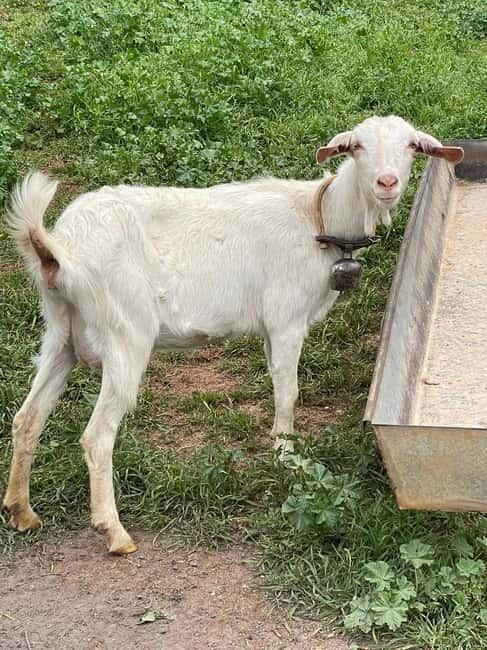
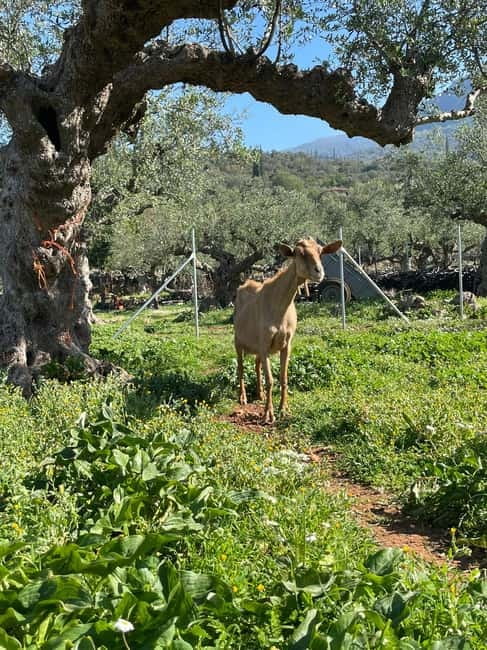
- Meet the farm animals: Goats provide milk for the cheese, chickens provide eggs, and friendly farm dogs may accompany your walk.
- Cook classic Messinian dishes: Prepare Kagianas, Greek salad, grilled beef patties, tzatziki, and bread baked in a wood-fired oven.
- Eat beneath the olive trees: The final meal brings together the food, setting, and stories behind each dish.
- Stay in a small group: With no more than 10 participants, the class should feel personal rather than crowded.
Arriving at Mama Gaia in Rural Messinia
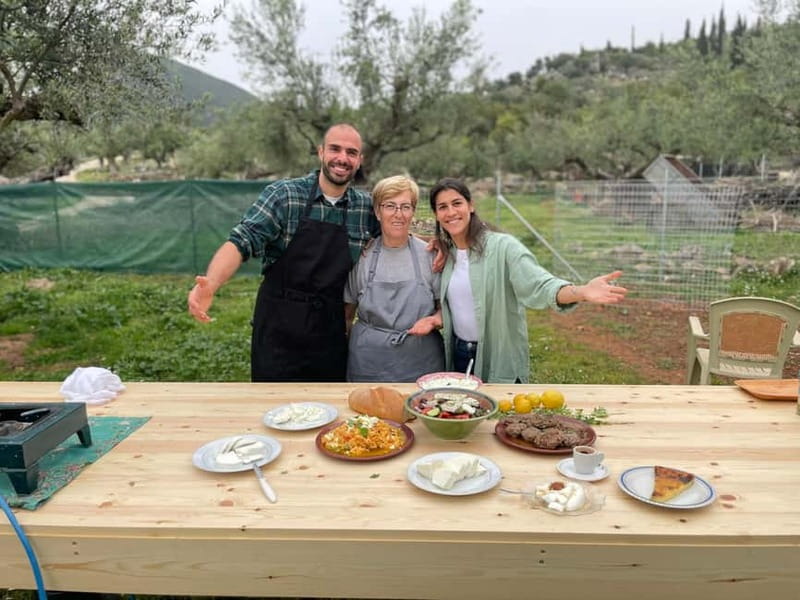
Mama Gaia is built around a simple idea: food makes more sense when you see where it comes from. Instead of beginning with a plate, the experience begins on a working farm in the Messinian countryside, surrounded by olive trees and open views.
The setting matters. Kalamata is famous for olives and Mediterranean food, but a farm visit shows you the daily work behind that reputation. You will smell herbs and soil, hear the animals, and see how a meal can grow from a garden, a chicken coop, and a small outdoor kitchen.
Your hosts are local and focused on sustainable farming and traditional cooking. That combination gives the day a useful balance. You are not only learning recipes. You are also learning why these foods belong to this part of Greece and how local ingredients shape the cooking.
The pace is designed to be friendly and practical. You should expect a warm welcome, an introduction to the farm, and time to look around before the food preparation begins. English, Greek, and Spanish are spoken, which is helpful for mixed-language groups.
More Farm Cooking Classes in Greece
- Naxos Perivoli Farm Experience & Wood-fire Cooking Class
★ 5.0 · 339 reviews - Melanes: Naxos Perivoli Farm & Cooking Class with Wood Fire
★ 5.0 · 177 reviews - Santorini Family Farm Food & Wine Tour with Cooking Class
★ 5.0 · 107 reviews
Goats, Chickens, and the Working Farm
The animals are not decorative extras. They are part of the food system you are learning about.
The goats provide milk for the homemade cheese, and you may have the chance to meet them up close. The free-range chickens lay the eggs used in the kitchen, and collecting fresh eggs helps connect the farm visit with the meal later in the day. Farm dogs may walk alongside you as you explore.
This part will be especially enjoyable for families and anyone who likes animals. One of the most praised details from the experience is the chance to spend time with the goats. Depending on the season and the day’s plan, you may also learn about milking.
Animal contact does mean you should think about allergies before booking. The experience is not suitable for people with animal allergies, and smoking is not allowed on the farm. Wear clothing and shoes that can handle soil, outdoor work, and a little mess.
Picking Tomatoes, Herbs, and Seasonal Produce
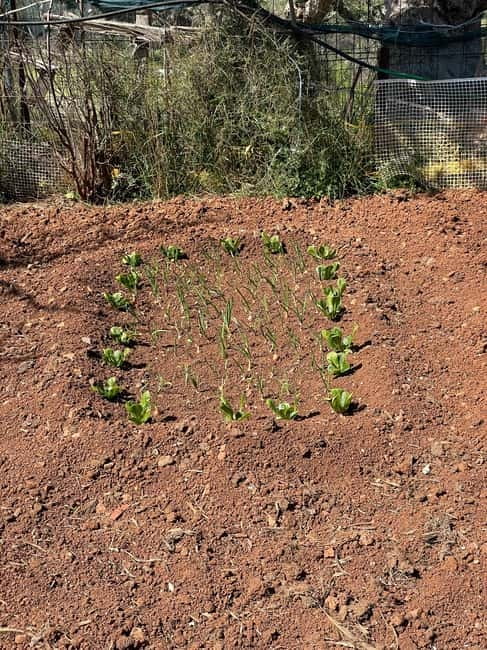
After seeing the animals, you head into the garden to collect ingredients for lunch or the main meal. The exact harvest depends on the season, but the farm lists tomatoes, peppers, herbs, and other seasonal vegetables among the produce you may pick.
You will also collect eggs from the coop. In the Mediterranean climate of Messinia, the hosts may introduce you to olives, figs, or other local products that are in season. This seasonal approach is one of the best parts of the activity because it keeps the cooking tied to what the farm can actually provide.
I like this part more than a standard market visit because you are doing a small amount of the work yourself. You can see the ingredients before they are washed, chopped, dressed, or cooked. A tomato picked in the garden becomes part of Kagianas or a Greek salad only a short time later.
Do not expect a formal agricultural lesson with fixed stops and technical detail at every plant. The focus is practical: gather what is needed, learn what grows here, then use it in the kitchen. If you want to understand the local food chain in a direct way, this is time well spent.
Learning to Make Sfela and Anthotyro
The cheesemaking workshop is the most distinctive part of the day. Sfela is a semi-hard, brined cheese associated with the region, while Anthotyro is softer, creamier, and more delicate.
Rather than simply tasting these cheeses, you learn how they are prepared. The workshop gives you a better sense of why Greek cheese is not one single style. Texture, salt, firmness, and freshness vary from one cheese to another, and each works differently at the table.
The hosts guide you through the process in the rustic outdoor kitchen. Since all cooking equipment and ingredients are included, you do not need to bring anything beyond suitable clothing, water, sun protection, and perhaps a camera.
This is a hands-on class, so you should expect to participate rather than watch a demonstration from a distance. The work may be less polished than a professional cooking school, but that is part of the appeal. You are learning a local method in the place where the ingredients are produced.
Same place, a different thing to cook:
- Athens: Classic Cooking Class with Market Visit and Wine
★ 5.0 · 1,101 reviews - Athens: Food Market Visit and Cooking Class with Wine
★ 4.9 · 1,087 reviews - Greek Cuisine Cooking Class in Santorini with Recipes and Wine
★ 5.0 · 969 reviews - Naxos: Half-Day Cooking Class at Basiliko Family Tavern
★ 5.0 · 887 reviews
Cooking Kagianas and a Full Greek Meal
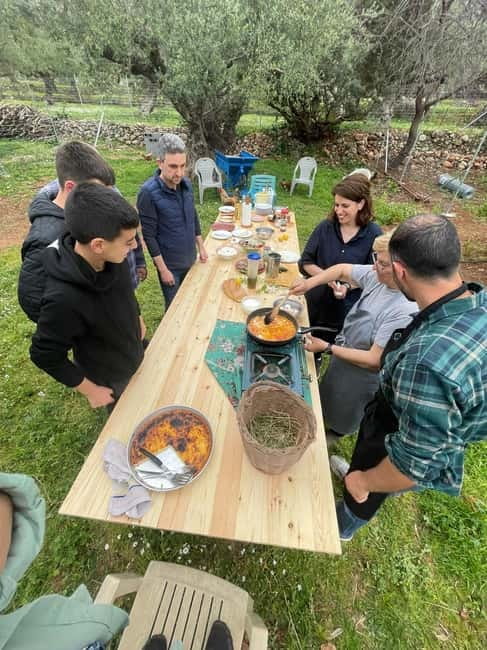
Once the harvest and cheesemaking are underway, you move into the main cooking session. The exact order can vary, but the dishes listed for the meal include several familiar Greek favorites.
Kagianas combines eggs, fresh tomatoes, and local cheese. It is a rustic dish, but the simplicity is the point. Good tomatoes, fresh eggs, and flavorful cheese do most of the work. Preparing it yourself helps you understand why Greek home cooking often depends more on ingredient quality than on elaborate technique.
You will also prepare a Greek salad with tomatoes, cucumbers, onions, olives, and feta, finished with extra virgin olive oil. This is a useful recipe to take home because it requires little equipment and is easy to repeat in your own kitchen.
The meal includes grilled free-range beef patties, fresh garden greens, and homemade tzatziki. The combination gives you a good spread of textures and flavors: grilled meat, cool yogurt and garlic, crisp vegetables, and salty cheese.
Fresh bread is baked with local flour in a traditional wood-fired oven. Bread from a wood-fired oven is not just another item on the menu. It adds a sense of place to the meal and shows how older cooking methods still fit into everyday farm life.
The hosts also explain the cultural meaning of the dishes and the techniques behind them. This makes the cooking class more useful than a simple recipe exchange. You learn how these foods fit into Greek family meals and local customs, not just how to assemble them.
Eating Under Olive Trees
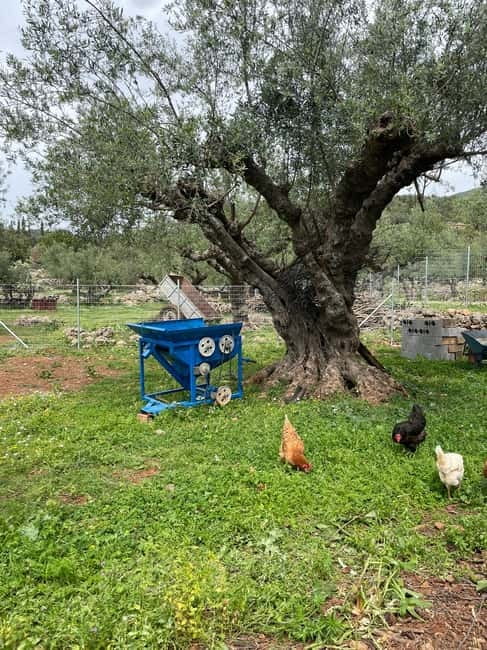
The final meal is served at the farm, surrounded by olive trees and the sounds of the countryside. This is where the separate parts of the day come together: the vegetables you picked, the cheese you helped make, and the dishes you prepared.
A farm meal does not promise restaurant-style precision, and that is not really the point. The value comes from eating food connected to the place and from knowing what went into preparing it. The setting also gives you time to talk with the hosts and other members of your group.
The meal should suit anyone who enjoys a social table and likes to ask questions. It may be less appealing if you want a fast, formal tasting with a fixed menu and little activity. Here, the cooking and conversation are central to the experience.
Food allergies and dietary restrictions should be shared in advance. The published menu includes eggs, dairy, beef, bread, and other common ingredients, so advance notice is important if you need changes.
What the $141 Price Includes
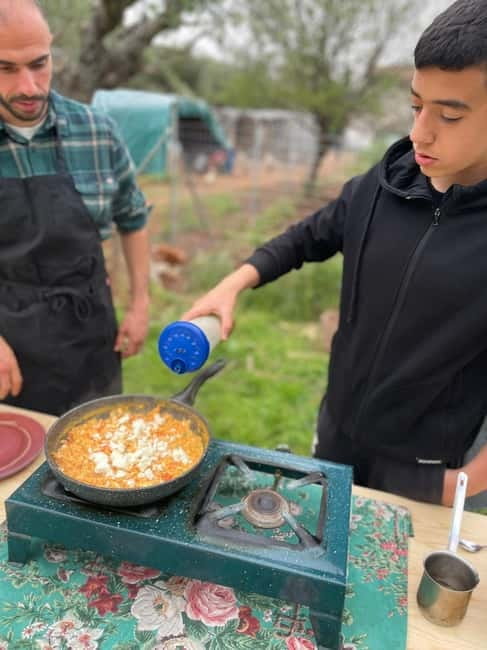
At $141 per person, this is not a cheap meal. It is also more than a short cooking demonstration. Your price covers a guided farm tour, the cheesemaking workshop, the cooking class, ingredients, equipment, and the farm-to-table meal.
That package makes the price easier to justify for someone who wants a full food experience rather than a restaurant lunch. You are paying for the setting, instruction, local hosts, food, and several activities in one visit.
The value is strongest if you take part fully. Pick the vegetables, ask questions about the goats and cheese, help with the cooking, and pay attention to the stories behind the recipes. If you only want to sit and eat, you will not get as much from the cost.
Transportation to and from the farm is not included. You will need to arrange your own way there, and the starting time can vary, so check availability carefully before making plans around the visit. The day is best treated as a planned outing from Kalamata rather than a quick stop between other activities.
Group Size, Weather, and What to Bring
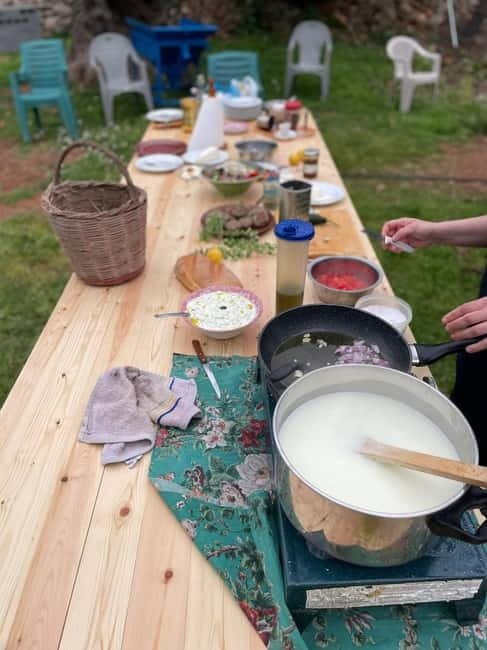
The group is limited to 10 participants. That is a useful size for a cooking class because you should have a better chance to handle ingredients and speak with the hosts. It also keeps the farm visit more personal than a large tour bus outing.
Wear comfortable clothes and shoes suitable for walking on uneven surfaces. A hat, sunscreen, and water are sensible because parts of the experience take place outdoors. Bring a camera if you want pictures of the animals, garden, olive trees, or finished meal.
Weather can affect the schedule. The experience may be rescheduled in poor conditions, so keep some flexibility in your plans. The outdoor kitchen and farm setting are major parts of the appeal, but they also make the day more weather-dependent than an indoor cooking class.
The activity is not suitable for wheelchair users or people with back problems. The uneven ground, walking, and practical work may be tiring for anyone with limited mobility. If you have concerns, ask before booking rather than assuming the farm can be adapted.
Who Will Enjoy This Experience Most
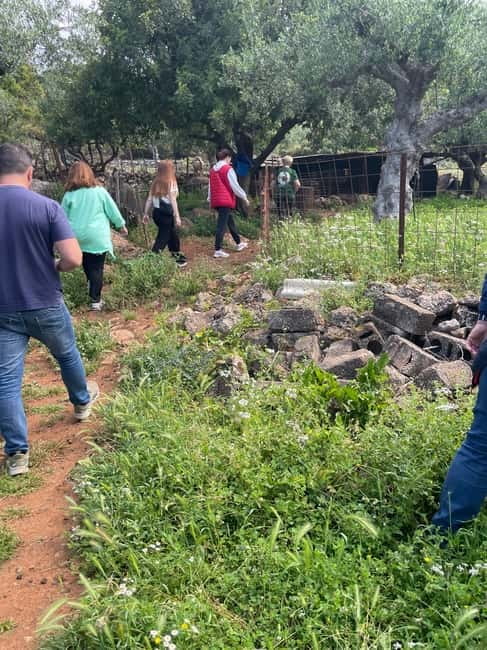
I would recommend Mama Gaia to people who want food connected to place. It is a particularly good fit for couples, families, small groups, and solo visitors who enjoy meeting local hosts and taking part in the preparation.
Animal lovers should enjoy the goats, chickens, and farm dogs. Home cooks will appreciate the cheesemaking and the simple dishes that can be repeated at home. Anyone interested in sustainable farming will also get a clear look at how animals, gardens, and cooking work together.
The experience may not suit you if you dislike outdoor conditions, have animal allergies, or want a tightly timed tour with no physical activity. It is also not the right choice for someone looking only for a restaurant meal in Kalamata.
The strongest praise has focused on the warm welcome, the clear instruction, the local ingredients, and the chance to meet the animals. Nicole and Porta are named as especially welcoming hosts, and Nicole’s energy has helped make the day memorable for more than one group.
Should You Book Mama Gaia?
You should book this experience if you want to spend meaningful time in the countryside and learn by doing. The combination of garden harvesting, fresh eggs, goats, two cheeses, traditional recipes, and a shared meal offers much more than a standard cooking class.
At $141, the price makes sense when you count the farm tour, instruction, ingredients, equipment, and meal together. Just plan your own transportation, prepare for uneven ground and outdoor weather, and tell the hosts about allergies or dietary needs ahead of time.
If those conditions suit you, Mama Gaia is a warm, food-focused way to understand Messinia through its farms and kitchen. It gives you recipes to remember, but the stronger memory may be sitting under the olive trees with food you helped bring from the garden to the table.
FAQ
How long does the Mama Gaia farm-to-table experience last?
The experience is listed as lasting one day. Check the available start times when booking because the exact schedule can vary.
How much does the experience cost?
The price is $141 per person.
Is transportation to the farm included?
No. Transportation to and from the farm is not included, so you must arrange your own transport.
What food will I prepare?
You may prepare Kagianas with eggs, fresh tomatoes, and local cheese, grilled free-range beef patties, garden greens, tzatziki, and Greek salad. Fresh bread is also baked in a traditional wood-fired oven.
Will I make cheese during the experience?
Yes. The cheesemaking workshop includes Sfela, a semi-hard brined cheese, and Anthotyro, a soft and creamy cheese.
How many people are in the group?
The group is limited to 10 participants.
What languages are spoken?
The hosts or greeters speak English, Greek, and Spanish.
What should I bring?
Bring comfortable shoes, a hat, sunscreen, water, and a camera. Wear clothing suitable for walking on uneven ground and taking part in farm and cooking activities.
Is the experience suitable for everyone?
No. It is not suitable for people with back problems, wheelchair users, or people with animal allergies. The experience can also be rescheduled because of bad weather, and you should share dietary restrictions or allergies in advance.
Just added around Greece
- Authentic and Traditional Cooking Class in Chania Crete★ 5.0 · 5 reviews
- Private Cooking Class – A Culinary Journey in Argostoli★ 5.0 · 2 reviews
- Chania Cooking Class in Crete with rustic, delicious and homely Cretan food!★ 4.5 · 14 reviews
- Private Greek Cooking Class in Athens-Learn to Cook with Angelina★ 5.0 · 3 reviews
- Cook with Katerina: Authentic Greek Home Cooking Class in Athens★ 5.0 · 15 reviews
- Private Walking Meze Cooking Course★ 5.0 · 6 reviews
- Cooking Class in Athens: Learn the Art of Phyllo with Christina★ 5.0 · 24 reviews
- Greek Cooking Class with Acropolis View★ 5.0 · 76 reviews
Farm & Countryside Cooking Classes, compared.

Half-Day Thai Cooking Class at Organic Farm in Chiang Mai
Read our review →
Cooking Class and Lunch at a Tuscan Farmhouse with Local Market Tour from Florence
Read our review →
Authentic Cooking Class with Market & Farm Visit
Read our review →
Hands-On Cooking Class & Farmhouse Tour on the Amalfi Coast
Read our review →Lists this class appears in