
REVIEW · LOMBARDY, ITALY
Iseo: Italian cooking class for homemade pasta and traditional desserts
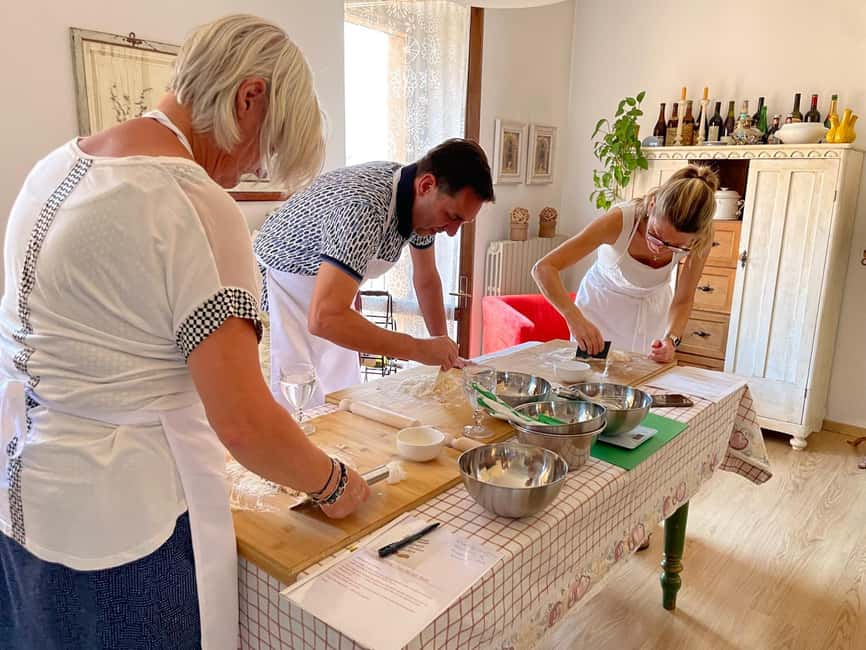
Pasta tastes better when you make it. This three-hour class at Elena’s home in Iseo offers two things I especially like: hands-on practice with fresh pasta and a relaxed meal shared with Elena and her husband. You also receive a recipe book, local wine, and a small parting gift, so the experience keeps giving after lunch.
I also like the small size, limited to six people, and Elena’s calm instruction in Italian or English. The main consideration is that this is a focused pasta-and-dessert class rather than a full tour of Italian cooking. You make two pasta dishes and one traditional dessert, but there is no promise of appetizers, a broad range of techniques, or a formal professional kitchen setting.
Key points to know before booking
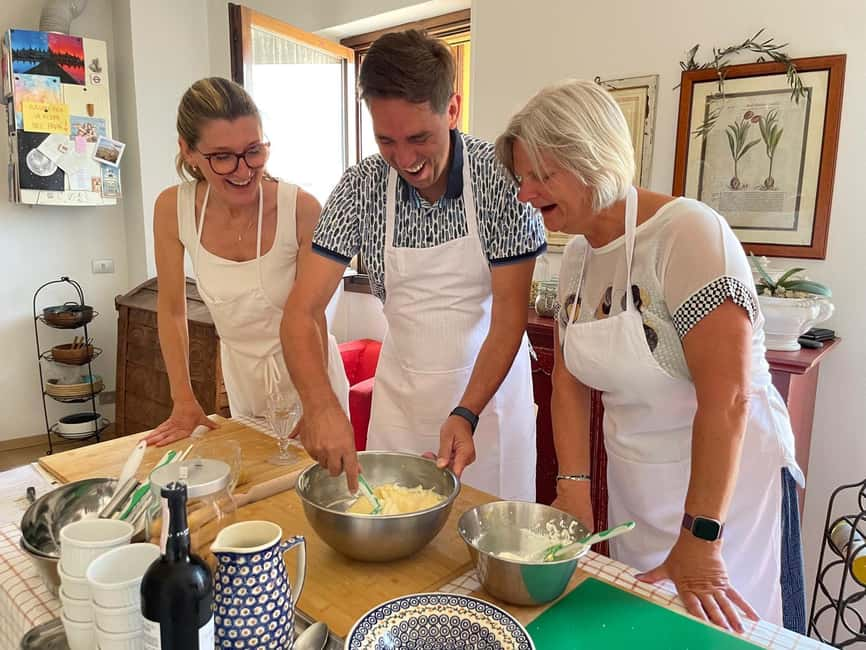
- You cook in Elena Cittadini’s home: This feels more like being welcomed into an Italian household than attending a large commercial workshop.
- You prepare two fresh pasta dishes: The class may include spaghetti alla chitarra and tagliatelle, with sauces built around seasonal ingredients, tomato, basil, and vegetables.
- Dessert brings family recipes to the table: Depending on the class, you might make tiramisu, apple pie, or amaretto semifreddo.
- The meal is part of the experience: You eat the food you prepared with Elena and her husband, accompanied by local wine and, according to one account, coffee.
- The group stays very small: With no more than six participants, you should have room to work and ask questions.
- Check the restrictions carefully: The class is not suitable for children under 10, wheelchair users, people with mobility impairments, people with animal allergies, or people with hearing impairments.
Why a home kitchen changes the experience
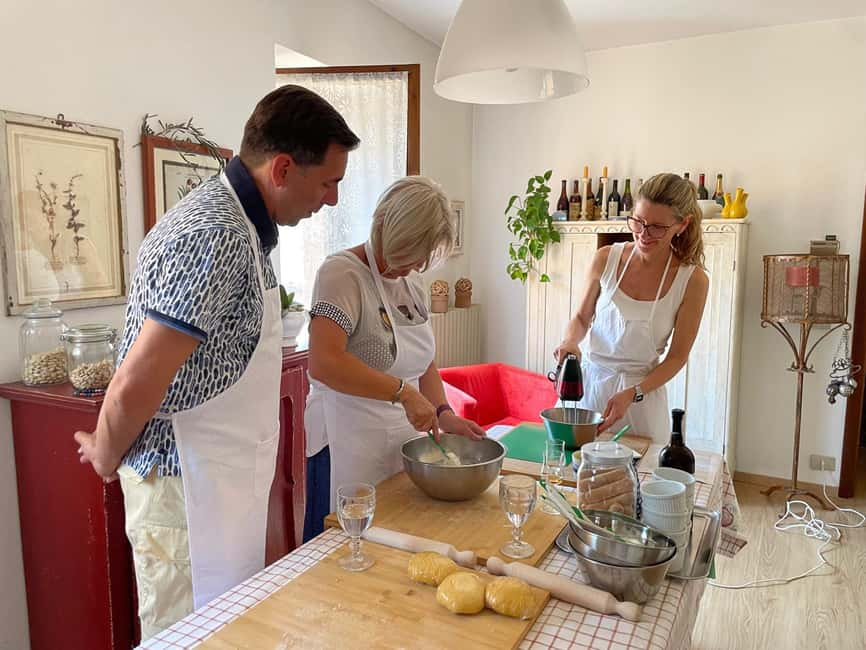
The address in Iseo is not just a meeting point. You arrive at Elena’s home at the agreed time and ring the bell marked Elena Cittadini. That simple arrival sets the tone: this is a personal cooking lesson, not a show put on for a large crowd.
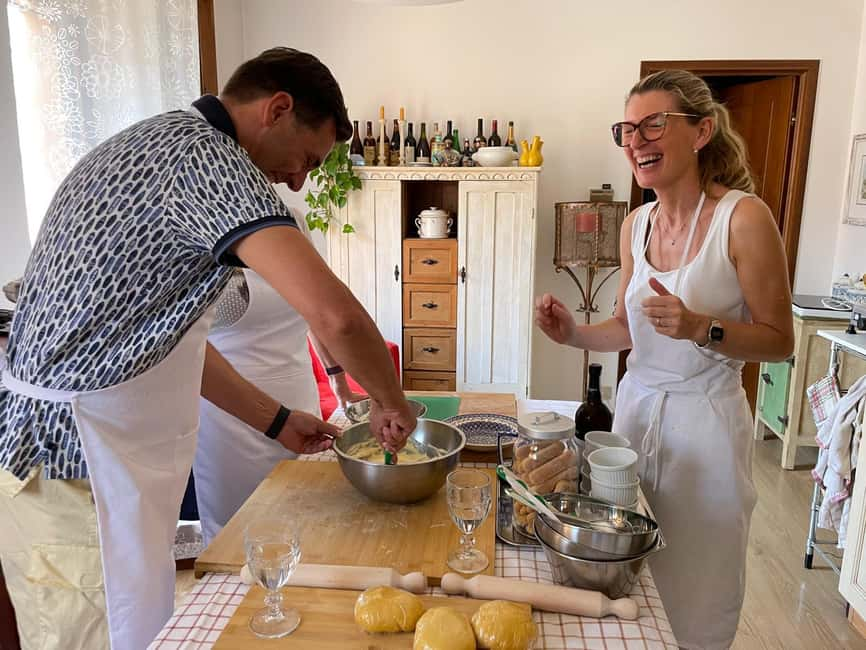
Elena and her husband host the class together. The pair have been described as warm, friendly, and attentive, and that matters in a home setting. You are not only learning how to mix flour and eggs. You are also hearing about local life, asking for suggestions for the rest of your time in Italy, and sharing a meal with the people who prepared it alongside you.
One particularly appealing detail is the family dog. For many people, an animal in the home adds to the friendly atmosphere. If you have an animal allergy, though, this class is specifically not suitable for you. That restriction is worth taking seriously before booking.
The small group limit of six gives the class a useful middle ground. You are not working alone, but you are also not standing at the back of a crowded demonstration. A small group makes it easier to see Elena’s hand movements, get help with dough, and ask why one technique works better than another.
More Pasta Making Classes in Italy:
- Florence: Pasta Cooking Class with Unlimited Wine
★ 4.9 · 10,285 reviews - 3 in 1 Cooking Class near Navona: Fettuccine, Ravioli & Tiramisu
★ 5.0 · 7,376 reviews - Florence: Pasta & Tiramisu Cooking Class with Unlimited Wine
★ 4.9 · 6,708 reviews
The three-hour cooking plan
The class is built around a straightforward rhythm: make the food, learn the methods, then sit down and eat it together. You should expect about three hours from beginning to end, with the exact starting time available when you check the date.
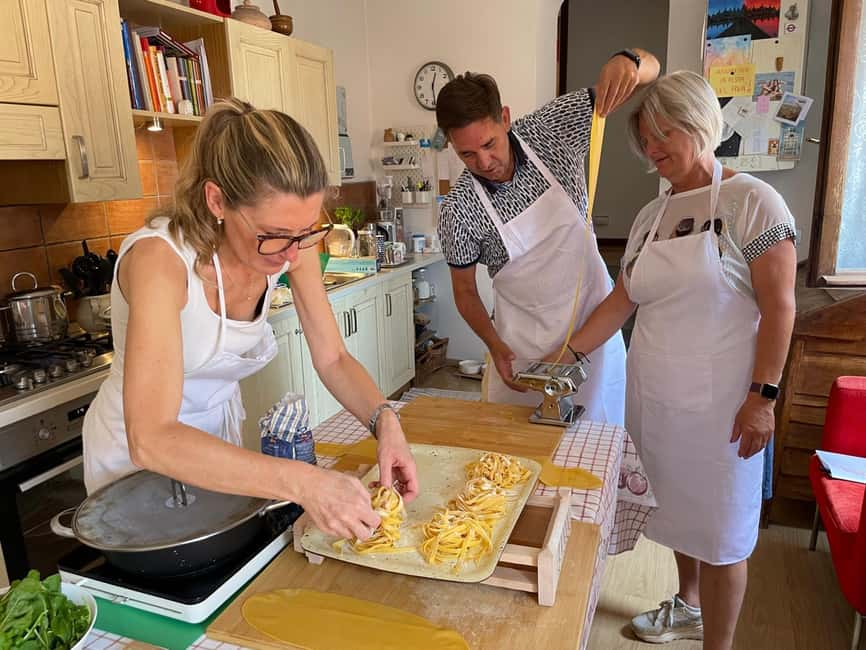
The focus is fresh handmade pasta. Elena guides you through the basic techniques needed to make traditional shapes, including spaghetti alla chitarra and tagliatelle. The goal is not simply to produce something edible. You learn how the dough is handled, shaped, and turned into a dish you can repeat at home.
That practical focus is one of the best reasons to book. Pasta is a skill you can carry home without buying rare equipment or searching for obscure ingredients. The recipe book adds another layer of value, since you do not have to rely on memory once your trip is over.
The class also covers sauces. Elena has a particular interest in vegetables and vegetarian food, and tomato and basil are favorite ingredients. That points to food that is traditional but not heavy or complicated. Seasonal ingredients are used, so the precise preparation may vary rather than following one rigid menu every day.
You should think of the class as a lesson in method and balance. You learn how a simple sauce can support fresh pasta, rather than burying it under too many ingredients. That is useful knowledge for home cooks who want Italian food that feels authentic without becoming fussy.
Making two pasta dishes by hand
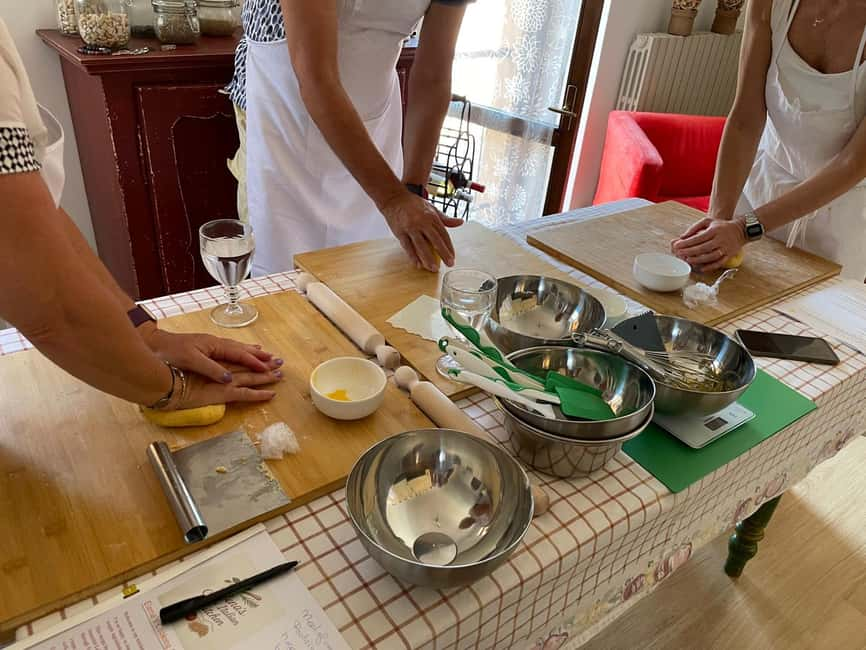
The two pasta dishes give the class its substance. One shape may be spaghetti alla chitarra, a traditional pasta cut with a chitarra tool, while the other may be tagliatelle. These shapes are different enough to make the lesson worthwhile, but the class remains manageable within three hours.
Tagliatelle offers a chance to work with broad ribbons of pasta. Spaghetti alla chitarra brings a different shape and texture to the table. Making both helps you see that fresh pasta is not one single technique. The shape affects how the sauce clings and how the finished dish feels when you eat it.
Elena’s teaching style appears to be careful and calm. One account praised her attention to detail and easy-to-follow instructions, while another noted her patience. That is good news if you have little cooking experience or if your pasta-making skills have previously been limited to opening a packet.
At the same time, experienced home cooks should set expectations correctly. The class teaches useful techniques, but it may not offer a wide survey of regional pasta shapes or advanced culinary theory. A person who has already attended several pasta workshops might find the range of techniques somewhat limited.
I see that as a reasonable trade-off for a short home-based class. You are not paying for a culinary school curriculum. You are paying for time with a local cook, clear instruction, shared food, and skills you can use again.
Tomato, basil, and seasonal sauces
Sauce is where the class moves beyond pasta mechanics. Elena’s preference for vegetables, tomato, and basil suggests a menu built on familiar Italian flavors rather than complicated restaurant-style preparations.
That simplicity is a strength. Fresh pasta can be delicate, and a sauce that is too rich or busy can hide the work you have just done. Learning how to make a clean tomato and basil sauce gives you a dependable recipe for later, especially when you want a quick meal that still tastes like something more than a convenience dish.
The use of seasonal ingredients also means you should not expect every class to be identical. The ingredients available at the time may affect the final dishes. For some people, that changing menu is part of the appeal. It reflects how home cooking works in Italy, where the kitchen often follows the season rather than a fixed printed menu.
The vegetarian emphasis is useful if you prefer vegetable-based food, but you should still tell Elena about allergies or intolerances in advance. The activity specifically asks participants to provide that information before attending.
More Tiramisu and Dessert Classes in Italy:
- Rome: Pasta Making Class with Wine, Limoncello, and Dessert
★ 4.9 · 3,177 reviews - Rome: 3-in-1 Fettuccine, Ravioli, and Tiramisu Cooking Class
★ 4.9 · 2,704 reviews - Florence: Cooking Class Pasta & Tiramisu Making Unlimited Wine
★ 5.0 · 2,234 reviews - Fettuccine & Tiramisù: Cooking Class with Wine & Limoncello
★ 4.9 · 2,103 reviews
Dessert: tiramisu, apple pie, or semifreddo
The sweet course gives the class a pleasant finish. Depending on the session, you might prepare tiramisu, apple pie, or amaretto semifreddo. These are different desserts, but each connects the cooking lesson to familiar family cooking.
Tiramisu is perhaps the most recognizable option, and it is practical to learn because it can be made again for friends or family. Apple pie offers a more homey direction, while amaretto semifreddo brings a distinctly Italian touch and a colder, lighter finish.
The idea here is not pastry-school precision. The dessert recipes are presented as traditional preparations connected to grandmother’s cooking. That makes them a good fit for you if you want food with a story and a strong link to home kitchens.
Dessert also helps balance the hands-on work. After handling dough and preparing sauces, you have one more dish to create before sitting down. It gives the three-hour schedule a clear beginning, middle, and end.
Sitting down for an informal Italian lunch
The meal at the end is not an extra detail. It is the point where the class becomes a social experience.
You eat the pasta and dessert you made, rather than watching someone else serve a separate meal. That creates a satisfying connection between the work and the result. If your dough is not perfectly shaped, it still becomes part of lunch, and that is a useful reminder that home cooking does not need to look like a restaurant plate.
A glass of local wine is included with the tasting. One description also noted coffee during the meal. The food is shared with Elena and her husband, who help create the informal, welcoming feeling that people often hope to find in a home cooking class.
This part may be especially valuable if you want local conversation. Past participants asked Elena and her family about life in Italy and received suggestions for other places to visit. You should not treat this as a formal sightseeing tour, but you can reasonably expect the meal to leave room for conversation and local tips.
The social side also makes the class a good choice for couples, friends, and solo visitors who enjoy meeting people through food. If you prefer to cook quietly and leave as soon as the lesson ends, the shared meal may feel longer than necessary.
What the $100 price includes
At $100 per person, the price is not a bargain cooking demonstration, but it covers more than a single recipe lesson. You receive three hours of instruction, ingredients and equipment, two handmade pasta dishes, a traditional dessert, a tasting meal, a glass of local wine, and a recipe book.
The small group is important when judging the value. Six people or fewer means the fee supports a more personal class, with better access to Elena and her work surface. You are not simply watching a chef prepare food for a room full of people.
The recipe book adds lasting value. If you use even one pasta method and one sauce at home, the class can pay off long after your time in Iseo. The small final gift is a modest touch, but it gives the experience a personal finish.
The price makes the most sense if you value instruction and hospitality as much as the meal. If you only want to eat Italian food, a restaurant will likely be a simpler choice. If you want to learn, cook, and share lunch in a local home, the fee is easier to justify.
Who should book this class
I would recommend it most strongly for adults and older children who enjoy food, conversation, and practical lessons. Children must be at least 10 years old, so families should check the ages in their group before booking.
It also suits you if you want a break from museums and scenic stops around Lombardy. A cooking class gives you a different way to connect with Iseo: through ingredients, household routines, and a shared table.
Vegetarians and people who prefer vegetable-led dishes may be especially comfortable with Elena’s style of cooking. Still, you should disclose every allergy or intolerance in advance rather than assuming a dish can be adjusted at the last minute.
This is less suitable for people who use wheelchairs or have mobility impairments, since the activity is held in a private home and is listed as unsuitable for those needs. It is also not suitable for people with hearing impairments. Italian and English are the teaching languages, so you should choose this experience only if one of those works well for you.
Practical details for your Iseo plans
The class lasts three hours, but allow enough time to reach Elena’s address before the agreed start. The exact address is provided for the appointment, and you ring the bell marked Elena Cittadini when you arrive.
The group size is capped at six. That is small enough for direct guidance but large enough to make the meal feel social. Since the class is hosted in a home, arrive ready for a friendly, informal setting rather than a polished cooking studio.
You can cancel up to 24 hours in advance for a full refund, and you can reserve while delaying payment. Those policies are useful if your Lombardy schedule is still shifting.
The experience has a rating of 5 from 16 reviews, and the praise is unusually consistent around the same points: Elena’s warmth, her patience, the quality of the food, and the hospitality shared by Elena and her husband. One useful piece of balanced feedback is that the class may feel limited if you want many different techniques or an appetizer course.
Should you book Elena’s Italian cooking class?
Book it if you want to make fresh pasta, eat what you prepare, and spend part of your time in Iseo with a local family. The strongest reasons are the small group, calm teaching, recipe book, and shared lunch with wine.
Skip it if you want a broad professional cooking course, a large menu, or a fully accessible venue. For most food-minded adults who value personal contact over spectacle, this is a warm and practical way to add flavor to a Lake Iseo visit.
FAQ
Where does the cooking class take place?
The class takes place at Elena Cittadini’s home in Iseo. Arrive at the provided address at the agreed time and ring the bell marked Elena Cittadini.
How long does the class last?
The cooking class lasts three hours. Starting times vary, so check availability for the date you want.
How many people can join?
The class is limited to six participants, making it a small-group experience.
Which languages are available?
The instructor teaches in Italian and English.
What food will I prepare?
You will create two dishes of fresh handmade pasta and one traditional dessert. Possible pasta examples include spaghetti alla chitarra and tagliatelle. Dessert options may include tiramisu, apple pie, or amaretto semifreddo.
Is food and wine included?
Yes. You eat the dishes prepared during the class, and a glass of local wine is included. Materials and equipment are also provided.
Can children attend?
Children under 10 years old cannot attend this activity.
What should I do about food allergies or intolerances?
Tell the host about any food allergies or intolerances in advance so the class can be planned safely.
More Italian Cooking Classes in Italy
- Cooking Class and Lunch at a Tuscan Farmhouse with Local Market Tour from Florence
★ 5.0 · 4,831 reviews - Tuscan Cooking Class and Dinner in Florence
★ 4.5 · 732 reviews - Rome Pasta Making Class with Italian Sauces and Wine Included
★ 5.0 · 645 reviews - Tuscan Cooking Class
★ 5.0 · 584 reviews
Just added around Italy
- Cooking Class in a Sicilian countryhouse★ 5.0 · 5 reviews
- Cesarine: Home Cooking Class & Meal with a Local in Catania★ 4.5 · 10 reviews
- Cesarine: Market Tour & Home Cooking Class in Catania★ 4.0 · 6 reviews
- Cooking Class in Taormina with Lunch Included★ 5.0 · 2 reviews
- Cooking Class and Wine Pairing in Capri★ 5.0 · 57 reviews
- Cooking class in Capri for small groups★ 4.0 · 4 reviews
- Private Cooking Class Experience in Reggio Calabria★ 5.0 · 5 reviews
- Lezione di Cucina : Pasta Fresca★ 5.0 · 12 reviews
Pasta Making Classes, compared.


3 in 1 Cooking Class near Navona: Fettuccine, Ravioli & Tiramisu
Read our review →
Pasta & Tiramisu Cooking Class with Unlimited Wine
Read our review →
Pasta Making Class with Wine, Limoncello, and Dessert
Read our review →
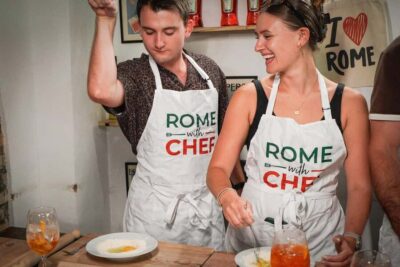
Rome Cooking Class: Make Pasta and 3 Spritz Cocktails
Read our review →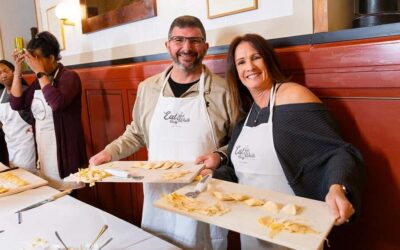
3-in-1 Fettuccine, Ravioli, and Tiramisu Cooking Class
Read our review →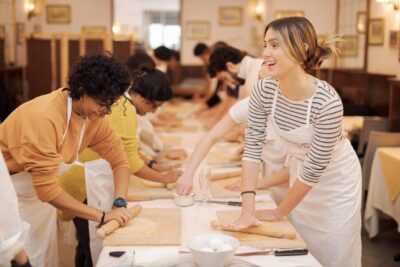
Fettuccine Pasta Cooking Class in Rome’s City Center
Read our review →Lists this class appears in