
REVIEW · BOLOGNA, ITALY
Handmade Pasta making Class with Chef Antonio
Fresh pasta tastes better when you make it. This small-group class with Chef Antonio brings Bologna’s famous cooking into a real local home, where you prepare egg pasta, ragù alla Bolognese, tortelloni, and a second sauce before sitting down to eat. I like the maximum of four participants and the personal teaching. I also like that Antonio sends the recipes afterward, so the meal does not end when you leave Bologna. The main drawback is that this is a home kitchen, not a polished cooking school, and the informal setting may not suit anyone wanting a slick, highly structured production.
The class lasts about three hours, though Antonio may let the conversation and cooking run longer. You meet at Via Antonio di Vincenzo 50, roughly a 20-minute walk from Bologna’s center according to one detailed account. At $83.08 per person, the price is fair for a private or near-private lesson, a full meal, wine, and recipes to take home. Still, you are paying for Antonio’s company and instruction as much as for the food, so this is best for people who enjoy a relaxed kitchen gathering.
Key details before you book
- A four-person maximum keeps the lesson personal: You should have plenty of room to ask questions and get hands-on help with the dough.
- You make two types of fresh pasta: The work includes silky tagliatelle and delicate tortelloni, with plenty of practice rolling, cutting, and shaping.
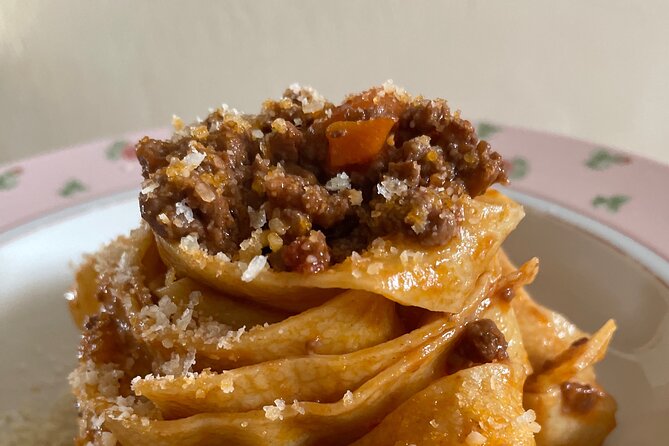
- Ragù alla Bolognese is cooked from scratch: Antonio focuses on flavor, technique, and the small adjustments that make the sauce work.
- The setting is a real local home: Expect warmth and personality rather than a spotless commercial teaching kitchen.
- Wine comes with the meal: You finish with a bottle of red, or white if you prefer, alongside the pasta you prepared.
- Recipes are sent after class: You can recreate the meal at home instead of leaving with only a pleasant memory.
Why this Bologna pasta class feels different
Bologna is one of Italy’s best cities for a cooking lesson because food here is not treated as a tourist prop. Handmade egg pasta is part of daily life, and dishes such as tagliatelle al ragù and tortelloni are tied closely to local habits.
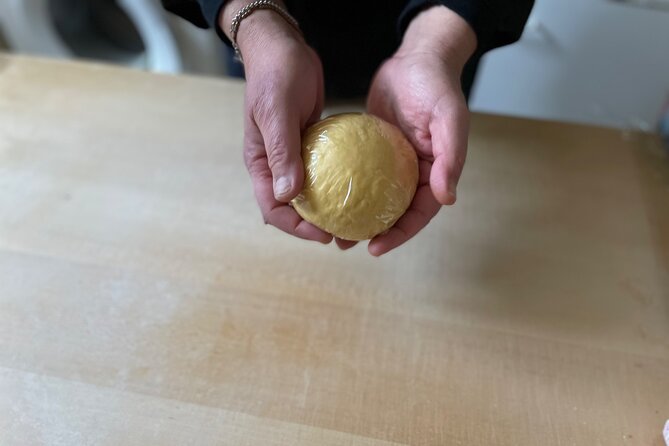
This class takes that idea seriously. You are not simply shown a plate of pasta and handed a recipe card. You work the flour and eggs, learn how the dough should feel, roll it thin, cut it, and shape filled pasta. That hands-on work matters. Pasta dough looks simple until you try to make it smooth, elastic, and even.
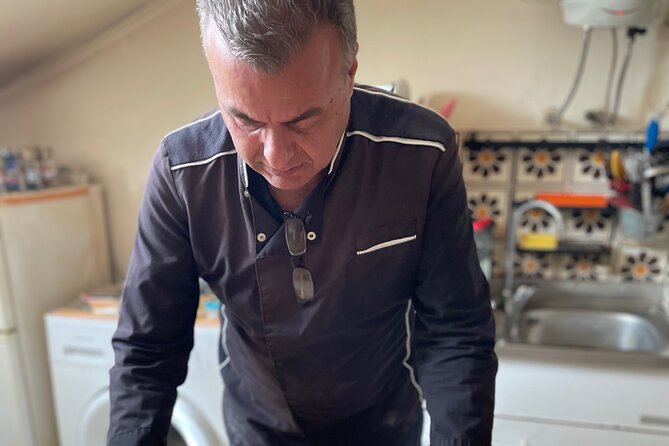
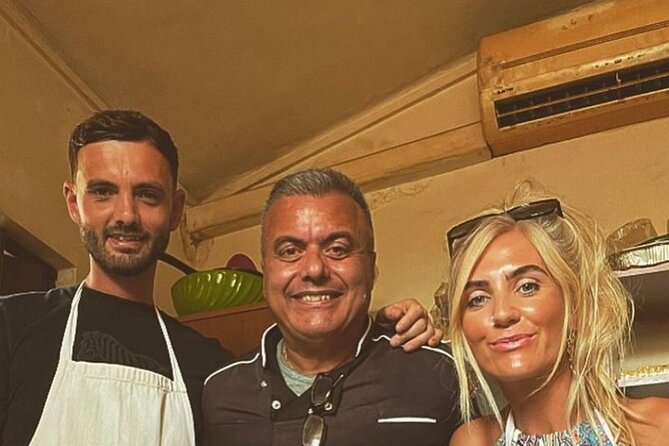
Antonio is central to the experience. He is a professional chef with experience running a local restaurant, and his teaching style sounds warm, funny, and highly personal. He introduces himself before the class, sends clear directions, and explains what you will prepare. Once you arrive, the lesson becomes as much a conversation as a cooking demonstration.
I would choose this class if you want contact with a real person and a sense of how an Italian kitchen works. I would choose a larger cooking school if you prefer formal stations, printed instructions during the lesson, and a fixed timetable.
More Pasta Making Classes in Bologna
- Bologna: Pasta Cooking Class, Ragu, Spritz, Wine & Gelato
★ 4.9 · 775 reviews - Bologna Local Pasta Cooking Class, Ragu, Spritz, Wine & Gelato
★ 5.0 · 527 reviews - Bologna: Pasta and Tiramisu Cooking Class with Wine
★ 4.7 · 507 reviews
Arriving at Via Antonio di Vincenzo 50
The meeting point is Via Antonio di Vincenzo 50 in Bologna, and the class returns to the same place. One detailed account places the address about a 20-minute walk from the heart of Bologna, which makes it reachable on foot but not right beside the main sights.
Antonio provides arrival instructions and helpful directions before the class. That is useful because home-based activities can be harder to spot than a shopfront cooking school. I would allow extra time, save the address on your phone, and avoid arriving breathless with flour already on your shoes.
The location also shapes the mood. You are entering a personal kitchen rather than a purpose-built classroom. Some people love this because it feels more like being welcomed into local life. Others may find the surroundings less polished. The setting is part of the bargain, and it is worth understanding that before booking.
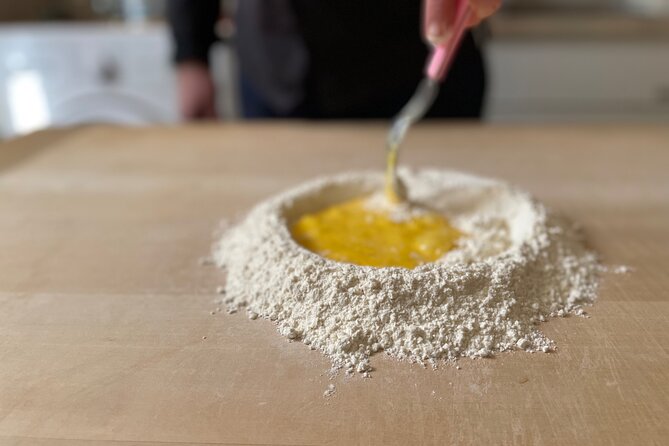
Mixing and working the egg pasta dough
The main lesson centers on fresh egg pasta. You begin with the basic mixture and learn that good dough is not simply eggs thrown into flour. The texture changes as you work it, and getting the consistency right takes patience and technique.
This is where a tiny group helps. With no more than four people, Antonio can watch how you knead and correct problems before they become serious. You can ask whether the dough is too dry, too sticky, or not yet smooth enough. That kind of close attention is difficult in a class filled with a dozen cooks.
The class is practical rather than theatrical. You should expect to handle the dough yourself, not just watch Antonio perform the difficult parts. One account describes the pasta-making as the main exercise, with useful hints offered along the way. That is good news if you want skills you can use at home.
Do not expect perfect pasta on your first attempt. Rolling evenly takes practice, and filled pasta adds another layer of difficulty. The fun is partly in getting through the awkward stage with help. Antonio’s encouraging manner appears to keep the work light, even when the dough refuses to cooperate.
Rolling and cutting tagliatelle
Once the dough is ready, you roll and cut it into tagliatelle. One account refers to the pasta as closer to pappardelle in width, so the exact cut may depend on the lesson and the work you produce. The important point is that you learn how fresh pasta should be rolled and shaped, rather than eating a dish prepared entirely in advance.
Tagliatelle is the right pasta for ragù alla Bolognese. Its broad, fresh strands hold the meat sauce far better than thin dried spaghetti. That is one of the useful food lessons here: the shape is not just decoration. It affects how the sauce reaches your fork.
Antonio also shares small practical tips during the process. These can include how the dough should feel, how thin to roll it, and how to manage the pasta before cooking. The supplied details do not list every technique, so you should see this as a guided working session rather than a formal syllabus.
For me, the value is in learning by touch. A recipe can tell you quantities, but it cannot fully explain when the dough is ready. The class gives you both the recipe and the memory of how the dough behaved under your hands.
Same place, a different thing to cook:
- Pastamama, Home Cooking Classes at Grace’s Home
★ 5.0 · 521 reviews - Bologna: Pasta and Tiramisu Small Group Cooking Class with Wine
★ 5.0 · 409 reviews - Bologna on the plate, Cooking Class with Alessia
★ 5.0 · 260 reviews - Bologna: Pasta Tagliatelle al Ragu Cooking Class with Wine
★ 4.7 · 225 reviews
Making tortelloni by hand
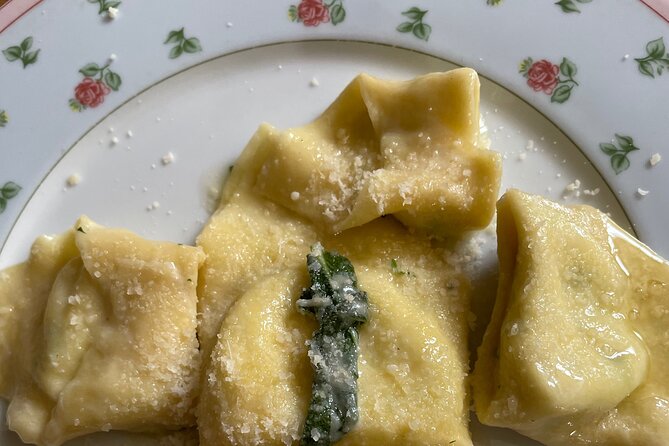
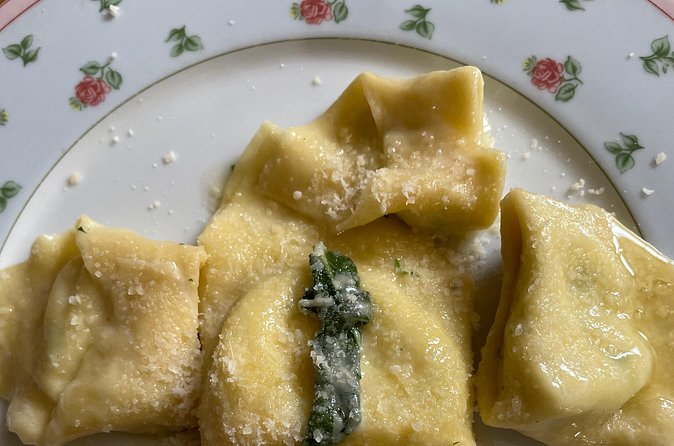
The second pasta is tortelloni, a larger filled shape that requires more care than tagliatelle. You prepare the filling, place it on the pasta, fold the dough, and seal the edges. Antonio encourages you to adjust the filling to your own taste, with possibilities such as more Parmesan or more salt.
That small invitation is important. It shows that Italian cooking is not always about obeying a rigid formula. You learn the basic balance, then make sensible adjustments. It also gives you a chance to understand how filling, pasta thickness, and seasoning work together.
Tortelloni can be fiddly. Too much filling makes sealing difficult, while too little leaves you with a disappointing bite. If you are cooking with a family member or friend, this part can be especially enjoyable because you compare shapes and techniques as you work.
The tortelloni is served with a butter sauce according to one detailed account, while the class description identifies the main meal as tagliatelle with ragù and tortelloni. The combination gives you two different pasta styles in one sitting: a broad noodle with a slow-cooked sauce and filled pasta with a simpler finish.
Cooking ragù alla Bolognese
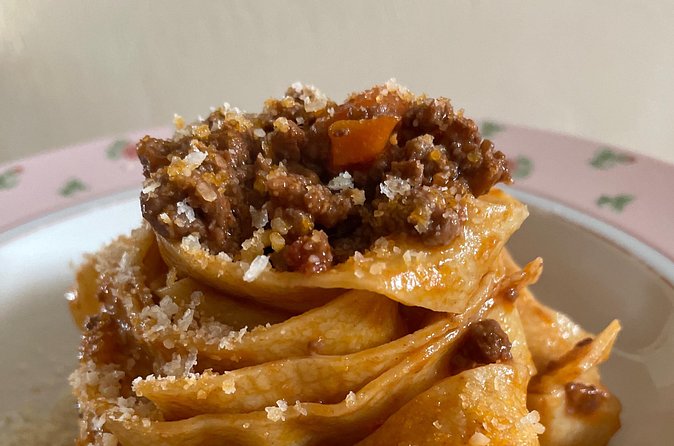
The ragù is one of the class highlights. Antonio teaches you how to prepare the sauce that goes with your tagliatelle, explaining the steps and the balance of flavors. The detailed feedback describes the finished sauce as full of distinct flavors, which is exactly what you want from a good Bolognese ragù.
This is more useful than learning a vague recipe called Italian meat sauce. Ragù alla Bolognese is designed for fresh tagliatelle, and the class connects the sauce to the pasta you have just made. You see how the two parts of the dish belong together.
Antonio’s storytelling adds context without turning the lesson into a lecture. He talks about food, cooking, and Bologna, and he also offers tips for the rest of your time in the city. His conversation can wander, which is a pleasure for some people and a possible irritation if you want every minute tightly controlled.
The meal is served after the cooking is complete, with a bottle of red wine. White wine is available if you prefer it. This changes the class from a simple lesson into a shared evening meal, and the wine gives you time to talk with Antonio once the work is done.
Eating what you made
The sample meal is tagliatelle with ragù alla Bolognese and tortelloni. Because you have handled the ingredients yourself, the meal becomes a final lesson in texture and balance. You can taste the difference between fresh pasta and dried pasta, and you can see how your rolling and shaping affected the result.
The meal is generous enough to feel like dinner rather than a quick tasting. You also get a second helping of pasta, according to one account, which is welcome after several hours of cooking.
The wine is part of the social side of the class. If you prefer red, that suits the ragù. If you would rather drink white, you can request it. The important thing is that the meal takes place around the same table, with Antonio still available to answer questions and share stories.
This is also where the home setting matters most. The atmosphere is described as warm and personal, with objects and small touches that make the kitchen feel lived in. It will not feel sterile or perfectly staged. That may be exactly what you want from a Bologna food experience, but it is worth knowing if you expect a restaurant-style dining room.
Antonio’s teaching style
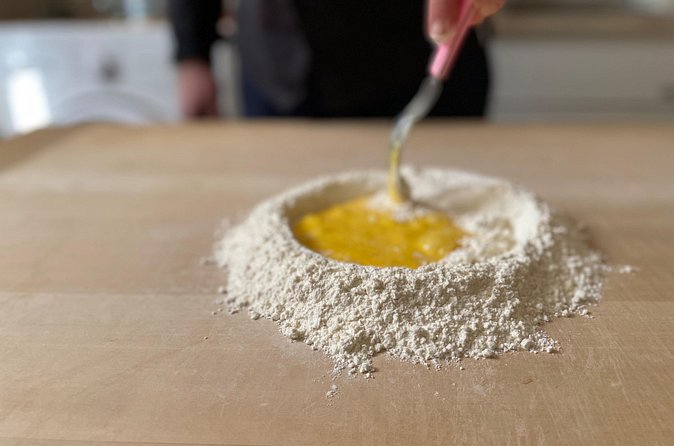
The strongest part of the class is Antonio himself. His approach is friendly, expressive, and informal. He explains what he is doing, encourages you when the pasta proves difficult, and uses humor to keep the lesson moving.
His interests are broad enough to make the conversation easy. One person even spent time discussing Major League Baseball with him. That detail tells you something useful: Antonio is not a distant instructor who only speaks when demonstrating a technique.
He also appears to be generous with his time. The advertised length is about three hours, but one account says the class ran well past the allotted time. This can be a welcome bonus if you enjoy long meals and conversation. It can be less convenient if you have a strict dinner reservation or an evening train.
I would not book this class if you want to rush in, produce pasta on a stopwatch, and leave immediately. I would book it if you like cooking with a host who treats the lesson as a social occasion.
Price, group size, and value at $83.08
At $83.08 per person, this is not the cheapest food activity in Bologna. The price makes more sense when you count what is included: roughly three hours of instruction, fresh pasta and sauce, a sit-down meal, wine, a maximum of four participants, and recipes sent afterward.
The group limit is the biggest value factor. A small class gives you more time with Antonio and more direct help at the worktable. In a larger class, you might spend much of the lesson watching someone else knead, roll, or fold.
The private nature of the activity also means only your own group participates. That suits couples, families, and friends who want a more relaxed session. It may feel less social than a large class, but you gain privacy and more control over the conversation.
I would call the price reasonable for a serious food lover, especially if you plan to cook the recipes at home. If your main goal is simply to eat fresh pasta, you can find a cheaper restaurant meal. If you want instruction, personal attention, wine, and a memorable evening, the cost is easier to justify.
Who should book this class
This is a strong choice for people who like to participate. You should be willing to knead dough, roll pasta, shape tortelloni, and accept that the first pieces may look uneven.
It suits couples, parents and adult children, siblings, and small groups of friends. The personal tone also works well for solo participants who enjoy conversation, though the activity is private and does not promise a larger social group.
Food lovers will get the most from the class, but you do not need professional cooking skills. The lesson is designed around learning, and Antonio’s patience is a major part of the appeal.
I would be more cautious if you have mobility concerns, though the available information says most people can participate and service animals are allowed. The activity is near public transportation, but the exact access details inside the home are not provided. Ask before booking if you need specific accommodations.
Booking timing and cancellation
This class is booked an average of 38 days ahead, so I would not leave it until the last minute if your Bologna dates are fixed. The maximum of four participants limits capacity, and the personal nature of the class makes availability tighter than it might be at a large school.
You receive confirmation when booking. Free cancellation is available up to 24 hours before the local start time. Canceling or changing the reservation less than 24 hours ahead does not qualify for a refund, so keep your sightseeing plan flexible around the cooking session.
Should you book Chef Antonio’s pasta class?
Book it if you want to learn by doing and enjoy the idea of cooking in a real home with a warm, talkative chef. The best reasons are the four-person limit, the chance to make both tagliatelle and tortelloni, the full ragù meal, and the recipes you can use later.
Skip it if you want a polished school kitchen, a tightly timed lesson, or a short demonstration with no hands-on work. For everyone else, this offers a practical way to understand Bologna through its food, one piece of dough at a time.
FAQ
Where does the pasta class take place?
The class begins at Via Antonio di Vincenzo 50, 40129 Bologna, Italy, and finishes at the same meeting point.
How long does the experience last?
The stated duration is approximately three hours. It may run longer if cooking and conversation continue.
How much does the class cost?
The listed price is $83.08 per person.
How many people can join?
The group maximum is four participants. Only your own group takes part.
Is the class offered in English?
Yes. The class is offered in English.
What pasta will I make?
You will make fresh egg pasta, including tagliatelle and tortelloni.
What meal is served?
The main meal is tagliatelle with ragù alla Bolognese and tortelloni. One account also describes a butter sauce for the tortelloni.
Is wine included?
Yes. The meal includes a bottle of red wine, with white wine available if you prefer it.
Will I receive the recipes?
Yes. Antonio sends slides containing the recipes prepared during the class.
Can I cancel for a full refund?
Yes, if you cancel at least 24 hours before the experience begins. Cancellations or changes made less than 24 hours ahead are not refunded or accepted.
Just added around Bologna
- Traditional Bolognese Cooking Class in Bologna with Giovanna S★ 5.0 · 6 reviews
- 3 hour Lasagna Bolognese cooking class★ 5.0 · 6 reviews
- Tortelloni and Tagliatelle Cooking Class in Bologna + Wine★ 3.0 · 2 reviews
- Pasta Making Class: Tagliatelle & Bolognese Sauce★ 5.0 · 15 reviews
- Bologna Walking Tour & Traditional Cooking Class with Wine★ 5.0 · 3 reviews
- Bolognese Cooking Class with Margherita in the Historic Center★ 5.0 · 26 reviews
- Home Cooking: Pasta Making with Natural Colors in a Tiny Group★ 5.0 · 6 reviews
- Private Market Tour and Cooking Class in Bologna with Giovanna C★ 5.0 · 20 reviews
Pasta Making Classes, compared.


3 in 1 Cooking Class near Navona: Fettuccine, Ravioli & Tiramisu
Read our review →
Pasta & Tiramisu Cooking Class with Unlimited Wine
Read our review →
Pasta Making Class with Wine, Limoncello, and Dessert
Read our review →
Rome Cooking Class: Make Pasta and 3 Spritz Cocktails
Read our review →
3-in-1 Fettuccine, Ravioli, and Tiramisu Cooking Class
Read our review →
Fettuccine Pasta Cooking Class in Rome’s City Center
Read our review →Lists this class appears in