REVIEW · ROME, ITALY
Fettuccine, Ravioli and Tiramisu Pasta Making in Rome
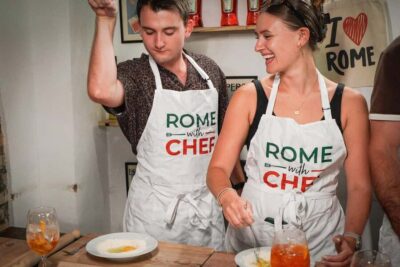
Come hungry and leave with new kitchen skills. This three-hour class puts you at a worktable in a Roman restaurant, where you prepare tiramisu, fresh fettuccine, and ricotta-filled ravioli before sitting down to eat the results. I like the hands-on format and the chance to learn dishes that you can repeat at home, rather than simply watching a chef work. I also like the friendly social setting, with a shared meal, wine, and limoncello built into the experience.
The main thing to consider is group size. The published limit is 18 people, though one family described a group of about 20. A good chef can keep that moving, but you should not expect a private lesson or much one-to-one time. There is also one important logistical warning: a participant arrived for a scheduled class and found no instructor at the stated time, an isolated but serious failure worth keeping in mind.
I would book this for families, couples, and first-time pasta makers who want a relaxed break from museums and monuments. Chefs including Lori, Dani, Tommo, Carlotta, Furio, Mimi, Alessia, and Maria have all been praised for being patient, clear, and upbeat. The class earns a 5 rating from 365 reviews, with 99 percent of customers recommending it, so the overall record is very strong.
Key points to know before booking
- Three Roman classics in one session: You make tiramisu, fettuccine, and ricotta ravioli from scratch.
- A real meal follows the lesson: Your pasta and dessert are cooked and served to you with water, wine or a soft drink, and either coffee or limoncello.
- Sauce is provided, not prepared: You choose among amatriciana, cacio e pepe, or tomato and basil for the fettuccine, but sauce-making is not part of the class.
- A social group setting: The class is offered in English and has a published maximum of 18 people.
- Good for children: One family brought children aged 7, 10, and 12, and all three enjoyed the relaxed format.
- Central meeting point: You meet at Via Giuseppe Zanardelli 14, near public transportation, and finish at the same place.
What the three-hour class actually includes
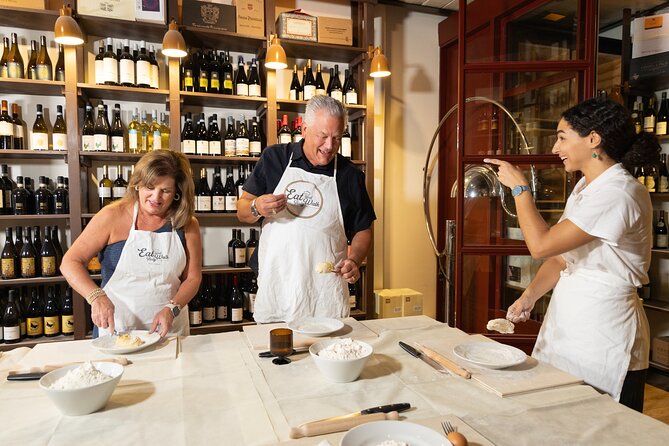
This is not a quick demonstration followed by a plate of pasta. You take part in each main preparation, then eat the finished food as a proper meal. The order begins with tiramisu, moves into fresh pasta, and finishes at the restaurant table.
That order makes practical sense. Tiramisu needs time to rest after it is assembled, so preparing it first gives the dessert time to settle while you work on the pasta. You are not simply handed a portion at the end. You layer the savoiardi biscuits, mascarpone cream, and cocoa yourself.
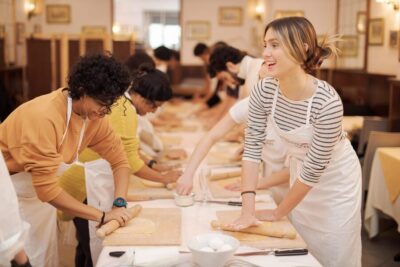
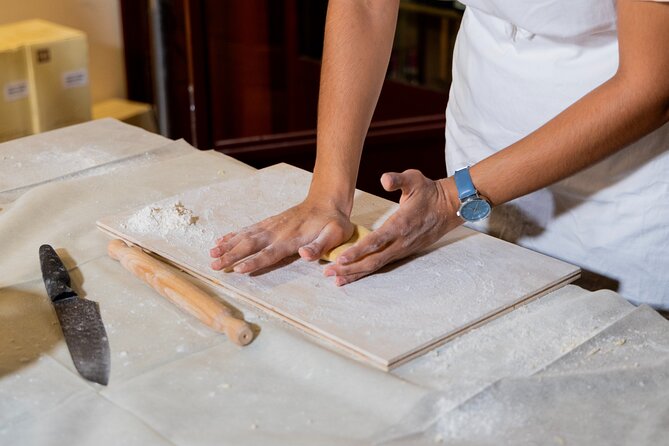
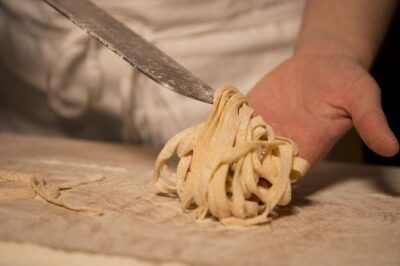
Next comes the pasta dough. Under the chef’s direction, you knead, roll, and shape the dough into fettuccine and stuffed ravioli. This is where the class earns its keep. Fresh pasta looks simple on a plate, but the feel of the dough, the thickness of the rolled sheet, and the amount of filling all affect the final result. Having a chef check your dough as you go can save you from producing ravioli that split or noodles that cook unevenly.
The class then turns your work into lunch or dinner. The fettuccine is served with your choice of amatriciana, cacio e pepe, or tomato and basil. The ravioli is filled with ricotta and Parmigiano, then served with butter and sage. Your tiramisu provides the sweet finish.
A useful detail is that you do not make the sauces. That keeps the class manageable within three hours, but it also means the lesson focuses on pasta and dessert rather than a full Roman menu. If your main goal is learning cacio e pepe technique or making amatriciana from scratch, this is not the right class.
More Pasta Making Classes in Rome
- 3 in 1 Cooking Class near Navona: Fettuccine, Ravioli & Tiramisu
★ 5.0 · 7,376 reviews - Rome: Pasta Making Class with Wine, Limoncello, and Dessert
★ 4.9 · 3,177 reviews - Rome Cooking Class: Make Pasta and 3 Spritz Cocktails
★ 5.0 · 2,937 reviews
Starting with tiramisu and traditional ingredients
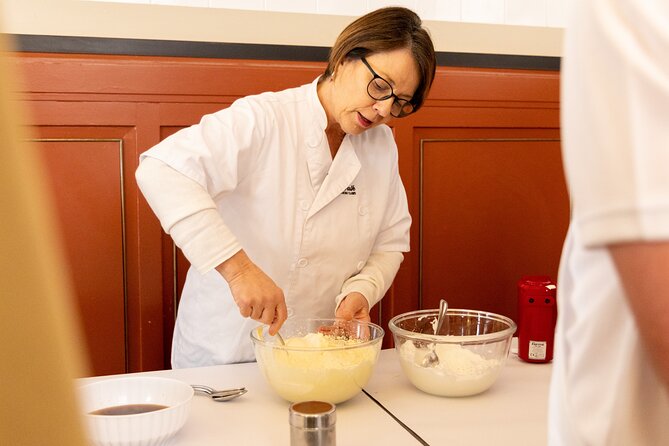
The tiramisu portion is likely the easiest part for beginners, and that is good news if you arrive after a busy morning of sightseeing. You assemble savoiardi biscuits with mascarpone and cocoa, following the chef’s instructions one step at a time.
The value here is not just the finished dessert. You get a clear look at the basic structure of a classic tiramisu, with its soft biscuit layer, creamy filling, and cocoa topping. One participant specifically described the tiramisu as easy to make, which suggests the class keeps this part approachable rather than turning it into a pastry exam.
I like that dessert comes first because it gives everyone an early success. Children can take part, and adults who have never made pasta before can settle into the class without worrying about perfect dough immediately. Chef Lori was singled out for keeping a young child engaged while still allowing the adult in the group to take part fully. That is useful information for parents who want an activity that holds a child’s attention.
The portion is hands-on, but you should not expect to prepare every ingredient from its raw state. The supplied menu identifies the ingredients and assembly process, while the kitchen handles the surrounding restaurant work. Think of this as guided preparation, not a professional pastry course.
Kneading, rolling, and shaping fresh pasta
The pasta section is the heart of the experience. You work with dough, roll it out, cut fettuccine, and shape ravioli filled with ricotta and Parmigiano. The chef helps you get the dough right before you move on, which matters far more than a fast lecture from across the room.
Chef Dani received praise for checking each person’s dough and explaining every step with patience. That is exactly the kind of teaching you want in a class like this. Pasta dough can feel stubborn at first, and a small adjustment in kneading or rolling can make the difference between a smooth sheet and a rough one.
The ravioli also adds a useful second skill. Fettuccine teaches you to roll and cut a simple pasta shape. Ravioli requires filling, folding, sealing, and portion control. Too much filling can cause problems, while too little leaves you with a disappointing bite. A chef moving around the table can offer practical corrections as you work.
I would not expect every piece to look like it came from a Roman kitchen. That is part of the fun. The goal is to understand the process well enough to repeat it at home. Several participants left eager to make the dishes again for family and friends, which is a better measure of success than perfect-looking pasta during the class.
Choosing your fettuccine sauce
Your fettuccine comes with a choice of three sauces:
- Amatriciana
- Cacio e pepe
- Tomato and basil
The choice gives you some control over the final meal, although the sauces are not made during the lesson. Cacio e pepe is the most distinctly Roman option, built around cheese and pepper. Amatriciana brings a stronger tomato flavor, while tomato and basil is the simplest and likely the safest pick for children or cautious eaters.
If you are sharing the class with a partner, you might choose different sauces so you can compare them. The menu describes the fettuccine as the starter course and the ravioli as the main course, though both are substantial pasta dishes. You should arrive ready for a filling meal.
One participant specifically enjoyed eating the cacio e pepe prepared after the lesson, while another praised the overall food as outstanding. The important point is that the meal is not an afterthought. The kitchen cooks your pasta and serves it as part of the experience, so you get to see how handmade pasta behaves once it reaches the pot and plate.
More Tiramisu and Dessert Classes in Rome
- Rome: 3-in-1 Fettuccine, Ravioli, and Tiramisu Cooking Class
★ 4.9 · 2,704 reviews - Fettuccine & Tiramisù: Cooking Class with Wine & Limoncello
★ 4.9 · 2,103 reviews - Rome: Pasta & Tiramisu Cooking Class near the Spanish Steps
★ 4.8 · 1,395 reviews - Cooking Class in the Heart of Rome: Pizza and Tiramisu Making
★ 5.0 · 1,330 reviews
Ricotta ravioli with butter and sage
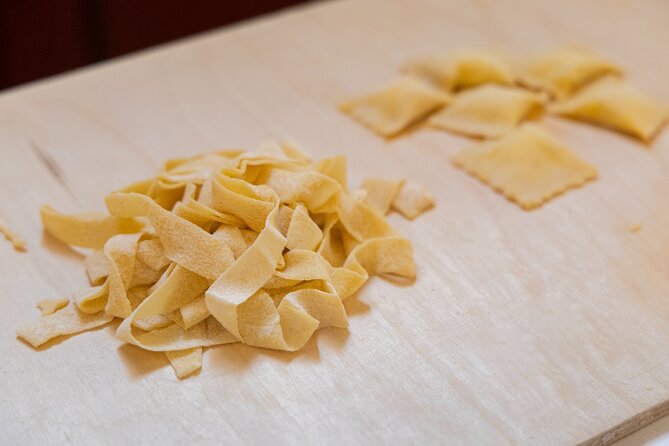
The ravioli provides a nice change of pace from the fettuccine. It is filled with ricotta and Parmigiano, then paired with butter and sage. This is a simple sauce, but that simplicity lets the pasta and filling do most of the work.
For me, this course gives the class its strongest sense of reward. You have just handled the dough, filled the ravioli, and sealed each piece. Then you sit down and eat the finished result. It connects the work at the table to the meal in a direct way.
The butter and sage sauce is not part of the cooking lesson, so you are learning the pasta shape more than the complete ravioli dish. Still, you leave knowing how to prepare one of the most useful fresh pasta forms. You can later adapt the filling or sauce at home without having to start from scratch.
Sitting down for wine, coffee, or limoncello
After the cooking, you eat together in the restaurant. Included beverages are a glass of wine or a soft drink, plus water. At the end, you choose either a shot of limoncello or hot coffee.
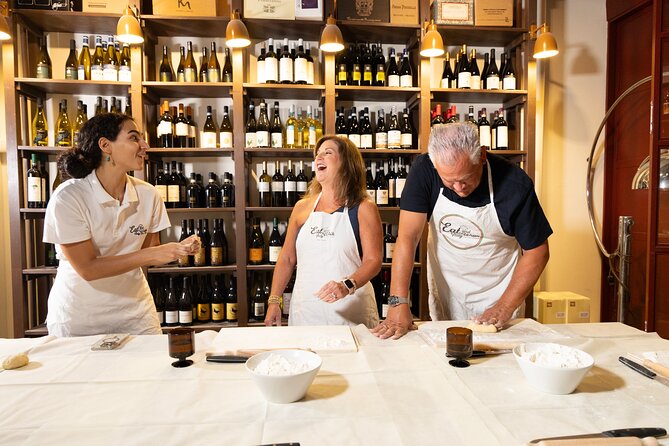
That shared table changes the tone of the class. It becomes a social evening rather than a strict lesson, and several participants liked meeting other people while eating the food they had prepared. If you are traveling as a couple, this gives you a chance to chat with people from other parts of the world. If you are alone, it can make the activity feel less solitary.
The beverage choices are modest but welcome. A glass of wine fits the meal, while a soft drink works better for children or anyone avoiding alcohol. Limoncello gives the evening a traditional Italian finish, but coffee is the practical choice if you still have more sightseeing ahead.
Extra drinks and extra food cost more, so do not treat the included beverage as an open bar. The class is priced as a cooking lesson and meal, not as an unlimited restaurant dinner.
The chefs and the teaching style
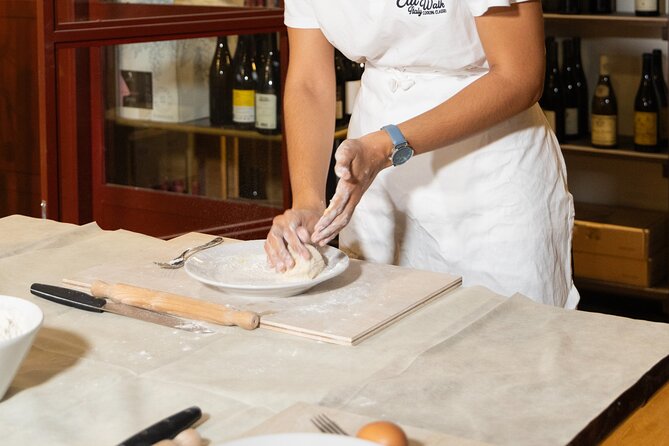
The clearest strength of this experience is the teaching. The names attached to especially positive experiences include Lori, Dani, Tommo, Carlotta, Furio, Mimi, Alessia, and Maria. You may not get to choose your chef, but the repeated pattern is clear: the instructors aim for a light, low-pressure class where people can keep up.
Chef Tommo was praised for precise instructions that remained easy to follow. Chef Carlotta was described as both educational and fun. Chef Alessia made pasta feel simple enough for a beginner to take the skills home. Chef Maria was especially helpful with a group of nine, while Chef Furio brought energy to the session.
The strongest practical praise went to chefs who checked dough and helped people individually. That is what you should value most. Pasta making is tactile, and a written recipe cannot tell you exactly how the dough should feel. A patient instructor can.
The atmosphere also seems to work for mixed-age groups. A family with children aged 7, 10, and 12 completed the class in a little over two and a half hours and found it low stress. That does not mean every child will focus for three hours, but it is a good sign for families who want a shared activity rather than a children-only program.
Group size, timing, and the one major warning
The class lasts about three hours, though one family finished in just over two and a half. Plan for the full three hours so you are not rushing to a museum reservation or dinner afterward.
The published maximum is 18 people. That is small enough for a chef to move around the room, but large enough that the class will feel communal. One participant described about 20 people in the group, so the actual number may vary. If you want a quiet, private lesson, choose something else. If you enjoy meeting people and do not mind some activity around you, the group format should suit you.
The meeting point is Via Giuseppe Zanardelli 14, 00186 Rome, near public transportation. You finish where you began. Check the address carefully and arrive with time to spare.
There is one poor service incident that should not be ignored. A participant arrived 20 minutes early for a 3:00 class, found the metal door closed, and could not begin the lesson when nobody appeared. Since the rest of the feedback is strongly positive, this looks unusual, but the impact was serious. I would save the confirmation, double-check the meeting details, and contact the provider promptly if the entrance is not open at the scheduled time.
Is $84.69 a fair price?
At $84.69 per person, the price is not cheap, but it covers more than a short cooking demonstration. You receive instruction, ingredients, three dishes, a sit-down meal, water, wine or a soft drink, and a choice of coffee or limoncello.
The value is strongest if you want both an activity and a meal. You are paying for the time with a chef, the use of a restaurant kitchen, and the chance to practice pasta rather than simply order it. The included meal also means you do not need to arrange a separate dinner immediately afterward.
The value is weaker if you mainly want a large Roman dinner or advanced instruction. Extra food and drinks are not included, and the sauces are prepared separately. You are also sharing the lesson with a sizable group.
The class is often booked about 41 days ahead, which suggests that popular dates can fill well before a Rome trip. If you want a particular day or time, booking early is sensible. Free cancellation is available up to 24 hours before the start time. Inside that window, the payment is not refunded and changes are not accepted.
Who should book this Rome cooking class?
I would recommend it to:
- Couples who want a relaxed food activity
- Families with school-age children
- First-time pasta makers
- Solo visitors who enjoy a shared table
- Anyone who wants recipes they can repeat at home
- People needing a break from churches, ruins, and museums
I would be more cautious if you have a tight schedule, need a private lesson, or want to learn sauces as well as pasta. The class is offered in English, and the group format keeps it friendly, but it is still a set program with limited room for customization.
FAQ
Where does the cooking class meet?
The meeting point is Via Giuseppe Zanardelli 14, 00186 Rome, Italy. The location is near public transportation.
Where does the experience finish?
The activity ends back at the meeting point.
How long does the class last?
The advertised duration is approximately three hours. One participant said their session lasted just over two and a half hours.
What dishes will I make?
You will prepare fettuccine, ricotta and Parmigiano ravioli, and tiramisu from scratch under the chef’s guidance.
Can I choose my fettuccine sauce?
Yes. The available choices are amatriciana, cacio e pepe, or tomato and basil.
Is sauce-making included?
No. The class includes making the pasta and tiramisu, but making the sauce is not included.
What drinks are included?
You receive water, plus a glass of wine or a soft drink. You can also choose either a shot of limoncello or hot coffee.
What is the cancellation policy?
You can cancel at least 24 hours before the start time for a full refund. Cancellations or changes made within 24 hours are not accepted and are not refunded.
Should you book it?
Yes, if you want to do more than take pictures of Roman food. This class gives you useful pasta skills, a full meal, and an easy way to meet people during a busy city break. The patient teaching, child-friendly approach, and strong record with chefs such as Lori and Dani make it a good pick for beginners.
Just keep the group size and sauce limitation in mind. Arrive early, confirm the meeting point, and allow the full three hours. For a hands-on taste of Roman cooking at a fair all-in price, this is one of the better ways to spend an afternoon or evening in central Rome.
Just added around Rome
- Testaccio: Home Cooking Cacio e Pepe, Amatriciana, Carbonara★ 4.9 · 57 reviews
- Super Fun Pasta and Gelato Cooking Class by the Vatican★ 5.0 · 6 reviews
- Spritz and Spaghetti Traditional Cooking Class in Rome★ 4.9 · 30 reviews
- ROME:Hands-On Lasagna & Marsala Tiramisu Cooking Experience”★ 5.0 · 3 reviews
- Rome: Trastevere Pasta Making Class★ 4.9 · 33 reviews
- Rome: Vatican Food Tours, Cooking classes & Free Tours★ 4.9 · 11 reviews
- Rome: Traditional Pasta and Tiramisu Cooking Class★ 5.0 · 4 reviews
- Rome: Small Group Pasta cooking class near Piazza Navona★ 4.9 · 8 reviews
Pasta Making Classes, compared.
3 in 1 Cooking Class near Navona: Fettuccine, Ravioli & Tiramisu
Read our review →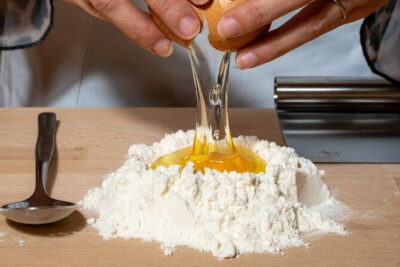
Pasta & Tiramisu Cooking Class with Unlimited Wine
Read our review →
Pasta Making Class with Wine, Limoncello, and Dessert
Read our review →
Rome Cooking Class: Make Pasta and 3 Spritz Cocktails
Read our review →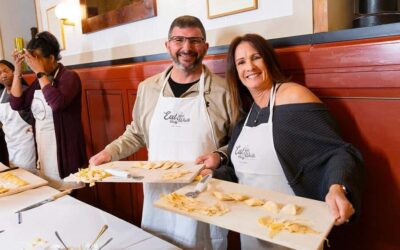
3-in-1 Fettuccine, Ravioli, and Tiramisu Cooking Class
Read our review →