REVIEW · SINGAPORE
Experience Singapore: Cultural Cooking Class
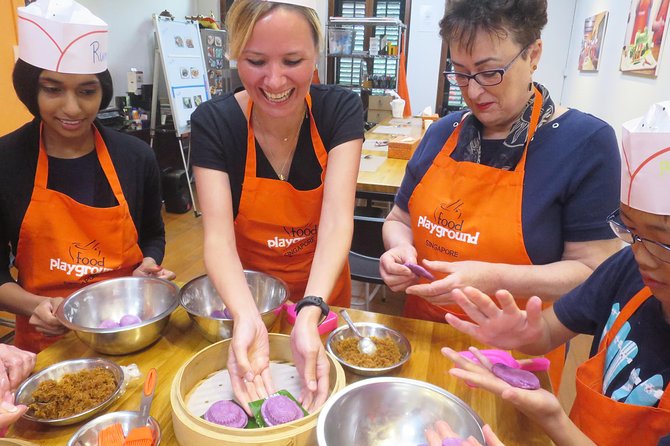
Come hungry, leave with recipes. This three-hour class at Food Playground turns Singapore’s famous food culture into a hands-on lesson, with dishes such as laksa, Hainanese chicken rice, satay, curry chicken, and ondeh ondeh depending on the day’s menu. I especially like the mix of cooking and cultural background, plus the chance to eat what you prepare.
The small class size is another real strength. You may work with as few as two people and no more than 12, which gives instructors time to help at the cooking stations. The main consideration is that some instructors spend a long time introducing dishes or sharing personal stories before cooking begins, so the pace may feel slow at first.
Key points at a glance
- Cook three Singapore-style dishes: The menu can include laksa, chicken satay, curry chicken, Hainanese chicken rice, or ondeh ondeh.
- Learn in a heritage shophouse: Food Playground is at 24A Sago Street in Chinatown, on the second floor of an old shophouse.
- Expect a social class: You cook alongside other people, usually in pairs, then sit down together for lunch.
- Useful take-home material: Recipes are sent after class, and photographs are often taken during the session.
- Good value for food lovers: The $96.97 price includes equipment, ingredients, lunch, water, coffee, tea, and English-speaking instruction.
- Easy Chinatown pairing: The class ends where it begins, leaving you close to temples, food halls, and several MRT stations.
Why Singapore food deserves a cooking class
Singapore’s food is not one single tradition. Malay, Chinese, Indian, and British influences all appear on the plate, often in one meal. A bowl of laksa, for example, is more than noodles and coconut broth. The spice paste, herbs, cooking methods, and regional influences all tell part of Singapore’s story.
You can eat well at hawker centers without taking a class. In fact, Singapore’s food stalls are essential stops. But eating gives you the finished dish. This class shows you some of the steps behind it: how spices are combined, how ingredients are prepared, and how familiar local favorites became part of everyday life.
That added context is what makes the morning worthwhile. The instructors do not simply hand you a recipe and point toward a stove. They explain the background of the dishes and offer practical tips for repeating them at home. The lesson is aimed at everyone, from beginners to experienced cooks, so you do not need special kitchen skills.
A few more cooking classes around the world worth a look
- Half-Day Thai Cooking Class at Organic Farm in Chiang Mai
★ 5.0 · 19,087 reviews - Florence: Pasta Cooking Class with Unlimited Wine
★ 4.9 · 10,285 reviews - 3 in 1 Cooking Class near Navona: Fettuccine, Ravioli & Tiramisu
★ 5.0 · 7,376 reviews
Arriving at 24A Sago Street
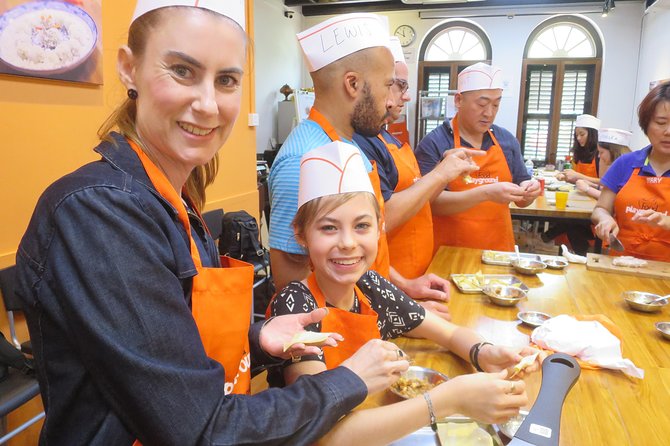
The class begins at 9:30 am at Food Playground, 24A Sago Street. The setting is part of the appeal. You cook on the second floor of a heritage shophouse in Chinatown, rather than in a bland modern classroom.
That location also gives you a useful plan for the rest of the day. The class finishes back at the same meeting point, close to Chinatown sights and food stops. A nearby temple, including its upper garden and museum, can be visited afterward, and the area has a busy food hall and several MRT stations.
You do not get hotel pickup or drop-off, so plan your own way to Sago Street. The fixed meeting point is simple, but you should allow enough time to arrive before the 9:30 start. This is a morning class, not a flexible drop-in activity.
The opening lesson and food quiz
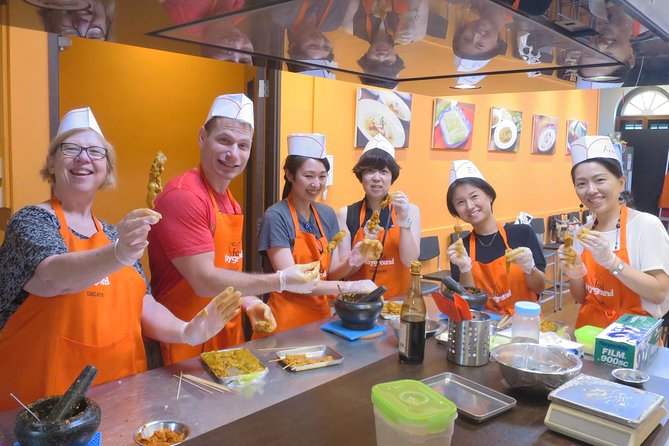
Once you arrive, you put on an apron and meet the instructor and the other cooks. The class begins with an introduction to Singaporean food and, in some sessions, a light food quiz.
The quiz is a nice touch. It gives the morning an easy start and gets you thinking about the ingredients, dishes, and cultural mix you will encounter. Instructors such as Mary, Monica, Nur, Sara, Cindy, YY, Kiat, and Ann have all led sessions, so the tone can differ from one class to another.
The teaching style is generally friendly and informal. You should expect plenty of explanation about the origins of dishes and the way food connects with Singaporean culture. This is one of the most praised parts of the experience, especially for anyone who wants more than a recipe card.
There is a small trade-off. A few sessions have included long opening talks, including discussion of dishes that were not on that day’s menu. If you prefer to start chopping right away, the first section may test your patience. I would treat the introduction as part of the cultural lesson, while keeping in mind that the practical cooking may not begin immediately.
Three dishes, group instruction, and hands-on cooking
The class prepares three dishes in a step-by-step format. The exact menu can change, but examples include laksa, chicken satay, Hainanese chicken rice, curry chicken, and ondeh ondeh.
The instructor first demonstrates the method, then the group helps reproduce it. You are not simply watching a chef cook while you sit at a counter. You take part in the preparation and cooking, with help available as you work.
Several sessions have included making curry paste from scratch. That is a particularly useful lesson because spice pastes are central to many Southeast Asian dishes, yet they can seem difficult to recreate at home. The class breaks the process into manageable steps and shows how the flavors come together.
The cooking arrangement is shared rather than completely private. People commonly work in pairs at a station, although a solo participant may have a station alone if numbers allow. This setup can be a plus if you enjoy conversation and teamwork. It also means you may not personally handle every single task if you are paired with someone else, though the class includes enough work for everyone to take part.
The maximum group size is 12, and the minimum is two. A group of six, which has occurred in a session, provides a particularly comfortable balance. You get the social feel of a group activity without being lost in a crowd.
Same place, a different thing to cook:
- Florence: Pasta & Tiramisu Cooking Class with Unlimited Wine
★ 4.9 · 6,708 reviews - Hanoi Cooking Class: Culture, Local Market & Meaning CSR Impact
★ 5.0 · 5,147 reviews - 5 Traditional Dishes Hanoi Cooking Class with Market Trip
★ 5.0 · 4,890 reviews - Cooking Class and Lunch at a Tuscan Farmhouse with Local Market Tour from Florence
★ 5.0 · 4,831 reviews
What lunch is really like
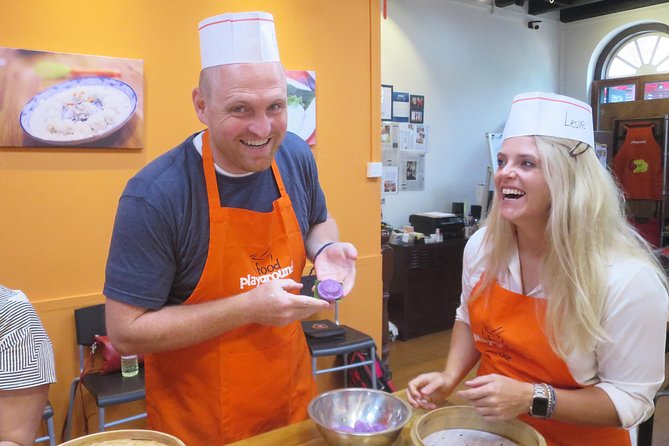
When the cooking is finished, you sit down and eat the food you have made. Lunch includes water, coffee, and tea, so the meal is built into the class rather than treated as an extra purchase.
This shared meal is an important part of the experience. You have spent the morning handling the ingredients, following the instructions, and smelling the spices as the dishes cook. Eating the finished food gives the lesson a clear payoff.
The meal can also be social. You sit with people who may have come from different places, and the relaxed dining period gives you time to compare notes and talk about Singapore. If you are traveling alone, this is an easy way to meet people without the forced feel of a formal group tour.
The food itself receives consistently strong praise, but remember that the menu changes. Do not book expecting one guaranteed dish unless the provider confirms it for your date. Laksa and Hainanese chicken rice are named examples, while curry chicken and ondeh ondeh have also appeared in actual sessions.
Cultural background without a museum lecture
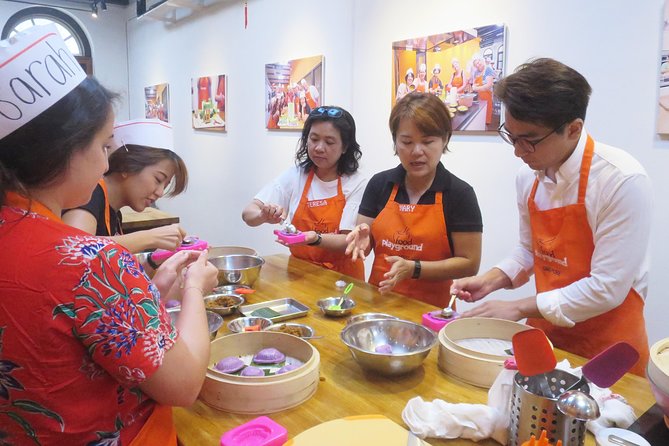
The best instructors connect each dish to Singapore’s past and present. You learn how food traditions developed across Chinese, Malay, Indian, and British communities, and why certain dishes became local favorites.
That information is delivered during the cooking, not as a separate history lecture. For some people, this is the main reason to book. The food becomes easier to understand when you know where its flavors and techniques came from.
The class also introduces you to the people working at Food Playground and the social mission behind the operation. One session was described as a strong example of a social enterprise, with attention given to both cooking and the people involved.
The cultural material is broad rather than academic. You will not leave with a full course in Singaporean food history. You will leave with enough background to make your next hawker-center meal more interesting.
Recipes, photographs, and practical value at home
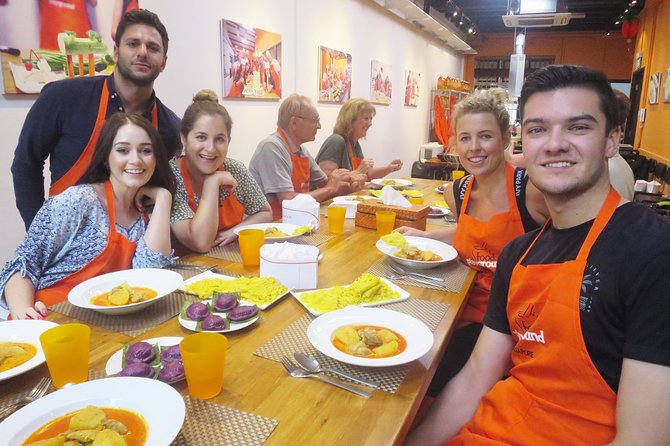
The class has value beyond the three hours because recipes are sent afterward. Photographs taken during the session may also be shared, giving you a visual reminder of the process.
That follow-up matters. Cooking classes can be fun in the moment and forgotten a week later. A recipe for laksa, curry chicken, satay, or another local favorite gives you a real chance to repeat the meal at home.
The instruction is designed to be approachable. You learn techniques rather than only watching a finished dish appear. This is useful for beginners, while experienced home cooks may appreciate the local approach to spice pastes, seasoning, and preparation.
You should keep your expectations realistic. The recipes may need adjustments based on the ingredients available where you live. The class can teach the method and flavor profile, but recreating Singaporean food abroad may require substitutions.
The $96.97 price: fair value or expensive lunch?
At $96.97 per person, this is not the cheapest meal you can eat in Singapore. A hawker-center lunch costs far less, and you could spend the same morning simply visiting markets and food stalls.
The comparison is not really fair, though. The price includes three hours of instruction, all equipment, all ingredients, lunch, water, coffee, tea, and a small-group setting. You also receive recipes afterward, and photographs may be included. For someone who likes to cook, that makes the cost reasonable.
I would think of it as a class with lunch, not lunch with a demonstration. The value is strongest if you plan to use the recipes at home or care about how the food is made. It is weaker if you only want to taste local dishes and would rather spend the morning eating around Chinatown.
Group discounts may be available, which could help families or friends booking together. The minimum age is seven, making it suitable for children who are genuinely interested in cooking. Young children who dislike shared tasks or extended instruction may find the pace less appealing.
Who will enjoy this class most?
This experience fits food-focused visitors who want more contact with local cooking than a restaurant meal provides. It is also a good choice for people who enjoy learning through conversation and do not mind working with others.
Families can benefit from the hands-on format, especially if a child already likes cooking. One parent and son had a particularly positive session with Mary, including the food quiz, the kitchen setting, and the shared meal.
Solo participants should also feel comfortable booking. The class creates a natural social setting, and the small group makes it easier to speak with the instructor and other people. You may even receive your own cooking station, depending on the group size.
I would be more cautious if you want a tightly timed professional cooking course. The class is friendly and educational, but the opening discussion may run long, and the transition between preparation steps may not always feel perfectly polished.
Practical details before you book
You will need to arrange your own transport to 24A Sago Street. The class starts at 9:30 am, lasts about three hours, and ends at the same location.
Tell the provider about dietary requirements when booking. The menu, ingredients, and instructions can change, so a specific dietary need should be discussed in advance rather than assumed to be covered.
The class requires at least two participants to operate. If the minimum is not reached and the class is canceled, you are offered another date or experience, or a full refund.
You can cancel for a full refund up to 24 hours before the start time. Cancellations or changes made within 24 hours are not refunded or accepted. The cutoff uses Singapore local time, so check the time carefully if you are booking from abroad.
Should you book Food Playground?
I would book this class if you want to understand Singapore through its food, not just eat it. The combination of a heritage Chinatown setting, three local dishes, cultural explanation, hands-on work, and a shared lunch gives you a fuller morning than a standard restaurant stop.
The strongest reasons to go are the small groups, warm instructors, useful recipes, and the chance to make dishes such as curry chicken or laksa from the ground up. The main weakness is pacing. Some classes spend longer than necessary on introductions before the cooking begins.
Book it as a cultural cooking experience, not as a fast kitchen workshop. If that sounds right, the $96.97 cost is fair, and you will leave with a full stomach, new recipes, and a better understanding of why Singapore eats the way it does.
FAQ
Where does the Singapore cooking class begin?
The class begins at Food Playground, 24A Sago Street, Singapore 059020.
What time does the class start?
The start time is 9:30 am, and the activity lasts approximately three hours.
What dishes will I cook?
The menu can change. Examples include laksa, Hainanese chicken rice, chicken satay, curry chicken, and ondeh ondeh. The class prepares three dishes.
Is lunch included?
Yes. Lunch, water, coffee, and tea are included, along with the equipment and ingredients needed for the class.
How many people can join?
The class operates with a minimum of two people and a maximum of 12 participants.
Can children join the class?
Yes. The minimum age is seven years.
Is hotel pickup included?
No. Hotel pickup and drop-off are not included. The class starts and ends at the Sago Street meeting point.
Just added around the world
- Aroidee’s Farm-Fresh Thai Cooking Experience★ 5.0 · 8 reviews
- Signature Thai Cooking Course★ 5.0 · 79 reviews
- Private Half-Day Thai Cooking Class in Chiang Mai★ 5.0 · 4 reviews
- Half Day Guided Thai Cooking Class in Chiang Mai★ 5.0 · 13 reviews
- Private Virtual Thai Cooking Class★ 5.0 · 9 reviews
- Northern Thai Cooking Class in Chiang Mai in a Countryside Home★ 5.0 · 2 reviews
- Online Thai and Akha Cooking Class★ 5.0 · 70 reviews
- 5 Hour Morning Thai Cooking Course★ 5.0 · 31 reviews
Cooking Classes, compared.
Half-Day Thai Cooking Class at Organic Farm in Chiang Mai
Read our review →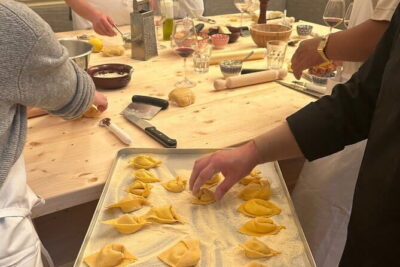
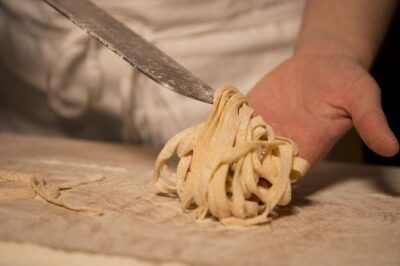
3 in 1 Cooking Class near Navona: Fettuccine, Ravioli & Tiramisu
Read our review →
Pasta & Tiramisu Cooking Class with Unlimited Wine
Read our review →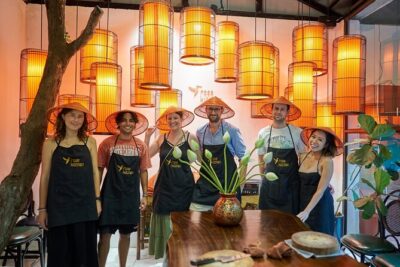
Hanoi Cooking Class: Culture, Local Market & Meaning CSR Impact
Read our review →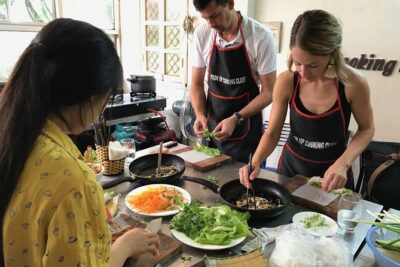
5 Traditional Dishes Hanoi Cooking Class with Market Trip
Read our review →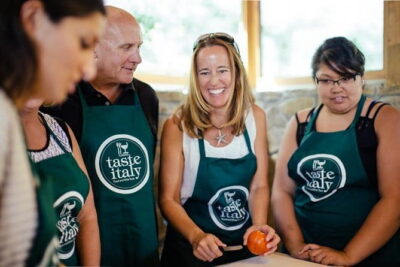
Cooking Class and Lunch at a Tuscan Farmhouse with Local Market Tour from Florence
Read our review →