
REVIEW · LIGURIA, ITALY
Cinque Terre: Pesto Cooking Class at a Local’s Home
Sea views make cooking better. This two-hour class brings you to a local home above the Ligurian coast, where you learn the story of pesto from La Spezia and prepare it two ways. I especially like the chance to compare a traditional mortar and pestle with an electric blender, and I love that you leave with pesto you made yourself.
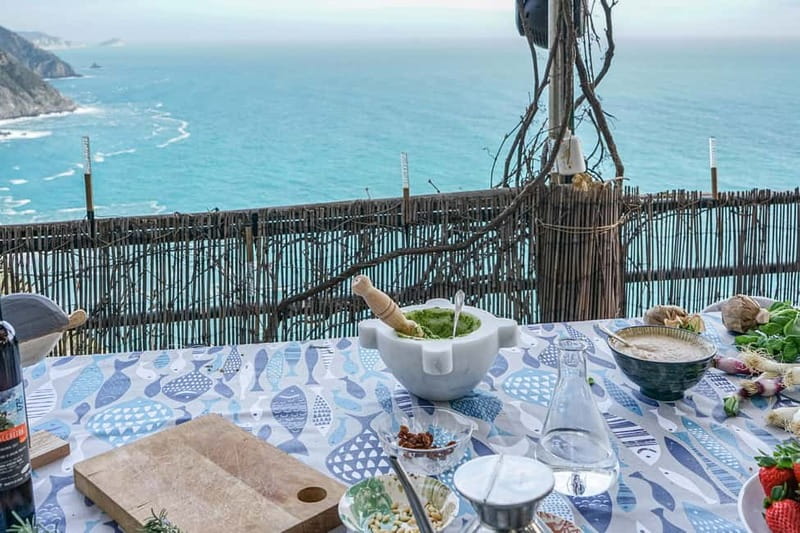
The vineyard setting is another strong point, with wide views toward the sea and a glass of local Possa wine included. The main thing to consider is the walk: from the meeting point, you go about 200 meters uphill, then follow terraced steps and a path to the house. Allow extra time, and wear shoes that feel secure on uneven ground.
Key points at a glance
- Two pesto methods: Learn the slower mortar-and-pestle technique and the practical electric-blender method.
- A vineyard setting: The class takes place at a local home with views over the Ligurian coast.
- Pesto to take home: Package your finished sauce and enjoy it later or eat it during your visit.
- Local wine included: Taste one glass from Possa winery in Liguria, with water provided.
- Small group format: The class is limited to 10 people, which leaves room for questions.
- A short but active walk: The route includes an uphill stretch and terraced steps before you reach the house.
Why this pesto class feels different
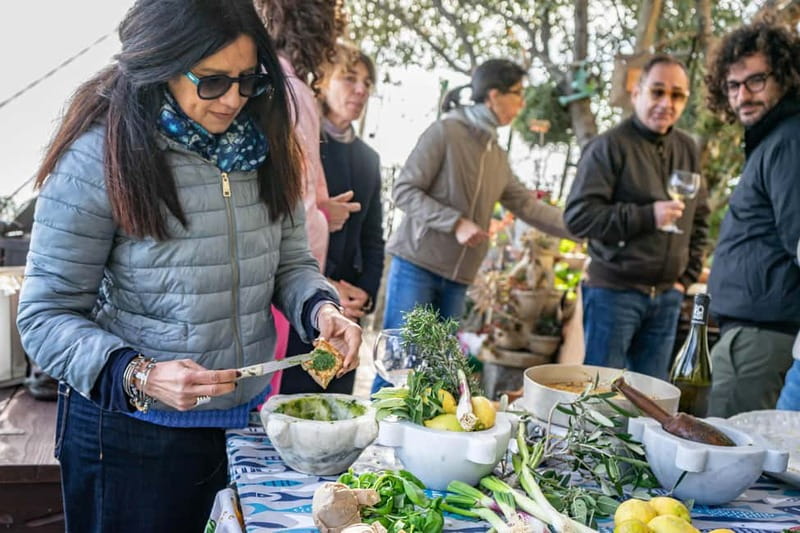
Many cooking classes take place in a professional kitchen. This one takes you into the home of a local host, known through the Cesarine network, and places the lesson among vineyards rather than behind a restaurant counter. That changes the mood from formal demonstration to a more personal introduction to Ligurian food.
You are not simply handed a plate of pesto and told how it was made. You work through the process, hear why the ingredients matter, and learn how to protect the sauce after preparation. For me, that practical touch is important. A recipe is useful, but knowing how to keep your finished pesto fresh means you can repeat the experience at home.
The class lasts two hours. That is long enough for a proper lesson and tasting, but short enough to fit around sightseeing in the Cinque Terre area. You will not spend an entire day cooking, which makes this a sensible choice if you want a food activity without giving up your afternoon.
A few more cooking classes around Italy worth a look
- Florence: Pasta Cooking Class with Unlimited Wine
★ 4.9 · 10,285 reviews - 3 in 1 Cooking Class near Navona: Fettuccine, Ravioli & Tiramisu
★ 5.0 · 7,376 reviews - Florence: Pasta & Tiramisu Cooking Class with Unlimited Wine
★ 4.9 · 6,708 reviews
Reaching the home above the coast
The meeting point is not the final destination. From there, you walk about 200 meters uphill to the host’s home. The directions take you down terraced steps, past a sign for I Foresti Farm, and along a path to the house.
This is worth taking seriously. The walk is not described as long, but the combination of an uphill section, steps, and a path means you should not arrive in stiff city shoes or with luggage. Give yourself a little breathing room before the scheduled start. A rushed arrival would spoil the calm setting, and the first part of the visit is meant to be enjoyed.
The reward is a property surrounded by vineyard views, with the sea spread out below. The scenery is not an extra viewed from a coach window. You have time to take it in while the class unfolds, which gives the setting a real role in the experience.
The route details are shared more fully after booking, including the address of your Cesarina host. Since the meeting point and home are separate, read those directions carefully before setting out.
Starting with the story of pesto from La Spezia
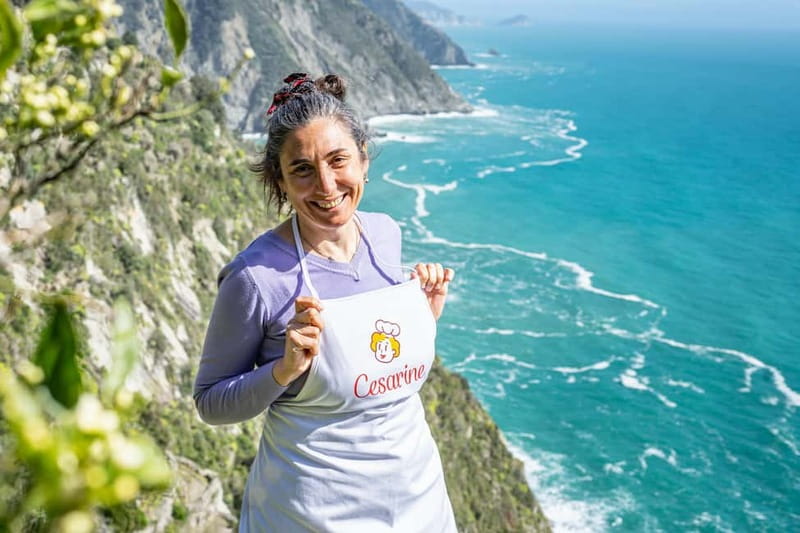
The class begins with the story of pesto from Spezia. That introduction gives you context before the ingredients reach the work surface. Pesto is now familiar across the world, but preparing it in Liguria helps connect the sauce to the place where it belongs.
Your host explains the traditional approach to choosing the best basil plants and selecting good-quality ingredients. This is useful because pesto has nowhere to hide. The recipe is simple, and each ingredient affects the final taste. Fresh basil, the right handling, and careful preparation matter more than a long ingredient list.
I like this part of the class because it turns a common souvenir food into something you understand. You learn not only what to do, but why certain choices make a difference. That can help you avoid the flat, overly blended pesto that often appears in jars far from Italy.
The host teaches in English or Italian. The class is limited to 10 participants, so you should have a better chance to follow the demonstration and ask questions than you would in a large group. The exact balance between hands-on work and demonstration can vary, but the activity is built around preparing the pesto yourself.
Mortar and pestle versus electric blender
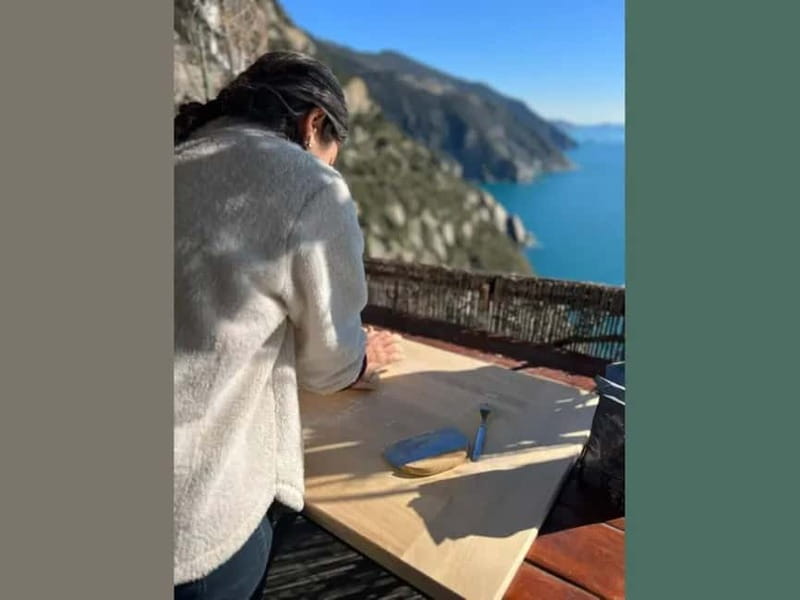
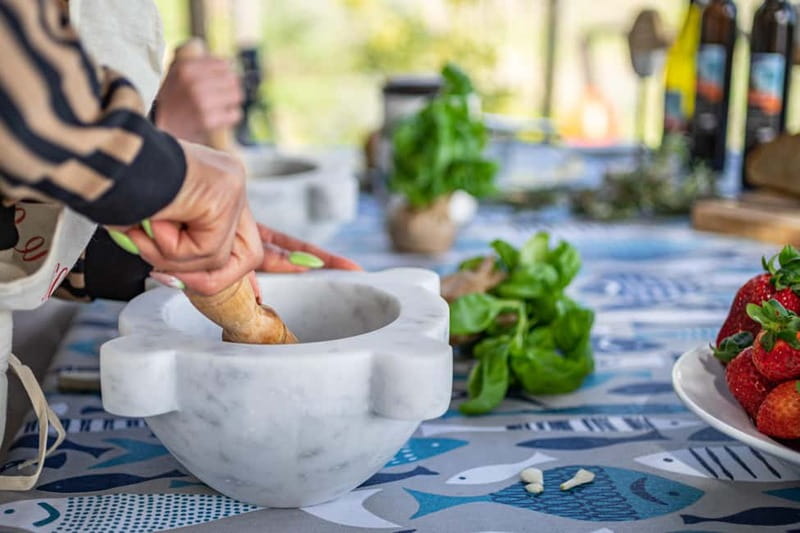
The most useful lesson is the comparison between two preparation methods. First comes the traditional mortar and pestle. This is the slower approach and requires more physical effort, but it lets you take part in an old-fashioned way of making the sauce.
The mortar gives you a clear sense of texture. You can see how the basil and other ingredients change as they are worked together. It also slows you down, which can be part of the pleasure when you are cooking in a quiet vineyard setting.
The electric blender is the practical option. At home, you may choose it when you want pesto on the table quickly. Learning both methods lets you decide which suits your kitchen, your available time, and the texture you prefer.
This is more useful than being shown only one supposedly correct technique. The traditional method connects you with local food customs, while the blender method helps you repeat the recipe after your holiday. You get an experience and a workable home lesson.
Your host also gives advice on storing the pesto. That may sound like a small detail, but it is one of the class’s strongest practical features. Fresh pesto can lose its appeal if handled poorly, so knowing how to keep it fresh for as long as possible helps you enjoy what you make instead of treating it as a one-time activity.
Same place, a different thing to cook:
- Cooking Class and Lunch at a Tuscan Farmhouse with Local Market Tour from Florence
★ 5.0 · 4,831 reviews - Rome: Pasta Making Class with Wine, Limoncello, and Dessert
★ 4.9 · 3,177 reviews - Pastamania – Florence Pasta Making Class
★ 5.0 · 3,050 reviews - Rome Cooking Class: Make Pasta and 3 Spritz Cocktails
★ 5.0 · 2,937 reviews
Packing the pesto you made
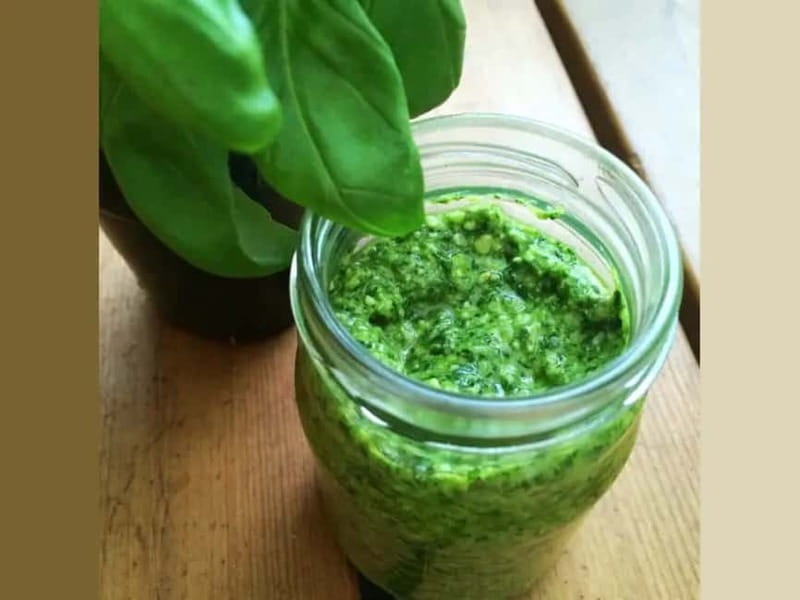
After preparing the sauce, you package it so you can take it home. This gives the class a clear finish and leaves you with something more useful than a photograph.
You can enjoy the pesto after returning home, using it as a reminder of the coast and the lesson. You can also eat it during your visit, perhaps on a rocky cliff overlooking the sea, according to the activity details. The choice depends on your timing and what you prefer, but the idea is appealing: your own pesto, made in Liguria, enjoyed with the coast in view.
Do remember that the package is part of your day’s belongings. If you plan to continue sightseeing, carrying the pesto may be less convenient than returning to your accommodation first. The activity does not state how the pesto is packaged for extended transport, so ask the host if you need advice for taking it on a longer journey.
The Possa wine tasting
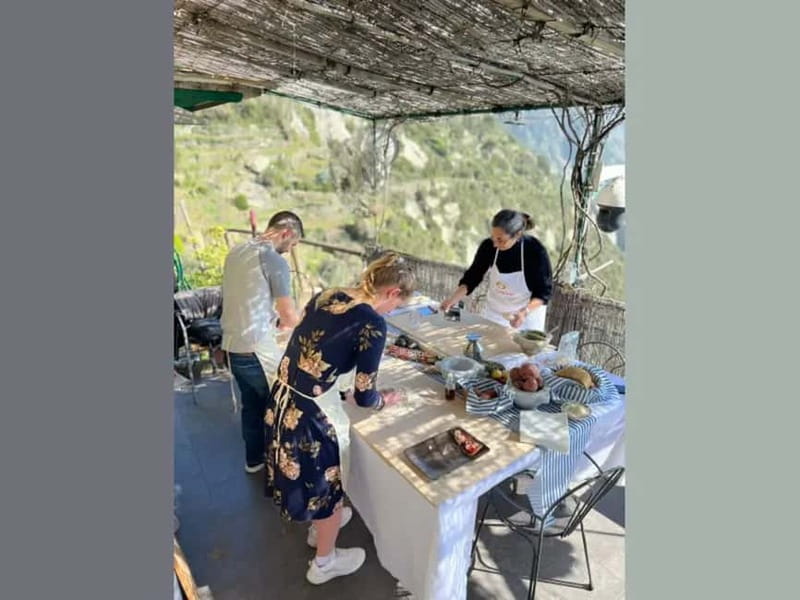
The class includes one glass of local Possa winery wine from Liguria, plus water. This is a modest tasting rather than a full wine tour, but it fits the activity well.
The wine gives you a local drink to pair with the food you have just prepared. It also adds a social pause to the lesson, when you can talk with the host and take in the property. The pleasant setting and conversation are a major part of the appeal. The cooking is the main event, but the visit would feel less complete without time to sit, taste, and enjoy the place.
If you do not drink alcohol, the supplied information confirms water is available. It does not specify a wider selection of non-alcoholic drinks, so mention any preference when arranging the visit.
What the two-hour schedule really gives you
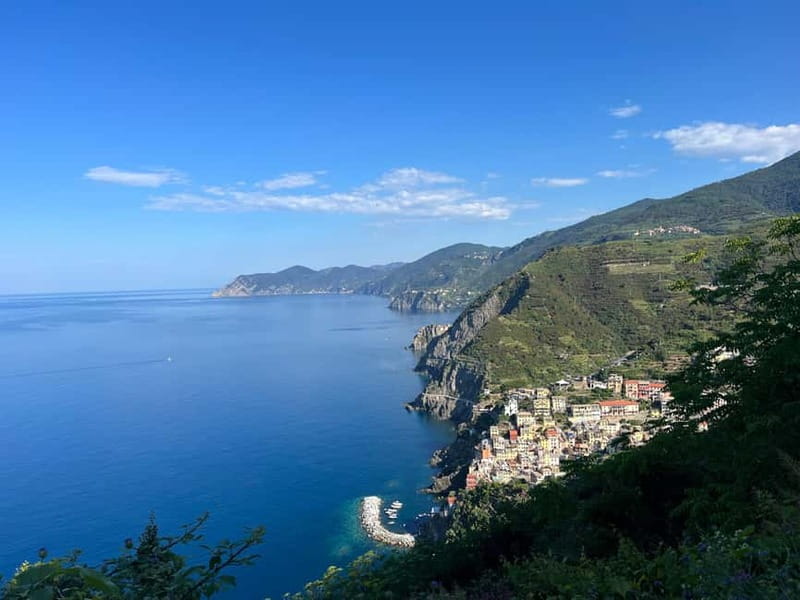
Two hours sounds brief, but it works for an express class. You receive an introduction to pesto, an explanation of ingredient selection, instruction in two methods, storage advice, time to package the sauce, and a glass of local wine.
You should not expect a full Italian cooking course covering several dishes. This is focused on pesto. That narrow subject is a strength if you want to learn one famous Ligurian recipe properly, but it may feel limited if you are hoping to make pasta, dessert, or a complete meal.
The short format also makes the class easier to fit into a Cinque Terre itinerary. You can pair it with other sightseeing without giving up a whole day. Still, allow time on both ends for the walk to the house and the return to the meeting point.
The class is offered at different starting times, depending on availability. Check the time carefully when booking, then plan around the uphill walk rather than arriving at the last minute.
Value, group size, and who should book
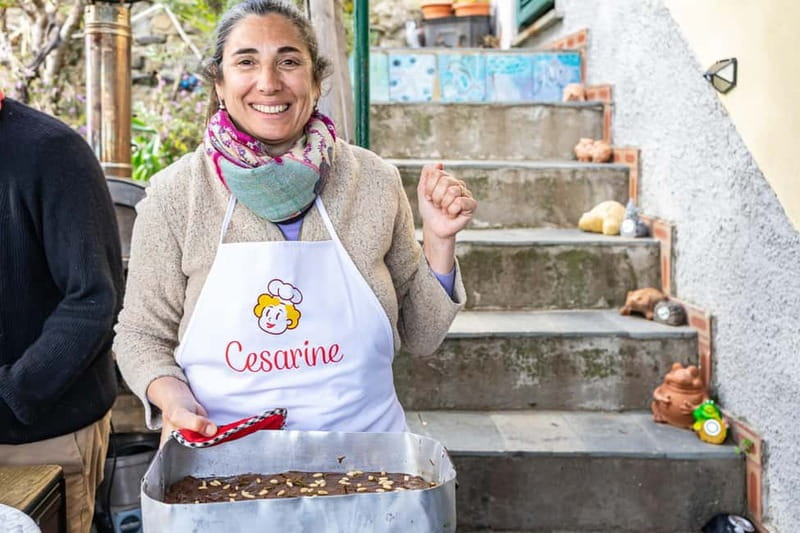
No price is provided here, so I cannot judge the exact cost against similar classes. I can still explain what you are paying for: a local-home setting, a small group of up to 10, instruction in two techniques, storage advice, prepared pesto to take away, sea views, and a glass of regional wine.
That is stronger value than a basic demonstration if you care about personal contact and a usable skill. The small group matters too. With 10 people or fewer, the class should feel more manageable, especially when everyone is working with ingredients and tools.
I would recommend it most to:
- Food-focused visitors who want more than a restaurant meal.
- Couples and families looking for a short shared activity.
- Home cooks who want to improve their pesto technique.
- People staying near the Cinque Terre area who can spare two hours.
- Visitors who enjoy local conversation as much as formal sightseeing.
It may be less suitable if you have difficulty with uphill walking, terraced steps, or uneven paths. The activity does not provide detailed accessibility information, so contact the organizer before booking if mobility is a concern.
Dietary requirements can be accommodated, but they must be confirmed directly with the organizer after booking. Do not wait until you arrive. Tell them in advance so they can advise you properly.
The host and the human side of the visit
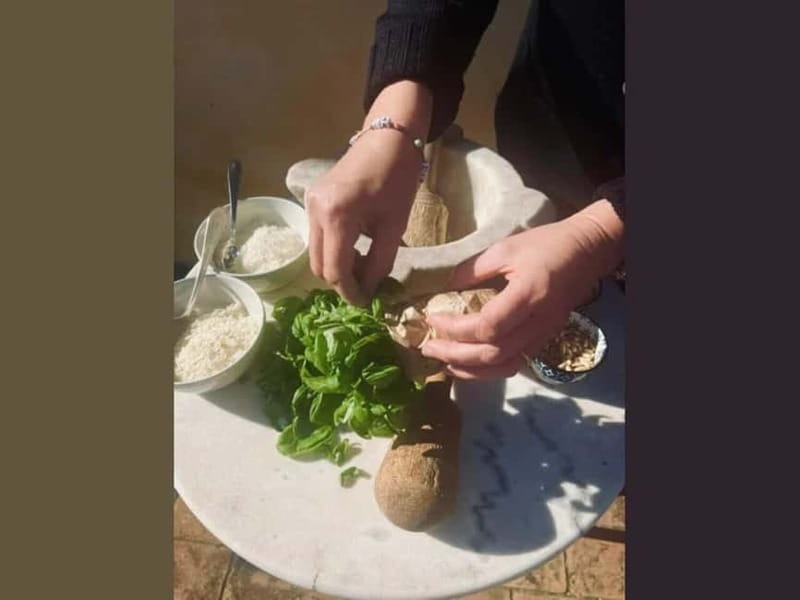
The host, referred to as the Cesarina, is central to the experience. You are visiting a local home, not attending a lesson in an anonymous commercial kitchen. That creates room for conversation about food, the area, and everyday Italian cooking.
The setting also supports a slower pace. You can look out across the vineyard and sea, share the wine, and talk while the pesto is prepared. Those simple moments may matter as much as the recipe itself.
The available feedback is especially positive about the beautiful property, good food, and conversation with the hosts. One practical point comes through clearly: the walk to the class takes longer than some people may expect, but the setting makes the effort worthwhile. I would treat that as useful planning advice, not a flaw.
Cancellation and planning details
You can cancel up to 24 hours before the activity for a full refund. You can also reserve now and pay later, which helps if your Cinque Terre schedule is still changing.
The address of the host is sent after reservation. Since the meeting point is not the house itself, keep the directions handy and allow extra time. The activity ends back at the meeting point, so plan for the return walk when arranging a train, meal, or later tour.
The class is available in English and Italian. The group limit is 10 people, and the duration is two hours. Those details make it easy to fit into a day, but the walking route means you should not schedule the next activity too tightly.
Should you book this pesto class?
Book it if you want a personal food lesson with scenery, conversation, and something practical to take home. The strongest reasons are the two preparation methods, the advice on storing fresh pesto, the vineyard and sea views, and the chance to meet a local host in a home setting.
Think twice if you want a full meal, a long cooking course, or an activity with no uphill walking. This is a focused pesto class, not a broad Italian food workshop.
For most food-minded visitors who can manage the short uphill route, I think it is a fine use of two hours. You leave with a recipe, a local taste, a glass of Ligurian wine, and a better understanding of why simple Italian food depends so much on good ingredients and careful handling.
FAQ
How long does the pesto cooking class last?
The class lasts two hours. Starting times vary, so check availability when booking.
Where does the cooking class take place?
It takes place at a local Cesarina host’s home in Liguria, near the Cinque Terre area, with views from a vineyard toward the sea.
How difficult is it to reach the host’s home?
From the meeting point, you walk about 200 meters uphill. The route then follows terraced steps, passes a sign for I Foresti Farm, and continues along a path to the house.
Which languages are available?
The class is offered in English and Italian.
Is wine included?
Yes. The class includes one glass of local Possa winery wine from Liguria and water.
Can dietary requirements be accommodated?
Different dietary requirements can be accommodated, but you must confirm them directly with the organizer after booking.
Just added around Italy
- Cooking Class in a Sicilian countryhouse★ 5.0 · 5 reviews
- Cesarine: Home Cooking Class & Meal with a Local in Catania★ 4.5 · 10 reviews
- Cesarine: Market Tour & Home Cooking Class in Catania★ 4.0 · 6 reviews
- Cooking Class in Taormina with Lunch Included★ 5.0 · 2 reviews
- Cooking Class and Wine Pairing in Capri★ 5.0 · 57 reviews
- Cooking class in Capri for small groups★ 4.0 · 4 reviews
- Private Cooking Class Experience in Reggio Calabria★ 5.0 · 5 reviews
- Lezione di Cucina : Pasta Fresca★ 5.0 · 12 reviews
Cooking Classes, compared.

Half-Day Thai Cooking Class at Organic Farm in Chiang Mai
Read our review →

3 in 1 Cooking Class near Navona: Fettuccine, Ravioli & Tiramisu
Read our review →
Pasta & Tiramisu Cooking Class with Unlimited Wine
Read our review →
Hanoi Cooking Class: Culture, Local Market & Meaning CSR Impact
Read our review →
5 Traditional Dishes Hanoi Cooking Class with Market Trip
Read our review →
Cooking Class and Lunch at a Tuscan Farmhouse with Local Market Tour from Florence
Read our review →