
REVIEW · QUINTANA ROO, MEXICO
Cancún: Cooking Class and Optional Local Market Tour
Come hungry, leave with new kitchen skills. This four-hour Cancún cooking class gives you a hands-on way to understand Mexican food beyond the resort buffet, with time to make tortillas, guacamole, enchiladas, sopes, quesadillas, and a secret dessert. I especially like the traditional tools, including the molcajete, comal, and clay pots, and the optional local market visit, where a chef helps you choose ingredients before class.
The $78 price is fair for a four-course meal, drinks, ingredients, instruction, and a full afternoon activity. The main caution is that this is aimed at curious home cooks rather than serious culinary students. Some preparation may already be done, and one guest found that the tortilla dough recipe was not provided afterward. The restaurant can also get hot in June because it uses fans instead of air conditioning.
Key points at a glance
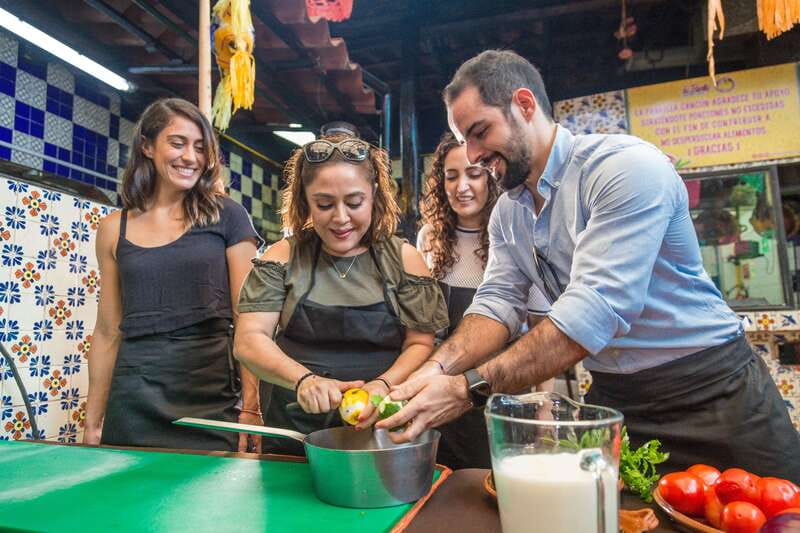
- Shop before you cook: The optional market visit lets you see fresh produce, meat, seafood, herbs, and tortilla-making before using ingredients in class.
- Make tortillas by hand: You work with masa and use traditional methods, though you should confirm whether the dough recipe will be included.
- Learn several Mexican staples: The menu can include guacamole, enchiladas, quesadillas, sopes, tacos, tostadas, rice pudding, and a secret dessert.
- Expect a friendly teaching style: Guides such as Diego, Nassim, G, Sasha, and Alex have been praised for patience, humor, and clear explanations.
- Vegetarians are well served: Vegetarian and vegan options are available with advance notice, and guides have adjusted dishes for meat-free diners.
- The margarita is part of the meal: One margarita is included, along with water, coffee, tea, fruit, and snacks.
Starting with a Cancún market visit
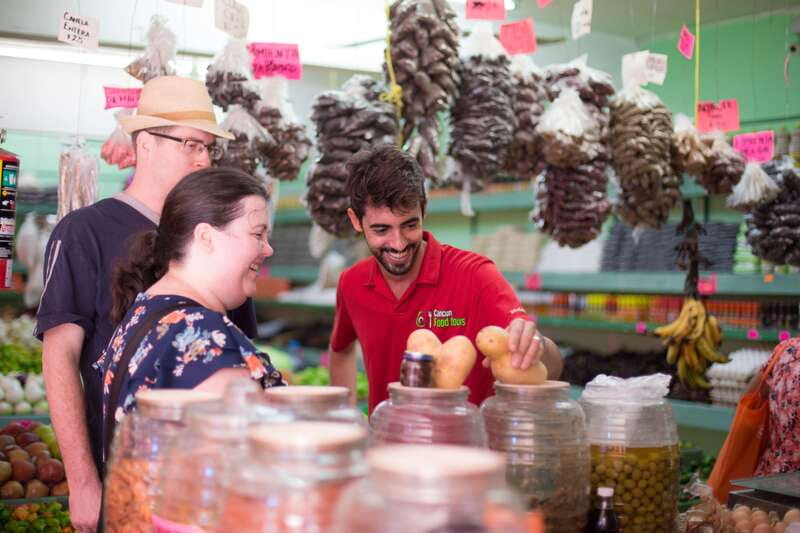
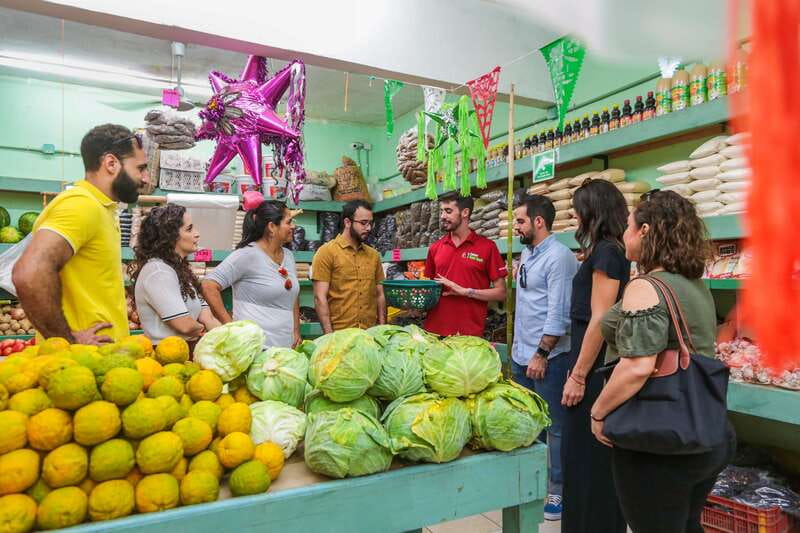
The optional market add-on changes the feel of the day. Instead of going straight to the restaurant, you meet your guide and travel to one of Cancún’s busy traditional markets. Guides point out herbs, vegetables, meat, seafood, and other ingredients, then explain how to judge freshness and quality.
That is useful knowledge for your cooking class, but it also gives you a look at daily food shopping away from the hotel zone. You may see tortilla production, including the large machines used to press and cook tortillas. One particularly useful stop lets you buy fresh tortillas if you want to compare them with the ones you prepare later.
I would choose the market option if you want more than a restaurant lesson. It adds local context and helps explain why Mexican cooking depends so much on fresh produce, masa, chiles, herbs, and carefully chosen ingredients. It also gives you time to see ordinary market prices, which can be much lower than those in tourist areas.
The market is not a formal food history lecture. It is a practical walk with your chef, focused on what you will cook and how to shop for it. That makes it more useful than a quick photo stop, especially if you hope to repeat the recipes at home.
Transportation from your Cancún hotel or BnB is available with this option. Pickup instructions call for a guide in a red polo shirt with a red banner, and the guide can wait five minutes. Be ready in the lobby. If you miss the vehicle, you can make your own way to the group by taxi or car, but that turns a relaxed start into a small logistical problem.
If you are staying in Playa del Carmen, pickup may depend on availability and may cost extra. Confirm that before booking if you are not based in Cancún.
More Cooking Classes with a Market Tour in Mexico
- Puerto Vallarta Cooking Class Experience with Market Tour
★ 5.0 · 698 reviews - Mexican Cooking Class with Food Market Visit in Mexico City
★ 5.0 · 506 reviews - Flavors of Oaxaca: Cooking Class with No Set Menu and Local Market Tour
★ 4.5 · 333 reviews
Cooking in a long-running Mexican restaurant
After the market, or after meeting directly at the venue, the class moves into an intimate Mexican restaurant that has been operating for more than 40 years. That setting matters. You are not standing in a polished demonstration kitchen built only for tourists. You are working in a functioning local restaurant with a homely feel and traditional cooking equipment.
The class uses tools such as a molcajete, a stone mortar for grinding and mixing; a comal, the flat griddle used for tortillas and other foods; and clay pots. These tools connect the finished dishes to older Mexican cooking methods, while also showing you what can be adapted in a normal home kitchen.
The venue provides fresh fruit, snacks, bottled water, coffee, and tea when you arrive. You then spend roughly three hours preparing food with the chef and other members of the group. The pace is social and hands-on rather than highly technical.
Guides named in the feedback include Diego, Nassim, G, Sasha, and others. The strongest pattern is their friendly teaching style. Diego is praised for taking time with ingredients and spice levels. Nassim is described as patient and good at answering questions. G is noted for keeping families entertained while still explaining the food. Sasha and Alex received similar praise for making the session relaxed and enjoyable.
You should expect to chop, mix, press, assemble, and taste. You may not spend every minute holding a knife. Some components, especially dough, may be prepared in advance. That is fine for a casual class, but it matters if your main goal is to learn every step from raw ingredients.
What you actually cook
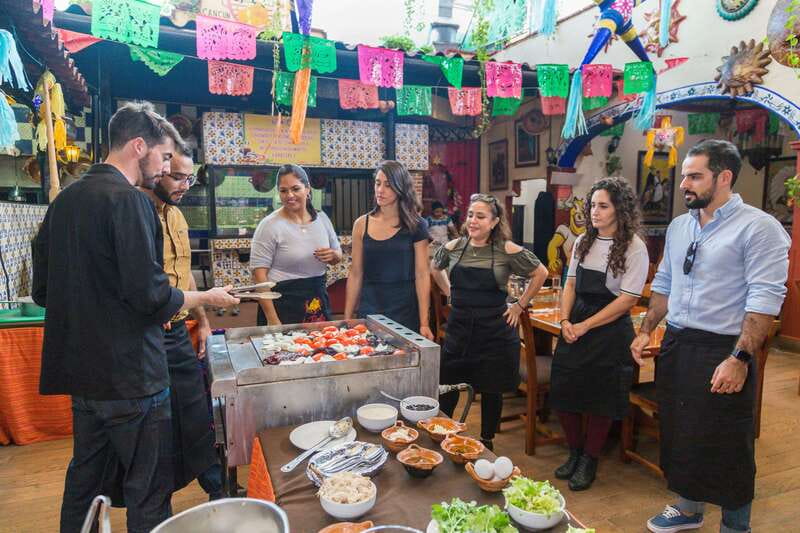
The menu can vary, but the core dishes are Mexican staples that make sense for a first class. Guacamole, enchiladas, quesadillas, and sopes appear often, with tacos, tostadas, pico de gallo, rice pudding, and a secret dessert also possible.
Guacamole
The guacamole lesson focuses on a simple trick that improves texture and flavor. You use fresh ingredients and a molcajete rather than treating the dish as mashed avocado with a packet of seasoning. Guides can adjust the spice level, which is helpful if your group includes both chile lovers and cautious eaters.
Guacamole is one of the most transferable parts of the class. You can make it easily at home, and the method depends more on balance and freshness than on specialist equipment. Several diners singled it out as one of the best dishes of the day.
Same place, a different thing to cook:
- Cabo San Lucas Mexican Cooking Class Experience and Local Markets
★ 5.0 · 915 reviews - Mexican Cooking from Scratch in a Local Home in Tulum
★ 5.0 · 585 reviews - Authentic Mexican Legacy Cooking Class in Cabo San Lucas
★ 5.0 · 530 reviews - Authentic Mayan Cooking Class in Cozumel
★ 5.0 · 344 reviews
Tortillas and masa
Making tortillas is one of the class highlights. You work with masa, press the dough, and cook the rounds on a comal. It is a simple process, but the texture can take practice. A fresh tortilla also gives you a better sense of why Mexican meals are built around masa rather than packaged flour products.
Here is the practical warning: one participant wanted the recipe for making the dough from scratch and did not receive it promptly. If you want to recreate the class exactly in Britain, Canada, or elsewhere, ask the chef to explain the masa mixture and write down the proportions before you leave.
The class is still useful even if the dough is partly prepared. You learn shaping, pressing, cooking, and handling. But you should not assume that every part of the tortilla process will be taught in full detail.
Enchiladas
The enchiladas offer a chance to make sauce, fill tortillas, and assemble a complete dish. One group prepared red sauce from scratch, with the heat adjusted to personal taste. This is a good lesson in how a sauce changes the character of a dish without requiring a long list of ingredients.
The final flavor will depend on the group’s preferences. One diner loved the guacamole and rice pudding but found the enchiladas too plain. That is not necessarily a flaw in the class. Mexican food varies widely by region and household, and a dish prepared for a mixed group may be milder than what you order in a specialist restaurant.
Sopes, quesadillas, tacos, and tostadas
Sopes show you another way to work with masa. They are thicker than standard tortillas and provide a different texture and shape. Quesadillas are familiar, but making them with fresh tortillas gives the dish more character than the usual resort version.
Some sessions include tacos or tostadas instead of, or in addition to, these dishes. The exact five-dish menu appears to vary. You may prepare pico de gallo, guacamole, enchiladas, quesadillas, and sopes, while another group may make tacos, tostadas, or rice pudding.
This flexibility is helpful for mixed groups and dietary needs. It also means you should not book expecting one fixed restaurant menu. The class is built around Mexican cooking basics, not a rigid exam syllabus.
Dessert and the margarita
A dessert is included, though the recipe is kept as a surprise. Rice pudding has appeared in some sessions and received warm praise. The format adds a nice finish to the meal because you are not simply cooking savory dishes and leaving.
One margarita is included. The drink is part of the class rather than an open bar arrangement, so plan for one serving unless you purchase anything separately. The margarita has been praised as a highlight, and a playful serving style involving the waiter’s head has amused diners.
If you have alcohol restrictions, tell the operator before the class. The activity also asks you to avoid alcohol and drugs outside the included serving, and you should advise the team about any dietary restrictions in advance.
How much hands-on cooking should you expect?
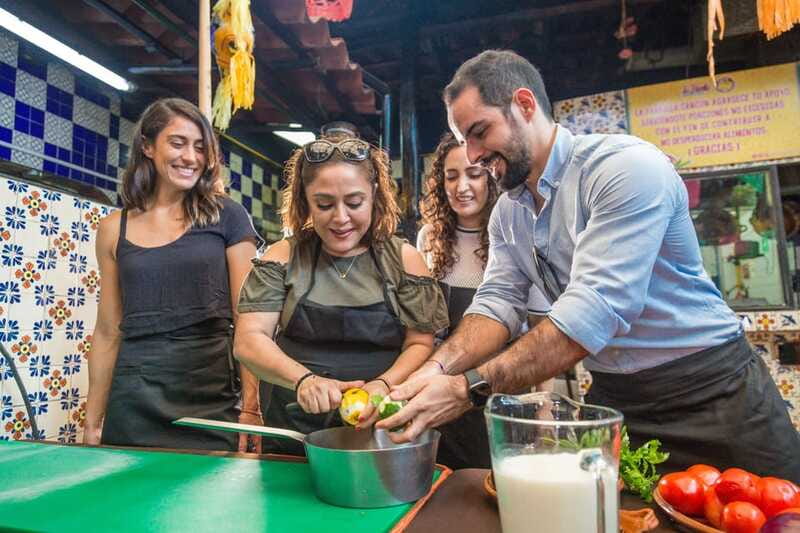
This is a cooking experience first, but it is also a social meal. You will have opportunities to prepare food, use traditional equipment, and ask questions. Guides are described as patient with children, vegetarians, and people who need extra time with chopping or shaping.
The class is not ideal if you want advanced knife work, complex sauces, or professional kitchen training. One participant specifically wished for a more advanced session at this price. That is a fair criticism. The value here comes from cultural context, a full meal, a guide, and the market option, not from advanced culinary technique.
Families can enjoy it, but young children may not take part in every step. A family with children aged three and six found that the younger members mostly sat out of the cooking. Older children who enjoy mixing, pressing tortillas, and tasting ingredients should get more from it.
The restaurant may also feel warm. It has fans but no air conditioning, and this was especially noticeable in June. Wear comfortable shoes and light clothing, but remember that sleeveless shirts are not allowed. Closed, comfortable footwear is the sensible choice for a kitchen setting.
Food restrictions and vegetarian options
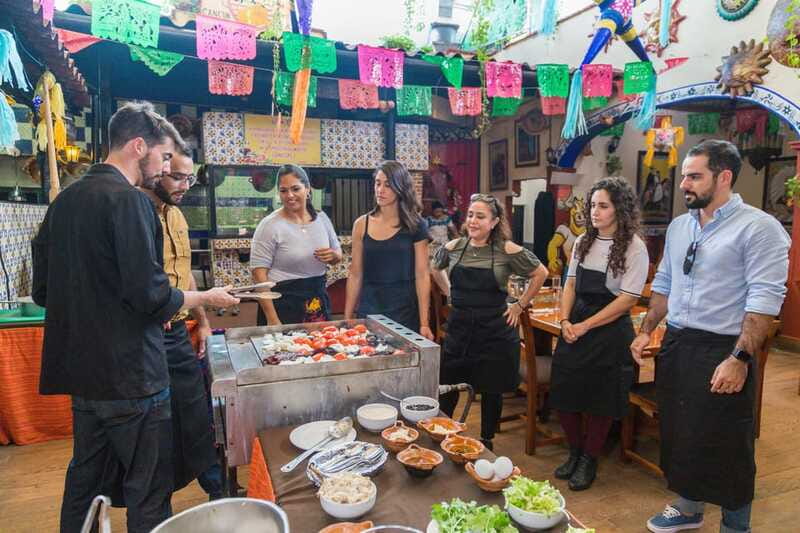
Vegetarians have several good choices. Enchiladas, quesadillas, guacamole, pico de gallo, tortillas, and sopes can all work without meat, and guides have adjusted menus for vegetarian participants without fuss.
Vegan options are available on request. Do not wait until the class begins. Send your dietary and alcohol restrictions in advance so the chef can plan ingredients and substitutions.
Spice levels can also be adjusted. Diego, for example, took care to make sure the group’s preferences were respected. This is valuable in a shared class, where one person may want a serious chile kick while another wants a gentler plate.
If you have a severe allergy, provide clear details before booking. The available information confirms that the team handles dietary needs, but it does not promise a fully allergy-free kitchen.
Is $78 good value?
At $78 per person, the base experience includes the Mexican cooking class, chef, ingredients, utensils, snacks, water, coffee, tea, one margarita, and a four-course meal. You are paying for food and instruction, but also for several hours of organized activity.
I consider that reasonable for Cancún, particularly if you want a break from the hotel pool and a meal you actively help create. The optional market transportation adds more value if you want to see a traditional market and avoid arranging taxis yourself. The exact add-on price is not provided, so check the total before paying.
The value is strongest for first-time visitors, couples, families with older children, and anyone who wants practical recipes rather than a passive food tasting. It is weaker for experienced cooks who want detailed technique or a fixed advanced menu.
Recipes have been supplied to some participants, which makes the class more useful at home. Still, there has been at least one delay with recipe delivery, and the dough instructions may not be complete. Ask about the recipe handout before leaving and take your own notes during the class.
Meeting point, language, and cancellation
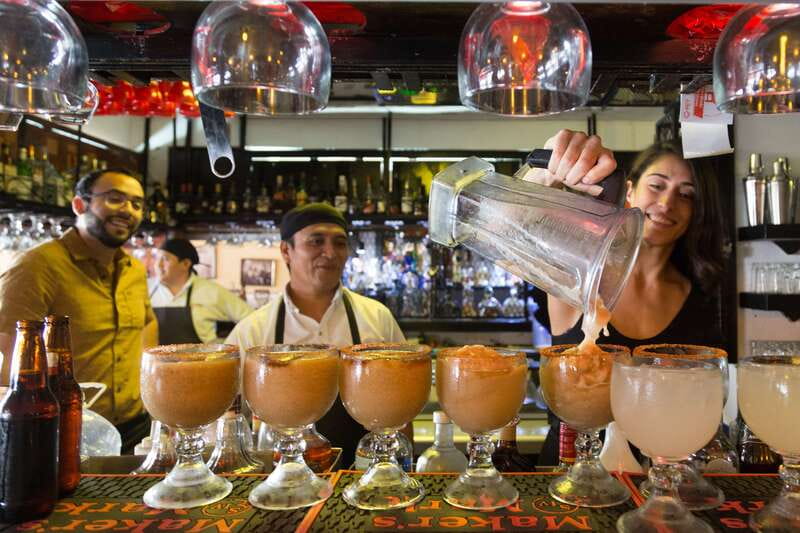
If you book the class without transport, you meet at the restaurant. Look for the guide in a red polo shirt and the red company banner. English and Spanish instruction are available.
The experience lasts four hours, with roughly three hours spent on cooking after arrival. Starting times depend on availability. You can cancel up to 24 hours before the activity for a full refund, and the reserve-now, pay-later option lets you hold a place without paying immediately.
There is a separate entrance for the activity, so you do not need to wait in a standard line. Weapons, sharp objects, sleeveless shirts, alcohol, and drugs are not allowed. The practical packing list is short: comfortable shoes and an appetite.
Who should book this Cancún cooking class?
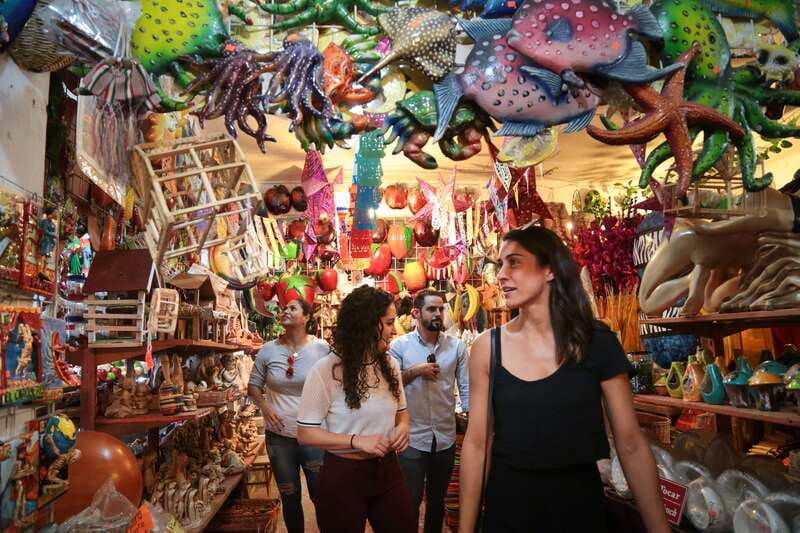
I would choose this class if you want to understand the food you are eating in Mexico and take a few useful skills home. The tortilla lesson, molcajete, fresh market ingredients, and adjustable spice levels give the experience more substance than a standard restaurant meal.
Book the market add-on if you want to see local food shopping, learn how to choose produce, and visit a tortilla shop. Choose the direct meeting option if you mainly care about cooking and already have your own transportation.
Skip it if you want an advanced culinary course, air conditioning, or a tightly fixed menu. Also think twice if you dislike warm kitchens, shared preparation, or simple home-style dishes.
For most visitors, I think the strongest choice is the market version with transport. It ties the ingredients to the meal and lets you see a side of Cancún beyond the hotel zone. Just confirm dietary needs, ask about the tortilla dough recipe, and keep your expectations at the level of a lively, practical introduction to Mexican cooking.
FAQ
How long does the Cancún cooking class last?
The activity lasts four hours. About three hours are spent learning and preparing traditional Mexican dishes once you arrive at the venue.
What dishes might I make?
The menu can include guacamole, enchiladas, sopes, quesadillas, tacos, tostadas, pico de gallo, rice pudding, and a secret dessert. The exact selection may vary by session.
Is the local market visit included?
The market visit is an optional add-on. It includes guided transportation from a Cancún hotel or BnB when selected, plus a market visit with the chef.
Is hotel pickup available?
Yes. Pickup and drop-off are available as an add-on from Cancún hotels or BnBs. Pickup from Playa del Carmen may depend on availability and may involve extra costs.
Are vegetarian or vegan options available?
Vegetarian options are available, and vegan options can be arranged on request. Tell the operator about dietary restrictions before the class.
What drinks are included?
The experience includes bottled water, coffee, tea, and one margarita. Snacks and fresh fruit are also provided.
What languages are offered?
The class is offered in English and Spanish.
Can I cancel for a refund?
You can cancel up to 24 hours in advance for a full refund. A reserve-now, pay-later option is also available.
Just added around Mexico
- Private Pre-Hispanic Cooking Class in Mexico City with Martha★ 5.0 · 19 reviews
- Flavors of Mexico: Cancun Cooking Class & Market Visit★ 4.5 · 5 reviews
- Private Authentic Mexican Cooking Class in Cancun with Alberto★ 5.0 · 3 reviews
- Tasty Mexican Cooking Class with Feast in Riviera Maya★ 5.0 · 99 reviews
- Cancun small group Cooking Class with Local Chef★ 5.0 · 61 reviews
- 4h Cooking Class in Cancun with 8 Recipes & Bottomless Drinks★ 5.0 · 50 reviews
- Cancun Hands-On Mexican Cooking Class★ 4.5 · 95 reviews
- Azteca Tacos Cooking Class★ 5.0 · 10 reviews
Cooking Classes with a Market Tour, compared.

Hanoi Cooking Class: Culture, Local Market & Meaning CSR Impact
Read our review →
5 Traditional Dishes Hanoi Cooking Class with Market Trip
Read our review →
Cooking Class and Lunch at a Tuscan Farmhouse with Local Market Tour from Florence
Read our review →
Cooking Class, Market & Thai Herbs Garden Tour
Read our review →
Authentic Cooking Class with Market & Farm Visit
Read our review →
Paella Cooking Experience & Boqueria Market Tour
Read our review →
Cooking Class Hoi An:Local Market, Basket Boat, Fishing & Cooking
Read our review →
Hoi An Cooking Class(Market,BasketBoat Crabfishing&Cooking Class)
Read our review →Lists this class appears in