REVIEW · BUENOS AIRES PROVINCE, ARGENTINA
Buenos Aires: Empanadas and Alfajores Guided Cooking Class
Come hungry, leave with new recipes. This three-hour cooking class brings you into a real Argentine home in San Telmo, where you make empanadas, alfajores, and mate with local hosts. I like the small group size, limited to eight people, and the way the class mixes practical cooking with conversation about Argentine food and daily life. I also like that you eat what you prepare, so the lesson ends with a proper meal rather than a quick taste.
The main consideration is that the class may feel less polished than a formal cooking school. A few people found some instructions hard to follow from the far end of the table, and you should confirm how the recipes will be shared before leaving. Still, at $37 per person, this is a generous and personal way to spend an evening in Buenos Aires.
Key points at a glance
- A real San Telmo home: You cook in a local household at Paseo Colon 1355, rather than in a commercial studio.
- Three Argentine staples: The class covers savory empanadas, corn-starch alfajores with dulce de leche, and traditional mate.
- Small and social: The group is capped at eight, which leaves room for questions and conversation.
- Hands-on from start to finish: You prepare dough, fillings, cookie shells, and the twisted empanada seal called the repulgue.
- Vegetarian options available: The class includes meat and vegetable fillings, making it easier for mixed groups.
- Good value at $37: Ingredients, mate, water, cooking instruction, and the meal are included. Wine costs extra.
Cooking in a San Telmo family home
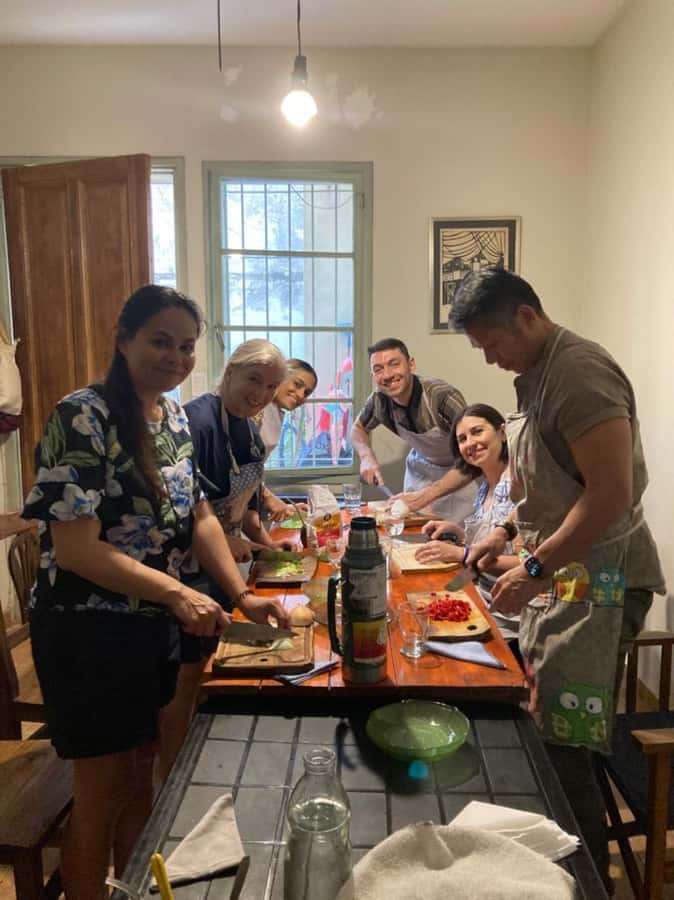
The meeting point is Paseo Colon 1355 in San Telmo. At the start time, you ring the bell and enter a real Argentine home. That small detail shapes the whole experience. You are not simply watching a chef work behind a counter. You are sitting around a household table, handling ingredients, asking questions, and sharing food with people you met only minutes earlier.
The setting has a warm, personal feel. One participant described cooking in a more than 100-year-old home, while another called the space small and cozy. That atmosphere is a big part of the value. Buenos Aires has plenty of restaurants where you can order an empanada, but a home kitchen gives you a better sense of how food fits into family life.
The hosts change depending on the session, with Thomas, Sophia, Maria, and Stella all praised by name in different classes. Thomas is described as funny and relaxed, while Sophia receives credit for clear explanations and useful information about Buenos Aires and Argentina. The hosts work as a team, with some leading the cooking and others helping keep the table organized and drinks filled.
You should expect a friendly, informal tone rather than a strict professional demonstration. That suits most people who want contact with local life. If you prefer a highly polished cooking school with individual workstations and printed instructions at every stage, this may feel more homespun.
A few more cooking classes around the world worth a look
- Budapest Cooking Class & Market Tour with Local Guide & Wines
★ 5.0 · 553 reviews - Private Guided Cooking Workshop Experience in Jodhphur
★ 5.0 · 158 reviews - Bergen: Guided Fishing Tour with Outdoor Cooking
★ 4.8 · 96 reviews
How the three-hour class unfolds
The class lasts three hours, but it is not only a lesson in recipes. The time is divided between preparing food, learning about Argentine customs, drinking mate, and sitting down together to eat.
The exact order can vary, but you begin by getting oriented in the kitchen and learning what you will make. The hosts explain the ingredients and the role these foods play in Argentina. That context matters because empanadas are not treated as a special restaurant dish. They are everyday food, suitable for a quick meal, a family gathering, or a celebration.
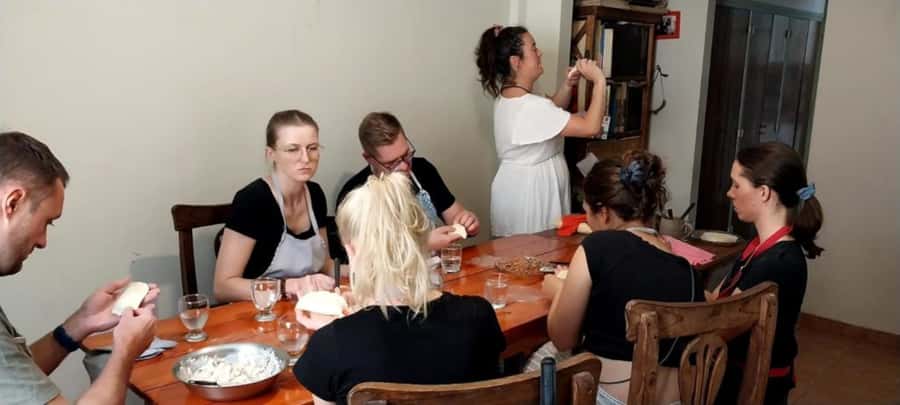
The small group helps here. With no more than eight people, you can take part instead of simply standing behind a crowd. Families have found the class workable for teenagers and younger participants, and one family with children aged 12 and 16 said everyone got involved. You do not need to be an experienced cook, although beginners may want to ask for an extra demonstration when a technique is shown.
Making empanadas and the repulgue
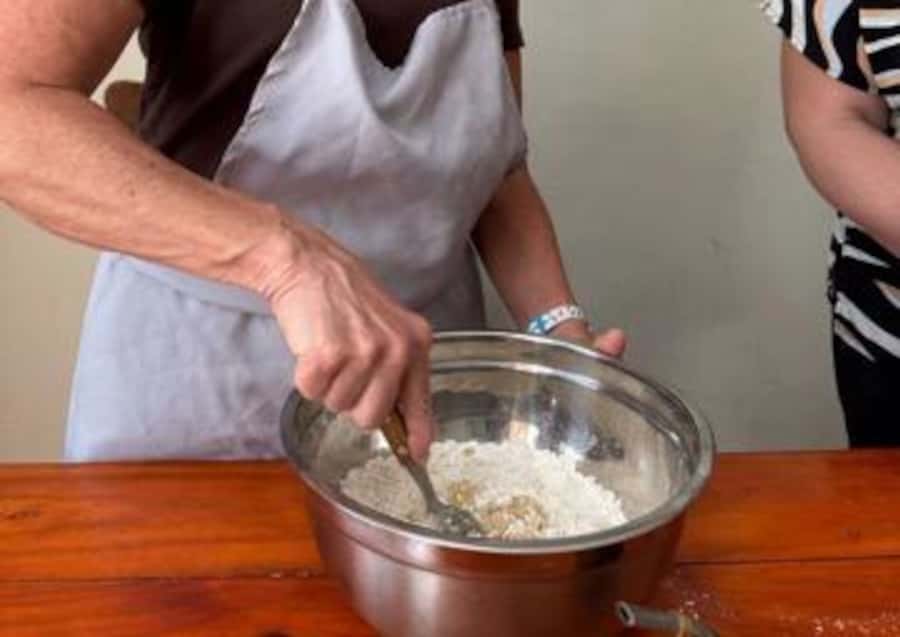
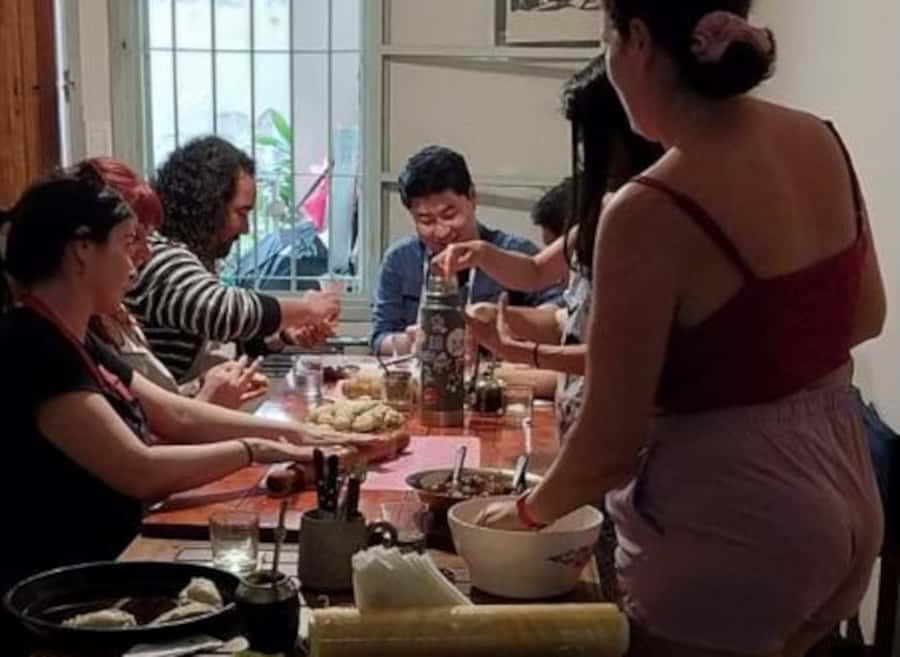
Empanadas take center stage. You work with dough and filling, then learn how to close each pastry properly. The classic twisted edge is called the repulgue, and mastering it is one of the most useful skills to take home.
The basic idea is simple: fill the dough, fold it, and seal the edge so the filling stays inside during cooking. The trick is in the small movements of your fingers. The class gives you a chance to practice rather than simply handing you a finished pastry.
The fillings include a traditional meat option and a vegetarian alternative. That is helpful for groups with different diets. One point to keep in mind is that the class may repeat the same meat filling instead of offering several different savory choices. One participant specifically wished there had been a cheese filling or another flavor rather than a second portion of the same meat mixture.
That is a fair limitation if you are hoping for a full survey of Argentine empanada styles. On the other hand, repeating a filling can make the lesson easier to follow. You get more practice with the dough and repulgue instead of racing through several recipes.
The empanadas may be baked or fried in Argentine cooking, and the class explains the preparation process. You should expect to participate in making the food, not just shaping one decorative pastry for a photograph. The reward comes later, when you sit down and eat the results.
Learning the ritual of mate
Mate adds a cultural layer that many cooking classes would leave out. This traditional herbal drink is prepared and shared in a particular way, and the class introduces you to that custom while you work.
You learn how mate is prepared and how it is traditionally drunk. It becomes part of the conversation and gives you a simple way to understand a daily Argentine habit. The lesson is not only about the liquid in the cup. It is about sharing time, passing the mate, and creating a relaxed social rhythm around food.
I like this section because it connects the kitchen to ordinary life. Empanadas and alfajores are foods you can recreate at home, but mate gives you a custom to recognize when you encounter it elsewhere in Argentina.
Mate is included, along with water. Wine is not part of the price, but it can be purchased if you want a drink with the meal. Since the class already includes a traditional beverage, you do not need to pay extra to get the full cultural experience.
Same place, a different thing to cook:
- Half-Day Thai Cooking Class at Organic Farm in Chiang Mai
★ 5.0 · 19,087 reviews - Florence: Pasta Cooking Class with Unlimited Wine
★ 4.9 · 10,285 reviews - 3 in 1 Cooking Class near Navona: Fettuccine, Ravioli & Tiramisu
★ 5.0 · 7,376 reviews - Florence: Pasta & Tiramisu Cooking Class with Unlimited Wine
★ 4.9 · 6,708 reviews
Preparing alfajores with dulce de leche
The sweet course is alfajores, one of Argentina’s best-loved treats. Here, the focus is on a corn-starch version filled with creamy dulce de leche.
You prepare the cookie mixture, shape the pieces, and put them together with the filling. Corn starch gives this style of alfajor a delicate texture, while dulce de leche provides the soft, caramel-like center. It is a pleasant contrast to the savory empanadas and gives the class a clear beginning, middle, and end.
This part should appeal to anyone with a sweet tooth, but it also works well for children and teenagers because the process is easy to understand and the payoff is immediate. Several people especially praised the alfajores when the meal was served.
The class covers two separate foods rather than spending all three hours on empanadas. That makes the $37 price more convincing. You learn a savory staple and a classic dessert, then add mate to the cultural side of the lesson.
Sitting down to eat what you made
At the end, you eat the empanadas and alfajores together. This is not a small sampling where you leave looking for dinner. People describe having plenty of food, and some even had empanadas left over because the portions were generous.
The meal also gives the class its social heart. You may arrive as a solo visitor, a couple, or a family, but the table encourages conversation. People come from different countries, and the hosts help create an easy atmosphere where strangers can talk without much effort.
That social element is one of the strongest reasons to book. You are not only learning how to fold dough. You are sharing a home meal with an international group and hearing stories about Argentina along the way.
The hosts also discuss Argentine history, culture, cooking habits, and local life. Sophia, in particular, has been praised for sharing tips about Buenos Aires beyond the kitchen. If you want a food class that also helps you understand the city, this is more useful than a purely technical workshop.
Is $37 good value?
At $37 per person, the class offers strong value for three hours. The price includes the cooking lesson, ingredients, mate, water, and the meal. You also receive a small-group setting and access to a local home, two recipes, and cultural conversation.
A restaurant meal alone could cost a substantial portion of that amount, especially in a popular San Telmo area. Here, your payment also covers instruction and participation. You are paying for time with the hosts, not just the food on the plate.
The value is best if you want to learn something you can repeat at home. Several participants left feeling able to make the dishes themselves. That practical confidence matters more than a single enjoyable dinner.
The class is less appealing if you dislike group activities or want a sophisticated tasting menu. You may share a table, wait for others during certain steps, and eat in a home setting where the tableware is practical rather than fancy. One person would have preferred small plates instead of napkins, which gives you a fair idea of the informal style.
What to know before you book
The class is offered in English and Portuguese. If you need detailed explanations in one of those languages, that is a useful advantage. The hosts have been praised for speaking fluent English and for explaining both cooking steps and cultural details clearly.
You do not need advanced cooking skills. The class is designed for all skill levels, but beginners should speak up if they cannot see or follow a technique. One useful seat tip is to avoid the far end of the table if possible, since demonstrations can be harder to watch from there.
Recipes appear to be shared after the session, but the process is not always automatic. One person needed to follow the guide on Instagram and ask directly, while others left with recipes to take home. I would confirm the recipe arrangements before you depart. That small step could save you from trying to remember measurements later.
The activity is wheelchair accessible, although the information provided does not describe the exact layout of the home. If access details are important for you, contact the provider before booking.
Free cancellation is available up to 24 hours in advance for a full refund. You can also reserve now and pay later, which helps if your Buenos Aires schedule is still shifting.
Who will enjoy this most?
I would recommend the class to couples, solo visitors, families with older children, and anyone who wants a social evening with a local angle. It is especially good for people who want to do something beyond sightseeing and restaurant dining.
Families should find the hands-on format appealing. Teenagers can shape empanadas, practice the repulgue, and make alfajores without needing advanced skills. The meal at the end also gives younger participants a clear reward for taking part.
Solo visitors may appreciate the group format. Since the group is limited to eight, conversation is easier than in a large workshop. The class has a welcoming tone, and the shared meal naturally gives you something to talk about.
I would be more cautious if you need a highly technical pastry course, a long list of fillings, or a private class. The focus is on a few approachable Argentine dishes, not on mastering every regional variation.
Should you book it?
Book this class if you want to cook in a real home, meet people over a shared meal, and learn three recognizable parts of Argentine food culture. The strongest points are the warm hosts, the small group, the generous food, and the mix of cooking with local conversation.
Keep your expectations practical. You may need to ask for a closer demonstration, and you should confirm how recipes will be delivered. But at $37, the class gives you a meal, instruction, cultural context, and recipes to try later. For a personal evening in San Telmo, that is a very good deal.
FAQ
How long does the Buenos Aires cooking class last?
The class lasts three hours. It includes food preparation, mate, conversation, and time to eat the finished empanadas and alfajores.
What dishes will I make?
You will prepare Argentine empanadas with savory fillings and alfajores made with corn starch and dulce de leche. The class also teaches you how to prepare traditional mate.
Is a vegetarian filling available?
Yes. The class includes a vegetarian filling as well as a classic meat option.
Where does the class meet?
Go to Paseo Colon 1355 in San Telmo at the scheduled starting time and ring the bell.
What is included in the $37 price?
The price includes the cooking class, ingredients, mate, water, and the meal made during the session. Wine is available for purchase but is not included.
Is the class available in English?
Yes. Instruction is available in English and Portuguese. The group is limited to eight participants, and the activity is wheelchair accessible.
Just added around the world
- Aroidee’s Farm-Fresh Thai Cooking Experience★ 5.0 · 8 reviews
- Signature Thai Cooking Course★ 5.0 · 79 reviews
- Private Half-Day Thai Cooking Class in Chiang Mai★ 5.0 · 4 reviews
- Half Day Guided Thai Cooking Class in Chiang Mai★ 5.0 · 13 reviews
- Online Thai and Akha Cooking Class★ 5.0 · 70 reviews
- Private Virtual Thai Cooking Class★ 5.0 · 9 reviews
- Northern Thai Cooking Class in Chiang Mai in a Countryside Home★ 5.0 · 2 reviews
- Traditional Northern Home Cooking Experience with Raunkaew Yanon Family★ 5.0 · 4 reviews
Cooking Classes, compared.
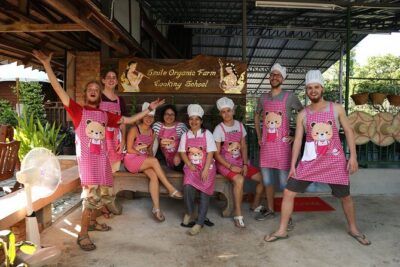
Half-Day Thai Cooking Class at Organic Farm in Chiang Mai
Read our review →
3 in 1 Cooking Class near Navona: Fettuccine, Ravioli & Tiramisu
Read our review →
Pasta & Tiramisu Cooking Class with Unlimited Wine
Read our review →
Hanoi Cooking Class: Culture, Local Market & Meaning CSR Impact
Read our review →
5 Traditional Dishes Hanoi Cooking Class with Market Trip
Read our review →
Cooking Class and Lunch at a Tuscan Farmhouse with Local Market Tour from Florence
Read our review →