
REVIEW · EMILIA-ROMAGNA, ITALY
Bologna: Grandma’s Recipe Pasta Cooking Class
Pasta tastes better when you make it. This three-hour Bologna class brings you into a local home near downtown to prepare fresh pasta, ragù, sauces, and a family tiramisu recipe. I like the hands-on cooking and the generous wine tasting, while the small-group setup can mean sharing work rather than cooking every step yourself.
I also like the personal touch behind the tiramisu, said to come from the host’s grandmother and her family for 80 years. The main caution is that the experience may not match every detail suggested in its promotional description: the wine may be self-service rather than carefully paired, and some sessions have finished much earlier than the advertised three hours.
Key points at a glance
- Family recipes: Learn tortellini, tagliatelle, ragù, sauces, and an old family tiramisu recipe.
- Near downtown: The class takes place in a large, cozy home in a convenient Bologna location.
- Three pasta preparations: You may work with tortellini, tagliatelle, and another pasta style during the session.
- Two workstations: The format encourages teamwork, though eight people may need to take turns.
- Wine included: Local wine is provided with unlimited tasting, but service and pairing may be informal.
- Vegetarian option: You can request a vegetarian alternative instead of ragù.
Cooking pasta in a Bologna home
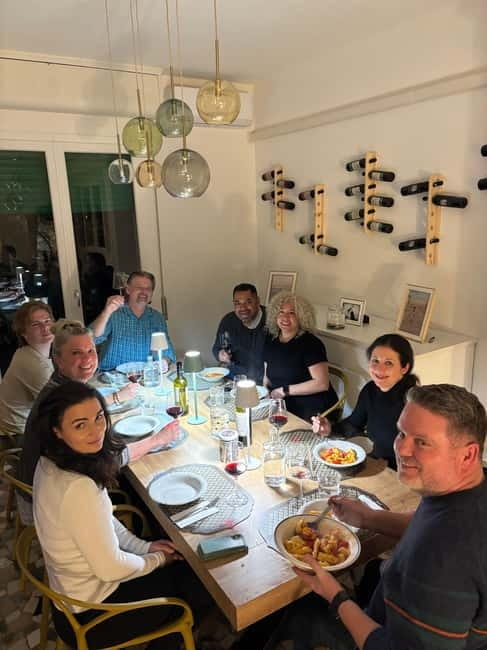
The appeal here is simple: you are not just eating pasta in Emilia-Romagna, you are helping make it. The class takes place in a large home a short distance from Bologna’s center, where the setting is meant to feel more personal than a formal culinary school.
That matters in a city known for food. Bologna is the capital of Emilia-Romagna, the region associated with ragù, tortellini, tagliatelle, and other fresh egg pastas. A class focused on these dishes gives you a useful food lesson while also giving you something practical to remember after your trip.
The instructor teaches in English, and the host shares family recipes and cooking tips intended for you to take home. You will not simply watch a chef work at the front of a room. The plan is for you to take part at one of two cooking stations, mixing, shaping, filling, and preparing the food with other people in the group.
I especially like the focus on classic local dishes. Tortellini and tagliatelle are not random pasta choices. They are closely tied to Bologna’s food culture, and learning how they are prepared gives your meal more context.
More Pasta Making Classes in Bologna
- Bologna: Pasta Cooking Class, Ragu, Spritz, Wine & Gelato
★ 4.9 · 775 reviews - Bologna Local Pasta Cooking Class, Ragu, Spritz, Wine & Gelato
★ 5.0 · 527 reviews - Bologna: Pasta and Tiramisu Cooking Class with Wine
★ 4.7 · 507 reviews
What you actually make during the three hours
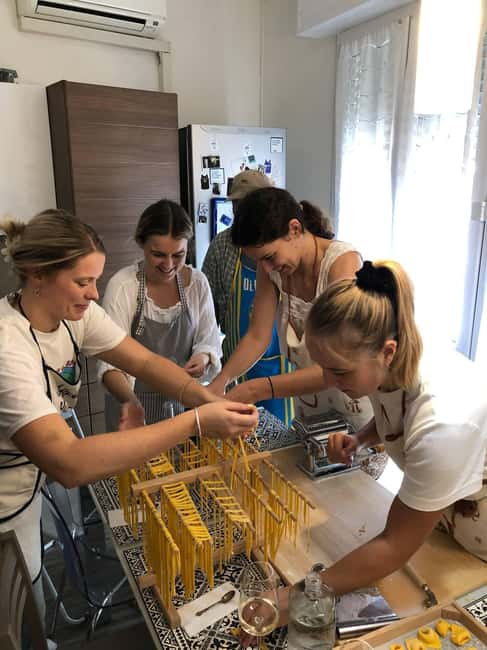
The class centers on fresh pasta and sauces. You prepare tortellini and tagliatelle together, then serve the pasta with ragù and a butter and sage sauce or a fresh tomato sauce, depending on the season’s ingredients.
A separate review described three types of pasta being prepared. The exact mix may vary, but you should expect more than one pasta shape and a meal built around the work you do in class.
The ragù is a major part of the experience. The instructor presents it as a signature family recipe, and one session produced a sauce that was especially well received. You may not receive a long technical lecture on every stage of the recipe, but the class can still show you how a simple sauce comes together and how it works with fresh pasta.
One particularly useful element is the tomato sauce. It is described as simple and quick, which is good news if you want a recipe you can repeat at home. A grand sauce with 20 ingredients is fun to taste but hard to recreate. A straightforward tomato sauce has a better chance of surviving your return flight.
The pasta work is hands-on, but you should set your expectations carefully. The pasta is made with a pasta machine rather than being fully rolled by hand. That keeps the process moving, but it removes some of the old-fashioned craft you might expect from a class built around grandmother’s recipes.
Tortellini, tagliatelle, and shared stations
The two-station arrangement is both a strength and a limitation. It gives the group room to work and keeps the class from feeling like a lecture. It also means that the amount of cooking you personally do depends on the size of the group and how tasks are shared.
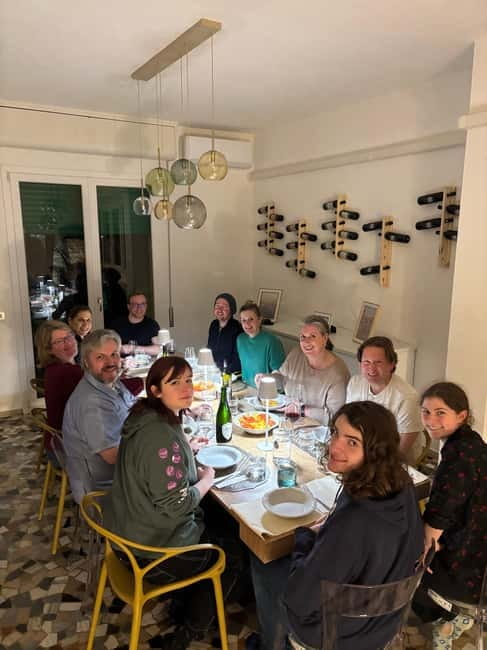
A group of eight has been reported, with two stations between everyone. In that situation, you will likely participate in each stage, but you may need to take turns. You might mix dough while another person shapes pasta, then switch jobs for the next task.
That format suits people who enjoy meeting others and working as a team. It is less ideal if you want your own full workstation and a quiet, precise lesson. The class is social, and conversation is part of the evening.
The two stations also make the experience more relaxed than a crowded demonstration. You have space to work, and the host’s intention is to let each person be creative. Still, the phrase 100 percent hands-on should be read in a practical way. You participate throughout, but you may not personally complete every single pasta or every recipe from start to finish.
Ragù, butter and sage, and seasonal sauces
The meal gives you a chance to compare different pasta pairings. Ragù brings a hearty meat sauce to the table, while butter and sage is lighter and lets the fresh pasta itself do more of the work. A fresh tomato sauce may replace one of these options when seasonal ingredients make it the better choice.
This is one of the class’s best teaching points. Italian cooking often depends less on piling on ingredients and more on matching a simple sauce to the pasta. Fresh egg pasta has a soft, delicate texture, so a sauce should support it rather than bury it.
Vegetarians can request an alternative to the ragù. One session served a Parmesan-based sauce instead. If you are vegetarian, it is worth making your preference clear before the class so the kitchen can plan the substitution.
The food itself has received strong praise. The prepared dishes are generous enough to function as dinner, and the ragù has been singled out as especially good. I would treat this as a meal-producing cooking class, not just a short lesson followed by a small sample.
Same place, a different thing to cook:
- Pastamama, Home Cooking Classes at Grace’s Home
★ 5.0 · 521 reviews - Bologna: Pasta and Tiramisu Small Group Cooking Class with Wine
★ 5.0 · 409 reviews - Bologna on the plate, Cooking Class with Alessia
★ 5.0 · 260 reviews - Bologna: Pasta Tagliatelle al Ragu Cooking Class with Wine
★ 4.7 · 225 reviews
The 80-year family tiramisu recipe
Dessert is tiramisu, made from a recipe associated with the host’s grandmother and the family for about 80 years. That detail gives the final course more personality than a standard restaurant dessert.
The tiramisu is also one of the class’s most appealing stories. You are not only learning a widely known Italian dessert, you are hearing how one household has kept its version over several generations. That family connection is exactly the sort of detail that can make a cooking class feel personal.
There is one practical point to note. In at least one class, only two participants made the tiramisu, with much of the work done by machine. So you may taste and learn about the dessert without personally preparing every step.
If tiramisu is your main reason for booking, ask how the group will divide the dessert work when you arrive. The recipe may be shared afterward, which helps, but the amount of direct practice can depend on the group.
Wine tasting: generous but informal
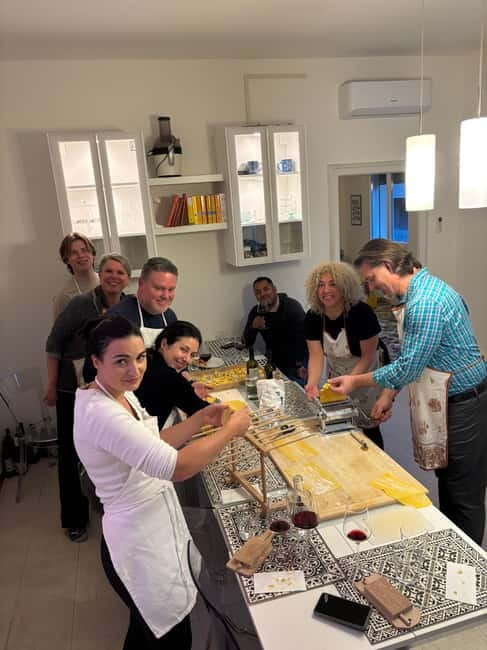
Wine is included throughout the experience, and the tasting is described as unlimited. Red and white wine are available for self-service, giving you something to drink with the food without paying extra for each glass.
That is a clear value at $88 per person, especially when the class includes dinner, ingredients, instruction, and dessert. It also adds to the social mood, since people can pour another glass while the pasta is being prepared.
The wine service may be more casual than the description suggests. A session served Merlot and Chardonnay, rather than wines clearly identified as local specialties. The bottles were placed on the table for guests to serve themselves, with little formal explanation of the wines or structured pairing with each course.
So I would book this for generous wine with your meal, not for a serious sommelier lesson. If you are hoping to learn why a particular Emilia-Romagna wine suits ragù or butter and sage, you may find the explanation limited.
The experience also does not always include every extra suggested in the promotional material. An Aperol or spritz lesson was not provided in one session, and there was no bartender-led cocktail demonstration. If wine and pasta are your priorities, this may not matter. If you are booking for a full drinks workshop, it is an important distinction.
Timing, pace, and the three-hour promise
The stated duration is three hours, which sounds right for making pasta, cooking a meal, eating, and preparing dessert. In practice, the pace may vary.
One session moved quickly from the main course to dessert, with less than five minutes between them. The same group felt it was being encouraged to leave after a little more than two hours and did not have time to finish the wine. That is a poor fit if you want a long, leisurely evening around the table.
This is the biggest practical issue for me. A cooking class should allow enough time to ask questions, taste the food, and enjoy the meal you helped prepare. A rushed finish can make the experience feel more like a scheduled food production line.
On the other hand, a quick class may suit you if you want to fit a meal into a busy Bologna itinerary. Check the available start time and keep your evening plans flexible. I would not schedule an important late-night activity immediately afterward, since the advertised three hours may not describe the pace of every session.
How authentic is the experience?
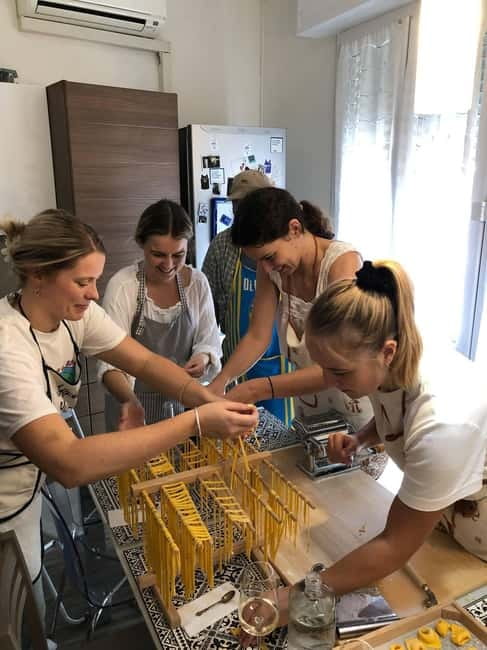
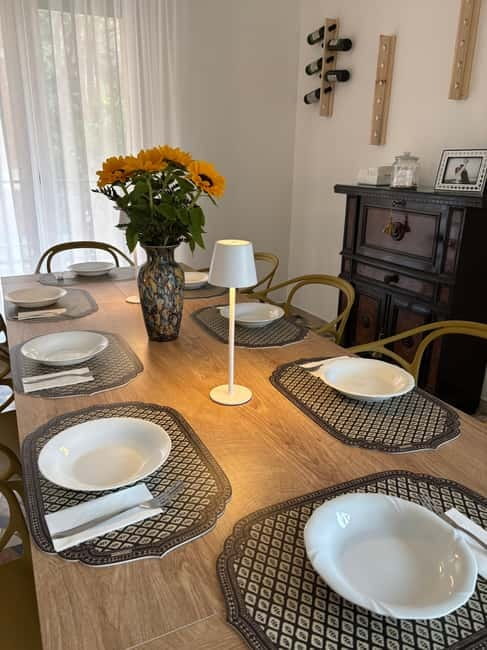
The setting, family recipes, local dishes, and shared meal all support the feeling of a home-based Bologna experience. You are cooking in a private-style space near the city center, not sitting in a polished restaurant kitchen. The recipes are personal, and the food reflects the region’s familiar pasta traditions.
But authenticity does not mean every detail is rustic. The pasta machine speeds up production. The wine may be supermarket-style Merlot and Chardonnay rather than carefully explained regional bottles. The group may share stations, and some parts of the meal may be prepared by only a few participants.
That mix is worth understanding before you book. You are getting a friendly home cooking session with regional food, not an old-world workshop where each person kneads dough by hand for hours.
The class also includes social contact with other participants. Conversation can be one of the best parts, particularly if you enjoy meeting people over a meal. If you prefer private instruction, ask about the group size before paying, since the shared-station format becomes more noticeable with eight people.
Is $88 a fair price?
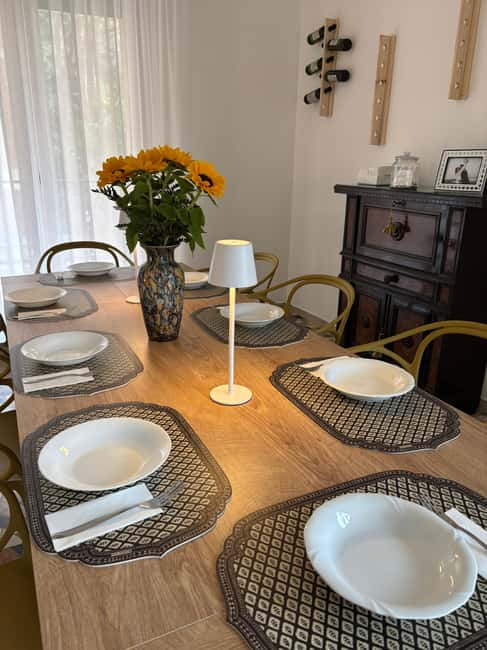
At $88, the price is reasonable if you value the full package. You receive ingredients and equipment, an English-speaking instructor, a three-hour class, a meal of fresh pasta and sauces, tiramisu, and wine.
A restaurant meal in Bologna may cost less if you simply want to eat pasta. That comparison misses the point, though. Here you are paying for instruction, participation, recipes, and the chance to learn dishes you can make again.
The value becomes weaker if you expect intensive private teaching, formal wine pairing, hand-rolled pasta, or a carefully paced evening. Those elements are not guaranteed by the actual format.
There is also a small promotional extra: you are invited to follow the host’s Instagram account, Stayhungrystaybologna, and send a message before booking to ask about a complimentary bottle of wine to take home. Since this is presented as a special offer, confirm it before you rely on it. It should be treated as a possible bonus, not the main reason to choose the class.
Free cancellation up to 24 hours before the start and the option to reserve now and pay later make the booking less risky. These policies are useful if your Bologna schedule is still changing.
Who should book this Bologna cooking class?
I would recommend it to you if you want:
- A friendly, social cooking experience rather than private tuition
- Classic Bologna pasta dishes and a full meal
- A family-style tiramisu story
- Wine included with the food
- A class near the city center
- A vegetarian option instead of ragù
- Recipes you can take home and try again
I would be more cautious if you want a serious culinary course. You may not get individual attention at every station, and the pasta is made with a machine. The wine component is generous but informal, and the advertised spritz lesson, cocktail service, jazz atmosphere, and candlelit mood may not be part of the actual session.
Final verdict: book it for food, not theater
I think this class is a good choice for a first visit to Bologna if your main goal is to cook and eat fresh local pasta with a friendly group. The strongest points are the excellent food, the family tiramisu recipe, the practical tomato sauce, and the generous wine.
Book it with realistic expectations. You are signing up for a shared home cooking session, not a private chef’s course or a formal wine seminar. If you can accept the two-station setup, informal tasting, machine-made pasta, and possible changes in timing, the $88 price offers a pleasant way to connect with Bologna through its food.
FAQ
Where does the cooking class take place?
It takes place in a large, cozy home in Bologna, a short distance from downtown. The meeting point is listed as Ringbell Cooking Class.
How long does the class last?
The stated duration is three hours. The actual pace may vary, and one session ended after a little more than two hours.
What language is the class taught in?
The instructor teaches in English.
What pasta will I make?
The class includes tortellini and tagliatelle, and one session prepared three types of pasta in total.
What sauces are served?
The pasta is served with ragù and either butter and sage sauce or fresh tomato sauce, depending on seasonal ingredients.
Is tiramisu included?
Yes. Dessert is the host’s family tiramisu recipe, associated with the host’s grandmother and the family for about 80 years.
Is wine included?
Yes. Wine is included, with red and white wine available for tasting.
Is the wine formally paired with each course?
The wine may be served informally for self-service. Formal explanations and course-by-course pairing are not guaranteed.
Is there a vegetarian option?
Yes. A vegetarian alternative is available instead of the ragù.
What is included in the price?
The $88 price includes the cooking class, instructor, all materials, and wine.
Just added around Bologna
- Traditional Bolognese Cooking Class in Bologna with Giovanna S★ 5.0 · 6 reviews
- 3 hour Lasagna Bolognese cooking class★ 5.0 · 6 reviews
- Tortelloni and Tagliatelle Cooking Class in Bologna + Wine★ 3.0 · 2 reviews
- Pasta Making Class: Tagliatelle & Bolognese Sauce★ 5.0 · 15 reviews
- Bologna Walking Tour & Traditional Cooking Class with Wine★ 5.0 · 3 reviews
- Bolognese Cooking Class with Margherita in the Historic Center★ 5.0 · 26 reviews
- Home Cooking: Pasta Making with Natural Colors in a Tiny Group★ 5.0 · 6 reviews
- Private Market Tour and Cooking Class in Bologna with Giovanna C★ 5.0 · 20 reviews
Pasta Making Classes, compared.


3 in 1 Cooking Class near Navona: Fettuccine, Ravioli & Tiramisu
Read our review →
Pasta & Tiramisu Cooking Class with Unlimited Wine
Read our review →
Pasta Making Class with Wine, Limoncello, and Dessert
Read our review →
Rome Cooking Class: Make Pasta and 3 Spritz Cocktails
Read our review →
3-in-1 Fettuccine, Ravioli, and Tiramisu Cooking Class
Read our review →
Fettuccine Pasta Cooking Class in Rome’s City Center
Read our review →Lists this class appears in