
REVIEW · APULIA, ITALY
Bari: Apulian Cooking Class – Fresh Pasta and Focaccia
Fresh pasta beats a souvenir. This 2.5-hour cooking class puts you in a Bari kitchen with Juanita, where you make orecchiette and traditional focaccia by hand. I like the close-to-the-station location and the way the lesson ends with your own food, local wine, water, and coffee. The main consideration is that the class is focused on two dishes, so it may feel limited if you want a broad tour of Apulian cuisine.
I also like the practical teaching. You work with local semolina and water, learn the small tricks behind the dough, and receive recipes for later. Juanita has earned praise for her patience and clear instructions, though food allergies, intolerances, and strong dislikes should be shared before you arrive.
Key points to know before booking
- Make orecchiette from semolina and water: You shape Bari’s famous ear-shaped pasta by hand, using a simple dough and traditional methods.
- Bake Bari-style focaccia: You knead the dough yourself, then prepare the crunchy, flavorful local specialty.
- Eat what you prepare: The lesson finishes with your focaccia and pasta, plus wine, water, and coffee.
- Learn with Juanita: Her patient, detailed teaching style helps beginners follow along without feeling rushed.
- Stay near central Bari: The location is just minutes from the main station, shopping streets, and historic monuments.
- Bring home the recipes: The written recipes give you a useful way to repeat the dishes after your trip.
What makes this Bari cooking class worthwhile
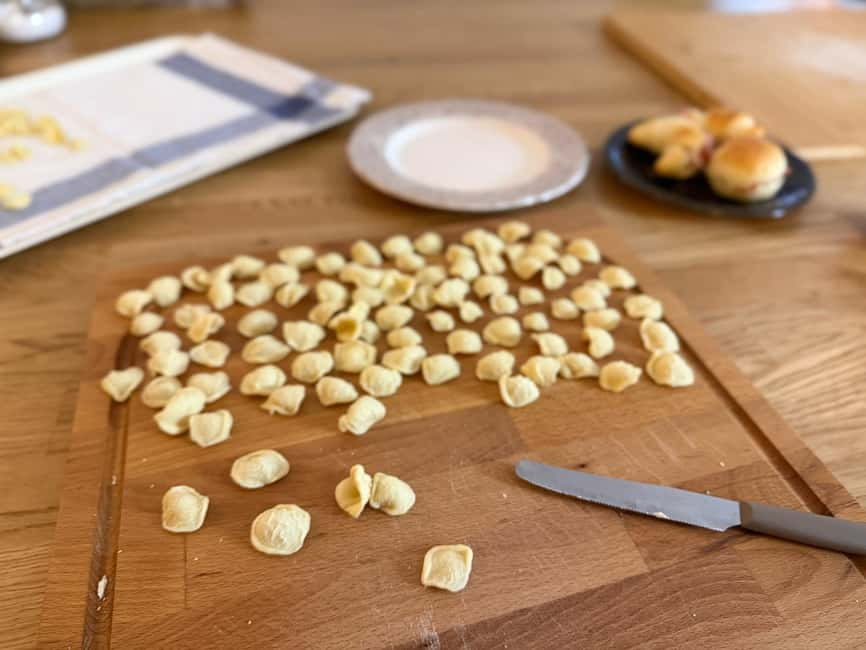
Bari is a fine place to learn pasta because the food here depends less on fancy equipment and more on hand skills. Orecchiette is a good example. Its dough uses a short list of basic ingredients, yet the shape takes practice. You cut and form each piece until the pasta develops its familiar little cup.
That simplicity makes the class useful. You are not watching a chef perform a recipe that requires restaurant machinery. You are learning a method you can try in your own kitchen. The same goes for focaccia. Flour, dough, seasoning, and a hot oven do most of the work, but the feel of the dough matters.
I like that the lesson is built around participation rather than a demonstration followed by a meal. You get your hands in the dough, shape the pasta, and prepare the focaccia yourself. For many people, that hands-on work will be more memorable than simply tasting a plate in a restaurant.
The setting also matters. You meet a local family close to Bari’s central station, not far from the city’s main shopping streets and historic monuments. That makes the class easy to fit into a day of sightseeing. You can schedule it around your arrival, a walk through the old center, or an afternoon shopping stop, depending on the starting time available.
More Pasta Making Classes in Bari:
- Bari: Pasta and Tiramisu Cooking Class with Wine
★ 4.8 · 389 reviews - Bari: Pasta and Tiramisu Cooking Class with Wine
★ 5.0 · 273 reviews - Bari Cooking Class: Traditional Focaccia & Orecchiette
★ 4.8 · 69 reviews
Starting with local semolina and orecchiette
The pasta portion begins with dough made from water and local semolina. This is a useful lesson in Apulian cooking: the ingredients are modest, so technique carries much of the flavor and character.
You will prepare the dough, then work on the shape of the orecchiette. The name means little ears, and the pieces should have a curved center that can hold sauce. The class teaches the traditional hand method passed down through Apulian families, rather than treating the pasta as a factory-made product.
Expect repetition. Making a few orecchiette is easy enough, but preparing a plateful takes patience. That is part of the point. You learn how pressure, cutting, and shaping change the final piece. Juanita’s patient approach is especially helpful here, since small adjustments can make the difference between a flat disk and a recognizable orecchietta.
I would consider this part a good fit for first-time pasta makers. You do not need to arrive with special skills. You only need a willingness to work slowly and accept that your early pieces may look less tidy than your later ones.
You also receive tips for making the dishes at home. That turns the class into more than a one-time holiday activity. Once you know the dough’s texture and the basic shaping motion, you can keep practicing with family or friends.
Kneading and baking Bari-style focaccia
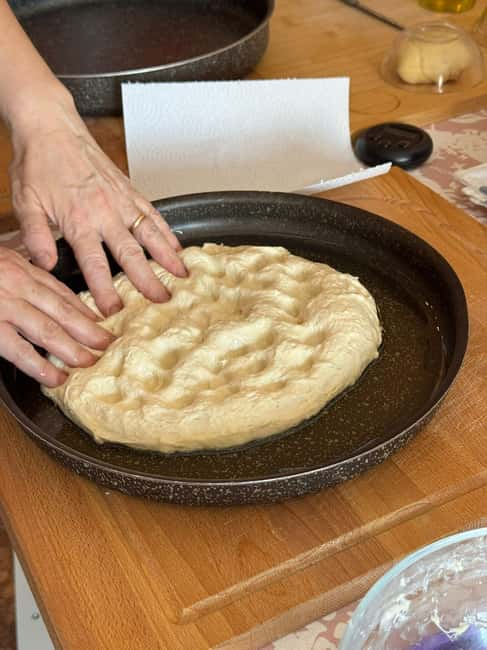
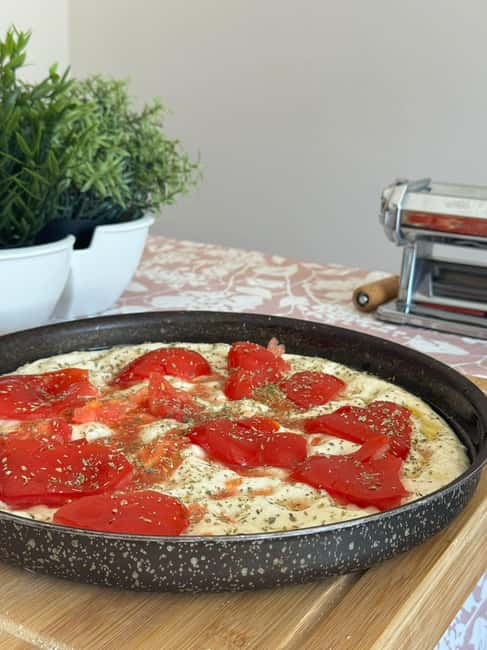
The focaccia lesson brings a different kind of work. Instead of shaping small pieces of pasta, you handle a larger dough and prepare a traditional Bari-style bread with a crunchy exterior and soft center.
The description emphasizes getting your hands into the dough, and that is exactly the appeal. You knead and prepare the focaccia rather than simply waiting for it to arrive at the table. The process gives you a better sense of how the bread comes together and why texture matters.
Bari-style focaccia is one of the city’s best-known foods, so this is not a random baking exercise. It connects the class to the local food culture you will encounter around Bari. The result is also easy to enjoy right away, especially after working with pasta dough.
The practical value is clear here too. Bread dough can feel difficult when you only follow measurements on a page. By handling it in person, you can pay attention to texture and consistency. Juanita can offer immediate guidance, which is something a printed recipe cannot do.
There is one small limitation. The class centers on focaccia and orecchiette, so it will not teach a full menu of regional dishes. If you want seafood, desserts, sauces, or a longer market-to-table program, you may need another activity. If your goal is to learn two classic Bari staples well, the narrow focus is a strength.
Sitting down to eat what you made
The best part of a short cooking class is often the meal at the end. Here, you taste the food prepared during the lesson and pair it with local wine, water, and coffee.
That closing meal gives the class a proper rhythm. You begin with instruction, move into work, and finish by sharing the results. You are not left with dough on your hands and no chance to enjoy it.
You may also receive additional homemade specialties. Juanita’s warm hospitality and extra homemade foods were singled out as part of the experience, along with good wine. Since the exact additional dishes are not specified, you should treat them as a pleasant possibility rather than a guaranteed menu.
The wine is another nice touch, but it also means you should mention any dietary or drink-related needs ahead of time. Vegetarian options are available on request. Food allergies, intolerances, and foods you do not like should be shared before the class so the host can plan properly.
Coffee at the end gives the meal a distinctly Italian finish. It also makes the experience feel social rather than purely instructional. You can ask questions, compare your pasta shapes, and talk through what you have learned before leaving with the recipes.
More Pizza Making Classes in Bari:
- Apulian cooking class fresh pasta and focaccia
★ 5.0 · 68 reviews - Bari Cooking Class : Traditional Focaccia & Orecchiette
★ 5.0 · 63 reviews - Florence Cooking Class The Art of Making Gelato & Authentic Pizza
★ 5.0 · 2,053 reviews - Cooking Class in the Heart of Rome: Pizza and Tiramisu Making
★ 5.0 · 1,330 reviews
Juanita’s teaching style and the family setting
A cooking class succeeds or fails on the teacher. Here, Juanita is the key reason I would consider booking. Her teaching has been praised for being clear, detailed, and patient, which are exactly the traits beginners need when working with dough.
A patient instructor also changes the mood of the class. You can ask for help without feeling that you are slowing everyone down. That matters when you are trying to shape orecchiette for the first time or decide whether focaccia dough feels ready.
The family setting adds a personal side that a large commercial kitchen may not provide. You are learning recipes associated with Apulian grandmothers, not just following a generic Italian cooking lesson. The class aims to show the small habits and practical tips that make home cooking work.
The available teaching languages are English and Italian. If you speak neither comfortably, the hands-on nature may still help, but the class is designed to be conducted in one of those two languages. Some content may appear in its original language, so do not expect every word to be translated into several languages.
No group size is provided, so I would not assume this is a private class or a tiny gathering. If personal attention is important to you, check the booking details before paying. Juanita’s patient style is encouraging, but the amount of direct help can depend on how many people attend.
Location near Bari’s station and historic center
The location is one of the class’s most practical features. It is just minutes from Bari’s central station and close to the main shopping streets and historic monuments.
That makes the experience easy to combine with a city visit. You can place it near the beginning of your stay and use the recipes as a first taste of Apulia, or schedule it between sightseeing stops. Since the class lasts 2.5 hours, allow enough time to arrive without rushing.
The location also helps if you are carrying a normal day bag while sightseeing. Oversize luggage is not allowed, so this is not an activity to pair with dragging large bags through the city. Leave substantial luggage at your accommodation or another suitable place before arriving.
The information does not provide a street address, meeting point instructions, or transportation details beyond the general location. Check the final directions carefully after booking. The phrase close to the station is useful, but it is not a substitute for the exact arrival point.
Is $101 a fair price?
At $101 per person, this is not the cheapest way to eat in Bari. You could buy focaccia and pasta for far less. The question is what you want from the experience.
The price includes instruction, ingredients for the pasta and focaccia, a welcome drink, the food you prepare, wine, water, coffee, and the recipes. You are paying for access to a local home-style setting and for direct guidance, not simply for lunch.
I see the strongest value in the skills you take away. A restaurant meal disappears quickly. Knowing how to make orecchiette dough and Bari focaccia gives you something you can repeat at home. The recipes also make the class more useful after your holiday.
The value is better for people who enjoy active food experiences. If you mainly want a quick meal near the station, the class will take too long and cost too much. If you like cooking, asking questions, and learning through practice, the price is easier to justify.
The 2.5-hour length is also well judged. It is long enough to make two dishes and eat them, but short enough to fit into a busy Bari itinerary. You will spend real time working, so do not expect a quick demonstration with a long free afternoon afterward.
Who should book this experience?
I would recommend it to first-time visitors who want a direct connection to Apulian food. You get two famous local specialties, a host who focuses on clear instruction, and a meal that uses what you prepared.
It is also a good choice for couples, families with older children, and small groups of friends who enjoy doing something together. The pasta shaping offers a relaxed activity, while the focaccia provides a larger shared project.
Vegetarians should request suitable options in advance. People with allergies or intolerances should contact the host before the class, not wait until the welcome drink or meal. The same advice applies if you have foods you strongly dislike.
I would be more cautious if you want a formal culinary school setting, a detailed tour of Bari’s food markets, or a long list of recipes. This experience is home-style and focused. Its strength is the chance to learn a few local staples properly.
The activity is not designed for everyone. Pets are not allowed, though assistance dogs are permitted. Oversize luggage, bikes, scooters, skateboards, mobility scooters, and similar large items are not permitted. Smoking indoors is prohibited, and unaccompanied minors cannot attend.
Booking flexibility and useful planning advice
You can cancel up to 24 hours before the activity for a full refund. You can also reserve now and pay later, which helps if your Bari schedule is still shifting.
Check the available starting times before choosing a date. The class lasts 2.5 hours, and you will want to arrive ready to work rather than squeeze it between two appointments.
Wear something suitable for a hands-on food lesson. The provided information does not specify clothing requirements, but dough work can be messy. Keep your belongings light, since oversize luggage is not allowed.
Most important, share your food needs in advance. Vegetarian options are available on request, and the host needs to know about allergies, intolerances, and disliked foods before the lesson.
Should you book the Bari cooking class?
Book it if you want to do more than eat Italian food. For $101, you learn to make orecchiette and Bari focaccia, eat your work with wine and coffee, and leave with recipes for another attempt at home.
I especially like the class for its practical focus, central location, and Juanita’s patient teaching style. Skip it if you want a broad regional menu, a market visit, or a cheap lunch. For an authentic, hands-on introduction to two Bari staples, this is a strong choice.
FAQ
How long does the cooking class last?
The class lasts 2.5 hours.
Where does the experience take place?
It takes place in Bari, Apulia, just minutes from the central station and close to the city’s main shopping streets and historic monuments.
What will I prepare?
You will prepare orecchiette using water and local semolina, then knead and bake traditional Bari-style focaccia.
What food and drinks are included?
The experience includes a welcome drink, the food you prepare, water, local wine, and coffee.
Is the class available in English?
Yes. The instructor teaches in English and Italian. Some content may be presented in its original language.
Can I cancel or pay later?
You can cancel up to 24 hours in advance for a full refund. You can also reserve your place and pay later.
Just added around Bari
- Polignano : Typical Cooking Class with Aperitif and wine included★ 4.5 · 33 reviews
- Cesarine: Home Cooking Class & Meal with a Local in Bari★ 5.0 · 17 reviews
- Dining Experience at a local’s Home in Polignano a mare with Show Cooking★ 3.0 · 2 reviews
- 4-Day Puglia Sightseeing Tour Including Cooking Class★ 5.0 · 18 reviews
- Premium Cooking Class in Bari: Pasta & Tiramisu, free wine bottle★ 5.0 · 2 reviews
- People of Bari unusual guided tour with pasta making at Grandma house★ 5.0 · 54 reviews
- Cooking class of Tagliatelle and Tiramisu in Altamura★ 5.0 · 7 reviews
- Bari Cooking Class : Traditional Focaccia & Orecchiette★ 5.0 · 63 reviews
Pasta Making Classes, compared.


3 in 1 Cooking Class near Navona: Fettuccine, Ravioli & Tiramisu
Read our review →
Pasta & Tiramisu Cooking Class with Unlimited Wine
Read our review →
Pasta Making Class with Wine, Limoncello, and Dessert
Read our review →
Rome Cooking Class: Make Pasta and 3 Spritz Cocktails
Read our review →
3-in-1 Fettuccine, Ravioli, and Tiramisu Cooking Class
Read our review →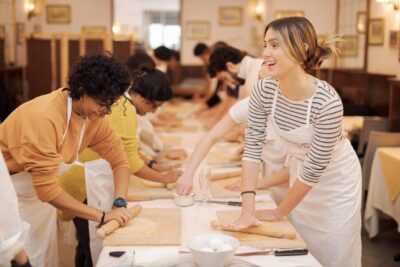
Fettuccine Pasta Cooking Class in Rome’s City Center
Read our review →Lists this class appears in