REVIEW · CENTRAL THAILAND, THAILAND
Bangkok: Hands-on Thai Cooking Class & Market Tour in Sathon
Thai food is best learned with your hands. This Sathon experience pairs a one-minute walk to Suan Phlu fresh market with a practical cooking lesson, so you see the ingredients before they reach your plate. I especially like the from-scratch coconut milk and curry paste, plus the chance to eat each dish while it is hot. The main consideration is the fixed daily menu, so check the schedule before booking if you have your heart set on pad Thai, tom yum, or a particular curry.
The class lasts 210 minutes and costs $45 per person. That is strong value for a four-course meal, market visit, instruction, ingredients, equipment, drinking water, and take-home recipes. I also like that dietary needs can be handled with suitable substitutes, though you should clearly explain your restrictions when booking.
Key points at a glance
- Suan Phlu market is practically next door: The cooking school sits behind the market at 33, Thanon Suan Phlu, making the shopping portion easy and useful rather than a separate excursion.
- Curry paste is made by hand: You work with the ingredients instead of simply opening a prepared packet.
- Every day has a different four-dish menu: The menu rotates between soups, salads, noodle dishes, curries, and mango sticky rice.
- You eat as you cook: Each dish is prepared and served hot before you move on to the next recipe.
- The class suits beginners: Instructions are clear and structured, with enough guidance for first-time cooks.
- Recipes go home with you: The standard recipes are included at no extra cost, giving the class value beyond one Bangkok meal.
Starting behind Suan Phlu Market
The meeting point is the House of Taste Thai Cooking School, behind Suan Phlu Market in Sathon. Use the full address, 33, Thanon Suan Phlu, Thung Maha Mek, Sathon, Bangkok 10120, when checking the map. The wording matters because the school is tucked behind the market rather than presented as a major street-front attraction.
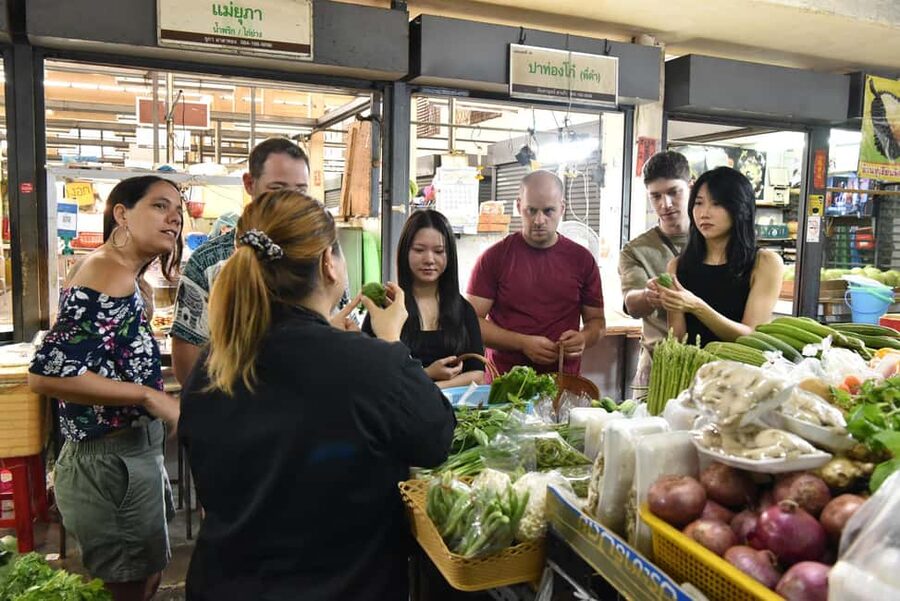
The market is about a one-minute walk from the school. That short distance shapes the whole experience. You do not spend precious class time riding across Bangkok, and you are not taken to a market chosen only for sightseeing. You go straight from the meeting point to a working local food market, select ingredients, then return to cook them.
The class is offered in the morning, afternoon, and evening. That gives you useful flexibility, especially if you are fitting it between temples, shopping, or a late arrival in Bangkok. The full experience takes three and a half hours, so leave enough room around it rather than trying to squeeze in a major attraction immediately afterward.
English and Thai are the listed teaching languages. The class is also described as wheelchair accessible and arranged for a private group. Since the exact group setup can affect the feel of a cooking lesson, check the booking details if you need a particular arrangement.
More Cooking Classes with a Market Tour in Bangkok
- Bangkok: Hands-on Thai Cooking Class and Market Tour
★ 4.9 · 1,614 reviews - Bangkok: Maliwan Thai Cooking Class with Market Tour
★ 4.9 · 1,133 reviews - Hands on Thai Cooking Class and Market Tour
★ 5.0 · 660 reviews
Shopping for ingredients at Suan Phlu
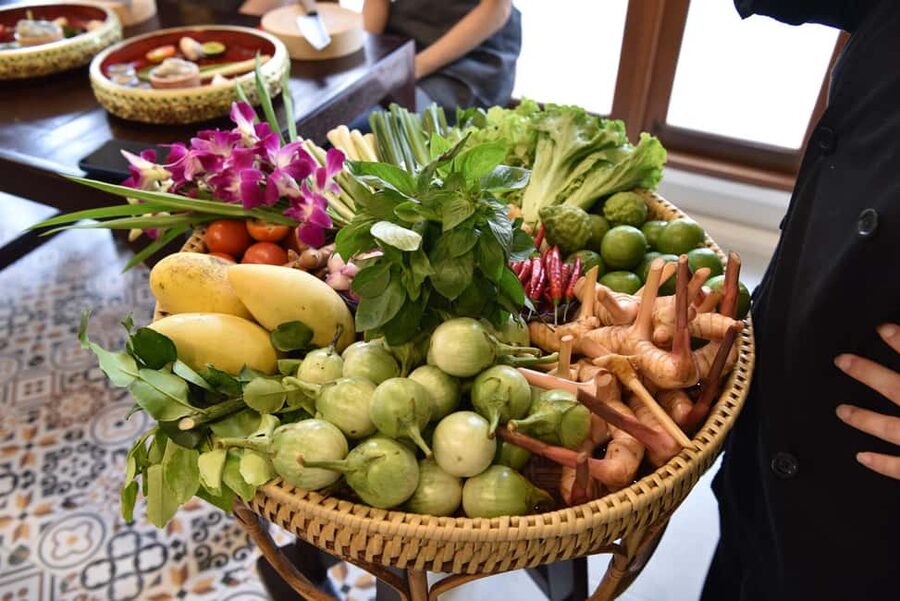
The market visit is not just a quick photo stop. You select the ingredients needed for the day’s four dishes and learn about Thai vegetables, rice, herbs, spices, and less familiar ingredients. This is where the recipes begin to make sense.
A cooking lesson can hand you a tray of chopped food and still leave you unsure what you actually cooked. The market portion helps fix that problem. You see the raw ingredients first, then handle them again in the kitchen. That connection is useful when you return home and try to find substitutes or identify items in an Asian grocery store.
The market also adds a local Bangkok setting without requiring a long organized outing. It is close, practical, and tied directly to the meal. I would not expect a sprawling food tour or a long lesson about every stall. The value is in selecting the produce and learning what goes into the dishes you are about to make.
Because the market can be lively, keep personal belongings secure and wear comfortable shoes. Those are sensible habits for any fresh market visit, even though the class itself provides a personal locker.
From coconut milk to curry paste
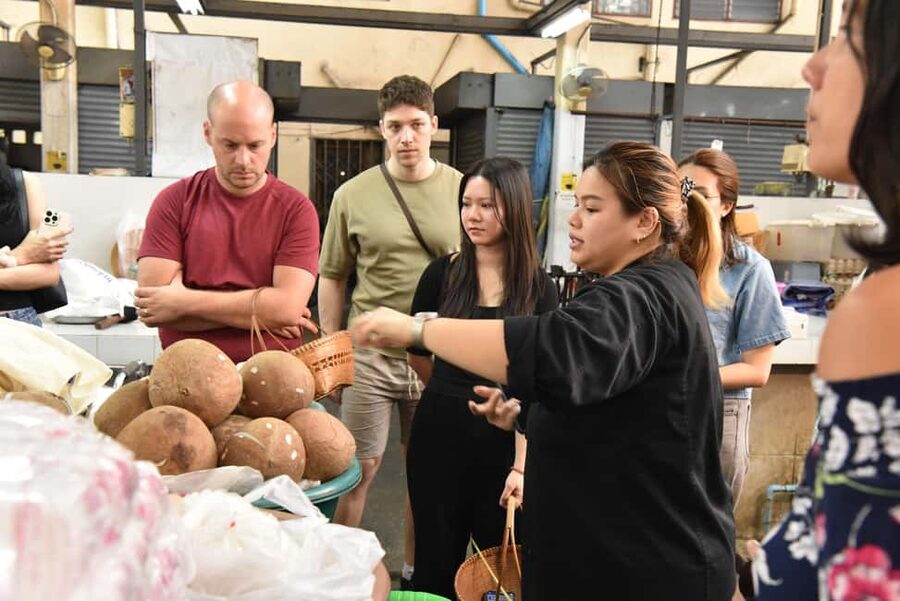
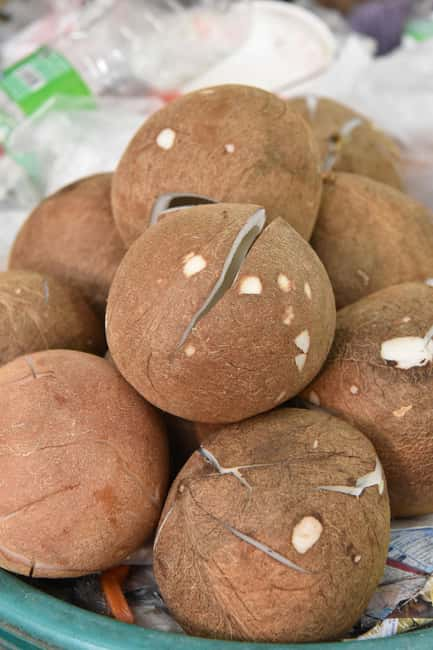
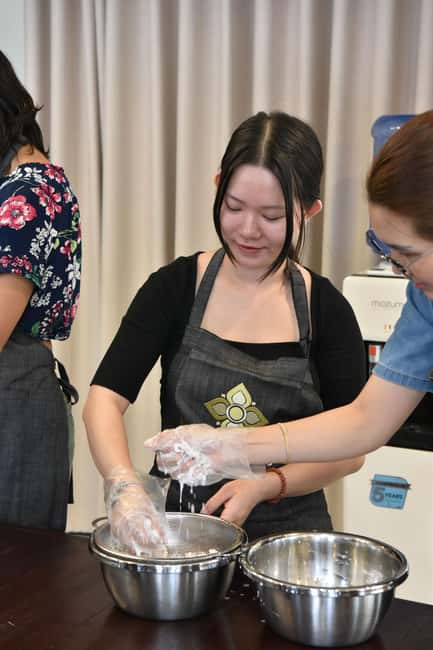
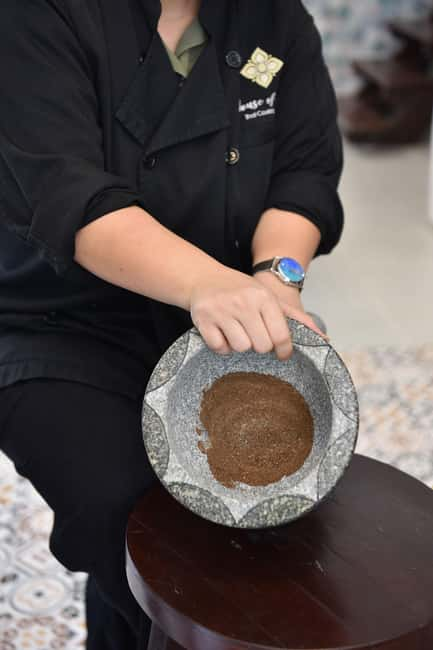
The strongest part of the class is the hands-on work. You learn to make fresh coconut milk and curry paste from scratch, rather than relying only on bottled sauces or ready-made curry blocks.
That matters because curry paste carries much of a Thai dish’s character. Working through the ingredients gives you a better feel for the balance of herbs, spices, heat, and aroma. It also makes the recipe more realistic to repeat at home. You may not copy every market ingredient exactly, but you will understand what the paste is meant to do.
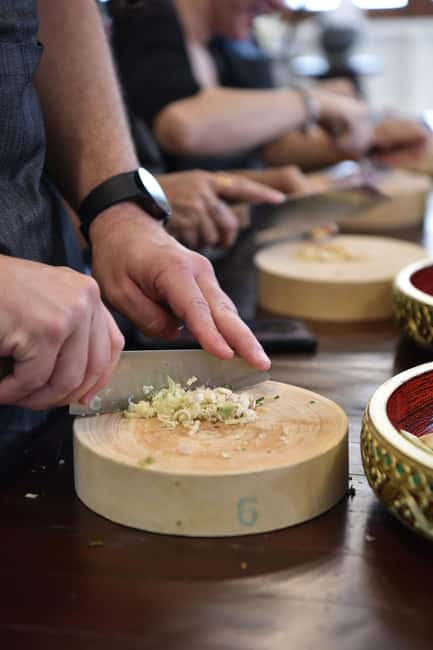
The cooking school supplies the ingredients and equipment, so you do not need to arrive with special tools. The instructions are built for beginners, and the class has been described as well structured, with clear and precise explanations. That is good news if you enjoy Thai food but rarely cook it yourself.
Instructors named in past classes include Pitch, Pitcher, Jay, and April. The teaching style appears to be friendly and practical, with special praise for clear explanations and helpful tips. Your instructor may differ, but you should expect guidance rather than a demonstration where you simply watch from the side.
The four-dish rhythm keeps the meal fresh
You spend about two hours cooking four dishes. The useful detail is the order: you prepare one dish, eat it while it is hot, then continue with the next. That is a much better format than cooking everything at once and ending with four cold plates.
The meal is substantial, but the pace still has a purpose. You learn several styles of Thai cooking in one sitting: a salad or soup, a stir-fry, a curry, and dessert on many menu days. By the end, you have worked with different textures, sauces, cooking methods, and levels of heat.
Here is the daily menu:
- Monday: Som Tum, pad Thai with shrimp, green curry with chicken, and mango sticky rice
- Tuesday: Tom Kha Gai, pad krapow gai, red curry with chicken, and mango sticky rice
- Wednesday: Tom Yum Goong, pad see ew with chicken, green curry with chicken, and mango sticky rice
- Thursday: Larb Gai, pad Thai with shrimp, panang curry with chicken, and mango sticky rice
- Friday: Som Tum, pad krapow gai, red curry with chicken, and mango sticky rice
- Saturday: Tom Kha Gai, pad Thai with shrimp, green curry with chicken, and mango sticky rice
- Sunday: Tom Yum Goong, pad see ew with chicken, panang curry with chicken, and mango sticky rice
The repetition of mango sticky rice is easy to understand: it is a dependable Thai dessert and a pleasant finish after spicy dishes. The savory menu changes more noticeably. Monday and Thursday are good picks if you want pad Thai. Wednesday and Sunday bring tom yum and pad see ew. Tuesday and Saturday focus on tom kha gai, while Friday offers a combination of papaya salad, basil chicken, and red curry.
More Cooking Classes with a Market Tour in Thailand
- Tingly Thai Cooking Class with Morning Market Tour
★ 5.0 · 589 reviews - Hands-on Thai Cooking Class & Market Tour in Sukhumvit
★ 5.0 · 571 reviews - Pink Chili – Thai Cooking Class and Market Tour in Bangkok
★ 5.0 · 416 reviews - Authentic Thai Cooking with the Largest market visit &TukTuk ride
★ 5.0 · 350 reviews
Choosing the right day for your menu
The menu should guide your booking decision. If you want a classic introduction, Monday gives you som tum, pad Thai, green curry, and mango sticky rice. It covers raw salad, noodles, curry, and dessert in one class.
Thursday is a good choice if panang curry interests you, while Wednesday and Sunday are the better options for tom yum and pad see ew. Tuesday and Saturday offer tom kha gai, a coconut-based soup, along with basil chicken or pad Thai depending on the day.
The fixed schedule is also the class’s main limitation. You cannot simply choose four dishes from the weekly list. If your trip dates are fixed, accept the day’s menu or choose another experience. If you have flexibility, select the day around the dishes you most want to learn.
There is also chicken or shrimp across much of the schedule. Vegetarian, halal, kosher, and allergy-sensitive diners can receive suitable substitute ingredients, but do not leave this to chance. State your needs ahead of time and repeat them to the instructor at the start.
Value at $45 per person
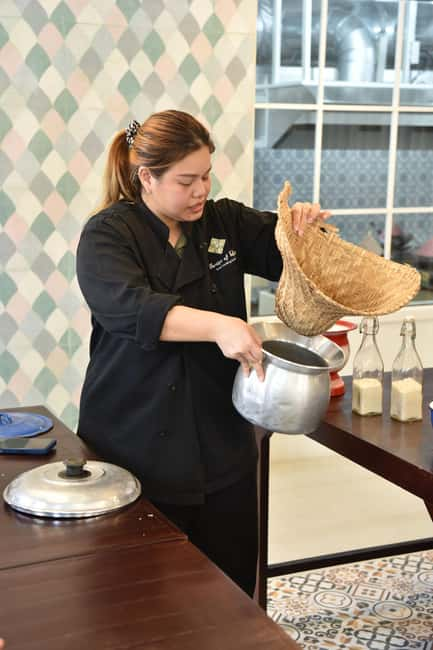
At $45, the price includes more than a single restaurant meal. You receive a market visit, four dishes, ingredients, cooking equipment, drinking water, a personal locker, and the recipes. Alcohol is not included, though it is available for purchase.
The best value comes from the teaching and the repeatability. You are not paying only for lunch or dinner. You are paying to learn several dishes and take the instructions home. That makes the experience especially worthwhile if you cook, plan to visit Thai restaurants often, or want a food-based activity with more substance than a standard tasting.
The meal itself also saves the trouble of finding a separate restaurant afterward. You cook what you eat, and the food arrives hot in stages. I would still choose this class for the lesson rather than for quantity alone. The appeal is learning to make curry paste and Thai dishes properly, not simply getting the cheapest large meal in Bangkok.
Who will enjoy this Sathon class?
This is a strong choice for first-time Thai cooks. The clear structure means you do not need advanced knife skills or deep knowledge of Thai ingredients before arriving. The lesson also suits families, since a past class was specifically recommended for children.
Food-focused couples and small private groups should like the format. You get a market visit, guided preparation, and a shared meal without spending a full day away from central Bangkok. The three-and-a-half-hour length is long enough to feel worthwhile but short enough to fit into a wider city itinerary.
I would also recommend it to anyone who wants recipes that can actually be used at home. The instruction includes standard recipes at no additional charge, and the practical tips are intended to build confidence rather than leave you with vague memories of a chef’s demonstration.
It may be less suitable if you dislike structured activities or want to roam a market at your own pace. The market visit is tied to the class, and the cooking follows the scheduled menu. It is also not the best fit if you need a fully custom menu, since the daily dishes are set.
Small details that make the class work
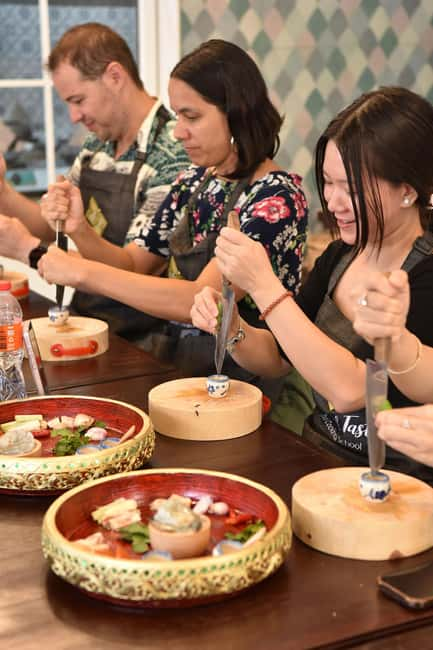
The class has several practical touches that keep the experience comfortable. A personal locker gives you somewhere to store belongings while you cook, and all equipment is supplied. Drinking water is included, while alcoholic drinks cost extra.
The cooking school’s position behind the market also reduces wasted time. You are not watching a long transfer eat into your lesson. The market and kitchen belong to one compact plan.
The format has earned praise for timing. You eat each dish before moving on, so the class does not turn into a final rush around a table covered with cooling food. That pacing also lets you ask questions while the dish is still fresh in your mind.
The teaching team appears to favor direct, easy-to-follow guidance. Pitcher has been praised for friendly explanations and useful cooking tips, while April was noted for creating a relaxed atmosphere. Jay and Pitch have also led well-liked sessions. Those details suggest a welcoming class, but the precise instructor depends on the date.
Booking advice for Bangkok
You can cancel up to 24 hours before the start time for a full refund, and the reserve-now, pay-later option keeps your plans flexible. Still, the menu calendar is the most important booking detail. Look at the day first, then match it to your food interests and dietary needs.
Use the exact meeting-point address in your map search. The school is behind Suan Phlu Market, and a precise search should help you avoid confusion. Arrive ready to walk through a market and cook for roughly two hours after the shopping portion.
If you are traveling with someone who does not cook, the class can still work because the finished dishes are part of the experience. If you have serious allergies, explain them clearly before the class and confirm the substitute ingredients. The school says it can accommodate vegetarian, halal, kosher, and allergy-sensitive preferences, but careful communication is still essential.
Should you book it?
Book this class if you want Thai food explained through ingredients, preparation, and eating, not just served to you. The Suan Phlu market visit, homemade coconut milk, hand-prepared curry paste, four hot dishes, and take-home recipes give the $45 price real value.
Choose your day carefully, since the menu is fixed and repeats on a weekly schedule. If you prefer an unplanned food walk or a completely custom cooking lesson, this may feel too organized. For beginners, families, and anyone who wants to recreate Thai food at home, it is a practical and enjoyable choice in Sathon.
FAQ
Where does the Thai cooking class meet?
It meets at the House of Taste Thai Cooking School at 33, Thanon Suan Phlu, behind Suan Phlu Market, Thung Maha Mek, Sathon, Bangkok 10120.
How long does the experience last?
The full activity lasts 210 minutes, or three and a half hours. The cooking portion takes about two hours.
Is the market tour included?
Yes. The Suan Phlu fresh market visit is included in every class, including morning, afternoon, and evening sessions.
How many dishes will I cook?
You will prepare four authentic Thai dishes and eat each one while it is hot. Mango sticky rice appears on every daily menu.
Can I choose the dishes?
The menu changes by day, but the dishes are set according to the weekly schedule. Check the menu for your chosen day before booking.
Can dietary restrictions be accommodated?
Yes. Suitable substitute ingredients can be provided for vegetarian, halal, kosher, and allergy-sensitive diners. Share your requirements in advance.
What is included in the $45 price?
The price includes the four-course meal, drinking water, all ingredients and cooking equipment, a personal locker, the market tour, and standard recipes. Alcoholic drinks are not included, but they can be purchased.
More Thai Cooking Classes in Bangkok
- Bangkok: Tingly Thai Cooking School Half-Day Cooking Class
★ 4.9 · 1,191 reviews - Tingly Thai Cooking School Evening Class
★ 5.0 · 335 reviews - Tingly Thai Cooking School Afternoon Class
★ 5.0 · 291 reviews - Bangkok: White Lotus Thai Cooking Class with Market Tour
★ 5.0 · 285 reviews
Just added around Bangkok
- Bangkok Udomsuk Thai Cooking Class with local market tour★ 5.0 · 5 reviews
- Thai cooking class experience in Bangkok with Tingly Thai cooking school★ 5.0 · 59 reviews
- Hands-On Thai Cooking Class Bangkok with Local Chef (Small Group)★ 5.0 · 119 reviews
- Thai Cooking Class★ 5.0 · 25 reviews
- Thai Cooking Class in Bangkok★ 5.0 · 23 reviews
- White Lotus Thai Cooking Class in Bangkok★ 5.0 · 31 reviews
- Baipai Thai Cooking School: Authentic Cooking Class Tour★ 5.0 · 3 reviews
- Sompong Thai Cooking School: Hands-On Culinary Experience★ 5.0 · 4 reviews
Cooking Classes with a Market Tour, compared.

Hanoi Cooking Class: Culture, Local Market & Meaning CSR Impact
Read our review →
5 Traditional Dishes Hanoi Cooking Class with Market Trip
Read our review →
Cooking Class and Lunch at a Tuscan Farmhouse with Local Market Tour from Florence
Read our review →
Cooking Class, Market & Thai Herbs Garden Tour
Read our review →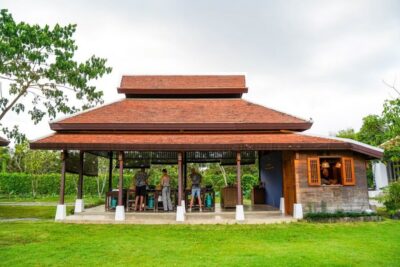
Authentic Cooking Class with Market & Farm Visit
Read our review →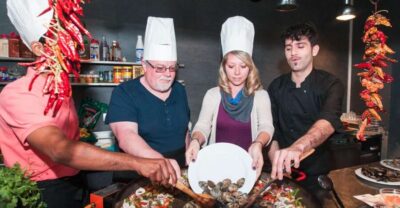
Paella Cooking Experience & Boqueria Market Tour
Read our review →
Cooking Class Hoi An:Local Market, Basket Boat, Fishing & Cooking
Read our review →