REVIEW · VENETO, ITALY
Ancient Venice and its spices: cooking class and market tour
Spices can tell Venice’s story. This three-hour private experience links a walk through Rialto Market with hands-on cooking, old Venetian recipes, and a meal in Massimo’s historic home. I especially like the mix of food and local history, plus the chance to taste ingredients such as saffron, pepper, anise, cardamom, nutmeg, and cinnamon in a meaningful setting. The main drawback is the activity’s long list of restrictions, including no wheelchair access and no participation for children under two or adults over 70.
I also like that this is more personal than a standard pasta lesson. You shop for ingredients, hear stories about merchants and spice routes, then cook and eat in a private group. Still, the exact menu is not fixed, so you should contact the host ahead of time with your food preferences, allergies, or other dietary needs.
Key points at a glance
- Rialto Market comes first: Spend about an hour seeing and shopping among Venice’s best-known food stalls.
- Spices carry the story: Learn how saffron, pepper, anise, cardamom, nutmeg, and cinnamon shaped Venetian cooking.
- Massimo is the host: His warmth, local stories, and cooking knowledge are central to the experience.
- The meal is hands-on: You help prepare old recipes with a modern touch, then sit down for food, drinks, and conversation.
- Private groups keep it personal: The experience is designed for your own group rather than a large class.
- Plan around the restrictions: The activity is not suitable for wheelchair users, young children, people with several listed medical conditions, or anyone over 70.
Why Venice’s spice trade belongs in a cooking class
Venice was not simply a city of canals and grand palaces. It was also a major meeting point for goods arriving from distant places. Spices were valuable, practical, and closely tied to the city’s trade networks.
That makes this experience more interesting than a basic lesson in rolling pasta. You are not just learning a recipe. You are looking at how ingredients changed what people cooked, how merchants made money, and how food reflected Venice’s place between Europe and the eastern Mediterranean.
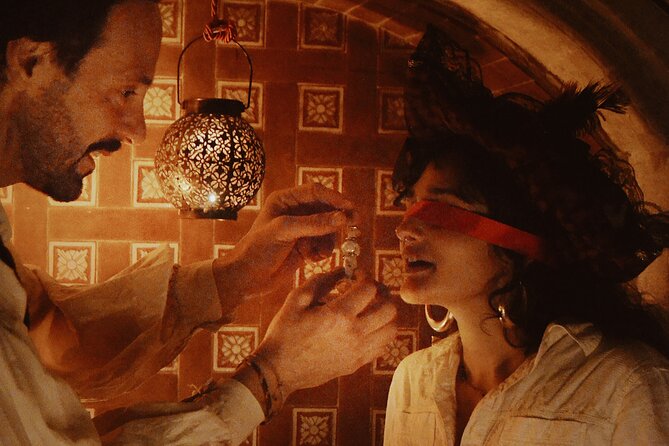
The experience uses spices as its main thread. Saffron, pepper, anise, and cardamom are specifically included, while reviews also describe dishes using nutmeg and cinnamon. The point is not only to smell and taste them. You learn how each one can alter a dish and how older Venetian cooking used flavors that may seem unusual in a modern Italian kitchen.
The theme also draws on figures such as Marco Polo and Casanova. That gives the class a playful historical frame, though you should think of it as storytelling woven into a meal rather than a formal academic lecture.
More Cooking Classes with a Market Tour in Italy
- Market Tour and Cooking Class with a Local Venetian Chef
★ 5.0 · 313 reviews - Venice: Rialto Market Tour, Cooking Class, and Lunch
★ 4.9 · 119 reviews - Rialto Market Tour & Private Cooking Class in the Heart of Venice
★ 5.0 · 106 reviews
Starting at Caffè Vergnano 1882
The meeting point is directly in front of the door of Caffè Vergnano 1882, at approximately 45.438690185764, 12.335534095764. That precise location is useful in Venice, where a nearby canal, bridge, or narrow lane can make a simple address less clear than expected.
You will want to arrive ready for walking. The first part takes place around the market, followed by a walk of about 10 minutes to the cooking location. Wear shoes that are comfortable on Venice’s hard paving and bridges.
The café is a practical place to orient yourself before starting. Since the host asks you to meet outside the door, do not assume you should wait inside or search for a tour desk. Look for the guide at the stated spot.
One hour at Mercato di Rialto
The Rialto Market is the experience’s most public and energetic stop. You spend roughly an hour visiting, sightseeing, and shopping for ingredients before heading to the private cooking space.
This section matters because it gives the meal a sense of place. Instead of arriving at a kitchen with ingredients already laid out, you begin by seeing what Venice’s food culture looks like in daily use. The market helps connect the spices and produce to the city around you.
You can expect the host to point out local flavors and ingredients as you move through the market. The exact shopping list depends on the menu and your preferences, so I would not expect a fixed parade of particular stalls or products. The supplied details do not promise a seafood-focused visit, a set number of vendors, or a specific market dish.
That uncertainty is also part of the charm. The meal can respond to your group’s wishes, rather than following a rigid classroom script. If you want a vegetarian meal, as one group did, mention it in advance. The host prepared an excellent multicourse vegetarian meal for that party, which suggests the menu can be adapted thoughtfully.
One practical point: this is a walking market tour, not a seated tasting. You will be on your feet, moving through a public market, then walking onward to the home. Anyone who finds uneven paving or extended standing difficult should consider that before booking.
From the market to Massimo’s old Venetian home
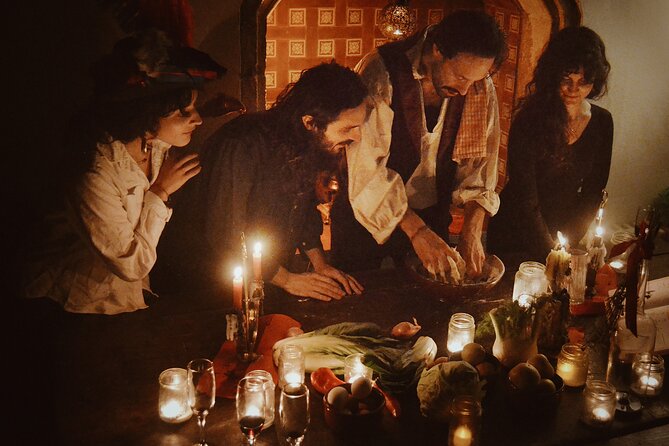
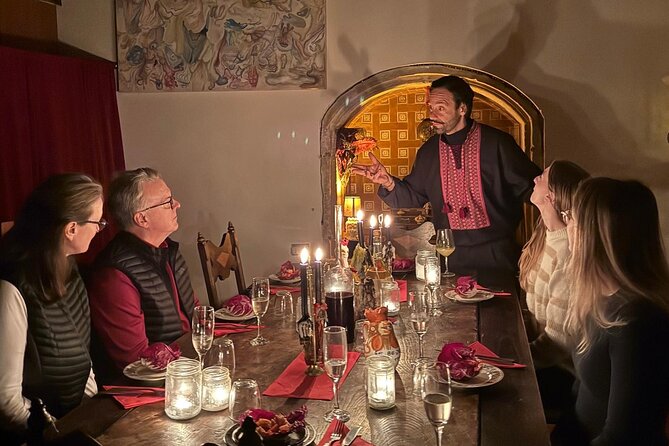
After the market, you walk for about 10 minutes to Venice’s cooking location. The class takes place in Massimo’s home, described as an old house filled with a sense of the past. Candles, a tricorne hat, old recipes, and spice displays help create the period atmosphere.
This setting is a major part of the appeal. A commercial cooking school can be efficient, but a private home changes the mood. The reviews describe arriving as strangers and feeling quickly welcomed as if visiting a friend. That personal welcome is one of the strongest reasons to choose this experience over a larger group class.
The home is also presented as an old spice shop in miniature. You can expect the setting to support the stories and the cooking, rather than serve as a plain kitchen where the historical theme disappears once the lesson begins.
Still, it is worth keeping expectations sensible. The information does not provide the home’s exact address, room layout, number of cooking stations, or details about seating. The experience is not advertised as wheelchair accessible, so the venue and route may present physical challenges.
More Cooking Classes with a Market Tour in Venice
- Rialto Market Tour with Hands on Cooking Class, Wine & Tiramisu
★ 4.5 · 66 reviews
Cooking ancient recipes with a modern touch
The cooking section lasts about two hours and 15 minutes, including the meal, tastings, drinks, and stories. You take part in reconstructing dishes from older Venetian traditions, with the spices serving as the main teaching tool.
This is not described as a narrowly focused pasta-making class. You may help prepare several courses, and the meal can include a starter, main dish, dessert, wine, spirits, and other tastings. The exact menu is not set in the information provided, so you should ask what is planned for your date if a particular dish matters to you.
One especially memorable dish described by a participant combined handmade pasta made with ancient flour and a wild mushroom sauce seasoned with nutmeg and cinnamon. That example shows the class’s character well. It is recognizably Italian, but the seasoning takes you beyond the familiar tomato, basil, and garlic routine.
I like that the lesson seems designed around tasting and discussion rather than technical perfection. You are there to understand how ingredients work, help prepare food, and enjoy the result. If you hope to leave with a precise pasta-making syllabus or a formal recipe booklet, that is not promised.
The host can also work around at least some dietary needs. One person specifically praised Massimo for accommodating a food allergy with great care. You should still disclose allergies and preferences before the activity. Do not wait until you are already at the market.
Massimo’s role makes the experience personal
Massimo is the central reason this experience feels different from an ordinary cooking class. His role combines host, teacher, guide, storyteller, and cook.
He is praised for explaining Venetian history through food, sharing local anecdotes, and making the class lively. His hospitality is repeatedly described as warm and generous. That matters because a private home experience depends heavily on the person leading it. If the host were distant or rushed, the format would lose much of its appeal. Here, Massimo’s personality is clearly part of what you are booking.
His stories also give structure to the meal. You may hear about Venice’s merchants, old recipes, family traditions, and the way spices moved along ancient routes. The activity uses humor and theatrical details, including candles and a tricorne, to make the past feel approachable.
I would not book this expecting a certified culinary course or a specialist lecture on maritime trade. Book it for conversation, food, atmosphere, and a host who connects those pieces well.
What you may eat and drink
The experience includes food and drink throughout the cooking visit. Depending on the menu, this can include lunch or dinner, wine tasting, spirits, dessert, and a final drink such as grappa with espresso.
The meal appears to be a real part of the activity, not a small sample after a short demonstration. One group enjoyed a multicourse vegetarian meal, while another described handmade pasta and a mushroom sauce as the high point of the meal. These details suggest you should arrive hungry.
The emphasis is on old Venetian dishes with a hint of innovation. That could appeal to you if you enjoy familiar Italian food with less familiar seasoning. It may be less suitable if you want a predictable menu or dislike trying ingredients that are not part of your usual cooking.
Because the menu is flexible, ask about your preferences before booking. The host specifically invites questions about what you would prefer to taste and any allergies. That conversation can help ensure the meal suits your group.
Alcohol is part of the advertised experience. Wine and spirits are included in the food and tasting description, and grappa with espresso is mentioned as part of the closing hospitality. If you do not drink alcohol, ask in advance about alternatives. The available details do not state what nonalcoholic options are offered.
Why the private format matters
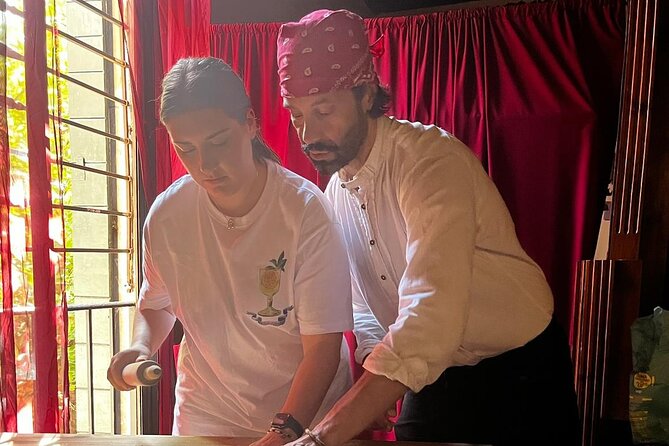
The private group setup is one of the best practical features. You are not sharing the cooking bench with a large crowd, and the host can shape the conversation around your interests.
For a family with adult children, a couple, or a small group of friends, this format can turn a meal into a shared event. One group of four included two adults and their adult children, and everyone took part. Another booking was used as a birthday activity, with the host making the occasion feel special.
The private format also helps with food requests. A vegetarian meal and an allergy adjustment were both handled successfully in the available feedback. That does not guarantee every request can be met, but it is a good reason to communicate early.
The tradeoff is that private experiences often offer less predictable structure than large cooking schools. The host’s style, the market’s condition, and your own questions may shape the pace. I see that as a benefit here, but people who prefer a tightly timed lesson may want something more formal.
Timing, walking, and practical limits
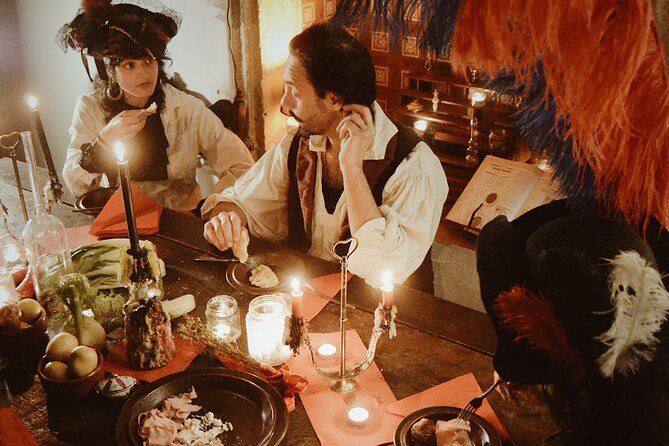
The total duration is three hours. About one hour is spent at the Rialto Market, about 10 minutes walking, and about two hours and 15 minutes at the cooking location. The timing leaves room for the meal and conversation rather than treating the cooking as a quick demonstration.
The activity ends at Campo Santa Maria Formosa. This is useful when planning the rest of your day, since you will not return to the original café. You can arrange your next stop from that area rather than building in time to retrace the route.
The class is offered in English. It is a private group experience, which makes it suitable for people who want direct conversation with the host rather than a multilingual group lesson.
The listed restrictions are unusually specific. The experience is not suitable for:
- Children under two
- Babies under one
- Wheelchair users
- People with epilepsy
- People with diabetes
- People with high blood pressure
- People over 70
The information does not explain the reason for each restriction. If one applies to you, contact the provider before booking rather than assuming an exception. The walking, food, alcohol, home setting, and possible sensory elements may all be relevant.
Is the experience good value?
No price is provided here, so I cannot judge it by a precise euro amount. I can still explain what you are paying for. This is not merely a cooking lesson. The package combines a private host, a Rialto Market visit, shopping, a guided food conversation, hands-on preparation, a multicourse meal, drinks, and local storytelling.
That can be good value for a small group that would otherwise pay separately for a market tour and a restaurant meal. The private setting adds another layer, especially if you are celebrating a birthday or marking a special occasion.
The value is less clear if your main goal is to master a technical skill. A focused pasta class may give you more repetition and a more standardized recipe. This experience puts equal weight on conversation, history, atmosphere, and eating.
I would also compare the cost with your dining plans. If the class includes a substantial meal, wine, dessert, and spirits, it can replace one of your main meals in Venice. If you are mainly interested in quick tastings, you may find the three-hour commitment longer than necessary.
Who should book it?
I would recommend this to food lovers who want context with their meal. It suits couples, adult families, small groups of friends, and anyone who prefers a private host to a large classroom.
It is especially good for you if you enjoy asking questions, trying unfamiliar spices, and listening to personal stories. The experience seems strongest when you treat it as a shared afternoon or evening rather than a simple recipe lesson.
Vegetarians and people with food allergies should still contact the host before booking, but the available details show a willingness to adapt. The host’s personal attention is a real advantage here.
I would choose another activity if you need step-free access, want a child-friendly class, avoid alcohol, or prefer a fixed menu. You should also reconsider if standing, walking, or a home-based setting would be uncomfortable.
Should you book Ancient Venice and Its Spices?
Yes, if you want Venice through food rather than only through monuments. The combination of Rialto Market, unusual spices, old recipes, and Massimo’s welcoming style gives the experience a strong sense of place.
Book it for the stories and the meal as much as for the cooking. Contact the host before arrival with allergies, dietary needs, and preferred foods, then allow the class to unfold at its own pace. For a small group seeking a personal Venetian memory, this is a strong choice.
FAQ
How long does the experience last?
The experience lasts three hours.
Where does the activity begin?
It begins directly in front of the door of Caffè Vergnano 1882.
Where does the activity end?
It ends at Campo Santa Maria Formosa.
Is the Rialto Market included?
Yes. You spend about one hour visiting, sightseeing, and shopping at Mercato di Rialto.
Is there walking between the market and the cooking location?
Yes. The route from the market to the cooking location takes about 10 minutes on foot.
Is the cooking class held in a private home?
Yes. The cooking and meal take place in the host’s old Venetian home.
What language is the experience offered in?
The experience is offered in English.
Is this a private group activity?
Yes. The group type is private.
Can I share food preferences or allergies?
Yes. The host asks you to share your preferences and allergies so the cooking class can be prepared appropriately.
Is the experience suitable for wheelchair users?
No. The activity is listed as not suitable for wheelchair users.
Just added around Venice
- Venice: Cooking Class with Tiramisu and Pasta Making★ 4.9 · 71 reviews
- Cesarine: Venice Show Cooking & Dining Experience at Local’s Home★ 4.5 · 11 reviews
- Cesarine: Home Cooking Class and Meal with a Local in Venice★ 5.0 · 28 reviews
- Venice: Traditional Home Cooking Experience★ 5.0 · 22 reviews
- Rialto Market Tour with Hands on Cooking Class, Wine & Tiramisu★ 4.5 · 66 reviews
- Rialto Market Tour & Private Cooking Class in the Heart of Venice★ 5.0 · 106 reviews
- Venice: Rialto Market Tour, Cooking Class, and Lunch★ 4.9 · 119 reviews
- Venice: Pasta and Tiramisu Cooking Class at a Local’s Home★ 4.8 · 205 reviews
Cooking Classes with a Market Tour, compared.

Hanoi Cooking Class: Culture, Local Market & Meaning CSR Impact
Read our review →
5 Traditional Dishes Hanoi Cooking Class with Market Trip
Read our review →
Cooking Class and Lunch at a Tuscan Farmhouse with Local Market Tour from Florence
Read our review →
Cooking Class, Market & Thai Herbs Garden Tour
Read our review →
Authentic Cooking Class with Market & Farm Visit
Read our review →
Paella Cooking Experience & Boqueria Market Tour
Read our review →
Cooking Class Hoi An:Local Market, Basket Boat, Fishing & Cooking
Read our review →