REVIEW · ROME, ITALY
3 in 1 Cooking Class near Navona: Fettuccine, Ravioli & Tiramisu
Pasta is Rome’s most delicious souvenir. This three-hour class near Piazza Navona gives you hands-on practice making fettuccine, ravioli, and tiramisu, then lets you sit down and eat what you prepared. I like the friendly teaching style, especially from chefs such as Carlotta, Lori, Mimi, Leo, and Maria, and I like that the recipes are simple enough to repeat at home. The main limitation is clear: you make the pasta and dessert, but not the sauces, and some diners may find the portions a little modest.
At $83.44 per person, this is not the cheapest meal in Rome. Still, the price includes the lesson, food, wine or a soft drink, water, and either coffee or limoncello. The high 4.9 rating from 7,380 reviews and 98 percent recommendation rate suggest a very dependable experience, though you should book ahead if your schedule is fixed.
Key things to know before booking
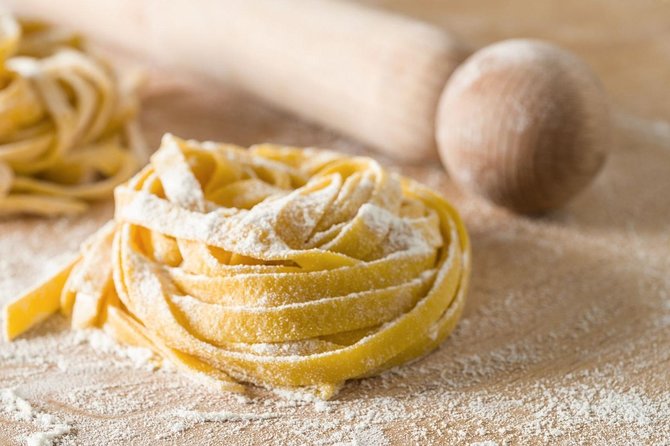
- Three Roman staples in one class: You prepare tiramisu first, then fresh fettuccine and ricotta ravioli.
- Sauce choices are included: Pick Amatriciana, Cacio e Pepe, or tomato and basil for your fettuccine.
- Ravioli uses a classic filling: Ricotta and Parmigiano are paired with butter and sage.
- You eat the food you make: Your pasta is cooked for you and served afterward with wine or a soft drink.
- Good for first-time cooks: The teaching is patient, practical, and designed for all ability levels.
- The group can reach 18 people: It is social and lively, but it is not a private lesson.
A practical cooking class near Piazza Navona
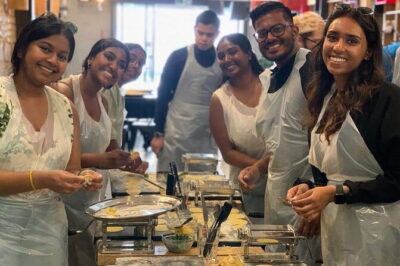
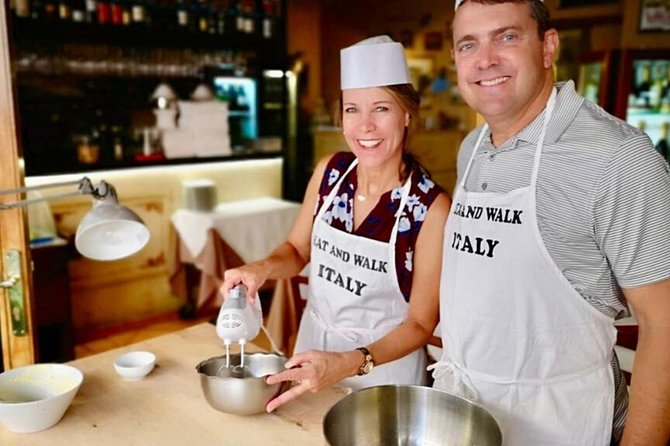
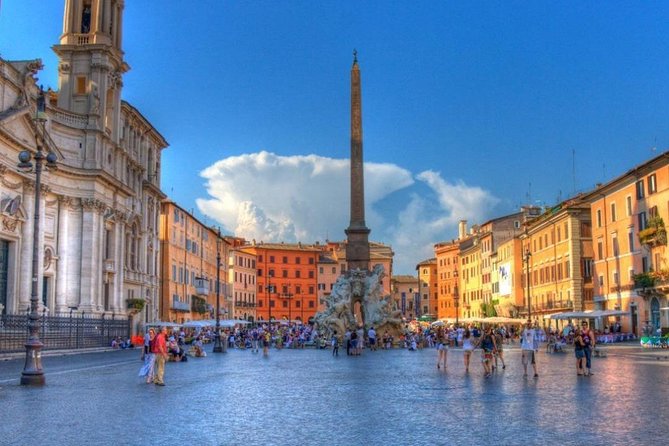
The class begins at Via Giuseppe Zanardelli 14, a convenient address in central Rome near public transportation and the Piazza Navona area. You make your own way there, meet the chef and the rest of the group, and receive an apron before the food work begins.
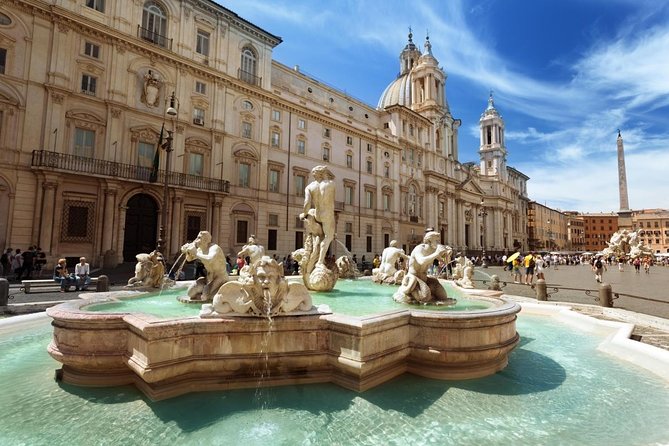
The location matters. A class near Navona fits neatly into a day spent around the Pantheon, the river, or Campo de’ Fiori. You can schedule it in the morning, afternoon, or evening, depending on the available start times. Since the experience lasts about three hours, leave enough room around it rather than trying to squeeze in a major museum visit at the same time.
The class is conducted in English. The teaching style is relaxed and active, not a formal culinary-school lecture. You work at your place while the chef demonstrates, explains, and moves around the room to help people who need an extra hand.
The official maximum is 18 people. That is small enough for a social atmosphere, but large enough that the chef cannot give you constant one-to-one attention. The quality of the class can also depend on the chef leading your session. Carlotta is praised for energy and humor, Lori for patience and warmth, and Mimi for clear explanations and family-friendly teaching. Leo, Maria, Mattia, Paris, Tom, and Furio are also named as strong instructors.
More Pasta Making Classes in Rome
- Rome: Pasta Making Class with Wine, Limoncello, and Dessert
★ 4.9 · 3,177 reviews - Rome Cooking Class: Make Pasta and 3 Spritz Cocktails
★ 5.0 · 2,937 reviews - Rome: 3-in-1 Fettuccine, Ravioli, and Tiramisu Cooking Class
★ 4.9 · 2,704 reviews
Tiramisu comes first
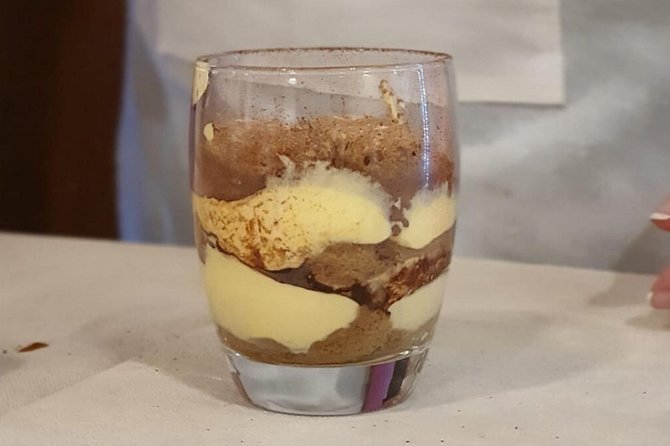
Starting with tiramisu is a clever choice. The dessert needs time to chill, so preparing it at the beginning gives it a chance to rest while you work on the pasta.
You follow a traditional recipe and assemble your own tiramisu. This is an approachable opening activity because it does not require advanced knife skills or complicated equipment. It also gives you an early success before the flour appears.
The class has shown some flexibility with ingredients. One couple noted that Maria offered an alternative for a person who disliked coffee. That is useful for families and mixed groups, though you should still mention dietary needs when booking rather than assume every substitution is possible.
The tiramisu is also one of the best parts to recreate at home. It uses familiar ingredients and does not require a pasta machine. Several people went home and made the dessert again, which is a good sign that the instructions are practical rather than merely entertaining.
Rolling fettuccine from scratch
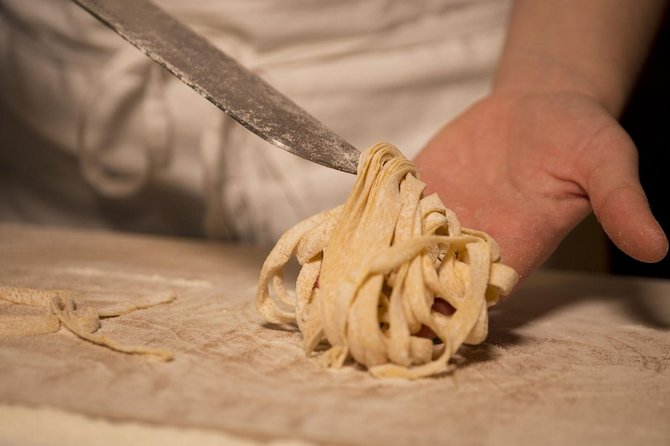
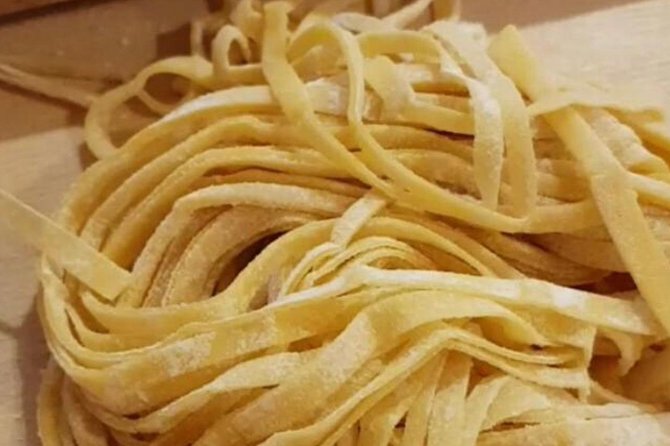
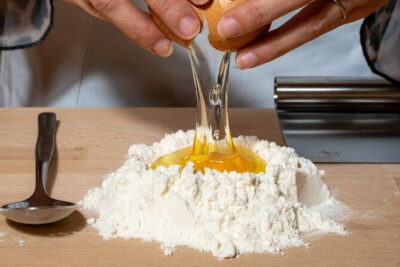
Next comes fresh pasta dough and fettuccine. This is the part that feels most like a real cooking lesson. You learn how to work the dough, shape it, and turn it into long ribbons.
The appeal is not just eating fresh pasta. It is learning a method you can use in your own kitchen. The instructors focus on clear steps and help beginners avoid the usual panic that comes when flour, eggs, and sticky dough meet on the table.
You do not need previous cooking experience. The class is designed for beginners, and the chefs are repeatedly praised for being patient, funny, and easy to follow. Chef Leo, in particular, receives praise for explaining techniques that seemed out of reach at first. Chef Lori is also noted for making the process comfortable for families and younger participants.
Once the fettuccine is shaped, you select one sauce:
- Amatriciana
- Cacio e Pepe
- Tomato and basil
The sauces are prepared by the kitchen rather than by you. This is the main point to understand before booking. If you want a class devoted to making ragù, mastering emulsions, or learning the fine points of Roman sauce technique, this is not that class.
The tradeoff is sensible for a group experience. You spend your hands-on time on fresh pasta and ravioli, the parts most people want to learn, while the professional kitchen handles the cooking and sauces. The result is less technical than a private chef lesson, but also easier and more relaxed.
Ravioli with ricotta, Parmigiano, butter, and sage
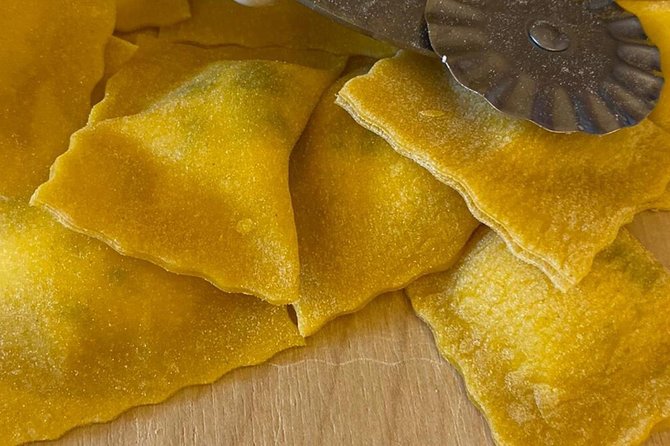
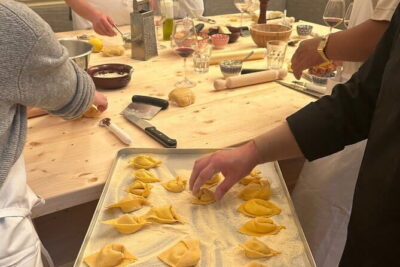
Ravioli adds a second pasta shape and gives the class a little more substance. You prepare the filling with ricotta and Parmigiano, then shape and seal the ravioli.
This section is worth paying attention to. Fettuccine is forgiving, but ravioli teaches you about filling quantity, sealing edges, and avoiding trapped air. The work takes more care, and the finished result feels more special when it arrives at the table.
The filling may include seasonal ingredients, although the listed menu centers on ricotta and Parmigiano. The finished ravioli is served with butter and sage. This is a classic pairing that keeps the focus on the pasta rather than covering it with a heavy sauce.
One useful detail is that the kitchen cooks the pasta for you after the preparation is finished. You do not need to stand over boiling water or worry about ruining the pasta at the last moment. The food is brought back to you as a meal, rather than leaving you with an uncooked project and a pat on the back.
A class participant specifically appreciated receiving individual pasta portions instead of one shared dish. That arrangement can be reassuring in a group setting, especially when people have different levels of cleanliness or different preferences at the table.
More Tiramisu and Dessert Classes in Rome
- Fettuccine & Tiramisù: Cooking Class with Wine & Limoncello
★ 4.9 · 2,103 reviews - Rome: Pasta & Tiramisu Cooking Class near the Spanish Steps
★ 4.8 · 1,395 reviews - Cooking Class in the Heart of Rome: Pizza and Tiramisu Making
★ 5.0 · 1,330 reviews - 2-in-1 Pasta and Tiramisu Cooking Masterclass in Rome
★ 5.0 · 832 reviews
The meal is part of the lesson
After the preparation, you sit down and eat the food you made. That transition is important. You are not simply watching a demonstration followed by a generic restaurant meal. The fettuccine and ravioli are the practical payoff for the work you just completed.
A glass of red or white wine is included, along with water. A soft drink is available as an alternative to wine. Afterward, you finish with your homemade tiramisu and choose coffee or a shot of limoncello.
The atmosphere is social. You share the experience with other people, talk about how the dough turned out, and compare the finished pasta. If you enjoy meeting people during a trip, that group setting adds value. If you prefer quiet dining or a private lesson, the class may feel busy.
The setting can include a covered outdoor dining area. One particularly positive account described it as warm and dry on a rainy day, with enough comfort to linger over the meal and wine. That detail makes the class useful beyond sunny weather. After two days of walking through the Forum, Colosseum, and Vatican, three hours seated around a table can be a welcome break.
What the $83.44 price really covers
At $83.44, you are paying for three things: instruction, a meal, and a central Rome activity. The value depends on which of those matters most to you.
As a meal alone, the price may feel high, especially if you expect large restaurant portions. One person specifically felt that the servings could have been bigger. You should think of the food as part of a lesson rather than an all-you-can-eat dinner.
As a cooking lesson, the price is more reasonable. You make three recognizable Italian dishes, receive instruction in English, and leave with skills you can use again. The class also includes wine or a soft drink, water, and coffee or limoncello, so you are not paying the class fee and then facing a separate meal bill.
The recipes are a major part of the value. The class can provide recipes afterward, including tiramisu, pasta, and the three fettuccine sauce options. That turns a one-time Rome activity into something you can repeat for friends and family.
I would consider it good value for a first-time pasta maker, a family that wants an active activity, or a couple looking for a meal with a story attached. I would be less enthusiastic if your main goal is advanced culinary training or a large, leisurely dinner.
Why families tend to like this class
This is one of the stronger options for families with older children. An 11-year-old has enjoyed the class, and another family found that a child of nearly 11 stayed involved and had fun. The tasks are physical and visible: mixing, shaping, filling, and assembling.
The chefs also seem to keep the mood light. Carlotta is described as energetic, Lori as funny and helpful, Mimi as bubbly, and Furio as especially good with children. That tone helps a nervous beginner get started.
You should still remember that the activity lasts about three hours. Very young children may find the pace long, and the group format means the chef must divide attention among everyone. For families with older children who can follow instructions, though, it offers more shared time than another passive sightseeing stop.
It also works well for mixed groups. The cooks in your party can take the lead while the less experienced members handle simpler tasks. Even people who rarely cook can take part without feeling tested.
The best timing during your Rome visit
This makes a strong first-night activity. You get an easy introduction to Italian food, learn the names of familiar dishes, and receive recipes that can shape the rest of your meals in Rome. One person described the class on the first night as relaxed, informative, and a good way to begin the trip.
It also suits a rainy afternoon or a day when your legs need rest. Rome rewards walking, but the Forum, Colosseum, Vatican, and city center can wear you down. A seated cooking class gives you a useful change of pace without wasting a day indoors.
An evening session can replace dinner, since the prepared pasta and dessert are served at the end. Just remember that the class includes a set menu and drinks, not a broad restaurant menu. If you have strong dietary restrictions, confirm what can be changed before you pay.
Because the experience is often booked around 40 days ahead, popular start times may fill. The schedule offers several times throughout the day, but flexibility is still helpful. Free cancellation is available up to 24 hours before the start time. Inside that window, the payment is not refunded and changes are not accepted.
Strengths, limits, and the right expectations
The strongest part of this experience is the balance between instruction and fun. You do real work, but the chefs do not make the class intimidating. The high rating is supported by repeated praise for clear teaching, patience, humor, and hands-on help.
The second strength is the menu. Fettuccine, ravioli, and tiramisu give you three different skills in one sitting. The dishes are familiar enough to enjoy immediately, but useful enough to repeat later.
The main limits are just as clear:
- You do not make the sauces.
- The group may include as many as 18 people.
- Portions may feel light if you arrive very hungry.
- The chef leading your class can vary.
- The class is in English, not a private multilingual lesson.
- Extra food and drinks are not included.
None of these points ruins the experience. They simply help you decide if the class matches your expectations. Come for a friendly, hands-on introduction to Italian pasta, not for professional kitchen training.
Should you book the Navona pasta class?
I would book this class if you want to do more than look at Roman food through a restaurant menu. It gives you a practical skill, a social meal, and three recipes that can follow you home.
It is especially well suited to families with older children, first-time cooks, couples, and anyone looking for a rainy-day or low-walking activity. Choose it early in your visit if you want the recipes and techniques to influence later meals.
I would skip it if you need a private lesson, expect generous restaurant portions, or specifically want to learn sauces. For most people who accept those limits, $83.44 buys a pleasant and useful three hours near Navona, with enough pasta to make your Roman memories taste better long after you leave.
FAQ
Where does the cooking class begin?
The class begins at Via Giuseppe Zanardelli 14, 00186 Rome, Italy.
How long does the experience last?
The class lasts approximately three hours.
Is the class offered in English?
Yes. The experience is offered in English.
What dishes will I make?
You make fettuccine, ravioli, and tiramisu.
What sauces can I choose for the fettuccine?
You can choose Amatriciana, Cacio e Pepe, or tomato and basil.
What is inside the ravioli?
The listed filling includes ricotta and Parmigiano. The ravioli is served with butter and sage.
Are drinks included?
Yes. The class includes water and either a glass of wine or a soft drink. You can finish with coffee or a shot of limoncello.
Do I make the pasta sauces?
No. The sauces are not made during the class. You choose your fettuccine sauce, and it is prepared by the kitchen.
How many people can join the class?
The maximum group size is 18 people.
Can I cancel for a full refund?
Yes, if you cancel at least 24 hours before the scheduled start time. Cancellations made within 24 hours are not refunded, and changes during that period are not accepted.
Just added around Rome
- Testaccio: Home Cooking Cacio e Pepe, Amatriciana, Carbonara★ 4.9 · 57 reviews
- Super Fun Pasta and Gelato Cooking Class by the Vatican★ 5.0 · 6 reviews
- Spritz and Spaghetti Traditional Cooking Class in Rome★ 4.9 · 30 reviews
- ROME:Hands-On Lasagna & Marsala Tiramisu Cooking Experience”★ 5.0 · 3 reviews
- Rome: Trastevere Pasta Making Class★ 4.9 · 33 reviews
- Rome: Traditional Pasta and Tiramisu Cooking Class★ 5.0 · 4 reviews
- Rome: Vatican Food Tours, Cooking classes & Free Tours★ 4.9 · 11 reviews
- Rome: Small Group Pasta cooking class near Piazza Navona★ 4.9 · 8 reviews
Pasta Making Classes, compared.
Pasta & Tiramisu Cooking Class with Unlimited Wine
Read our review →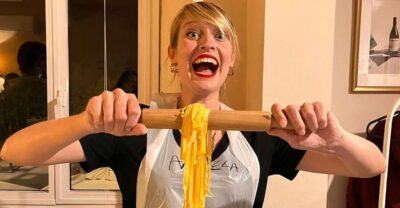
Pasta Making Class with Wine, Limoncello, and Dessert
Read our review →
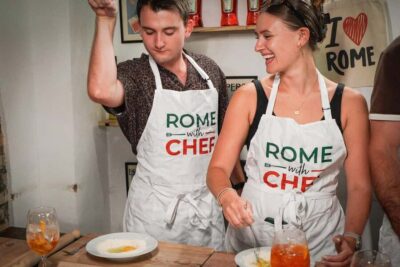
Rome Cooking Class: Make Pasta and 3 Spritz Cocktails
Read our review →
3-in-1 Fettuccine, Ravioli, and Tiramisu Cooking Class
Read our review →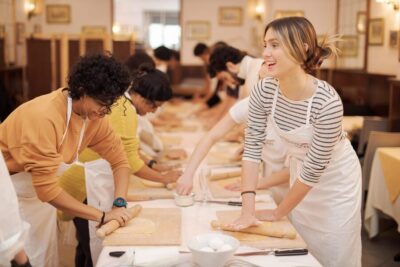
Fettuccine Pasta Cooking Class in Rome’s City Center
Read our review →