
REVIEW · NEW DELHI, INDIA
Five Course Cooking Class & Meal
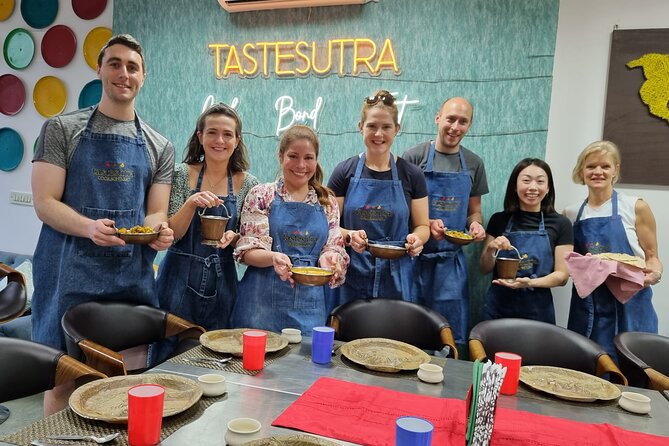
The best souvenirs are edible. At Tastesutra near Lajpat Nagar Metro Station, you cook five courses from start to finish, then sit down to eat what you made. I like the clear focus on Indian spices and the chance to learn practical recipes you can repeat at home. I also like the warm teaching style, with cultural notes on cooking, table customs, and family life.
The main consideration is time. Three hours moves quickly when you are preparing chicken, paneer, lentils, vegetables, rice, breads, and dessert. This is a hands-on workshop, not a quick demonstration, so arrive ready to work. The class costs $60.82 per person, a fair price if you value a full meal, instruction, drinks, and recipes you can keep using.
Key points at a glance
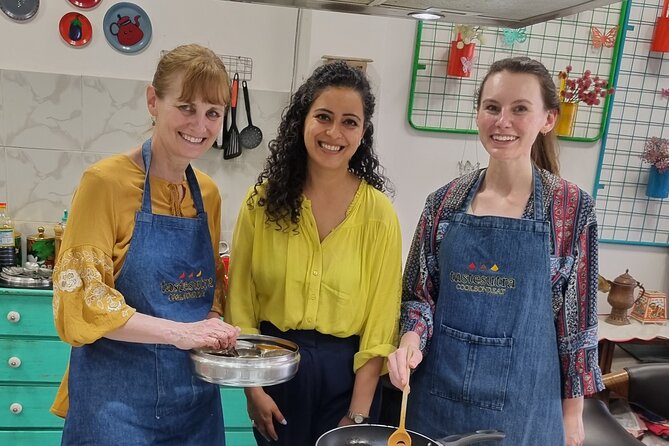
- Cook five courses yourself: The class covers a chicken dish, paneer, lentils, seasonal vegetables, rice, breads, and dessert.
- Learn the logic of Indian spices: You are shown how ingredients are combined, when spices go into the pan, and how small changes affect flavor.
- Eat what you prepare: Lunch and beverages are included, so the class ends with a proper shared meal.
- Easy Delhi location: Tastesutra is on the first floor of A-20 in Lajpat Nagar II, close to Lajpat Nagar Metro Station.
- Dietary needs can be handled: Vegetarian, vegan, and gluten-free options are available if you specify them when booking.
- A private group setting: Only your group takes part, with a minimum booking of two people and a maximum of 20.
Starting at Tastesutra near Lajpat Nagar Metro Station
The class begins at Tastesutra Cooking Studio, on the first floor of A-20, Block A, Lajpat Nagar II. The nearest metro stop is Lajpat Nagar, and the studio is accessible by public transportation.
That location matters in Delhi. You do not need to arrange a special transfer to reach an out-of-the-way cooking school. If you are staying elsewhere in the city, the metro gives you a practical way to reach the class without depending entirely on traffic. The meeting point is also the ending point, so the activity is simple to plan around.
The exact room layout and class size can vary, but the booking allows between two and 20 people. Since the activity is private to your group, you are not placed with unrelated participants. That suits couples, families, and small groups who want to ask questions freely or adjust the level of chili and other ingredients.
You should allow a little extra time to find the first-floor studio, especially if you are unfamiliar with Lajpat Nagar. The experience lasts about three hours, and the cooking itself is the main event, so arriving late could mean missing the early spice introduction.
A few more cooking classes around India worth a look
- Pink City Cooking Class
★ 5.0 · 452 reviews - Veg and Non veg : Private Cooking Class in Delhi home (7 meal)
★ 5.0 · 226 reviews - Indian Cooking Class in an Authentic Local Home – Learn 6 Dishes
★ 5.0 · 195 reviews
The first lesson: Indian spices and cooking habits
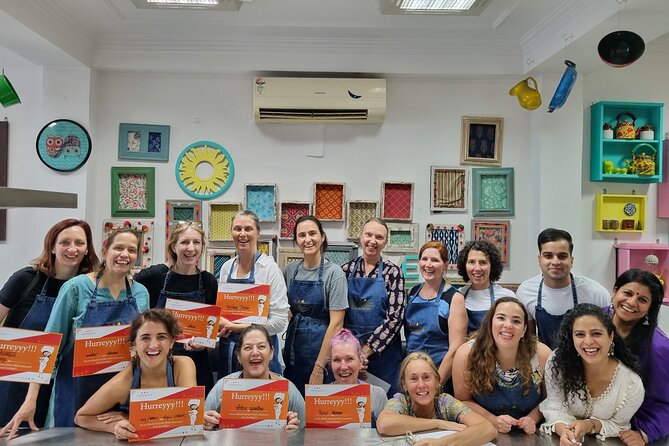
The session begins with an introduction to Indian ingredients and spices. This is more useful than simply receiving a list of recipes because Indian cooking depends heavily on order, proportion, and timing.
You learn which spices work together, when to add them, and how different ratios change the final taste. That is the part I find most valuable for home cooks. A recipe tells you what to use, but understanding why the ingredients are combined gives you more freedom when you cook later.
The instruction also connects food with daily life in India. The class includes discussion of traditional cooking customs and eating customs, along with stories about family life and local food culture. These details give the meal a wider setting. You are not only learning how to make a curry, but also how home cooking differs from what you may find in a restaurant.
Some past sessions have included explanations of the health benefits associated with spices and the difference between made-from-scratch food and restaurant preparation. Keep in mind that the exact teacher may vary. Names mentioned by participants include Sonal, Sonam, Anchal, and Alchan, so the experience may be led by different members of the Tastesutra team.
The teaching style is one of the strongest parts of the class. The instruction is described as friendly, clear, and accommodating, with explanations suited to different levels of cooking experience. One session was even offered bilingually. Still, you should not expect a formal culinary-school lecture. This is a practical class, with conversation and cooking happening at the same time.
Preparing the five-course menu
The central part of the workshop is a complete hands-on meal. The stated menu includes one beverage, a chicken dish, a paneer dish, lentils, a seasonal vegetable, rice, breads, and dessert.
That is a generous amount of food for three hours. You are not simply watching someone cook while you take notes. The class gives you a part in the food-making process, from handling ingredients to mixing spices and following each stage of preparation.
The chicken dish gives you a chance to work with the flavors often associated with North Indian cooking. The paneer dish provides a vegetarian contrast, while lentils add a staple food that is common in Indian home kitchens. Seasonal vegetables keep the meal from being only a collection of rich sauces.
Rice and breads make the menu feel like a full Indian meal rather than a set of isolated recipes. The bread portion can be especially useful because breads require attention to dough, shaping, and cooking technique. One session included three kinds of bread, though you should treat that as an example rather than a guaranteed menu for every date.
Dessert completes the meal, and a drink is included as well. Some participants specifically praised the chai, while another session began with lassi. The exact beverage or dessert may depend on the class plan, but both examples show that the experience includes more than main courses.
The menu can also be adjusted. Vegetarian, vegan, and gluten-free options are available, but you must state your needs when booking. Do not wait until you arrive. Advance notice gives the instructor a chance to organize suitable ingredients and recipes.
Why the hands-on format matters
Indian food can look complicated when you first encounter a long spice list. The class helps by breaking the process into manageable steps and allowing you to make the food yourself.
I like this format because you can ask about the details that cookbooks often skip. When should a spice go into the pan? How much chili gives flavor without too much heat? What changes when paneer replaces meat? The class is designed to address those practical questions.
The ability to control the chili level is another advantage. One participant appreciated making food with less chili, while still keeping the dishes flavorful. That is useful if you enjoy Indian food but do not want restaurant-level heat.
You also get a chance to understand how simple fresh ingredients can produce a broad range of flavors. The cooking is presented as accessible rather than mysterious. Several participants went home feeling confident enough to repeat the recipes, and some had already made them again after returning home.
That is a good test of value. A cooking class is worth more when it changes what you do later in your own kitchen. Tastesutra sends recipes afterward by email, according to the experience information, so you have a practical reference rather than only a memory of what happened in class.
Same place, a different thing to cook:
- Durga Cooking Class
★ 5.0 · 159 reviews - Private Guided Cooking Workshop Experience in Jodhphur
★ 5.0 · 158 reviews - Jaipur Market Tour & Vegetarian Rajasthani Home Cooking Class
★ 5.0 · 113 reviews - Cooking Class in Jaipur – Family Experience with Meal & Transport
★ 5.0 · 101 reviews
Sitting down to eat your own Delhi lunch
Once the cooking is finished, you eat the meal together at the studio. Lunch and beverages are included in the price, and the activity ends back at the meeting point.
This final meal is not an afterthought. It gives you time to taste the dishes side by side and notice how the spices work across the menu. You can compare the lentils with the vegetable dish, try the breads with the paneer or chicken, and finish with dessert.
The shared meal also adds a social side to the class. The setting is private to your group, but the atmosphere is still described as relaxed and friendly. Families, couples, and friends can enjoy the food without feeling rushed out as soon as the last pan is washed.
The studio has also been praised for being clean and professionally set up. That matters in a cooking activity, where a well-organized workspace makes it easier to follow instructions and stay involved.
Do not expect the meal to replace a full day of sightseeing or a long restaurant evening. The class is scheduled for about three hours, and the focus remains on learning. But if you want one substantial lunch with an activity attached, the format works well.
Cultural details beyond the recipes
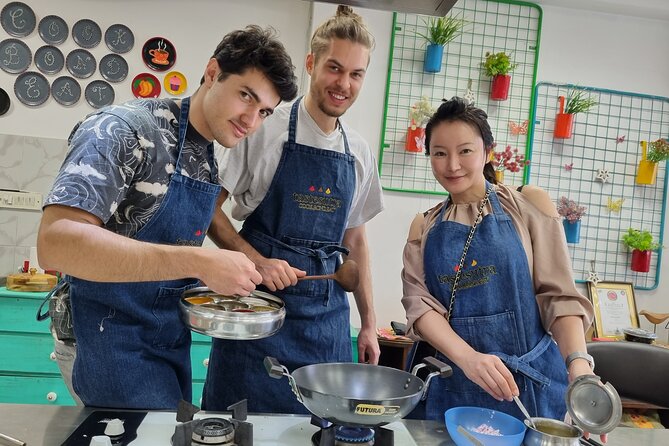
Food is the doorway into the wider culture here. The session can include discussion of traditional preparation methods, eating customs, table manners, and family routines.
These details are useful because they explain why Indian food is prepared and served in certain ways. You gain context without sitting through a separate history talk. The cultural information grows naturally out of the ingredients and dishes in front of you.
The class may also include personal stories from the instructor. That gives the session a human quality and helps connect the recipes with everyday life. The strongest teaching seems to come from instructors who explain not only the steps, but also the reasons behind them.
If you are interested in Delhi beyond major monuments, this is a good addition to a sightseeing schedule. It offers a local food experience without requiring a long trip outside the city. One family also received suggestions for places to visit in Delhi, including alternatives to the most common tourist stops. Those recommendations are not a formal part of the activity, so consider them a pleasant extra rather than a promised feature.
Tastesutra also offers a market tour as a separate follow-on activity. That is worth noting if you want to connect the cooking class with shopping for Indian ingredients, but it is not included in this three-hour booking.
Is $60.82 a good price?
At $60.82 per person, this is not the cheapest lunch in New Delhi. You can certainly eat well for less money. The question is what you are buying.
The fee includes about three hours of instruction, a five-course meal, beverages, ingredients, and recipes for later use. You also receive direct practice with several types of Indian food instead of paying only for a meal prepared by someone else.
For a visitor who enjoys cooking, the value is strong. The recipes can continue to pay off after the trip, especially if you do not often cook Indian food at home. You are also paying for the teacher’s preparation, the organized studio, and the chance to ask questions as you work.
The value is weaker if you want only a quick introduction or if your main goal is eating rather than cooking. This class asks for your time and attention. You will be handling food, following several steps, and staying involved throughout the session.
The perfect group for this price is two to four people who want a private activity and a substantial meal. Larger groups can book, up to 20 people, but a smaller party may find it easier to ask detailed questions and get close instruction.
Who should book this cooking class?
I would recommend Tastesutra to you if you enjoy food, want a practical cultural activity, or are looking for something different from Delhi’s usual sightseeing route.
It is particularly suitable for:
- First-time visitors who want an introduction to Indian home cooking
- Experienced home cooks looking for spice and bread techniques
- Families seeking a shared activity
- Couples wanting a private food experience
- Vegetarians, vegans, and people needing gluten-free adjustments
- Anyone who wants recipes to use after returning home
You do not need to be an experienced cook. The instruction is designed to be hands-on and clear, and the menu is presented step by step.
I would hesitate to recommend it if you dislike group cooking, have very little time in Delhi, or want a highly formal professional cooking course. The class is friendly and practical, not an exam or a restaurant kitchen apprenticeship.
Book at least two people, as that is the minimum booking requirement. Confirmation arrives at booking, and the activity has a mobile ticket. If your plans change, free cancellation is available up to 24 hours before the local start time. Cancellations or changes inside that window are not accepted for a refund.
Should you book Tastesutra?
Yes, if you want to understand Indian food by making it yourself.
The strongest reasons are the full menu, the clear attention to spice combinations, the welcoming instruction, and the chance to repeat the dishes at home. The class also gives you a cultural lesson without separating food from everyday life.
The only real caution is that five courses in three hours is a full schedule. You need to participate, not simply watch. For the right person, that is the appeal. For a visitor who wants a quiet lunch, it may feel like too much activity.
At $60.82, Tastesutra makes sense as a meal, lesson, and useful travel memory in one. If Indian food is one of the reasons you came to Delhi, this is a smart way to take some of it home with you.
FAQ
Where does the cooking class take place?
The class takes place at Tastesutra Cooking Studio, First Floor, A-20, Block A, Lajpat Nagar II, New Delhi. It is near Lajpat Nagar Metro Station.
How long does the experience last?
The cooking class and meal last approximately three hours.
What food is included?
The five-course cooking experience includes one beverage, a chicken dish, a paneer dish, lentils, a seasonal vegetable, rice, breads, and dessert. Lunch and beverages are included.
Are vegetarian, vegan, and gluten-free options available?
Yes. Vegetarian, vegan, and gluten-free options are available. You need to advise Tastesutra of your dietary requirements when booking.
How many people are required to book?
A minimum of two people is required per booking. The maximum is 20 people, and only your group participates in the private activity.
Can I cancel for a full refund?
Yes. You can cancel at least 24 hours before the local start time for a full refund. Cancellations or changes made less than 24 hours before the experience are not refunded or accepted.
Just added around India
- Private tour to learn Traditional Indian Art, craft & Cooking★ 5.0 · 4 reviews
- Chennai Super Market Tour and Cooking Class with a Fun Local★ 5.0 · 9 reviews
- Neighborhood Market Tour & South Indian Cooking Class in Chennai★ 5.0 · 7 reviews
- Traditional Chettinad Cooking Class in a Local Home near Chennai★ 4.5 · 12 reviews
- Chennai Dosa Making Class & Home-Dining Experience with Jyashree★ 5.0 · 8 reviews
- Cooking experience in Bangalore, a half day tour★ 5.0 · 5 reviews
- Discover Bangalore’s Cuisine: Private Half-Day Cooking Experience★ 5.0 · 3 reviews
- Traditional Gowda Cooking Class and Meal in a Bangalore Home★ 5.0 · 31 reviews
Cooking Classes, compared.
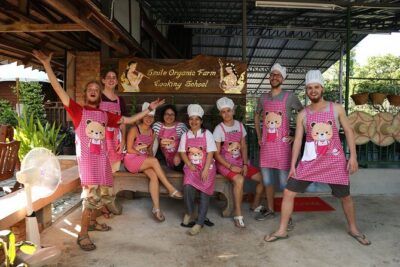
Half-Day Thai Cooking Class at Organic Farm in Chiang Mai
Read our review →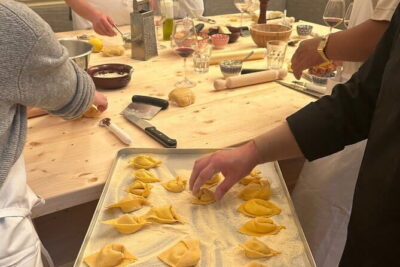
3 in 1 Cooking Class near Navona: Fettuccine, Ravioli & Tiramisu
Read our review →
Pasta & Tiramisu Cooking Class with Unlimited Wine
Read our review →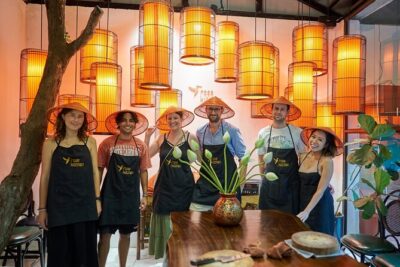
Hanoi Cooking Class: Culture, Local Market & Meaning CSR Impact
Read our review →
5 Traditional Dishes Hanoi Cooking Class with Market Trip
Read our review →
Cooking Class and Lunch at a Tuscan Farmhouse with Local Market Tour from Florence
Read our review →
Cooking Class, Market & Thai Herbs Garden Tour
Read our review →Lists this class appears in