
REVIEW · CRETE, GREECE
Chania: Authentic Cooking Class
Come hungry, leave with Cretan recipes.
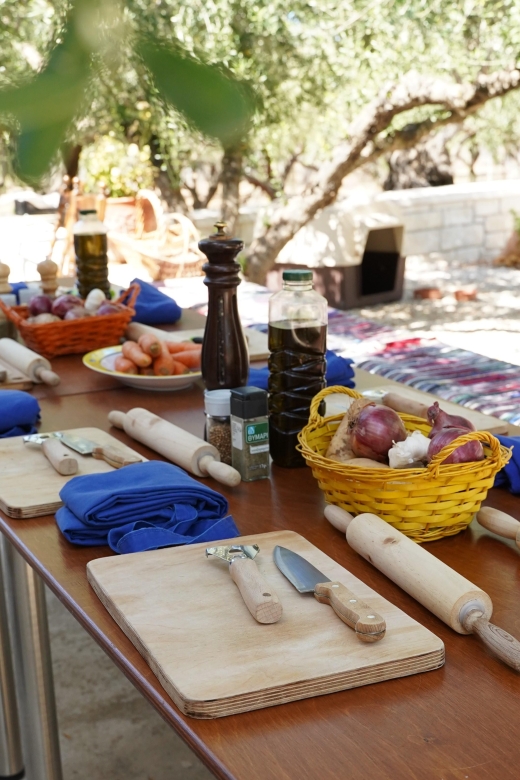
This four-hour cooking class takes you 10 to 15 minutes outside Chania, to a family home in Nerokourou shaded by olive and avocado trees. I like the fresh garden ingredients and the warm, informal welcome from Veerna, Kostas, Nikos, and their family. I also like that the class is more than a kitchen lesson: you prepare a full meal, learn local stories, then sit down together with wine and raki.
The main thing to consider is transportation. It is not included in the $129 price, so you need to drive, take a taxi, or arrange a shared transfer for an extra fee. The class can also run longer than four hours, which is pleasant if you have time, but worth noting if you have evening plans.
Key points at a glance
- Veerna’s kalitsounia are the star project: You roll the dough, add cheese and wild greens, and learn how to make one of Crete’s most loved small pies.
- The meal begins in a wood-fired oven: Lamb cooks for more than two hours while you prepare the rest of the menu.
- Produce comes from nearby: Herbs and vegetables are gathered from the family garden or bought from local farmers.
- You eat what you make: The class ends with a generous meal, local wine, raki, and dessert.
- It feels like a family gathering: The setting is a working family property, and familiar faces may stop by during the class.
- It works for families: One family found the class enjoyable for children aged 11 and 14, and a vegetarian alternative was prepared for another participant.
A short drive from Chania to a family kitchen

The class is held in Nerokourou, a pretty neighborhood outside central Chania. By car or taxi, the trip takes about 10 to 15 minutes. You can park along the fence, and the exact location is supplied after booking.
That short ride matters. You leave the busy center behind and arrive at a home surrounded by olive trees, an herb garden, avocado trees, and farm animals. A few small dogs may be part of the welcome committee. This is not a cooking school in a hotel basement. It is a family property with a purpose-built outdoor kitchen and dining area.
You can drive yourself, take a taxi, or ask for pickup. Transfers cost extra and use either a nine-seat van or a five-seat electric vehicle. You may share the ride with other people attending the class. One participant paid about €20 for a taxi from the cruise port, which gives you a useful planning guide, though your fare will depend on traffic and your pickup point.
The setting is wheelchair accessible, but transportation arrangements still deserve attention if you need a vehicle with particular access features. Ask about the transfer when booking.
A few more cooking classes around Greece worth a look
- Athens: Classic Cooking Class with Market Visit and Wine
★ 5.0 · 1,101 reviews - Athens: Food Market Visit and Cooking Class with Wine
★ 4.9 · 1,087 reviews - Greek Cuisine Cooking Class in Santorini with Recipes and Wine
★ 5.0 · 969 reviews
Greek coffee, homemade cookies, and the menu briefing
Veerna welcomes you with a homemade refreshment or Greek coffee. Cookies come with it, giving you a relaxed start before the hands-on work begins.
This opening is more important than it may sound. Cooking classes can feel rushed when everyone is sent straight to a chopping board. Here, you have time to meet the family and the rest of the group, hear what you will prepare, and settle into the rhythm of the afternoon or evening.
The instruction is in English. Veerna leads the cooking, with help from family members and assistants. Several people found her lively, funny, and easy to follow. Her style is practical rather than formal. She demonstrates a technique, explains why it matters, and then lets you try it.
You should expect conversation throughout. The family shares stories about Cretan food, olive growing, bread, and local customs. Nikos has been praised for keeping the mood light, while Kostas is often involved in welcoming people and helping with the meal.
The thieves dinner starts in the stone oven
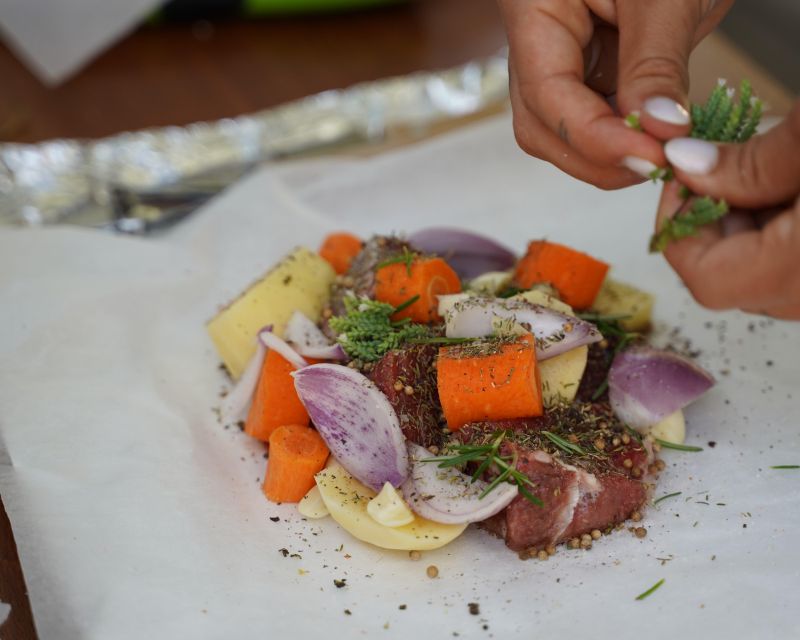
The first major dish is oven-roasted lamb, known locally as the thieves dinner. It goes into a wood-fired stone oven early because it needs more than two hours to cook.
The name provides one of the class’s most memorable history lessons. You learn why this lamb dish is linked with thieves and how it connects to older Cretan life. The food story gives the meal a sense of place without turning the class into a lecture.
There is also a practical reason to start here. Once the lamb is cooking, you have time to work on the dishes that need more attention. You are not standing around waiting for one recipe to finish. The timing keeps the class moving, with baking, chopping, rolling, and garden visits spread across the session.
The lamb is a substantial centerpiece, so this class is not ideal if you want only a light snack or a quick demonstration. It is built around a full meal. Vegetarian alternatives have been offered, so tell the hosts about dietary needs in advance.
Gathering herbs and rolling grape leaves
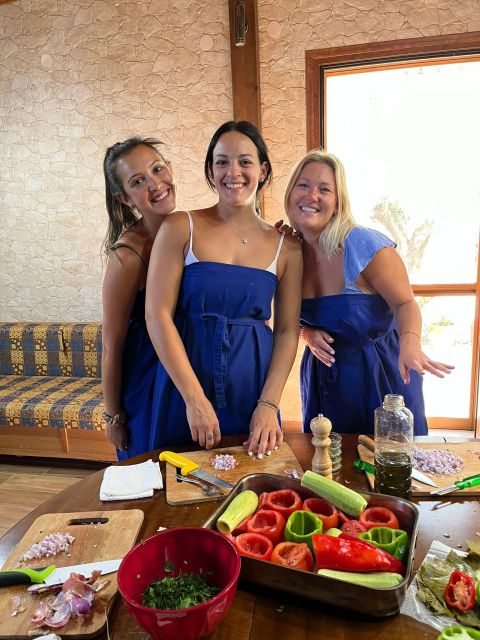
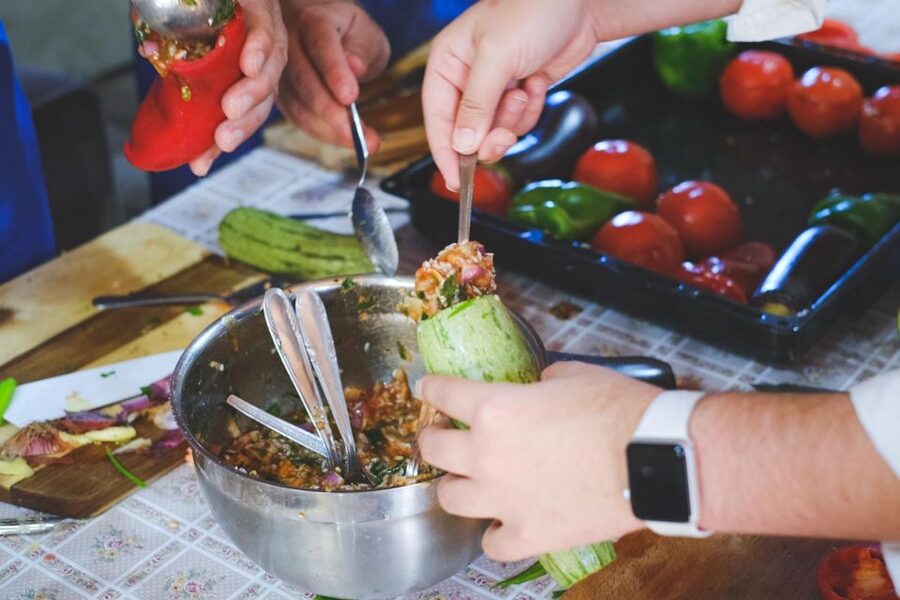
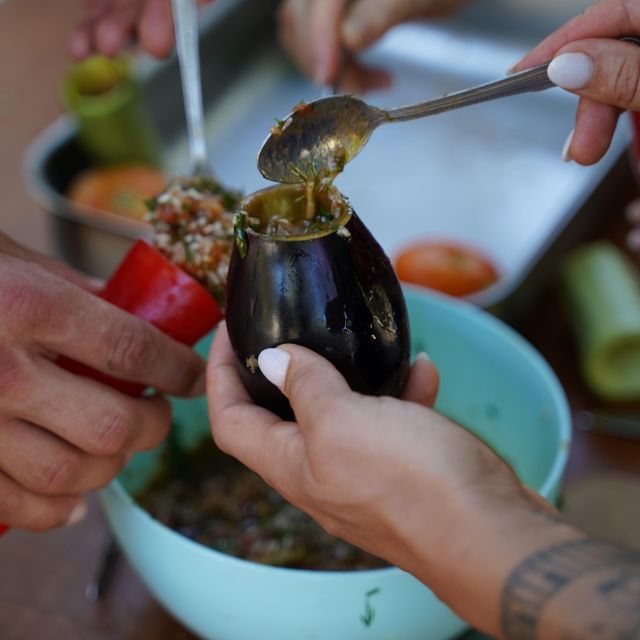
Next comes stuffed vegetables and dolmades, stuffed grape leaves. You gather herbs and vegetables from the garden, then prepare the filling.
This part shows why the location adds value. You are not simply handed premeasured ingredients. You see where some of the produce comes from, pick herbs, and connect the food to the land around the house. The garden visit also gives you a break from the workbench while the oven does its job.
Rolling grape leaves is the class’s small test of patience. The leaves are delicate, and the filling needs to be placed carefully so the rolls hold together during cooking. Veerna demonstrates the technique, then helps you correct your own rolling.
Do not worry if your first dolma looks loose or lumpy. That is part of the lesson. You leave understanding the method, which is more useful than producing perfect little parcels under instructor supervision.
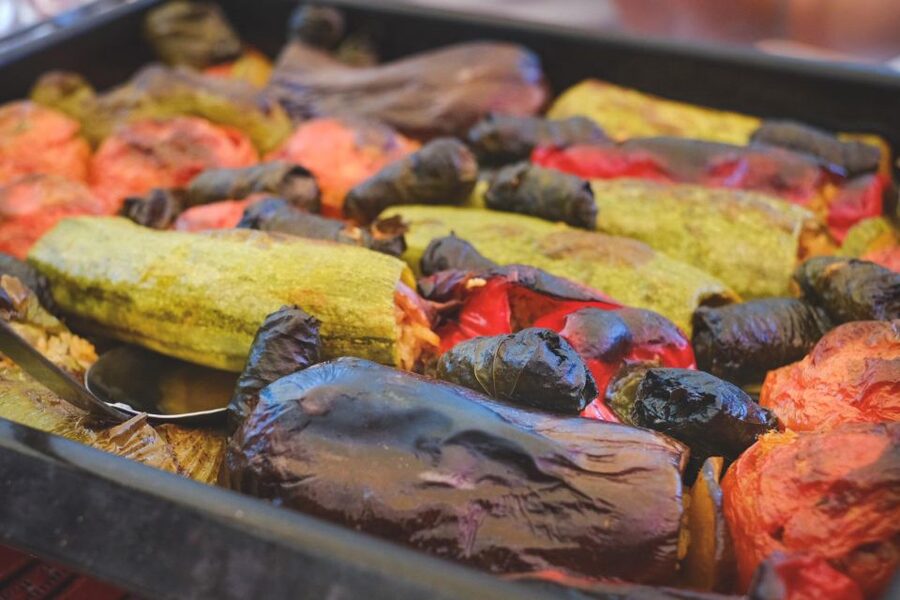
The stuffed vegetables and dolmades then go into the oven. The flavors are simple, built around herbs, vegetables, olive oil, and careful seasoning. This is the sort of food you can reasonably attempt at home, especially if you receive the recipes afterward.
Same place, a different thing to cook:
- Naxos: Half-Day Cooking Class at Basiliko Family Tavern
★ 5.0 · 887 reviews - Greek Cooking Class in Athens Including Rooftop Dinner with Acropolis View
★ 5.0 · 826 reviews - Greek Small-Group Athens Cooking Class & Dinner
★ 5.0 · 574 reviews - Exclusive Cooking Experience in our Cave Home by Petra Kouzina
★ 5.0 · 572 reviews
Making kalitsounia from scratch
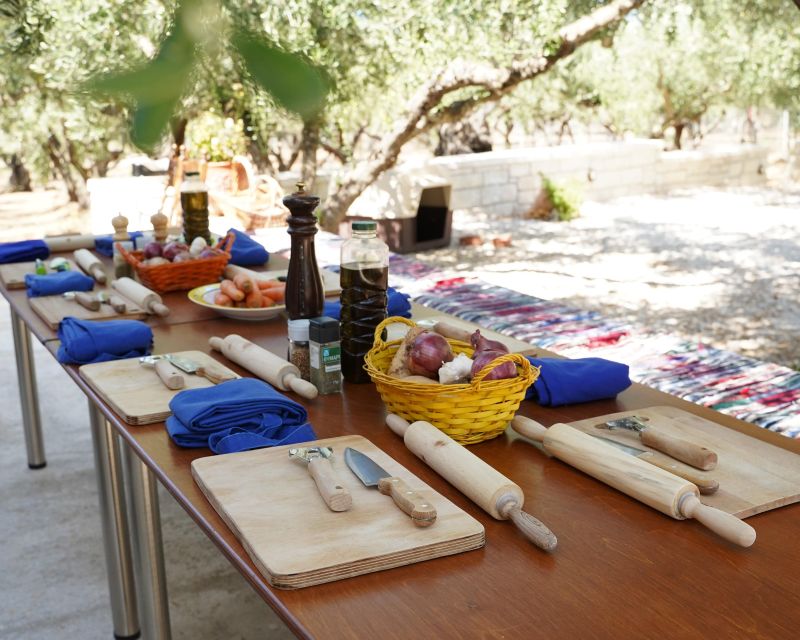
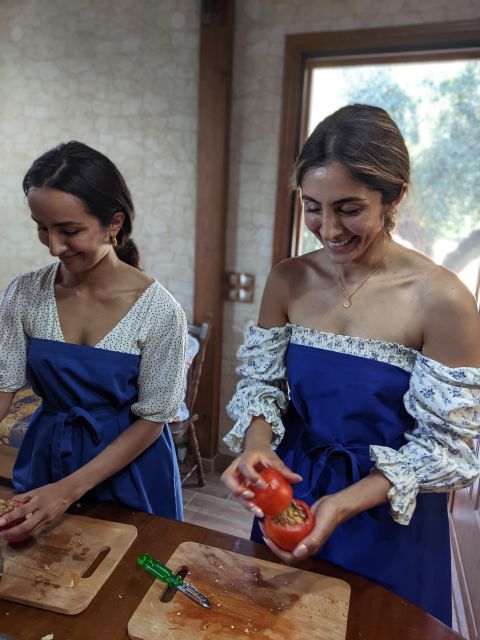
The kalitsounia portion is likely the most memorable hands-on project. These traditional Cretan pies are made with rolled dough and filled with cheese and wild greens.
Veerna is especially known for her kalitsounia, which she has sold for years. That experience shows in the way she handles the dough and explains the filling. You get out the rolling pins, work the dough, and learn how to shape the pies before they are baked.
Several people arrived doubtful that they could make phyllo or pastry at home, then found the technique manageable. That is a good sign for home cooks. The class does not depend on restaurant equipment or complicated tricks. You learn a method that feels possible in an ordinary kitchen, even if your first batch at home is less tidy.
The kalitsounia also give you a direct taste of Cretan cooking at its most useful: modest ingredients, careful handling, and a dish that works as a snack, side, or light meal. Keep notes or take mental pictures, since your hands may be covered in flour and dough when the best action is happening.
Tzatziki and dakos: the easy wins
The appetizers come last in the cooking sequence but are eaten first. You prepare tzatziki and dakos, two simple dishes that show how much flavor can come from good ingredients.
Dakos is a classic Cretan combination built around crisp bread, tomato, cheese, olive oil, and seasoning. Tzatziki brings yogurt, cucumber, garlic, and herbs into the meal. These are the easiest recipes to recreate at home, making them useful souvenirs in their own right.
I like this part of the menu because it gives you quick results after the more delicate work with grape leaves and pastry. You can taste what you have made almost immediately, then return to the oven dishes as they finish.
The appetizers also balance the lamb and baked items. The meal has plenty of food, but the menu is not just a parade of heavy dishes. Fresh vegetables, herbs, yogurt, and olive oil keep it connected to the Mediterranean cooking style being explained throughout the class.
A long table, local wine, and raki
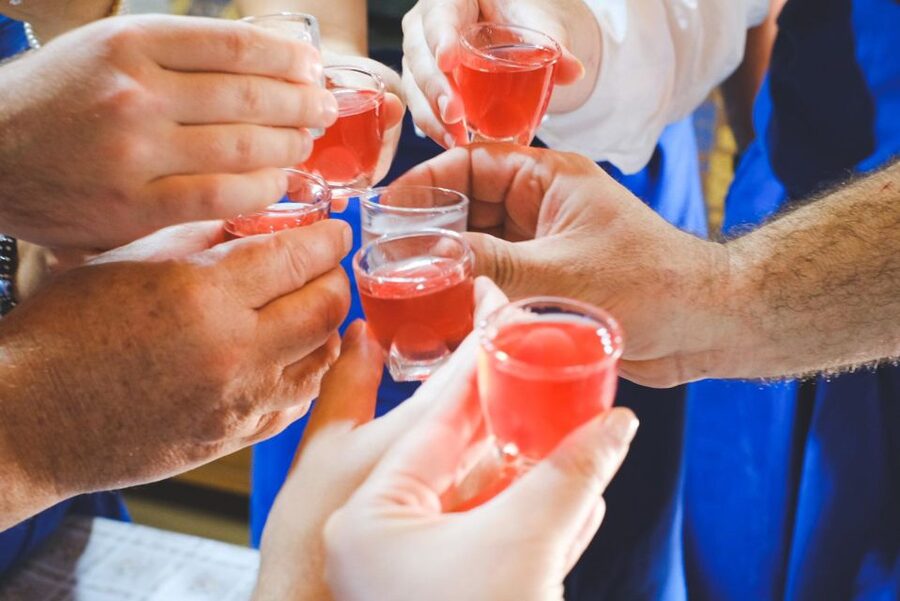
At the end, you sit down to eat the dishes you prepared. Local wine is served generously, and raki is part of the Cretan welcome. Dessert follows, although the exact sweet offering can vary.
This shared meal is the emotional center of the experience. You are not rushed out as soon as the last pan leaves the oven. You have time to talk with the family, compare your cooking efforts, and meet people from different countries.
The atmosphere is relaxed and personal. Familiar faces may stop by the house, and the family treats the cooking as a social occasion rather than a strict class. One birthday celebration even included a cake, which gives you an idea of the warm, flexible mood.
The wine and raki are included in the price, but drink sensibly. With a four-hour class, a large meal, and several drinks, it is easy to lose track of time. If you are driving, skip the alcohol and arrange a taxi or paid transfer instead.
Leftovers may be available to take with you. One participant left with enough food for another dinner, though you should not assume this is guaranteed every time.
What the $129 price really covers
At $129 per person, this is not the cheapest food activity in Chania. It is also not a quick market tasting. The fee covers four hours of instruction, ingredients, a full lunch or dinner, local wine, raki, dessert, and the use of the family property.
The value improves if you care about personal contact and cooking from scratch. You are not only watching a chef prepare food. You roll dough, gather herbs, make dolmades, prepare stuffed vegetables, and help build a complete Cretan meal.
The class also saves you the cost of a restaurant dinner, though I would not book it solely as a budget meal. The real value lies in learning techniques and taking the recipes home. You are paying for time, food, instruction, and a social evening in a private family setting.
For cruise passengers, the timing can work well if you arrange transportation carefully. The drive from the port is manageable, but leave a generous buffer before your ship’s departure. A four-hour class can stretch to roughly four and a half hours, especially when people linger over dinner.
Who will enjoy this class most
I would recommend it most strongly to people who want to meet local hosts and cook rather than simply eat. Couples, families, solo visitors, and small groups can all fit the format.
It is also a good choice for families with older children. The hands-on tasks give children something real to do, and the informal setting is less stiff than a formal culinary school. Younger children may need help with knives, hot ovens, and the long meal, but the activity has worked well for children aged 11 and 14.
You will probably enjoy it if you like:
- Traditional food with a story behind it
- Garden produce and simple local ingredients
- Social meals with wine and conversation
- Learning recipes you can try at home
- A rural setting close to Chania
- Family-run experiences instead of hotel-based activities
It may not suit you if you need a tightly timed four-hour program, dislike group activities, or want a quiet meal with no alcohol. The class is social, and the family’s hospitality is a major part of the experience.
Practical tips before you book
Tell the hosts about vegetarian needs or other dietary restrictions when you reserve. A vegetarian alternative has been prepared before, but advance notice makes the kitchen’s job easier.
Wear clothes you do not mind getting flour, oil, or food on. Closed shoes are sensible around the outdoor kitchen and garden. Bring your phone for photos, but remember that cooking with sticky or oily hands makes photography awkward. One useful improvement would be a shared folder of class photos, but you should not count on that being provided.
If you want to drive, plan around the wine and raki. If you want pickup, request the extra-cost transfer in the booking form and provide your location. The class offers free cancellation up to 24 hours before the start time, and you can reserve now and pay later, which helps if your Chania schedule is still shifting.
The class is wheelchair accessible. Confirm any transport requirements directly, since the standard vehicles are a nine-seat van and a five-seat electric vehicle.
Should you book the Chania cooking class?
Yes, if you want one of Chania’s most personal food experiences and have half a day to spare. The combination of Veerna’s teaching, garden ingredients, the wood-fired oven, traditional recipes, and a long family meal gives you much more than a standard demonstration.
I would book it early for a special occasion, a cruise stop, or a family day out. The class has earned a perfect 5 rating from 74 reviews, and the praise centers on the same things that matter most: friendly hosts, excellent food, a beautiful olive grove, clear instruction, and the feeling of being welcomed into a home.
Skip it only if your schedule is too tight for a four-hour meal or if you prefer independent sightseeing. For everyone else, the $129 is a fair price for an afternoon or evening that feeds you twice: first at the table, then later when you try the recipes at home.
FAQ
Where is the Chania cooking class located?
It is in Nerokourou, about 10 to 15 minutes from central Chania. The exact location is provided with the booking information.
Is transportation included?
No. You can reach the property by car or taxi and park along the fence. Shared pickup is available for an extra fee using a nine-seat van or a five-seat electric vehicle.
How long does the cooking class last?
The scheduled duration is four hours. It may run to about four and a half hours when the meal and conversation continue.
What food will I prepare?
The menu includes oven-roasted lamb, stuffed vegetables, dolmades, kalitsounia filled with cheese and wild greens, tzatziki, and dakos. Dessert is also served.
Are wine and raki included?
Yes. The price includes generous amounts of local wine and raki, along with the meal and ingredients.
Can I cancel or pay later?
You can cancel up to 24 hours before the activity for a full refund. Reserve now and pay later is also available.
Just added around Greece
- Authentic and Traditional Cooking Class in Chania Crete★ 5.0 · 5 reviews
- Private Cooking Class – A Culinary Journey in Argostoli★ 5.0 · 2 reviews
- Chania Cooking Class in Crete with rustic, delicious and homely Cretan food!★ 4.5 · 14 reviews
- Private Greek Cooking Class in Athens-Learn to Cook with Angelina★ 5.0 · 3 reviews
- Cook with Katerina: Authentic Greek Home Cooking Class in Athens★ 5.0 · 15 reviews
- Private Walking Meze Cooking Course★ 5.0 · 6 reviews
- Cooking Class in Athens: Learn the Art of Phyllo with Christina★ 5.0 · 24 reviews
- Greek Cooking Class with Acropolis View★ 5.0 · 76 reviews
Cooking Classes, compared.

Half-Day Thai Cooking Class at Organic Farm in Chiang Mai
Read our review →

3 in 1 Cooking Class near Navona: Fettuccine, Ravioli & Tiramisu
Read our review →
Pasta & Tiramisu Cooking Class with Unlimited Wine
Read our review →
Hanoi Cooking Class: Culture, Local Market & Meaning CSR Impact
Read our review →
5 Traditional Dishes Hanoi Cooking Class with Market Trip
Read our review →
Cooking Class and Lunch at a Tuscan Farmhouse with Local Market Tour from Florence
Read our review →
Cooking Class, Market & Thai Herbs Garden Tour
Read our review →Lists this class appears in