
REVIEW · CENTRAL HUNGARY, HUNGARY
Budapest: Chimney Cake Baking Class – More Flavors & Drinks
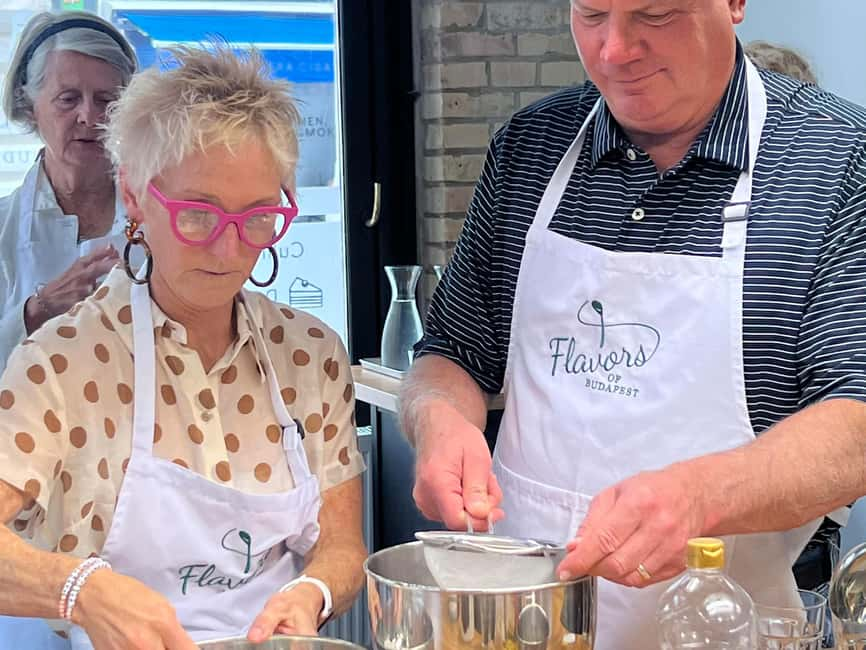
Sweet dough, hot ovens, and a Budapest classic. This 1.5-hour class at Flavors of Budapest lets you make two full-size kürtőskalács from scratch, then finish them with traditional flavors such as cinnamon, walnut, cocoa, or vanilla. I like the hands-on format, since you make your own cakes rather than watching a chef do the work. I also like that the chef explains how to repeat the process at home without professional machinery. The main consideration is the $70 price, which is fair for a guided cooking activity but more than you would pay for a ready-made chimney cake from a street stand.
The workshop takes place in a bright, well-equipped studio near Andrassy Avenue and the Opera House. You get drinks, an English recipe, and a participation certificate, too. The class requires at least eight participants to run, so check that it is confirmed before building your whole afternoon around it.
Key points at a glance
- Two proper chimney cakes: You make full-size cakes with traditional dough thickness, not small sample portions.
- Dough from scratch: The class covers the process from mixing and shaping to baking.
- Classic Hungarian flavors: Choose from cinnamon, walnut, cocoa, or vanilla.
- Useful home techniques: You learn ways to make the cakes without special professional equipment.
- Central Budapest setting: The studio is beside Andrassy Avenue, behind the Opera House, at the corner of Hajós and Ó Street.
- Friendly English instruction: The pace is relaxed, with guidance from an experienced chef and drinks during the class.
Why chimney cake makes a good Budapest activity
Kürtőskalács is one of Hungary’s best-known sweet treats. The name refers to its hollow, chimney-like shape. Dough is wrapped around a cylindrical form, baked, and coated with flavorings that cling to the warm surface.
You can buy chimney cake in Budapest, but buying one and making one are two different experiences. A finished cake gives you a snack. This class shows you the dough, the shaping, the baking, and the small practical choices that determine the final texture.
I like that the activity gives you something tied to Hungarian food culture without requiring a full day. At 1.5 hours, it fits neatly between sightseeing stops. You can visit the Opera House area, attend the class, and still have much of the day available for Budapest’s museums, baths, or cafés.
The class also gives you a better sense of what you are eating. You see how a simple strip of dough becomes a hollow pastry with a crisp outer layer and a soft center. That change is the whole point of the activity.
More Tiramisu and Dessert Classes in Budapest:
- 3 in 1 Cooking Class near Navona: Fettuccine, Ravioli & Tiramisu
★ 5.0 · 7,376 reviews - Florence: Pasta & Tiramisu Cooking Class with Unlimited Wine
★ 4.9 · 6,708 reviews - Rome: Pasta Making Class with Wine, Limoncello, and Dessert
★ 4.9 · 3,177 reviews
Finding the studio near the Opera House
The venue, Flavors of Budapest, is in central Budapest, right behind the splendid Opera House and next to Andrassy Avenue. The entrance is at the corner of Hajós and Ó Street.
This is a useful location for a short food class because you do not need to spend a large part of your day reaching it. The area is already part of many sightseeing routes, so you can combine the workshop with a walk along Andrassy Avenue or a visit to the surrounding central streets.
The meeting point is the chef’s venue, not a hotel or a pickup point. Hotel pickup and drop-off are not included, so you need to make your own way there. Give yourself enough time to identify the corner entrance, especially if you are arriving straight from another attraction.
The studio itself is described as bright, professional, comfortable, and well equipped. That matters in a cooking class. Good working space makes it easier to follow each stage, keep your hands and ingredients organized, and focus on the dough instead of coping with a cramped setup.
Starting with dough made from scratch
The workshop begins with the dough-making process. This is one of the most valuable parts for anyone who wants to repeat the recipe at home, since the dough is the foundation of the finished cake.
You are guided through the process step by step. The chef explains what you are doing and why, rather than handing you prepared dough and moving straight to decoration. That gives the class more substance than a quick pastry demonstration.
I particularly like the promise of practical techniques for home kitchens. You do not need a professional cooking studio to enjoy the class, and you are shown how to approach the method without special machines. The exact home setup is not specified, so you should expect useful guidance rather than a guarantee that every piece of studio equipment can be replaced in precisely the same way.
The relaxed pace is helpful for beginners. You do not need previous baking experience, and the structure is designed so you can keep up with the group. If you are used to cooking classes that move too quickly, this format should feel more manageable.
Shaping two full-size kürtőskalács
Once the dough is ready, you shape and roll it before baking. This is where you begin to see why the traditional form matters.
Each person makes two full-size chimney cakes. That is a generous portion for a 1.5-hour class, particularly because you handle both cakes yourself. The class does not rely on miniature versions that look attractive but teach you little about the real product.
The traditional dough thickness is another useful detail. A thinner strip or smaller pastry might bake differently from the full-size version you find in Hungary. Working with the proper size gives you a better idea of the method you would need to repeat at home.
Shaping is also the part where guidance counts. You need to roll the dough in a way that creates the familiar hollow cylinder. The chef leads you through the process, so you are not left guessing how to turn a lump of dough into a chimney cake.
You should expect a practical session rather than a polished pastry competition. The point is to understand the method and enjoy the result. Small imperfections are part of the fun, especially when you have made both cakes yourself.
More Baking Classes in Budapest:
- Lisbon: Pastel de Nata Baking Class
★ 4.9 · 2,106 reviews - Paris Croissant Small-Group Baking Class with a Chef
★ 5.0 · 910 reviews - Paris: French Croissant Baking Class with a Chef
★ 4.9 · 712 reviews - Paris Macarons Small-Group Baking Class with a Chef
★ 5.0 · 316 reviews
Baking the cakes and choosing your flavor
After shaping, the cakes are baked and finished. The warm pastry is coated in your choice of classic Hungarian flavors, including cinnamon, walnut, cocoa, or vanilla.
These options give you a useful comparison. Cinnamon is the familiar choice, walnut has a distinctly Central European feel, cocoa makes the cake more dessert-like, and vanilla offers a gentler finish. The supplied details do not specify whether you can choose a different flavor for each cake, so ask the chef if you want two different coatings.
The baking stage is where the dough becomes the treat you recognize from Budapest streets. The outside takes on color and flavor while the inside remains soft enough to pull apart. You get to see that change rather than receiving a pastry at the end with no idea how it was made.
The class includes drinks during the workshop. The exact drinks are not specified, so do not book this expecting a particular wine, coffee, or soft drink. Think of them as a pleasant part of the session while you work and eat.
What the chef adds to the experience
The chef does more than direct the steps. You hear the story of chimney cake, including where it comes from and how it changed over time in Hungary.
That context gives the pastry a place in Hungarian food culture. You are not simply following a recipe for a sweet bread. You learn why the shape matters, how the form developed, and what makes the Hungarian version recognizable.
The chef’s manner is another positive point. A verified participant described the chef as warm and friendly, with excellent food and clear presentation and remarks. That matches the needs of a hands-on class, where a patient instructor can make the difference between feeling lost and enjoying the work.
The English instruction is another practical advantage. You can ask questions, follow the recipe, and take home instructions in English. The activity is hosted or guided in English, and no prior experience is required.
Learning to make it at home
The recipe in English is included, but the real value is the method you learn during the session. A recipe can tell you quantities and steps. A chef can also show you how the dough should feel, how to shape it, and how to deal with the lack of professional equipment.
The class specifically focuses on techniques you can use at home. That makes it more useful than an activity built only around eating. You leave with a better chance of making chimney cake again instead of treating the workshop as a one-time souvenir.
Be realistic about what you will take home. The included food is the two cakes you make during class, along with the English recipe and certificate of participation. There is no mention of takeaway packaging or extra cakes, so plan to eat your creations during the workshop.
The certificate is a nice extra, though the recipe and practical instruction are the more important keepsakes. If you enjoy collecting certificates from cooking activities, it adds a small finishing touch.
Is $70 a fair price?
At $70 per person, this is not the cheapest way to taste chimney cake in Budapest. A bakery or street vendor will cost less if your only goal is a quick sweet snack.
The price makes more sense if you value instruction and participation. You receive two full-size cakes, dough-making practice, step-by-step coaching, drinks, an English recipe, and a certificate. You are paying for studio space, an experienced chef, ingredients, and the time to make the food yourself.
I would judge the price by your interests. If you enjoy cooking, want a Budapest activity indoors, or hope to recreate the pastry at home, $70 can be reasonable. If you only want to sample kürtőskalács and take photographs, buying one elsewhere will be better value.
The two full-size cakes help the price. You are not paying $70 for a tiny demonstration portion. Each person works on two traditional-size cakes, giving you repeated practice with the dough and shaping.
Who should book this class?
This class suits first-time bakers because you do not need previous experience. The relaxed pace and step-by-step guidance should help you follow along even if you rarely bake.
It also suits couples, friends, and families with older children who enjoy making food together. The stated age rule is important: children under 8 are not suitable for the activity, and children under 2 are also excluded. The information does not give a separate child price, so check the booking details if you are arranging a family group.
Food-focused visitors will get the most from the class, especially if you like learning the process behind a local specialty. You will also appreciate it if rain, cold, or a busy sightseeing schedule makes an indoor activity attractive.
It may be less suitable if you dislike structured group activities or want a completely private lesson. The minimum number required for the class to operate is eight participants, and no private format is stated. The pace is friendly and relaxed, but it is still a shared workshop.
Timing and planning advice
The class lasts about 1.5 hours. That is long enough to work through the main stages without taking over your day.
Because the studio is close to the Opera House and Andrassy Avenue, it pairs well with central Budapest sightseeing. Leave room before the start time to reach the corner of Hajós and Ó Street. The exact start times vary, so check availability when you book.
The minimum of eight participants is worth noting. If you are planning around a fixed dinner reservation, concert, or train, confirm that the class will run before relying on it as the main event in your schedule.
Cancellation is flexible enough for normal trip planning. You can cancel up to 24 hours in advance for a full refund, and the reserve now, pay later option lets you hold a place without paying immediately. These details are useful if your Budapest plans are still changing.
My verdict on the Budapest chimney cake class
I like this experience because it turns a familiar Budapest snack into a practical food lesson. You make two full-size cakes, learn the dough from scratch, choose traditional flavors, and receive guidance you can use at home.
The strongest feature is the hands-on structure. You are not watching a chef prepare a pastry while holding a sample plate. You shape and bake your own cakes, with an experienced English-speaking chef nearby to keep the process moving.
The main drawback is value for visitors who only want to eat chimney cake. At $70, the class costs much more than a purchased pastry. It also requires at least eight participants, so it may not fit a tightly fixed schedule.
Should you book it?
Book this class if you want an indoor Budapest activity with real participation, not just a tasting. It is especially worthwhile for home cooks, food lovers, and anyone curious about how kürtőskalács gets its shape and texture.
Skip it if you are watching every dollar or only want a quick taste. In that case, buy a chimney cake from a local vendor and spend the remaining time exploring the city.
For the right person, the class offers a useful souvenir: a recipe, a new technique, and the confidence to try the pastry again at home.
FAQ
How long does the chimney cake baking class last?
The workshop lasts approximately 1.5 hours.
Where is the cooking studio located?
Flavors of Budapest is in central Budapest, next to Andrassy Avenue and behind the Opera House. The entrance is at the corner of Hajós and Ó Street.
How many chimney cakes does each participant make?
Each participant prepares two full-size traditional chimney cakes.
Are the cakes made from scratch?
Yes. The class includes making the dough from scratch, followed by shaping and baking.
Which flavors can I choose?
Classic Hungarian flavor options include cinnamon, walnut, cocoa, and vanilla.
Is the class taught in English?
Yes. The listed language is English, and the host or greeter is English-speaking.
Do I need previous baking experience?
No. The class is suitable for beginners and includes step-by-step guidance from an experienced chef.
Are drinks included?
Yes. Drinks are provided during the workshop, although the specific types of drinks are not stated.
Are children allowed to attend?
Children under 8 are not suitable for the activity. Children under 2 are also not permitted.
Can I cancel the booking for a refund?
Yes. You can cancel up to 24 hours in advance for a full refund. You can also reserve now and pay later.
Just added around Budapest
- Hungarian Home Cooking Class with Chef Marti★ 5.0 · 30 reviews
- 4-Hour Open Air Gulash Cooking with nature in Hungary★ 5.0 · 2 reviews
- Authentic Jewish Cooking Class by a Professional chef★ 5.0 · 8 reviews
- Budapest Market Tour & Home Cooking Class with local Chef & Guide★ 5.0 · 23 reviews
- Hungarian Cooking Class with Nelli – ONLINE over Zoom★ 5.0 · 16 reviews
- Easy Cooking Class Budapest – with Market Walk (local wine & pálinka included)★ 5.0 · 62 reviews
- Budapest: Cooking School – Hungarian Menu & Local Market★ 5.0 · 7 reviews
- Hungarian Premium Cooking Class with 4-course meal★ 5.0 · 15 reviews
Tiramisu & Dessert Classes, compared.

3 in 1 Cooking Class near Navona: Fettuccine, Ravioli & Tiramisu
Read our review →
Pasta & Tiramisu Cooking Class with Unlimited Wine
Read our review →
Pasta Making Class with Wine, Limoncello, and Dessert
Read our review →
3-in-1 Fettuccine, Ravioli, and Tiramisu Cooking Class
Read our review →
Cooking Class Pasta & Tiramisu Making Unlimited Wine
Read our review →
Fettuccine & Tiramisù: Cooking Class with Wine & Limoncello
Read our review →
Florence Cooking Class The Art of Making Gelato & Authentic Pizza
Read our review →
Pasta & Tiramisu Cooking Class near the Spanish Steps
Read our review →Lists this class appears in