
REVIEW · EMILIA-ROMAGNA, ITALY
Bologna: Original Lasagna & Gelato Class at a Cooking School
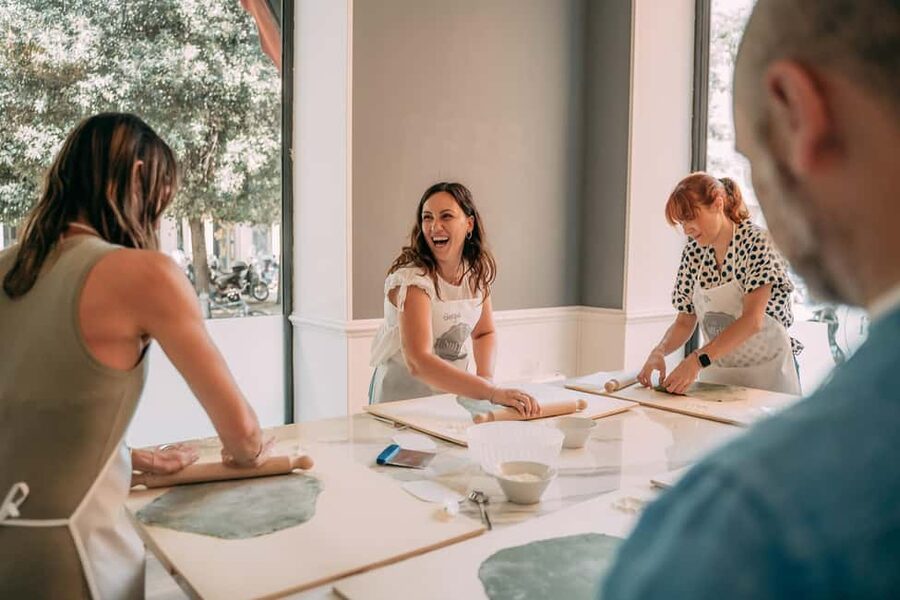
Come hungry, leave with dinner skills. In Bologna, this cooking class gives you a hands-on way to understand the city’s food culture by making green spinach pasta, creamy béchamel, traditional lasagna, and homemade gelato. I especially like the small-group feel, which allows the chef to give useful corrections, and the meal at the end, with local wine, mortadella, ham, and cheese. The main consideration is that the ragù is prepared partly in advance, so you do not make the full sauce from start to finish.
The class takes place at La Soffritta, a modern cooking school inside the Falcone and Borsellino Gallery. It lasts between 1.5 and 3 hours, depending on the session and pace. You will need to arrive 10 minutes early, and children under 14 cannot take part.
Key points at a glance
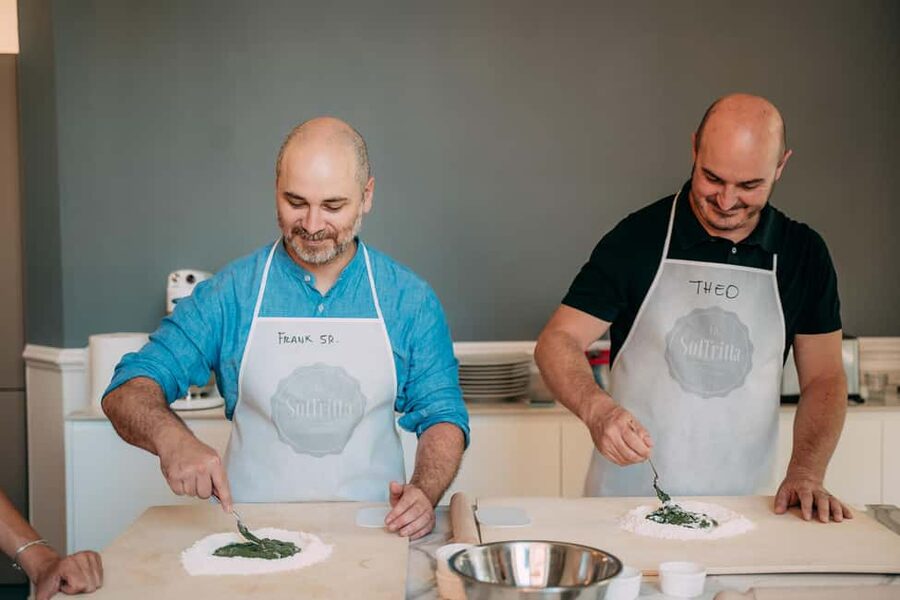
- Green pasta from scratch: Knead, rest, roll, and cut spinach pasta sheets for classic Bolognese lasagna.
- Béchamel made by hand: Prepare the creamy white sauce yourself rather than simply watching the chef assemble the dish.
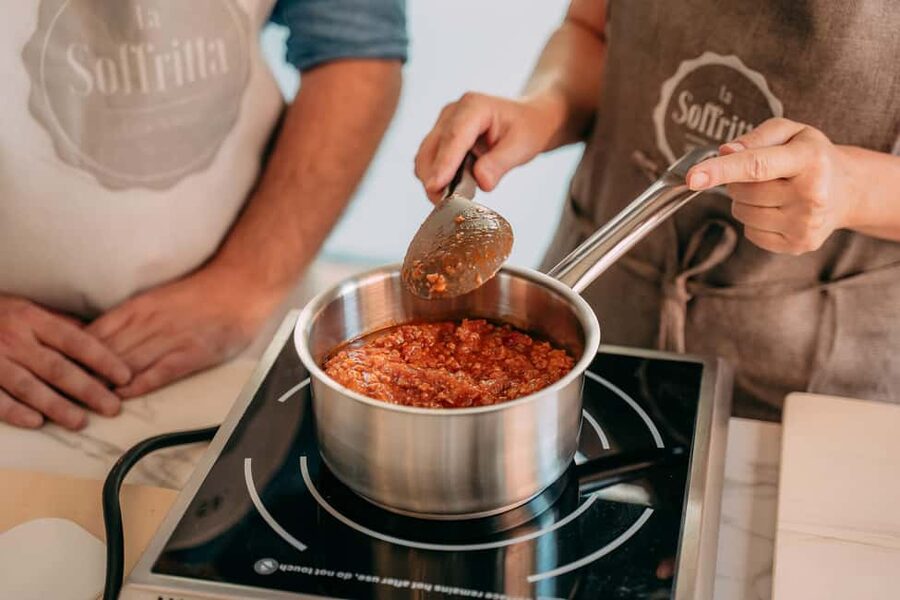
- Slow-cooked ragù included wisely: The sauce is prepared partly ahead because proper ragù needs time and cannot be rushed during a short class.
- Gelato with seasonal ingredients: Make one or two flavors, with examples including yogurt ice cream and pear sorbet.
- Aperitivo before dinner: Taste Emilia-Romagna wine, mortadella, regional ham, and cheese while the lasagna cooks.
- Recipes for home: Take away a cookbook with the class recipes, tips, and additional Italian dishes.
Why this Bologna class works so well
I like cooking classes that teach a dish you can actually repeat at home. Lasagna fits the bill, but this is not quite the same lasagna many people make outside Italy.
The traditional Bolognese version uses green pasta sheets colored with spinach. The pasta is rolled thin, layered with béchamel and ragù, and baked until the parts come together. You get more than a plate of food here. You learn why the dish tastes and feels different.
The class also balances work with eating. You are not standing at a counter for three straight hours while your lunch becomes an afterthought. Once the lasagna goes into the oven, the focus shifts to gelato. Then you sit down with wine and regional snacks before eating the meal you helped prepare.
That pacing matters. It keeps the session social and gives you time to talk with the chef and the other participants. Several sessions have been praised for their small numbers, and some have even been private or nearly private. Group size can vary, but the format is designed to provide personal attention.
There is one honest limit. You do not prepare the entire ragù from the beginning. The sauce is slow-cooked in advance, then explained and used during the class. That is a sensible choice for the available time, but serious cooks hoping to learn every stage of Bolognese ragù should keep this in mind.
More Tiramisu and Dessert Classes in Bologna
- Bologna: Pasta Cooking Class, Ragu, Spritz, Wine & Gelato
★ 4.9 · 775 reviews - Bologna Local Pasta Cooking Class, Ragu, Spritz, Wine & Gelato
★ 5.0 · 527 reviews - Bologna: Pasta and Tiramisu Cooking Class with Wine
★ 4.7 · 507 reviews
Inside La Soffritta in central Bologna
The meeting point is the La Soffritta cooking school inside the Falcone and Borsellino Gallery. The school is described as recently established, with a clean, elegant kitchen, large windows, and plenty of natural light.
That setting helps. A cooking class can feel cramped or improvised when the room is too small, but the space here has been repeatedly praised as comfortable and welcoming. You will be working with ingredients, flour, pasta dough, sauces, and equipment, so a well-arranged kitchen makes the session easier to follow.
The chef waits inside the school, not outside on the street. Use the provided map carefully, arrive 10 minutes early, and allow a few minutes to find the entrance to the gallery. There is no hotel pickup or drop-off, so you make your own way there.
Instruction is in English. Chef Moina has received particularly warm praise for her clear explanations, patience, and friendly manner. Another instructor, Francesca, has also been singled out for sharing helpful insights into lasagna. Names and instructors may vary by date, but you can expect professional culinary instruction in English.
Making spinach pasta the Bolognese way
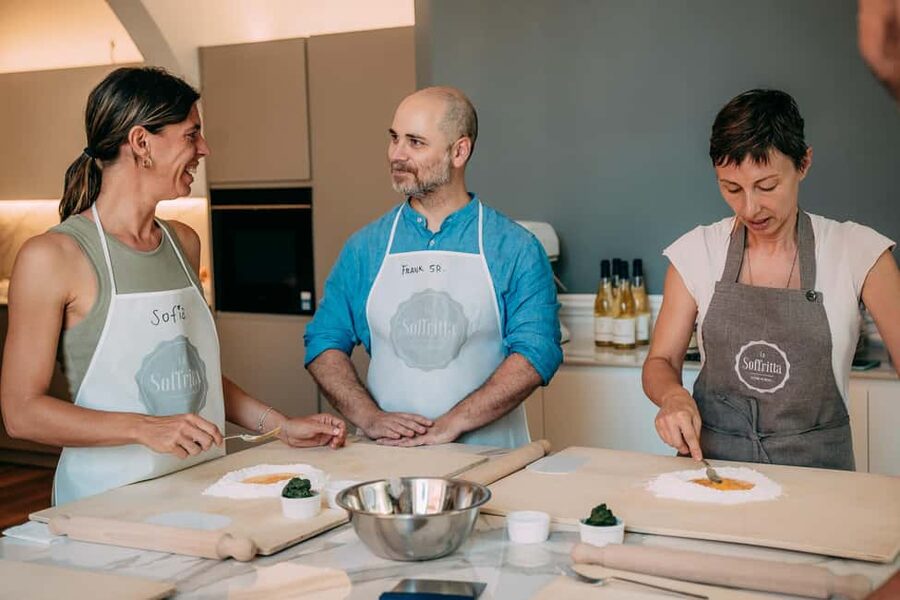
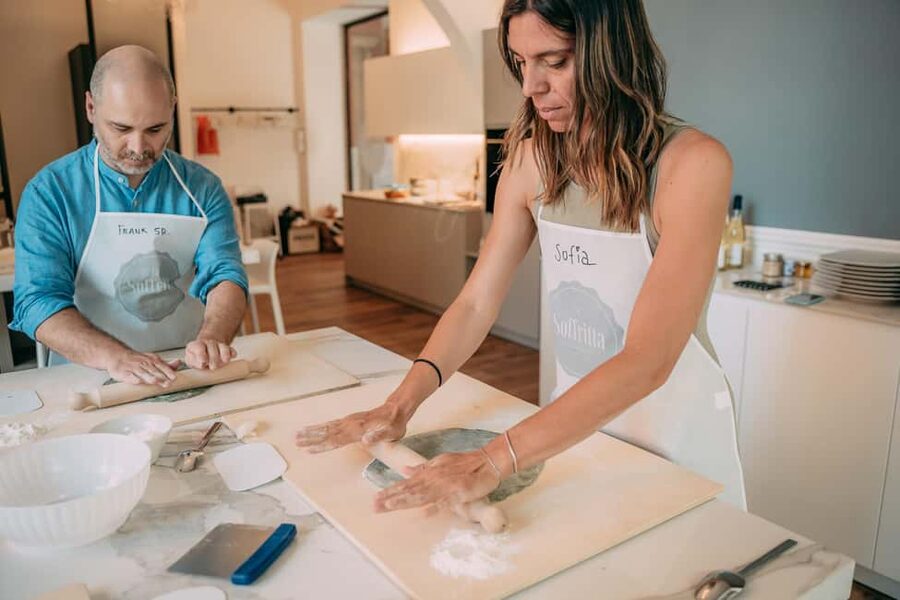
The first major task is fresh pasta. You start by working with the dough, kneading it and learning how it should feel as it comes together.
Spinach gives the sheets their familiar green color. This is a useful detail because it shows that the classic Bolognese style is not simply a matter of adding more cheese or sauce. The pasta itself is part of the identity of the dish.
You will learn to roll the dough thin and cut it into lasagna-sized sheets. That process takes some care. Too thick, and the pasta can feel heavy. Too thin, and the sheets may be harder to handle. The chef demonstrates the technique and helps you develop a feel for the dough.
The dough needs time to rest. Rather than letting that pause interrupt the class, the chef uses the time to move to the sauces. This is one reason the class keeps a good rhythm.
One useful point from the sessions is that much of the learning comes from watching the chef’s hand movements closely. You may not spend every minute doing every task yourself. One participant felt there was more watching than expected during the sauce preparation, particularly for confident home cooks who wanted more hands-on time. If you want a class built around constant individual cooking, ask about the format when booking.
For most people, the balance works. You get to handle the pasta while still seeing the proper technique before trying it yourself.
Béchamel, ragù, and the art of layering
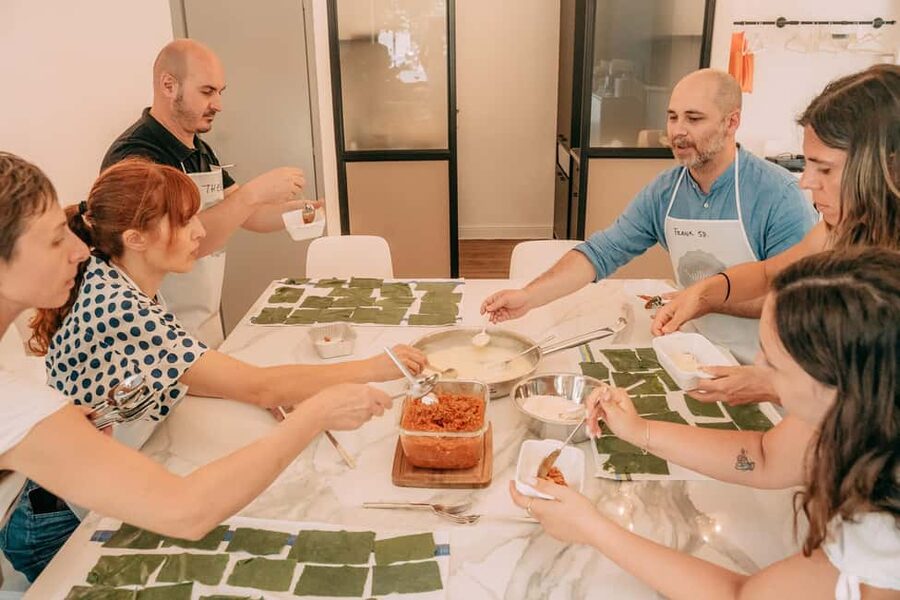
Next comes béchamel, the smooth white sauce that gives the lasagna its soft texture. You prepare it from scratch and learn how it fits with the meat sauce and pasta.
The class also explains the Bolognese ragù. The sauce has been slow-cooked partly in advance, so you do not watch the full process from raw ingredients to finished ragù. That is not a shortcut in the careless sense. Real ragù takes time, and making it fully during a short cooking lesson would either produce a rushed sauce or turn the class into an all-day event.
Instead, the chef uses the prepared ragù to explain the traditional approach, then shows you how it works in the finished lasagna. This is a good trade for a class that also includes pasta, béchamel, gelato, aperitivo, and a sit-down meal.
You then assemble the dish layer by layer. The green pasta, béchamel, and ragù are combined into a pan ready for the oven. This is where the earlier steps make sense. The pasta is not just a craft exercise, and the sauces are not separate recipes. Their balance determines the final dish.
A number of participants have said the finished lasagna was among the best they tasted in Bologna. That praise makes sense because you eat it fresh, after assembling it yourself, rather than pulling a cold portion from a display case.
The class can also change your idea of what Bolognese lasagna should be. One participant who already made lasagna at home found the local method surprisingly different. You may return home with a new approach to pasta thickness, sauce proportions, and layering.
Same place, a different thing to cook:
- Pastamama, Home Cooking Classes at Grace’s Home
★ 5.0 · 521 reviews - Bologna: Pasta and Tiramisu Small Group Cooking Class with Wine
★ 5.0 · 409 reviews - Bologna on the plate, Cooking Class with Alessia
★ 5.0 · 260 reviews - Bologna: Pasta Tagliatelle al Ragu Cooking Class with Wine
★ 4.7 · 225 reviews
Gelato while the lasagna bakes
With the lasagna in the oven, the class turns to dessert. You make one or two gelato flavors using seasonal ingredients and straightforward techniques.
Past examples include yogurt ice cream and pear sorbet. These are useful choices because they show two different styles. Yogurt gives you a creamy base, while pear sorbet is lighter and fruit-focused.
The gelato section keeps the class from becoming too narrow. You are not only learning a famous savory dish. You also get a lesson in a sweet that is closely associated with Italian food culture.
You may also receive suggestions for toppings and ways to serve the finished gelato. The exact flavors depend on seasonal ingredients, so do not expect a fixed dessert menu every time. That small amount of variation is part of the appeal, but it means the specific gelato flavors are not guaranteed.
The timing is practical. Instead of waiting around for the lasagna to bake, you use that period to prepare dessert. By the time the gelato is ready, the meal is close to serving.
An Emilia-Romagna aperitivo before dinner
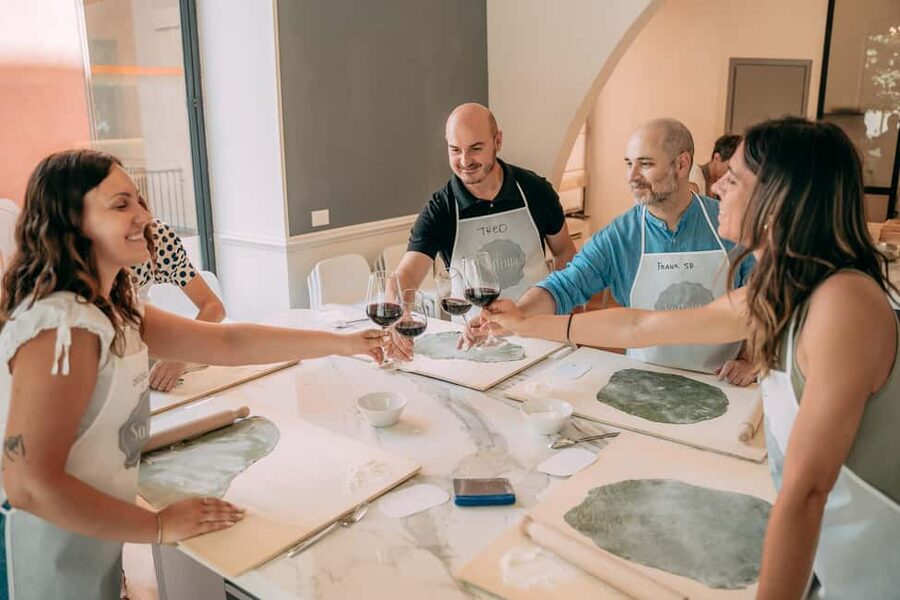
The class includes an aperitivo with wine, mortadella, regional ham, and cheese. It is more than a snack to fill time.
Mortadella comes from Bologna, and the local cured meats help place the cooking lesson within Emilia-Romagna’s food culture. The wine adds another regional touch without turning the class into a formal tasting.
I like this part because it gives you a chance to sit down before the main meal. You can sample the local products, talk with the people around you, and watch the final cooking stages without hovering over the oven.
The aperitivo is also included in the price, so you do not need to budget separately for these items. If you have food allergies or dietary requirements, tell the school in advance. The menu includes meat, dairy, and wine, so this is important.
Sitting down to eat what you made
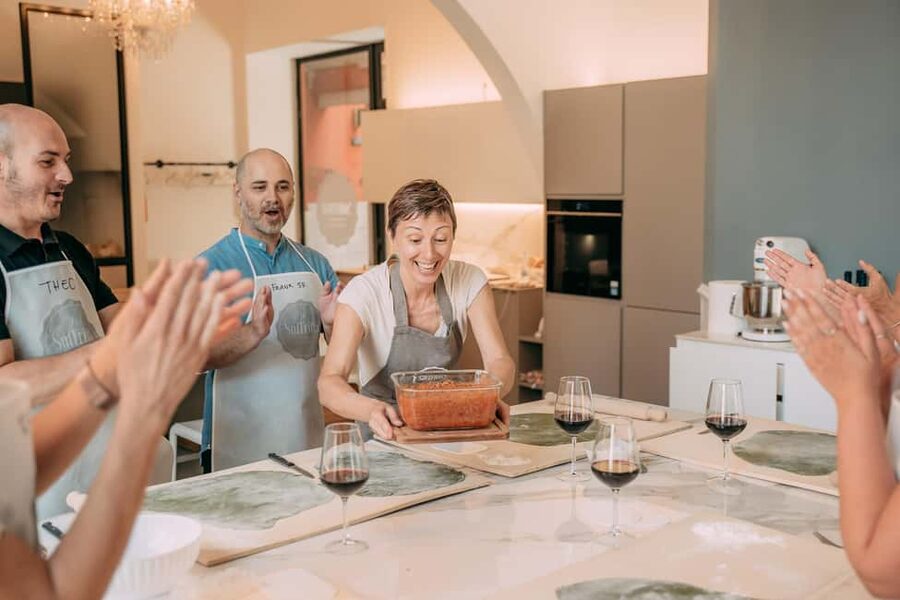
The final meal is the payoff, but it is not the only reason to book the class. You sit down with your handmade lasagna and gelato after spending the session learning the methods behind them.
This ending gives the class a proper social shape. You do not simply receive a boxed portion and leave. You share a meal prepared in the same kitchen where you worked.
The finished lasagna is served as lunch or dinner, depending on the class time. The gelato follows as dessert, along with any suggested toppings. Wine and regional foods form part of the meal rather than an optional extra.
For me, the best value is that the meal feels connected to the lesson. You taste the pasta after learning how to roll it. You eat the lasagna after building the layers. You try the gelato after preparing the mixture. That connection makes it easier to remember the techniques later.
What you take home besides a full stomach
The school provides the equipment, ingredients, and apron. You do not need to arrive with specialist cooking tools.
At the end, you receive a cookbook with the recipes prepared during the session, plus additional Italian classics and cooking tips. This adds real value, especially if you are booking the class as a way to improve your home cooking rather than simply fill an afternoon in Bologna.
The recipes also help solve the usual problem with cooking lessons: remembering the general idea but forgetting the exact proportions. You can use the book when you try the green pasta, béchamel, lasagna, or gelato at home.
Several participants felt confident enough to repeat the dishes after returning home. That is a good sign for beginners and competent home cooks alike. The class gives you both a cultural memory and something practical to use.
Price, timing, and who gets the best value
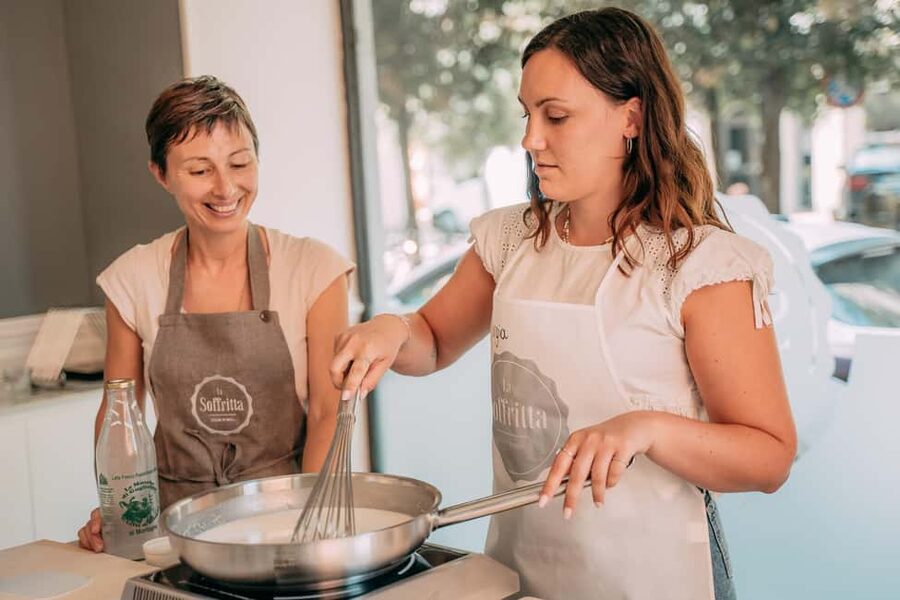
At $69 per person, the class is fairly priced for what it includes. You receive instruction from a professional chef, ingredients, equipment, an apron, the lasagna and gelato lessons, an aperitivo with wine and local foods, a full meal, and a cookbook.
You are also paying for convenience. Instead of arranging separate tastings, a cooking lesson, and dinner, you get all three in one central location. For a food-focused evening in Bologna, that makes the price easier to justify.
The duration is listed as 1.5 to 3 hours. Plan for the longer end if you want to enjoy the meal and social time without rushing. The exact length can depend on the group and the session schedule.
I would recommend this class to:
- First-time visitors who want an introduction to Bolognese food.
- Couples looking for a meal with an activity attached.
- Families with children aged 14 or older.
- Home cooks who want to improve fresh pasta skills.
- People who enjoy small-group classes and meeting other participants.
- Anyone who wants recipes they can use after returning home.
I would be more cautious if you need step-free access or use a wheelchair. Some parts of the school may not be easy to access, and the activity is not suitable for wheelchair users. Children under 14 cannot join, and minors must be accompanied by an adult.
The class is guaranteed with at least two participants. Cancellation is free up to 24 hours before the start, and you can reserve now and pay later, which is useful if your Bologna plans are still shifting.
Should you book this Bologna cooking class?
Book it if you want to learn a true local dish, eat a proper meal, and leave with recipes you can use at home. The strongest parts are the fresh spinach pasta, the small-group attention, the warm instruction from chefs such as Moina and Francesca, and the complete meal with wine, cured meats, cheese, lasagna, and gelato.
Do not book it expecting to prepare every component from the first step. The ragù is partly prepared in advance, and some sauce work may be demonstrated rather than assigned to every participant.
For most people, that is a fair compromise. At $69, you get a practical food lesson, a generous meal, regional tastes, and a cookbook in a pleasant central kitchen. If you have three hours to spare in Bologna and want more than another restaurant meal, this is an easy class to recommend.
FAQ
Where does the cooking class take place?
The class takes place at the La Soffritta cooking school inside the Falcone and Borsellino Gallery in Bologna.
How early should I arrive?
You should arrive 10 minutes before the scheduled start time. The chef will be waiting inside the cooking school.
What language is the class taught in?
The class is taught in English.
Is the full Bolognese ragù prepared during the class?
No. The ragù is partially prepared in advance because traditional ragù requires a long cooking time. The class includes the ragù as part of the lasagna preparation.
Can children join the class?
Children under 14 cannot join. Minors who are allowed to participate must be accompanied by an adult.
Are food allergies and dietary requirements accommodated?
You should inform the school about food allergies or dietary requirements before the class.
Is the class accessible for wheelchair users?
The activity is not suitable for wheelchair users. Some parts of the tour may also be difficult for people with reduced mobility or other disabilities.
Just added around Bologna
- Traditional Bolognese Cooking Class in Bologna with Giovanna S★ 5.0 · 6 reviews
- 3 hour Lasagna Bolognese cooking class★ 5.0 · 6 reviews
- Tortelloni and Tagliatelle Cooking Class in Bologna + Wine★ 3.0 · 2 reviews
- Bologna Walking Tour & Traditional Cooking Class with Wine★ 5.0 · 3 reviews
- Pasta Making Class: Tagliatelle & Bolognese Sauce★ 5.0 · 15 reviews
- Bolognese Cooking Class with Margherita in the Historic Center★ 5.0 · 26 reviews
- Home Cooking: Pasta Making with Natural Colors in a Tiny Group★ 5.0 · 6 reviews
- Private Market Tour and Cooking Class in Bologna with Giovanna C★ 5.0 · 20 reviews
Tiramisu & Dessert Classes, compared.

3 in 1 Cooking Class near Navona: Fettuccine, Ravioli & Tiramisu
Read our review →
Pasta & Tiramisu Cooking Class with Unlimited Wine
Read our review →
Pasta Making Class with Wine, Limoncello, and Dessert
Read our review →
3-in-1 Fettuccine, Ravioli, and Tiramisu Cooking Class
Read our review →
Cooking Class Pasta & Tiramisu Making Unlimited Wine
Read our review →
Fettuccine & Tiramisù: Cooking Class with Wine & Limoncello
Read our review →
Florence Cooking Class The Art of Making Gelato & Authentic Pizza
Read our review →
Pasta & Tiramisu Cooking Class near the Spanish Steps
Read our review →Lists this class appears in