
REVIEW · BUENOS AIRES, ARGENTINA
BA: Empanadas and Alfajores Cooking Experience in Palermo
Food can open a city faster than a map. This two-and-a-half-hour cooking experience in Palermo gives you a hands-on taste of Argentina, with empanadas, dulce de leche alfajores, mate, and stories from a local host. I especially like the small-group format, limited to 10 people, and the choice between meat and vegan empanadas.
I also like that you do more than eat the finished food. You chop, cook, fill, fold, bake, and assemble, then receive the recipes so you can try again at home. The main thing to keep in mind is that the amount of hands-on cooking may vary. Some sessions involve plenty of participation, while others use prepared shells and let only one person handle certain steps.
- Argentine classics in one sitting: Prepare savory empanadas and sweet alfajores, two foods that tell very different parts of the country’s food story.
- Meat and vegan choices: The class can accommodate both traditional beef fillings and vegan options such as lentils.
- Small group size: With no more than 10 people, it is easier to ask questions, meet others, and get help with tricky folding.
- Cultural details at the counter: Learn about family recipes, regional empanada shapes, mate, and Argentine food customs while you cook.
- Recipes for your kitchen: The recipes are sent by WhatsApp after the experience, making the class useful beyond your stay in Buenos Aires.
What the Palermo cooking class is really like
The activity begins at Gorriti 4882 in Palermo and ends at the same location. The address is near public transportation, but you arrange your own way there. There is no hotel pickup or included transportation, so allow enough time to reach the meeting point.
The setting is designed for a small, social class rather than a large demonstration. You sit and work alongside the chef and the other participants, which can make the experience feel more like a shared meal with a little instruction than a formal culinary school.
That relaxed tone is one of the strongest reasons to book. You can come alone, as a couple, or with children, and the group format gives you an easy way to talk with people from different places. Several sessions have included families, couples, solo participants, and friends.
The listed price is $49 per person. For Buenos Aires, that is a fair price if you value the food, instruction, local stories, and recipes. You are not paying only for lunch. You are paying for an activity that fills about half a day and gives you something you can repeat at home.
Still, I would keep expectations realistic. This is a friendly introduction to Argentine cooking, not an advanced chef course. If your ideal class means making every component from raw ingredients, ask about the current format before booking. Some sessions have included chopping vegetables and meat, cooking the filling on the stove, rolling dough, and folding empanadas. Others have used premade shells and focused more on filling and shaping.
Making empanadas, Argentina’s everyday classic

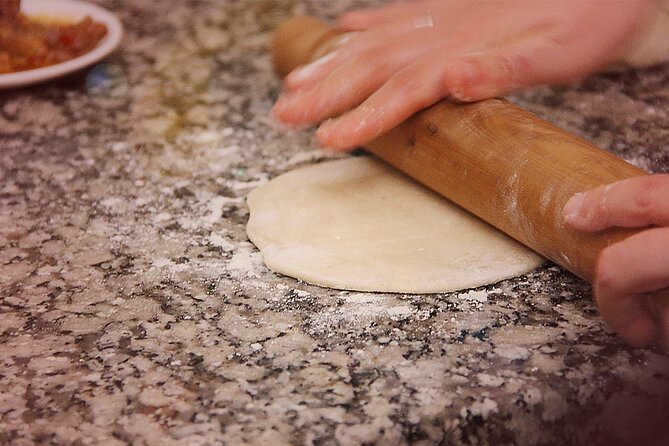
The empanada portion is the heart of the class. The chef explains the filling, shows you how to prepare it, and guides you as you assemble the pastries. Beef is the standard choice, while vegan participants may receive a lentil filling.
That choice matters for families and mixed groups. You do not have to order a separate experience for a vegetarian or vegan member of your party. The kitchen can work with different fillings during the same session, though you should make your preference clear when booking if possible.
The most useful lesson may be the folding. Argentine empanadas are not simply stuffed pastry circles. Their shape and folded edge can identify the filling, and different regions have their own habits. You may learn that beef and lentil empanadas are folded or marked differently.
This is also where the class feels most connected to home cooking. One local story shared during a session described children working at their grandmother’s kitchen table and being expected to whistle while preparing the filling, so the adults knew they were not sneaking bites. It is a small detail, but it gives the food a family setting that a restaurant meal cannot provide.
Do not be discouraged if your first empanada looks more like a small cushion than a neat crescent. Folding takes practice. The chef can show you how to seal the edge, and the small group makes it easier to get help rather than quietly struggle at the end of the table.
The level of work can vary. In the most hands-on version, you chop ingredients, cook the filling, roll dough, add the mixture, and shape the pastries. In a more streamlined version, the filling is prepared quickly and the shells are ready to use. That is still fun, but it is better described as an interactive food workshop than a full from-scratch lesson.
A few more cooking classes around the world worth a look
- Half-Day Thai Cooking Class at Organic Farm in Chiang Mai
★ 5.0 · 19,087 reviews - Florence: Pasta Cooking Class with Unlimited Wine
★ 4.9 · 10,285 reviews - 3 in 1 Cooking Class near Navona: Fettuccine, Ravioli & Tiramisu
★ 5.0 · 7,376 reviews
Alfajores, dulce de leche, and fragile cookies
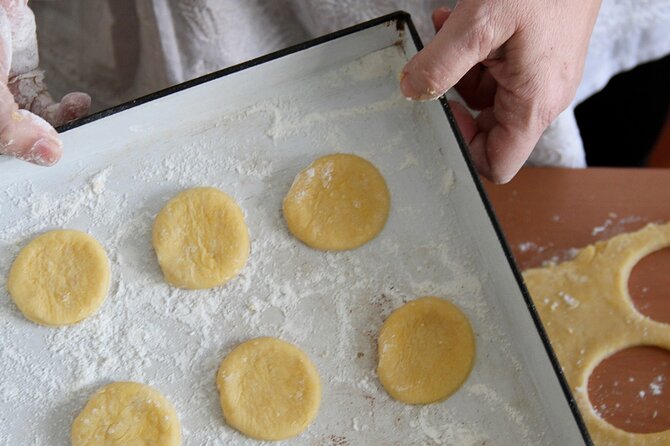
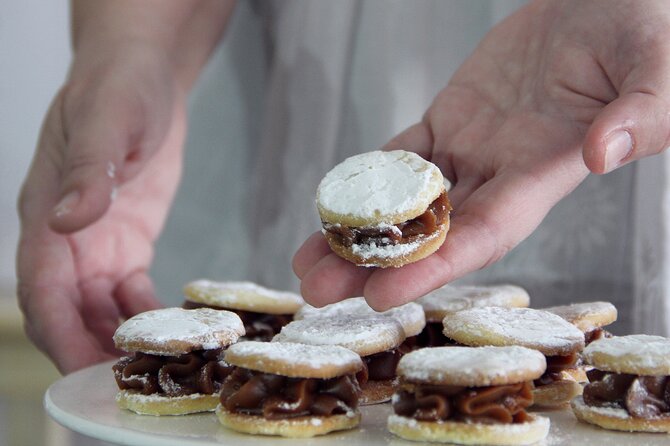
Once the empanada work is underway, attention turns to alfajores. These Argentine cookies are usually made from two delicate biscuits joined with dulce de leche, then finished in a variety of ways.
You mix, bake, and assemble the cookies with guidance from the host. In some sessions, participants have topped one cookie with dulce de leche and rolled the edge in coconut. Children have also enjoyed making different shapes, giving this part a creative feel rather than a strict pastry exercise.
The cookies can be fragile. Handle them lightly when adding the filling, since pressing too hard may break them. That small warning is worth remembering, especially if children are helping.
The alfajores provide a nice contrast to the empanadas. The savory dish involves chopping, seasoning, and folding. The sweet course is slower and more delicate, with dulce de leche supplying the familiar Argentine flavor. You finish with two foods that are common in daily life, celebrations, cafés, and family kitchens across the country.
One limitation is that the recipes may taste fairly plain to some people. A small number of participants have found the food under-seasoned, while most have enjoyed both dishes. Your reaction may depend on what you expect. This is home-style instruction, not a restaurant tasting menu packed with dramatic sauces and spice.
Mate, wine, and the social side of the class
Mate is listed as the signature infusion served during the experience. It is an important Argentine tradition, and trying it in a cooking setting gives you a little context for how food and conversation work together.
Some sessions have also included wine, and several participants have enjoyed drinking it with the finished empanadas and alfajores. However, coffee, tea, and mate are the stated inclusions, so you should not book specifically expecting wine. Drinks may differ by host or session.
The social setting is a major part of the value. You can cook while hearing about Argentine food, geography, customs, and life in Buenos Aires. Hosts named in the feedback include Tomas, Thomas, Valentino, Carolina, and Catalina, so the person leading your class may vary.
Chef Valentino received praise for patient instruction and encouragement. Tomas was noted for clear teaching and variations on the recipes, and one session revealed that he also makes artisan aperitifs, including vermouths and fernets. You may get more local conversation than you expected, though the exact style depends on the host.
This is a good choice if you want an activity that does not require a long walk or a full day of sightseeing. It also works well near the beginning of a trip, when cooking gives you an easy introduction to local ingredients and customs. It can be especially useful on a jet-lagged day because you stay in one place, eat along the way, and still feel that you have done something distinctly Argentine.
Why families tend to enjoy it
The class is suitable for children, and families with children around 10 and 13 have found it especially enjoyable. Kids can help with shaping alfajores, filling empanadas, and creating different designs.
There is one practical caution. Some parts of the class may involve chopping vegetables and meat with sharp knives. Children will need adult help and supervision, and the class is not a setting where every child can work independently.
For family groups, the best feature is the short, clear sequence. You prepare the filling, assemble the empanadas, work on the cookies while fillings cool, then sit down to eat. Children get a visible result at each stage, which helps hold their attention.
The class also gives picky eaters a gentle way to try new flavors. They can see what goes into the food and take part in making it, rather than receiving an unfamiliar dish without explanation. That does not guarantee an empty plate, but it gives food a better chance.
Same place, a different thing to cook:
- Florence: Pasta & Tiramisu Cooking Class with Unlimited Wine
★ 4.9 · 6,708 reviews - Hanoi Cooking Class: Culture, Local Market & Meaning CSR Impact
★ 5.0 · 5,147 reviews - 5 Traditional Dishes Hanoi Cooking Class with Market Trip
★ 5.0 · 4,890 reviews - Cooking Class and Lunch at a Tuscan Farmhouse with Local Market Tour from Florence
★ 5.0 · 4,831 reviews
Who will get the most from this experience
I would recommend this experience to:
- First-time visitors who want a friendly introduction to Argentine food
- Families seeking a practical indoor activity in Palermo
- Solo visitors who enjoy meeting people through shared meals
- Couples who want something more active than a restaurant dinner
- Vegetarian and vegan participants who want an alternative to beef
- Home cooks who would like recipes to recreate the food later
It is less suited to you if you want advanced pastry skills, a highly structured professional kitchen, or complete control over every ingredient. The class can be beginner-friendly and genuinely fun without being technically demanding.
The small group helps, but it does not guarantee equal time at the cutting board. One disappointing session involved too much watching and too little doing. If participation is important to you, ask at the start how the work will be divided and volunteer for the steps you want to try.
The value of the recipes and cultural stories
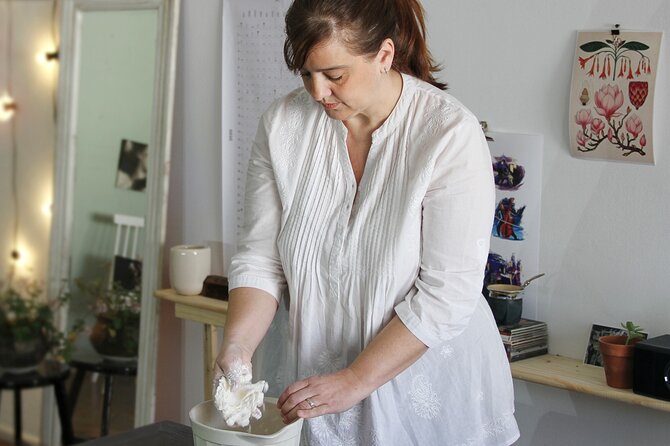
The recipes sent by WhatsApp are one of the best practical extras. You do not have to rely on memory after a busy Buenos Aires visit, and you can make the dishes for friends once you return home.
The recipes also extend the experience beyond the meal. You learn not only what goes into the food, but how Argentines shape, serve, and talk about it. A guide may explain regional differences, family methods, or the place of empanadas in everyday life.
The cultural material is not identical in every session. Some hosts provide plenty of background about the city, country, and food traditions. Others keep the focus on cooking and offer less conversation. That variation is worth knowing if cultural explanation is your main reason for booking.
Timing, cancellation, and planning advice
The experience lasts about 2 hours and 30 minutes. That is long enough for cooking and eating without taking over your entire day, but you should not schedule a tight appointment immediately afterward.
Confirmation is provided when you book. The activity is near public transportation, and you must make your own way to Gorriti 4882. The end point is the same as the start.
Free cancellation is available if you cancel at least 24 hours before the local start time. Cancellations or changes made less than 24 hours in advance are not accepted for a refund. The experience is often booked well ahead, with an average lead time of about 37 days, so reserve early if your Buenos Aires dates are fixed.
The provider is Signature Tours. The class has a maximum of 10 people, and that limit is important. A larger group would make the shaping and filling steps less personal.
Should you book the Palermo empanada and alfajor class?
Yes, if you want a relaxed, social taste of Argentine food and you are happy with beginner-level instruction. The combination of empanadas, alfajores, mate, local stories, and take-home recipes gives you more than a meal for $49.
I would book it especially for families, solo visitors, and anyone who wants a break from museums and guided walks. Choose it with realistic expectations about the cooking. The strongest sessions are hands-on and warm, while a weaker session may feel more like watching a demonstration.
If you want the most from it, tell the host you would like to chop, fold, and assemble, not just observe. Ask about the vegan option in advance, handle the alfajores gently, and treat the class as a shared Argentine kitchen experience rather than a demanding culinary course.
FAQ
Where does the cooking experience take place?
It takes place at Gorriti 4882, C1414BJN, in Buenos Aires. The address is in Palermo and is near public transportation.
How long does the experience last?
The class lasts approximately 2 hours and 30 minutes.
How much does it cost?
The listed price is $49 per person.
What foods will I make?
You will prepare Argentine empanadas and dulce de leche alfajores.
Are vegan empanadas available?
Yes. Meat and vegan options are available, with lentils used as a vegan filling in at least some sessions.
Is mate included?
Yes. Mate is listed among the included coffee and tea options as the local infusion served during the class.
Is wine included?
Wine has been served during some sessions, but it is not listed as a guaranteed inclusion. The stated drinks are coffee, tea, and mate.
How many people can join the class?
The experience has a maximum of 10 participants.
What is the cancellation policy?
You can cancel at least 24 hours before the local start time for a full refund. Cancellations or changes made less than 24 hours before the start are not accepted for a refund.
Just added around the world
- Aroidee’s Farm-Fresh Thai Cooking Experience★ 5.0 · 8 reviews
- Signature Thai Cooking Course★ 5.0 · 79 reviews
- Private Half-Day Thai Cooking Class in Chiang Mai★ 5.0 · 4 reviews
- Half Day Guided Thai Cooking Class in Chiang Mai★ 5.0 · 13 reviews
- Online Thai and Akha Cooking Class★ 5.0 · 70 reviews
- Private Virtual Thai Cooking Class★ 5.0 · 9 reviews
- Northern Thai Cooking Class in Chiang Mai in a Countryside Home★ 5.0 · 2 reviews
- 5 Hour Morning Thai Cooking Course★ 5.0 · 31 reviews
Cooking Classes, compared.

Half-Day Thai Cooking Class at Organic Farm in Chiang Mai
Read our review →

3 in 1 Cooking Class near Navona: Fettuccine, Ravioli & Tiramisu
Read our review →
Pasta & Tiramisu Cooking Class with Unlimited Wine
Read our review →
Hanoi Cooking Class: Culture, Local Market & Meaning CSR Impact
Read our review →
5 Traditional Dishes Hanoi Cooking Class with Market Trip
Read our review →
Cooking Class and Lunch at a Tuscan Farmhouse with Local Market Tour from Florence
Read our review →