
REVIEW · BEIRUT, LEBANON
Private Lebanese Cooking Class in Beirut with Amal + Transfers
A family kitchen can tell Beirut’s story. This private cooking class takes you from your Beirut hotel to Amal’s home in Aramoun, where you’ll prepare Lebanese dishes with Amal and her mother, then eat together at the family table. I like the personal setting and the use of herbs, fruits, and vegetables from the home garden. I also like that the meal is more than a demonstration: you take part in making it.
The main consideration is time. The class lasts about three hours, and the home is outside central Beirut, so this is not a quick stop between city sights. The price is $142 per person, which is a serious lunch bill, but hotel transfers, private instruction, drinks, several courses, and time with a Lebanese family make it easier to judge as a full cultural experience rather than a standard meal.
Key Points About This Beirut Cooking Experience
- Cook with Amal and her mother: You get hands-on instruction in a family kitchen rather than watching a chef work from a distance.
- Start and finish at your Beirut hotel: Pickup and drop-off are included, which removes much of the transport hassle.
- Use ingredients from the family garden: Herbs, fruits, and vegetables give the meal a close connection to the home and its surroundings.
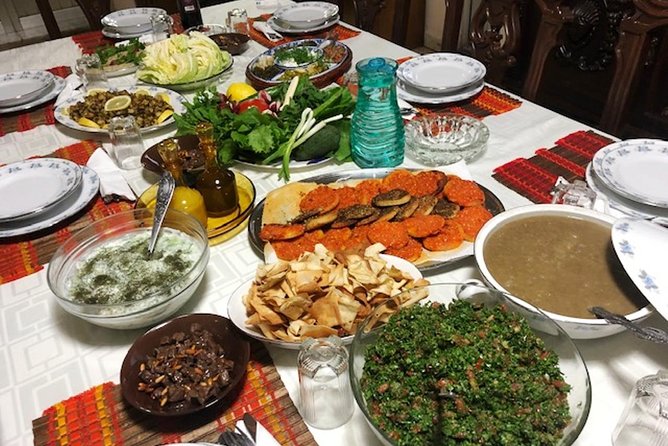
- Prepare several Lebanese dishes: The class covers an appetizer, salad, and dessert, with possible dishes such as tabuli, kibbi, mtabal, and maakaroun.
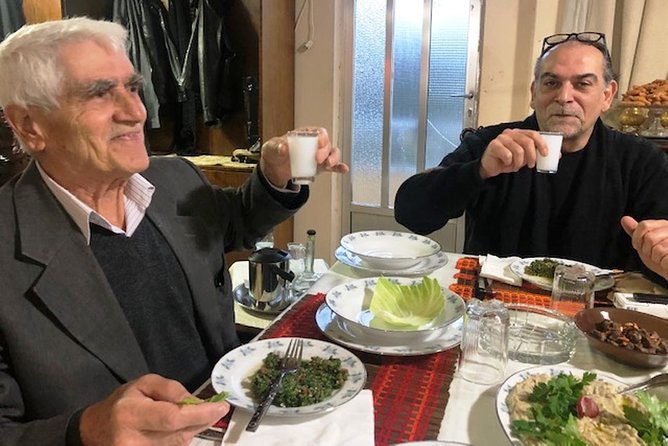
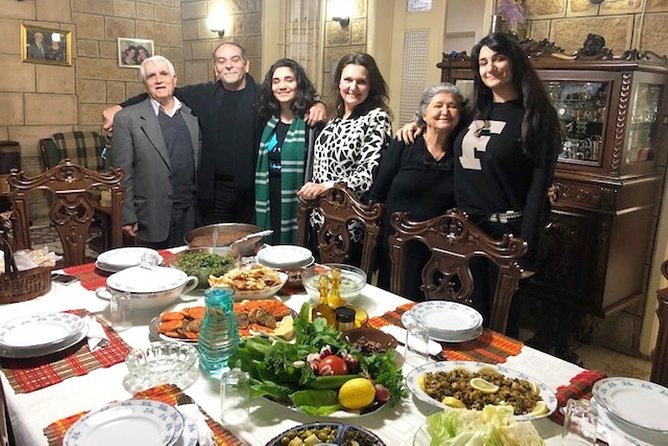
- Share lunch with the family: After cooking, you sit at the dining table with Amal and her parents for the meal you helped prepare.
- Private format, flexible food needs: Only your group takes part, and vegetarian, vegan, halal, allergy, and other dietary requests can be arranged if provided when booking.
From Beirut Hotel to Amal’s Home in Aramoun
Your experience begins with pickup at your Beirut hotel. That matters here. Aramoun is a suburb outside Beirut, and having transport included lets you focus on the afternoon instead of working out taxis, directions, or the return trip.
The drive also shifts the pace of the day. You leave the city behind and reach a residential area surrounded by gardens and family homes. This is not a restaurant in downtown Beirut with a cooking activity added to the menu. You are going to a real family home, which gives the meal a more personal setting.
The experience lasts about three hours, though the exact rhythm can feel relaxed. You begin with a drink and an introduction to Lebanese cooking and its history. Then you move into the kitchen for about an hour of hands-on work before sitting down to eat.
Because the activity is private, your group does not have to share the class with strangers. That is useful if you want to ask questions, work at your own pace, or focus on a particular dietary need. It also makes this a strong choice for couples, families, and small groups who value conversation over a large organized class.
More Private Cooking Classes in the world:
- PRIVATE Authentic Balinese Cooking Class in Ubud at Putu’s Home
★ 5.0 · 644 reviews - Private Market Tour & Cooking Class in Puerto Vallarta with Manu
★ 5.0 · 241 reviews - Private Cooking Class with 5 dishes of your choice
★ 5.0 · 227 reviews
A Classic Lebanese Home With a View
Amal’s home has a fireplace, a terrace, and views toward Beirut. These details shape the experience as much as the food does. You begin in a comfortable home, drink in hand, rather than in a hurried commercial kitchen.
The terrace gives you a sense of the setting around Aramoun, while the fireplace offers a warm place to sit if the weather turns unpleasant. That is more than a decorative touch. One account of the experience describes a very rainy day when the fireplace helped keep the gathering pleasant indoors.
You should expect a family setting, not a polished cooking studio. That can mean a more relaxed and genuine afternoon, but it also means the experience is tied to the home, the family, and the flow of the day. If you prefer a tightly timed class with professional workstations and precise restaurant service, this may feel informal.
I see that informality as part of the appeal. You are not simply learning how to follow a recipe. You are seeing how food fits into a Lebanese household, where cooking, conversation, family, and hospitality share the same space.
The First Conversation: Lebanese Food and Family Recipes
Before cooking, Amal introduces you to Lebanese cuisine and its background. This opening gives the dishes a setting, so you understand that the meal is built from familiar family food rather than a set of disconnected recipes.
The recipes come from Amal’s family. Her mother joins the cooking session, bringing another generation into the kitchen. Later, Amal’s parents join the meal, creating the feeling of a family gathering rather than a one-person demonstration.
That family connection is one of the strongest reasons to choose this activity. You get to hear about food through the people who prepare it at home. You also see how recipes can pass from one generation to another without losing their everyday character.
The food itself is based on straightforward ingredients: chickpeas, lemon, olive oil, garlic, eggplant, tahini, herbs, nuts, semolina, and fresh produce. Lebanese cooking often gets its depth from the balance of these ingredients, not from complicated equipment. You will learn techniques and combinations that you can recognize later in restaurants and homes across Lebanon.
One Hour of Hands-On Cooking
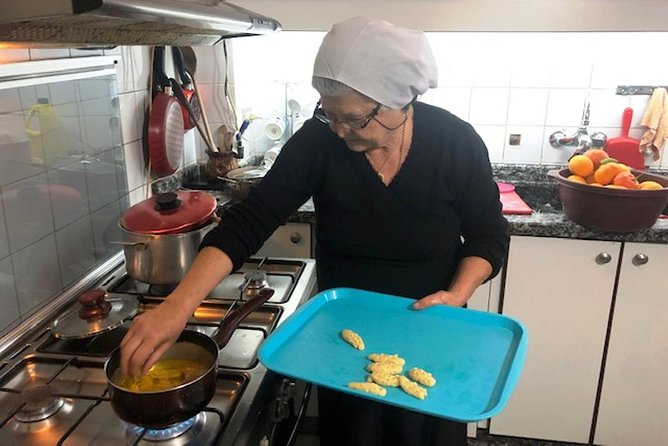
The kitchen portion lasts about an hour. You work alongside Amal and her mother to prepare an appetizer, a salad, and a dessert using family recipes and Lebanese cooking methods.
The menu can vary, so you should not treat the sample dishes as a fixed promise. Possible foods include chickpeas with lemon, olive oil, and garlic sauce; tabuli; kibbi; mtabal; and maakaroun.
Tabuli gives you a useful introduction to the Lebanese way of building a salad around herbs and fresh flavors. Mtabal combines grilled, mashed eggplant with tahini, lemon juice, and garlic. It is a good example of how a few strong ingredients can create a dish with plenty of character.
Kibbi brings minced meat together with herbs and nuts. If you eat meat, it adds a more substantial element to the meal. If you do not, be sure to request a vegetarian or vegan menu when you book, since the standard possibilities may include meat.
The dessert, maakaroun, is made from semolina shaped into fingers, deep fried, and soaked in sugar syrup. It provides a sweet finish after the sharper flavors of lemon, garlic, tahini, and herbs.
You should expect to participate rather than simply watch. The exact tasks will depend on the menu and the day, but the format is designed for you to help prepare the food. That makes the class useful after you return home because you have handled the ingredients and seen the techniques in practice.
A few more cooking classes around the world worth a look
- Half-Day Thai Cooking Class at Organic Farm in Chiang Mai
★ 5.0 · 19,087 reviews - Florence: Pasta Cooking Class with Unlimited Wine
★ 4.9 · 10,285 reviews - 3 in 1 Cooking Class near Navona: Fettuccine, Ravioli & Tiramisu
★ 5.0 · 7,376 reviews - Florence: Pasta & Tiramisu Cooking Class with Unlimited Wine
★ 4.9 · 6,708 reviews
Garden Ingredients and Lebanese Flavor
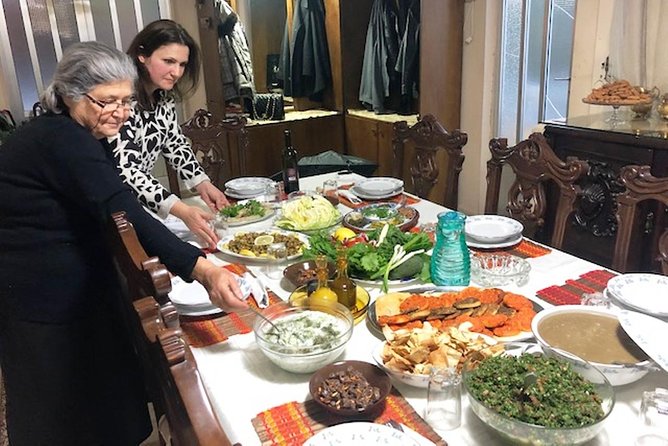
The family garden gives the cooking a clear sense of place. You use organically grown fruits, vegetables, and herbs from the home garden when available. That link between garden and table is easy to miss in a restaurant, where ingredients arrive without a story.
Fresh herbs matter especially in Lebanese food. They bring aroma and lift to salads, sauces, and savory dishes. You also get a better feel for the role of lemon, garlic, olive oil, and tahini when you use them as part of a meal prepared in a home kitchen.
I like this part of the experience because it connects the food to daily life. You are not only learning that a dish contains parsley, lemon, or eggplant. You are seeing how local produce becomes lunch for a family and its visitors.
Still, the garden should not be the sole reason you book. The supplied details do not promise a garden tour or a set list of produce. Think of it as an ingredient source that adds meaning to the class, not as a separate sightseeing stop.
Lunch at the Family Table
After the cooking, you sit down with Amal and her parents to eat the meal you helped prepare. This is the point where the class becomes a social experience. The food is no longer a set of tasks in the kitchen. It becomes lunch, shared with the people who taught you.
Drinks are included, and the meal is described as a traditional Lebanese lunch with several courses. The possible spread can include a chickpea preparation, tabuli, kibbi, mtabal, and maakaroun, though your actual menu may differ.
The family setting is especially useful if you want contact with local life. You can ask questions, compare food traditions, and understand how these dishes fit together at the table. The pace is likely more relaxed than a restaurant meal because the meal follows a shared cooking session.
This is also where the private format pays off. With only your own group present, you can spend more time talking with Amal and her family. A larger class might teach the same recipe, but it would not offer the same chance to connect the cooking with the people who make it part of their home.
Is $142 Per Person Good Value?
At $142 per person, this is not a cheap lunch. If you only want to eat Lebanese food, you can spend far less at a Beirut restaurant. You should book this for the combination of transport, private instruction, ingredients, drinks, lunch, and family time.
The value improves for small groups because the private setting avoids the limits of a large class. You are paying for access to a home, personal attention, and an experience that would be difficult to arrange on your own.
The price also includes pickup and drop-off from your Beirut hotel. That has real value in a city where getting to a suburb and back can take planning. You do not need to separate the cost of a cooking class from the cost and trouble of arranging transport.
Group discounts are available, so check the total for your party before deciding. The experience is especially worthwhile if food is one of your main reasons for visiting Lebanon, or if you want an afternoon that adds a personal side to a Beirut stay.
Who Will Enjoy This Most?
I would recommend this class to anyone who sees food as a way to meet people. It is a good fit for couples, families, and small groups who prefer a private afternoon to a busy group tour.
It also suits people who want to learn by doing. You will have a better chance of remembering the flavors and methods because you help prepare the dishes before eating them.
Vegetarians, vegans, and people who need halal food can request suitable meals. Allergies, dietary restrictions, and food preferences should be provided at booking. Do not wait until you arrive, since the menu needs to be planned in advance.
This may not suit you if you have only a short time in Beirut, want a fast meal, or dislike home-based activities. The class takes about three hours, and the trip to Aramoun means it occupies a meaningful part of your day.
Practical Details Before You Book
Confirmation is sent within 48 hours, subject to availability. The experience is near public transportation, but pickup and drop-off are offered from your Beirut hotel, making that the simpler choice.
Free cancellation is available if you cancel at least 24 hours before the start time. Changes or cancellations inside that 24-hour window are not accepted for a refund, and cut-off times follow local time in Lebanon.
The activity has a mobile ticket, which is handy for a day when you are moving around Beirut. Bring an appetite and allow enough room in your schedule for the meal to unfold at a comfortable pace.
You should also tell the provider about food needs when booking. Vegetarian, vegan, and halal options are possible, and allergies or other preferences should be stated clearly.
Should You Book Amal’s Cooking Class?
Book it if you want a personal connection to Lebanese food, not just a list of dishes. The best parts are the private home, the time with Amal, her mother, and her parents, the garden ingredients, and the meal you help prepare.
Skip it if you are watching your budget closely or have only a few hours in Beirut. At $142 per person, it makes sense as a full cultural afternoon with transport and lunch, not as a bargain cooking lesson.
For most food-focused visitors, I think the private format and warm family setting justify the cost. You leave with more than a full stomach: you get a practical look at how Lebanese food is prepared, shared, and passed between generations.
FAQ
Where does the cooking class take place?
The class takes place in Amal’s family home in Aramoun, a suburb outside Beirut. The home has a fireplace, a terrace, and views toward the capital.
How long does the experience last?
The experience lasts approximately three hours. About one hour is devoted to hands-on cooking.
Is hotel pickup included?
Yes. Pickup and drop-off at your Beirut hotel are offered.
Is this a private activity?
Yes. Only your group participates in the cooking class.
What food will I prepare?
You will prepare a Lebanese appetizer, salad, and dessert using family recipes. Possible dishes include chickpeas with lemon, olive oil, and garlic; tabuli; kibbi; mtabal; and maakaroun.
Can vegetarian, vegan, or halal meals be provided?
Yes. Vegetarian, vegan, and halal meals can be provided if requested when booking.
What should I do if someone in my group has an allergy?
Provide details about allergies, dietary restrictions, or food preferences when you book. This allows the menu to be arranged in advance.
Can I cancel for a full refund?
Yes. You can receive a full refund if you cancel at least 24 hours before the experience start time. Cancellations or changes made less than 24 hours before the start time are not accepted for a refund.
Just added around the world
- Aroidee’s Farm-Fresh Thai Cooking Experience★ 5.0 · 8 reviews
- Signature Thai Cooking Course★ 5.0 · 79 reviews
- Private Half-Day Thai Cooking Class in Chiang Mai★ 5.0 · 4 reviews
- Half Day Guided Thai Cooking Class in Chiang Mai★ 5.0 · 13 reviews
- Online Thai and Akha Cooking Class★ 5.0 · 70 reviews
- Private Virtual Thai Cooking Class★ 5.0 · 9 reviews
- Northern Thai Cooking Class in Chiang Mai in a Countryside Home★ 5.0 · 2 reviews
- 5 Hour Morning Thai Cooking Course★ 5.0 · 31 reviews
Private Cooking Classes, compared.
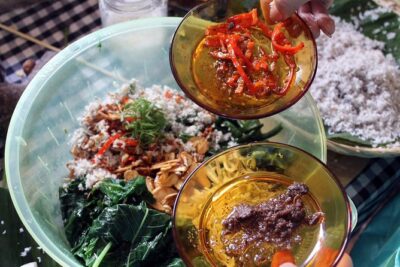
PRIVATE Authentic Balinese Cooking Class in Ubud at Putu’s Home
Read our review →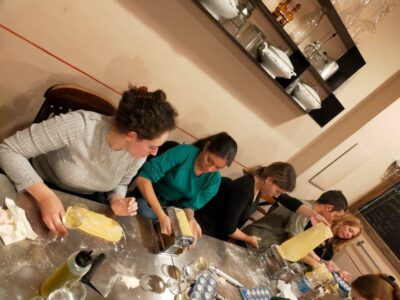
Pasta Making Class with Tiramisu & Wine PRIVATE OPTION
Read our review →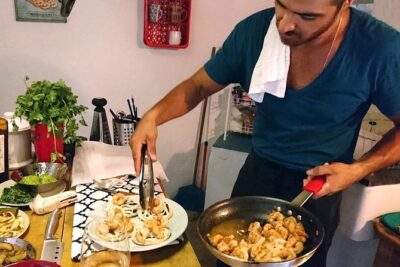
Private Market Tour & Cooking Class in Puerto Vallarta with Manu
Read our review →
Private Cooking Class with 5 dishes of your choice
Read our review →
Veg and Non veg : Private Cooking Class in Delhi home (7 meal)
Read our review →
PRIVATE Balinese Cooking Class in Ubud with Dewa with Transfers
Read our review →
VIP Mekong Delta Adventure Cycling & Kayaking – Private Day Trip
Read our review →
Private Home Cooking in Yanaka – Local Flavors in a Warm Setting
Read our review →Lists this class appears in