REVIEW · BANGKOK, THAILAND
Thai Cooking Class with Market Visit by Maliwan
Come hungry and leave with dinner skills. This four-hour Bangkok class combines a tuk-tuk ride, a local market visit, and hands-on cooking in a small group, so you learn where Thai ingredients come from before using them at the stove. I especially like the market shopping with the instructor and the chance to cook at your own station, rather than simply watching a chef work. The printed recipes and e-certificate are useful extras.
The main drawback is that the menu is chosen by the instructor before your class, so you cannot count on making a particular dish. You also need to arrive on time, wear closed shoes, and tell the school about allergies or dietary needs quickly after booking.
Key points at a glance
- Tuk-tuk ride to a local market: The class begins with a short, characterful ride to shop for ingredients.
- Small groups of up to seven: You get personal help while preparing your own food.
- Market lessons matter: The instructor explains ingredients, vendors, and local shopping habits as you choose what to cook.
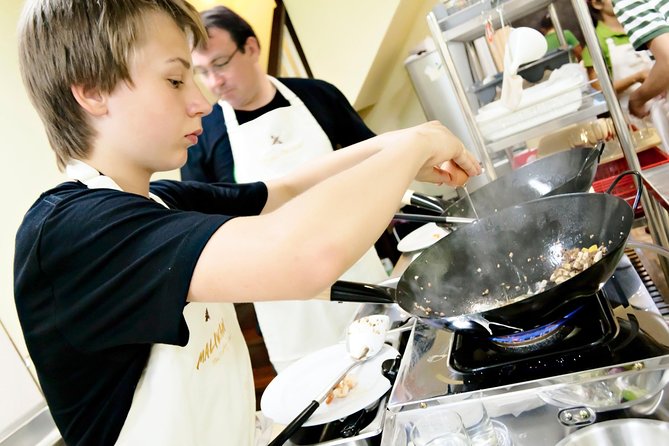
- Hands-on cooking: You work through each dish at your own station, with demonstrations before each step.
- A meal you prepare yourself: Rice, ingredients, equipment, a welcome drink, and tuition are included.
- Good value for food lovers: At $43.86 per person, the class includes transport to the market, instruction, food, recipes, and a certificate.
Starting at Maliwan in Bangkok’s Old Town
The class begins at Maliwan Thai Cooking Class, at 9 Thanon Sap Sam Hang in Taladyod, Phra Nakhon. The meeting point is near public transportation, but hotel pickup and drop-off are not included, so you need to make your own way there.
That arrangement is worth noting in Bangkok. Traffic can be slow, and one participant needed help after being delayed by road congestion. The school is strict about timing: arriving an hour late counts as a no-show, and you will not be able to join the rest of the class. Plan extra time, especially if you are crossing town.
Once you arrive, you can expect a welcome drink and an introduction to the class. The maximum group size is seven, although some sessions are much smaller. A small class makes a real difference here because Thai cooking often involves quick chopping, seasoning, tasting, and adjusting. You are not lost in the back row while someone else does the work.
The instructors have different names in the class accounts, including May, Mae, Mai, Mei, Matinee, and Maue. That suggests the teacher can vary by date. The consistent theme is friendly, clear instruction, with assistants helping at the cooking stations.
More Cooking Classes with a Market Tour in Bangkok
- Bangkok: Hands-on Thai Cooking Class and Market Tour
★ 4.9 · 1,614 reviews - Bangkok: Maliwan Thai Cooking Class with Market Tour
★ 4.9 · 1,133 reviews - Hands on Thai Cooking Class and Market Tour
★ 5.0 · 660 reviews
The tuk-tuk ride and local market visit
The market visit gives this class more character than a standard cooking lesson. You travel by tuk-tuk with the instructor to a nearby local market, then walk through the stalls to gather the ingredients for the meal.
The tuk-tuk is not just a convenient transfer. It adds a little Bangkok flavor before the cooking begins, and it makes the trip feel connected to the city outside the classroom. You are not simply handed a basket of premeasured ingredients. You see the shopping stage first.
At the market, the instructor explains the produce, herbs, seasonings, and other items used in Thai cooking. The precise ingredients depend on the menu, which is set ahead of time by the instructor. That is one reason to treat the market as a lesson in Thai food rather than a fixed shopping list.
The experience can differ depending on the class time. Morning markets may be busier, while an afternoon visit can feel quieter and more personal. The market may also be wet or muddy, so sturdy closed shoes are a must. Wear something you do not mind getting dirty.
This part is especially helpful if you want to cook Thai food at home. Ingredients that look familiar in a recipe can be confusing in a market. Seeing them in their usual form, hearing how they are selected, and learning how they are used gives you more confidence when you later shop on your own.
The market is also the cultural part of the class. You get a glimpse of how everyday food buying works, rather than seeing only the polished restaurant version of Thai cuisine. For many people, this becomes one of the strongest parts of the half-day.
Cooking at your own station
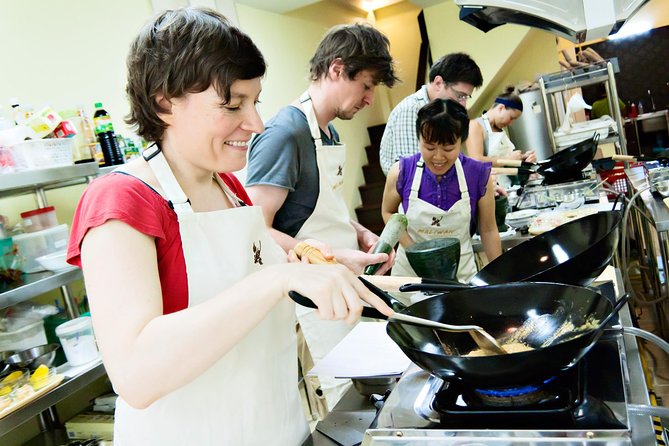
Back at the school, the class moves into a clean, organized kitchen. Each participant works at a personal cooking station, with ingredients and equipment provided. The setup keeps the session practical. You are there to cook, not just watch a demonstration.
The usual rhythm is simple. The instructor demonstrates one dish, explains the method, and then you prepare it yourself before moving on. This approach makes the class easy to follow, even if you have little cooking experience.
Several class accounts describe making four or five dishes, but the menu varies. The school decides the recipes before the date, so the exact number and selection should not be treated as guaranteed. Rice is included, and the finished food becomes your meal at the end.
I like the focus on adjusting flavors. You can learn how to make changes to suit your taste, especially with spice and seasoning. That is a useful lesson because Thai food is not one fixed flavor setting. The class helps you understand how a dish can be made hotter, milder, sweeter, or more savory.
The assistants are another practical benefit. They help keep the cooking moving and offer support when several people need attention at once. A small group of six or seven is large enough to feel social but small enough for the instructor to check your work.
The kitchen has also been described as air-conditioned, with an upstairs dining area overlooking a beautiful temple. That gives the meal a pleasant finish and provides a break after standing at the cooking stations.
What you may cook, and why the menu matters
The class teaches classic Thai recipes, but the exact dishes are not listed in advance. That can be a minor frustration if you have your heart set on one particular curry, soup, or noodle dish.
There is a good reason for leaving the menu to the instructor. The dishes can match the available ingredients and the needs of the group. It also means the market visit and cooking session work together, instead of feeling like two unrelated activities.
Participants have described the recipes as straightforward to follow, with complex flavors coming from fresh ingredients and careful seasoning. That is encouraging if you want recipes you will actually repeat at home. The printed recipes give you a clear reference after you leave.
If you are vegetarian, vegan, gluten-free, or have an allergy, contact the school within two hours of booking. Last-minute changes may not be possible. Peanut allergies and vegetarian substitutions have been handled successfully, but you should never wait until arrival to mention a restriction.
Do not assume that every recipe can be changed on the spot. The safest plan is to provide complete details early and confirm them before the class.
More Cooking Classes with a Market Tour in Thailand
- Tingly Thai Cooking Class with Morning Market Tour
★ 5.0 · 589 reviews - Hands-on Thai Cooking Class & Market Tour in Sukhumvit
★ 5.0 · 571 reviews - Pink Chili – Thai Cooking Class and Market Tour in Bangkok
★ 5.0 · 416 reviews - Authentic Thai Cooking with the Largest market visit &TukTuk ride
★ 5.0 · 350 reviews
Eating what you made
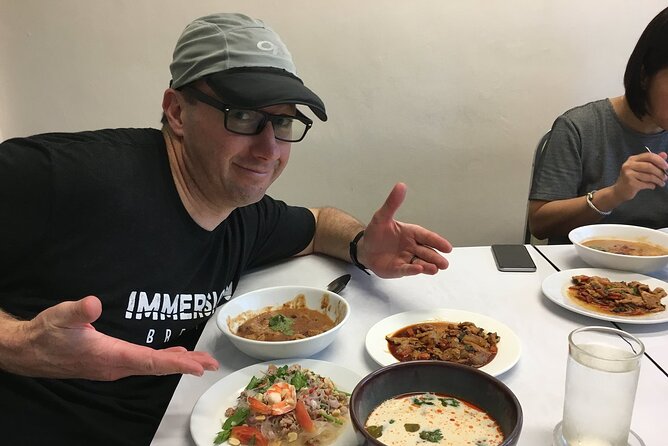
The reward comes at the end, when you sit down to eat the food you prepared. Rice is included, as are the ingredients and equipment used during the class. Extra drinks cost more.
This meal is more satisfying than a restaurant lunch for one simple reason: you understand the work behind it. You have seen the ingredients at the market, handled them in the kitchen, and made the seasoning decisions yourself.
The class atmosphere also makes the meal social. You may be cooking with couples, friends, or solo participants, and the small group creates an easy setting for conversation. One solo participant found the format welcoming, while other pairs described the class as a highlight of their Bangkok visit.
The food itself receives strong praise, but the greater value is learning how to repeat it. You leave with printed recipes and an e-certificate of completion. The certificate is not the main reason to book, but it is a pleasant keepsake.
The value at $43.86 per person
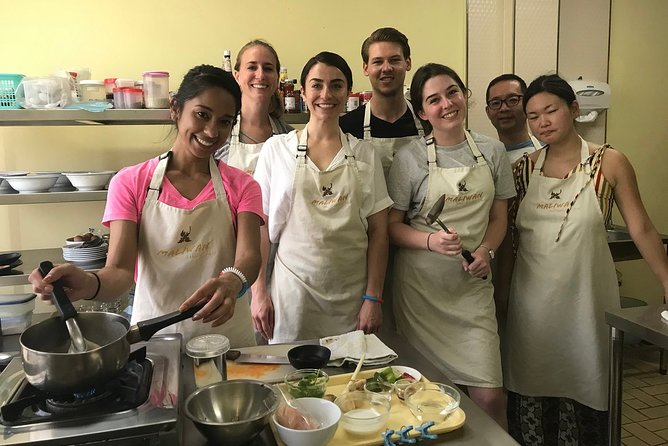
At $43.86, this is a fair price for a four-hour activity in Bangkok. The cost includes the market visit, tuk-tuk transport to and from the market, welcome drink, rice, all ingredients, cooking equipment, instruction, printed recipes, and the meal you prepare.
The value improves if you compare it with the parts separately. A market visit with an instructor gives you local context. A cooking class provides hands-on training. A meal is included at the end. The package combines all three without requiring you to buy ingredients or rent equipment.
It is also a better fit for people who want to learn than for people who only want lunch. If you are looking for the cheapest meal in Bangkok, this is not the right comparison. You are paying for instruction and an activity that continues after your holiday through the recipes you take home.
The small maximum group size adds value. With no more than seven people, the instructor can watch your technique and answer questions. A larger class might cost less, but it would likely offer less personal help.
Who will enjoy this Bangkok class most
This class is a strong choice for food lovers, first-time visitors, and anyone who wants more contact with daily life in Bangkok. It suits solo participants because the small format makes it easy to join without needing your own group.
It also works well for couples and friends. You can share the market visit, cook side by side, and sit down to a meal you made together. The minimum age is 13, so it is suitable for teenagers who are interested in food and can manage a kitchen session.
You should think twice if you have back or leg problems. The experience includes transport, market walking, and time standing while cooking. It may not be comfortable if you need frequent seating or have difficulty moving through a wet market.
You may also prefer another activity if you need a fixed menu. Since the instructor decides the recipes, you should book this for the overall learning experience rather than one promised dish.
Useful planning advice before you go
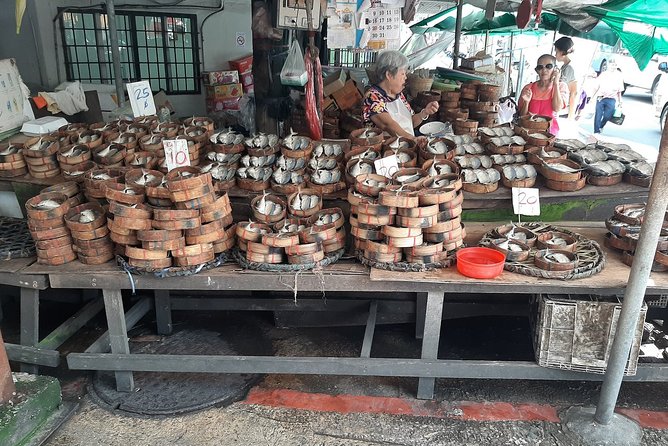
Wear sturdy, closed footwear. The market can be wet and muddy, and sandals are a poor choice. Comfortable clothing is sensible since you will be walking and cooking for several hours.
Build in plenty of travel time to reach the meeting point. The school does not provide hotel transfers, and the one-hour late rule is strict. Missing the start can mean losing the entire class without being able to join later.
Tell the school about dietary restrictions within two hours of booking. Include allergies, vegetarian or vegan needs, and gluten-free requirements. Early notice gives the kitchen the best chance to adjust the recipes.
The class accepts mobile tickets, and confirmation is sent within 48 hours, subject to availability. The activity ends back at the Maliwan meeting point, so you can plan your next stop from there.
Free cancellation is available if you cancel at least 24 hours before the start time. Cancellations or changes made inside that window are not refunded or accepted.
Should you book the Maliwan cooking class?
Book it if you want to understand Thai food by shopping for ingredients, cooking them yourself, and eating the results. The market visit, tuk-tuk ride, small group, and personal stations give the class more substance than a basic demonstration.
I would especially recommend it to anyone who plans to try Thai recipes at home. The printed instructions, flavor adjustments, and market explanations make the $43.86 price good value.
Skip it if you need a guaranteed dish, cannot arrive on time, or find walking and standing difficult. For most food-focused visitors who can manage those conditions, this is a friendly, practical way to spend four hours in Bangkok.
FAQ
How long is the Thai cooking class?
The experience lasts approximately four hours.
Where does the class begin?
It begins at Maliwan Thai Cooking Class, 9 Thanon Sap Sam Hang, Taladyod, Phra Nakhon, Bangkok 10200, Thailand.
Is the market visit included?
Yes. The class includes a visit to a local market, with tuk-tuk transportation to and from the market.
Is food included in the price?
Yes. Ingredients, rice, a welcome drink, and the meal you prepare are included. Extra drinks are not included.
Can I request vegetarian, vegan, or gluten-free food?
You can request dietary adjustments, but you must provide the details within two hours of booking. Last-minute changes may not be possible.
How many people can join the class?
The maximum group size is seven participants.
What happens if I arrive late?
Arriving one hour late is treated as a no-show, and you will not be able to participate in the rest of the class.
More Thai Cooking Classes in Bangkok
- Bangkok: Tingly Thai Cooking School Half-Day Cooking Class
★ 4.9 · 1,191 reviews - Tingly Thai Cooking School Evening Class
★ 5.0 · 335 reviews - Tingly Thai Cooking School Afternoon Class
★ 5.0 · 291 reviews - Bangkok: White Lotus Thai Cooking Class with Market Tour
★ 5.0 · 285 reviews
Just added around Bangkok
- Bangkok Udomsuk Thai Cooking Class with local market tour★ 5.0 · 5 reviews
- Thai cooking class experience in Bangkok with Tingly Thai cooking school★ 5.0 · 59 reviews
- Thai Cooking Class★ 5.0 · 25 reviews
- Thai Cooking Class in Bangkok★ 5.0 · 23 reviews
- Hands-On Thai Cooking Class Bangkok with Local Chef (Small Group)★ 5.0 · 119 reviews
- White Lotus Thai Cooking Class in Bangkok★ 5.0 · 31 reviews
- Baipai Thai Cooking School: Authentic Cooking Class Tour★ 5.0 · 3 reviews
- Sompong Thai Cooking School: Hands-On Culinary Experience★ 5.0 · 4 reviews
Cooking Classes with a Market Tour, compared.
Hanoi Cooking Class: Culture, Local Market & Meaning CSR Impact
Read our review →
5 Traditional Dishes Hanoi Cooking Class with Market Trip
Read our review →
Cooking Class and Lunch at a Tuscan Farmhouse with Local Market Tour from Florence
Read our review →
Cooking Class, Market & Thai Herbs Garden Tour
Read our review →
Authentic Cooking Class with Market & Farm Visit
Read our review →
Paella Cooking Experience & Boqueria Market Tour
Read our review →
Cooking Class Hoi An:Local Market, Basket Boat, Fishing & Cooking
Read our review →