
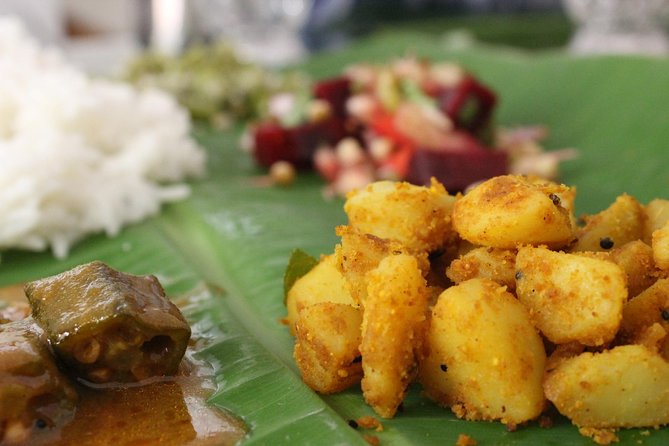
REVIEW · BANGALORE, INDIA
Traditional Gowda Cooking Class and Meal in a Bangalore Home
Traditional food often begins at home. This three-hour Bangalore cooking class brings you into Archana’s family home to prepare Gowda dishes, learn about local customs, and eat what you make. I like the personal setting and the chance to try foods such as ragi mudde and holige, dishes that may not appear on a standard restaurant menu. The main consideration is that this is a floor-seated meal, and the menu can vary.
I also like that the class is private, with hands-on help throughout rather than a large demonstration where you simply watch. Archana and her family add a strong personal touch, including family recipes, cultural stories, and, when available, ingredients selected from a rooftop garden. At $74 per person, it is not a cheap meal, but it offers food, instruction, and a direct look at Bangalore family life in one experience.
Key details before you book
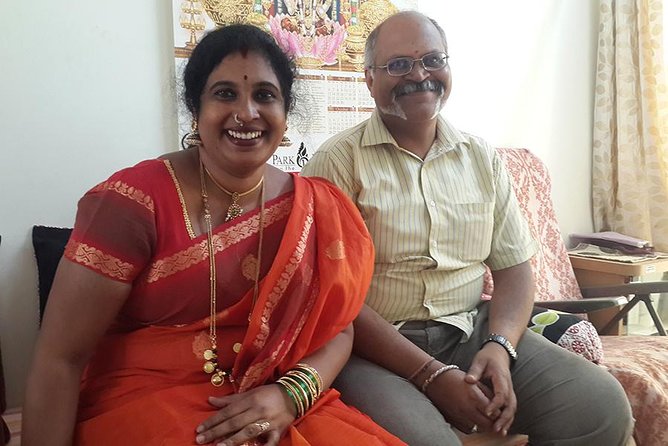
- Archana hosts the class in her family home, with her husband Rajesh and other family members sometimes part of the welcome.
- You prepare two or three Gowda dishes, which may include bisi bele huli anna, ragi mudde, holige, or mamsada saaru.
- The meal is served on a banana leaf, with diners sitting on the floor in a traditional South Indian style.
- A rooftop garden may provide herbs, giving you a closer look at the ingredients used in the meal.
- Vegetarian meals are available, but you need to request this when booking and share other dietary needs in advance.
- The class begins and ends in Rajajinagar, with no hotel pickup or drop-off included.
Entering a Bangalore family home
The meeting point is in Rajajinagar, a residential area of Bengaluru. This is not a restaurant class with a polished commercial kitchen and a rotating cast of instructors. You enter a real family home, which is the point of the experience.
Archana welcomes you with a drink of paanaka, a sweet lemonade, and small snacks. Depending on the menu, these may include kosambari, a light lentil salad, neruli bajji, fried onion fritters, or crisp snacks such as nippat, chakli, and usli.
That opening matters. You are not rushed straight to a cutting board. The food gives you something to taste while Archana explains the role of ingredients and the customs connected with eating at home. Her family’s roots in Bangalore go back five generations, and that background gives the class a strong local connection.
You may also meet family members during the visit. Archana’s mother has been part of some classes, and her husband Rajesh has helped welcome participants. This family presence is one of the most praised parts of the experience. It makes the afternoon feel less like a lesson sold to outsiders and more like an invitation into someone’s home.
You should still set your expectations correctly. A home visit has less formal structure than a professional cooking school. The setting may feel intimate and informal, which most people will appreciate, but anyone wanting restaurant-style service or a highly controlled timetable may prefer a conventional class.
A few more cooking classes around India worth a look
- Pink City Cooking Class
★ 5.0 · 452 reviews - Five Course Cooking Class & Meal
★ 5.0 · 250 reviews - Veg and Non veg : Private Cooking Class in Delhi home (7 meal)
★ 5.0 · 226 reviews
The rooftop garden and local ingredients
One especially appealing part of the visit is the chance to see Archana’s rooftop garden and select herbs for the meal. This connects the cooking to the household rather than treating ingredients as anonymous items taken from a storage shelf.
The garden visit also gives you a small but useful lesson in how flavor is built. Indian cooking often depends on herbs, lentils, spices, and vegetables working together, rather than on one dominant ingredient. Seeing some of those ingredients in a home setting helps explain why a simple dish can have so much character.
The exact garden activity is not guaranteed as a separate formal stop, so I would treat it as a possible highlight rather than a promised full garden tour. The main focus remains cooking and dining. Still, if you enjoy seeing where food begins, this detail adds something special.
Archana also explains the meaning and values connected with Indian food. That can include the way dishes are shared, how family recipes are passed on, and why certain foods are associated with rural Karnataka or particular occasions. You get cultural context without needing a separate museum or lecture.
Cooking two or three Gowda dishes
The central lesson covers two or three traditional Gowda dishes. The menu can vary, but the examples give you a good idea of the range.
Bisi bele huli anna combines rice, vegetables, and lentils in a savory preparation. It is hearty and practical, the kind of dish that shows how grains, pulses, and vegetables can form a satisfying meal without relying on meat. You may find the dish especially useful if you want to recreate a South Indian meal at home.
Ragi mudde is made from millet flour and shaped into balls. It is strongly associated with rural Karnataka and is traditionally eaten with a liquid dish such as mamsada saaru. The texture and method are different from the rice dishes many visitors know, so the hands-on preparation is worthwhile.
If the menu includes holige, you will work with a lentil-stuffed flatbread. It brings a sweeter, more festive note to the meal and shows another side of Karnataka cooking. If mamsada saaru is served, it is a stewed mutton dish that adds a rich, savory center to the meal.
You will not necessarily prepare every dish listed above. The descriptions indicate possible menu items, not a fixed menu for every date. This is important if you have your heart set on one particular recipe. Ask about the planned dishes when you book, especially if you have dietary restrictions or strong preferences.
The practical advantage of a private class is the amount of help you receive. You can ask questions, watch a technique again, and get guidance while you work. That is more useful than watching a chef prepare a dish at a distance.
Learning through family recipes
The class is about more than producing lunch. Archana shares recipes connected with her family, including cooking knowledge passed through generations. That gives the dishes a sense of place that you rarely get from a standard restaurant meal.
I particularly like this aspect for visitors who have already eaten plenty of dosas, idlis, and restaurant curries. Those foods are excellent, but they represent only part of South Indian cooking. Gowda food introduces you to dishes tied to Karnataka’s homes and rural traditions.
The cultural discussion also helps explain why food is such a useful entry point into Bangalore life. You learn through ordinary actions: preparing ingredients, sharing snacks, arranging food, and eating together. The experience does not promise a broad tour of the city, but it offers a close look at one household and its traditions.
The private format suits curious people who enjoy conversation. It also works well for families and small groups because you can ask questions without competing with a large class. Since only your group participates, the pace can feel more personal.
Same place, a different thing to cook:
- Indian Cooking Class in an Authentic Local Home – Learn 6 Dishes
★ 5.0 · 195 reviews - Durga Cooking Class
★ 5.0 · 159 reviews - Private Guided Cooking Workshop Experience in Jodhphur
★ 5.0 · 158 reviews - Jaipur Market Tour & Vegetarian Rajasthani Home Cooking Class
★ 5.0 · 113 reviews
Sitting on the floor for a banana-leaf meal
After the cooking, you sit down to eat the meal you helped prepare. The food is served on a banana leaf, and you sit on the floor in a traditional arrangement.
This is one of the most distinctive parts of the experience. A banana leaf is not just attractive presentation. It changes the feel of the meal and connects it with South Indian dining customs. You get to see how several dishes work together rather than sampling isolated plates.
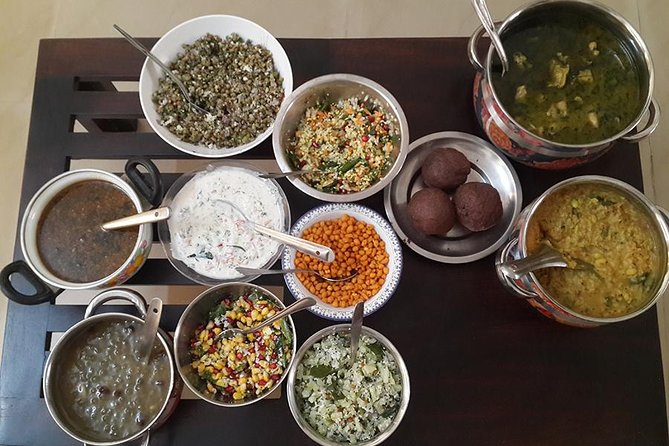
The meal may include the dishes prepared during class, along with starters, dessert, and beverages. You might begin with paanaka and snacks, move to rice or millet-based dishes, and finish with traditional Gowda sweets.
The floor seating deserves practical attention. If you have difficulty sitting on the floor for a meal, ask about the arrangement before booking. The provided information does not promise chair seating, so you should not assume it will be available.
The same applies to spice levels and ingredients. Vegetarian food is available, but you must advise the host when booking. You should also give advance notice of specific dietary requirements. The more clearly you explain your needs, the easier it will be to plan a suitable menu.
What the $74 price includes
At $74 per person, the price covers a private Gowda cooking class and a home-cooked South Indian meal. You are paying for more than the food itself. The cost also includes direct instruction, a private setting, family conversation, and the chance to take part in customs that are difficult to access through ordinary sightseeing.
The value is strongest if you want cultural contact as well as a meal. A restaurant dinner might cost less, but it would not give you the same preparation time, personal explanations, or view of family life. A formal cooking school might provide more technical instruction, but it could feel less connected to a real household.
Group discounts may be available, which can make the experience more appealing for families or friends. Since the class is private, the final value depends partly on how many people are in your group and how much you enjoy conversation and participation.
I would not choose this experience only because you want the cheapest way to eat local food. I would choose it because you want to understand what you are eating and meet the people who prepare it. The food is the reward, but the setting is what justifies the price.
Timing, transport, and planning
The activity lasts about three hours. That is enough time for a welcome, cooking, conversation, and a full meal without taking over your entire day.
You need to make your own way to Rajajinagar. Hotel pickup and drop-off are not included, although the meeting area is near public transportation. Plan extra time for reaching the home, since a late arrival could cut into the cooking portion.
Confirmation is sent within 48 hours of booking, subject to availability. The experience is often booked about 15 days ahead, so I would not leave it until the last day of a short Bangalore stay. Booking early also gives you time to communicate vegetarian needs or other dietary requirements.
The activity offers a mobile ticket, which is useful when you are moving around the city with your phone rather than carrying printed documents. Free cancellation is available if you cancel at least 24 hours before the local start time. Changes or cancellations inside that window are not refunded.
Who will enjoy this class most
I would recommend the class to you if you:
- Prefer home cooking to polished tourist venues
- Want to learn about Karnataka food beyond familiar restaurant dishes
- Enjoy meeting local families and asking questions
- Are happy to take part rather than simply watch
- Want a private activity for a couple, family, or small group
- Can manage a floor-seated meal
- Are willing to travel to Rajajinagar independently
It is especially useful for first-time visitors who want a gentle introduction to Bangalore culture. It also suits people who have already seen the major sights and want an experience centered on everyday life.
I would think twice if you need a fixed menu, chair seating, hotel transport, or a highly technical chef-training session. The menu can change, and the appeal comes from the home setting rather than restaurant-level formality.
Should you book the Gowda cooking class?
Yes, if food is one of the main reasons you travel. The combination of a private home, hands-on cooking, family recipes, rooftop herbs, and a banana-leaf meal gives you a genuine connection to Bangalore’s food culture.
The strongest reasons to book are Archana’s warm hosting, the family setting, and the chance to prepare dishes such as ragi mudde and bisi bele huli anna. Just confirm the menu, explain dietary needs, and be comfortable with floor seating before you pay.
At $74, this is best viewed as a cultural visit with a meal included, not simply a three-hour cooking lesson. If that sounds like your kind of afternoon, it is a thoughtful and highly personal addition to a Bangalore itinerary.
FAQ
Where does the cooking class begin and end?
The experience begins in Rajajinagar, Bengaluru, and ends back at the meeting point.
How long does the experience last?
The cooking class and meal last approximately three hours.
Is the class private?
Yes. Only your group participates in the activity.
What dishes might I prepare?
You may prepare two or three Gowda dishes, such as bisi bele huli anna, ragi mudde, holige, or mamsada saaru. The exact menu can vary.
Is a vegetarian option available?
Yes. A vegetarian option is available, but you should request it when booking.
Are hotel pickup and drop-off included?
No. You are responsible for reaching the meeting point and returning afterward. The location is near public transportation.
How is the meal served?
The meal is served on a banana leaf, with diners sitting on the floor in a traditional South Indian style.
Can I cancel for a full refund?
Yes, if you cancel at least 24 hours before the experience start time. Cancellations or changes made less than 24 hours in advance are not refunded.
Just added around India
- Private tour to learn Traditional Indian Art, craft & Cooking★ 5.0 · 4 reviews
- Chennai Super Market Tour and Cooking Class with a Fun Local★ 5.0 · 9 reviews
- Neighborhood Market Tour & South Indian Cooking Class in Chennai★ 5.0 · 7 reviews
- Traditional Chettinad Cooking Class in a Local Home near Chennai★ 4.5 · 12 reviews
- Chennai Dosa Making Class & Home-Dining Experience with Jyashree★ 5.0 · 8 reviews
- Cooking experience in Bangalore, a half day tour★ 5.0 · 5 reviews
- Discover Bangalore’s Cuisine: Private Half-Day Cooking Experience★ 5.0 · 3 reviews
- Private South Indian Cooking Class in Bangalore with a Local★ 5.0 · 11 reviews
Cooking Classes, compared.

Half-Day Thai Cooking Class at Organic Farm in Chiang Mai
Read our review →

3 in 1 Cooking Class near Navona: Fettuccine, Ravioli & Tiramisu
Read our review →
Pasta & Tiramisu Cooking Class with Unlimited Wine
Read our review →
Hanoi Cooking Class: Culture, Local Market & Meaning CSR Impact
Read our review →
5 Traditional Dishes Hanoi Cooking Class with Market Trip
Read our review →
Cooking Class and Lunch at a Tuscan Farmhouse with Local Market Tour from Florence
Read our review →
Cooking Class, Market & Thai Herbs Garden Tour
Read our review →Lists this class appears in