
REVIEW · ACCRA, GHANA
Culinary for Social Change-Cooking Class
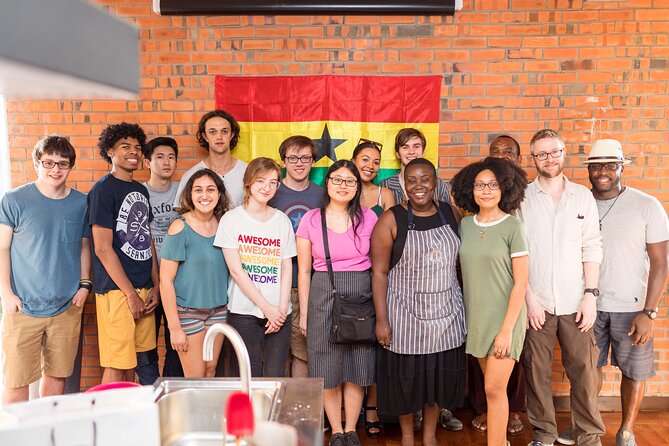
Cook Ghanaian food, and support a new future. Chef Jay’s three-hour class in Accra combines hands-on cooking with a clear social purpose: your $60 fee helps fund a program that supports underprivileged women. I like the chance to learn dishes such as jollof rice and kelewele, and I like that you leave with a recipe to try at home. The class also includes local drinks, snacks, chilled coconut water, and a full meal.
The main consideration is the fixed booking policy. This experience is non-refundable and cannot be changed, so you need to be sure of your date before paying. The class also runs only Wednesday through Saturday, from 10 a.m. to 1 p.m., and poor weather or low enrollment can lead to a date change or refund.
Key points at a glance
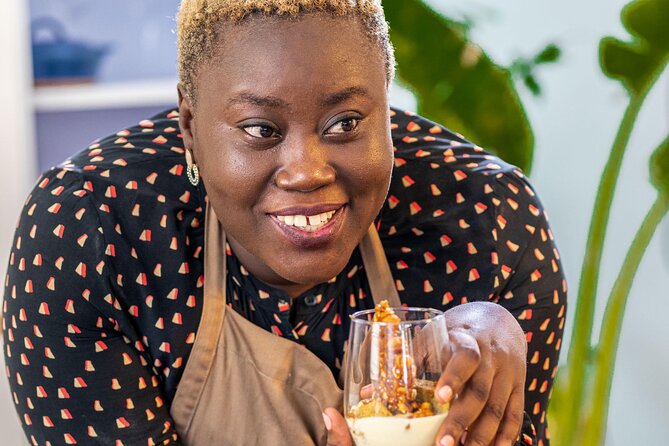
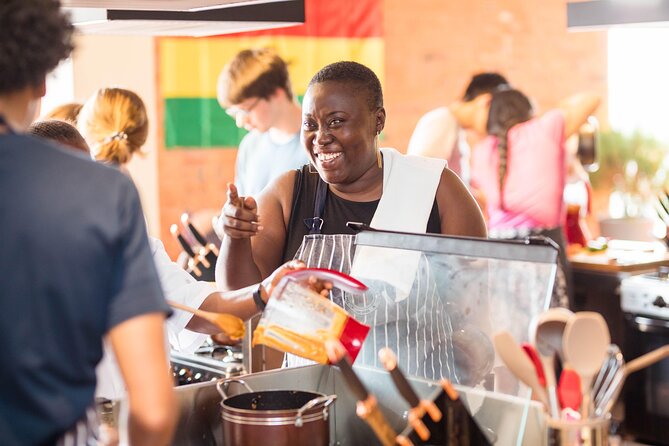
- Chef Jay leads a hands-on Ghanaian cooking class where you cook alongside the chef rather than simply watch.
- Jollof rice and kelewele feature prominently, with fried chicken and salad included in the meal described by one recent group.
- Your booking supports a women’s empowerment program, giving the class a purpose beyond lunch.
- Local drinks, snacks, bottled water, and chilled coconut water are included, while alcohol costs extra and is not provided.
- The private format suits a small group, since only your party takes part in the activity.
- You meet at Labone Arcade in Accra, then return to the same point after roughly three hours.
Cooking with a purpose in Accra
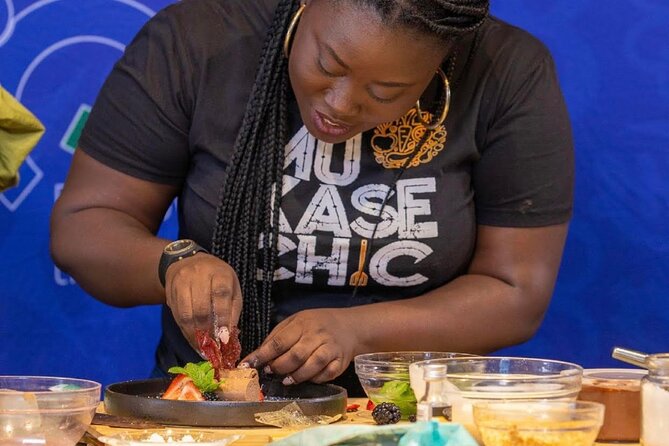
A cooking class can be a pleasant way to spend a morning. This one asks you to pay attention to who benefits from that meal. The stated aim of Culinary for Social Change is to empower underprivileged women, and money from the class directly funds that work.
That gives the experience more weight than a standard food demonstration. You are not only learning how to prepare Ghanaian dishes. You are also helping support a program designed to give women better opportunities. The available information does not spell out the full structure of the program, so you should not expect a detailed social-impact presentation. Still, the link between your booking and the cause is central to the experience.
Chef Jay teaches the class, with staff members helping during the session. A December group specifically praised Chef Jay and the staff for being friendly. That matters in a hands-on class, where a relaxed teacher can make it easier to ask questions, handle unfamiliar ingredients, and join in without feeling awkward.
The class gives you an overview of Ghanaian hospitality through food. In practical terms, that means cooking, eating, drinking, and talking around a shared meal. You are given a closer look at what Ghanaian cuisine tastes like and how several dishes fit together on the table.
A few more cooking classes around the world worth a look
- Half-Day Thai Cooking Class at Organic Farm in Chiang Mai
★ 5.0 · 19,087 reviews - Florence: Pasta Cooking Class with Unlimited Wine
★ 4.9 · 10,285 reviews - 3 in 1 Cooking Class near Navona: Fettuccine, Ravioli & Tiramisu
★ 5.0 · 7,376 reviews
What the three-hour class includes
The session runs from 10 a.m. to 1 p.m., which makes it a useful morning activity. You can cook, eat, and still have part of the afternoon free for other plans in Accra.
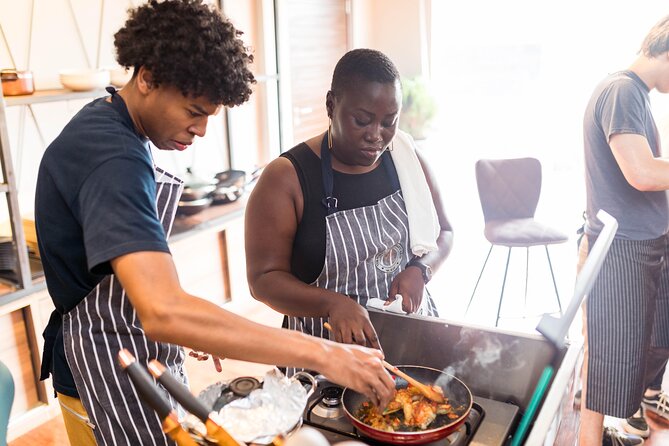
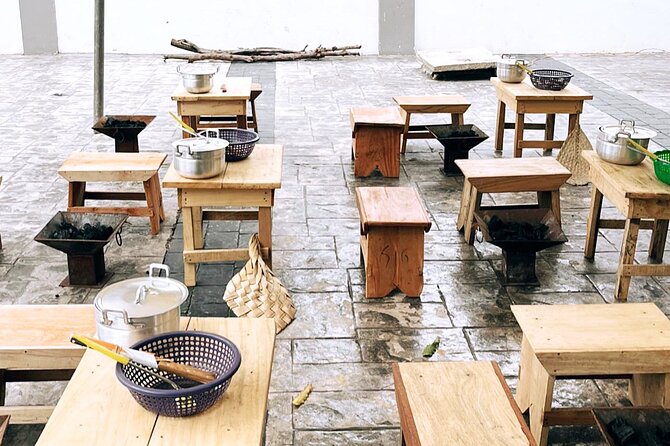
The class is described as participatory. You cook alongside Chef Jay instead of sitting through a demonstration and waiting for the food to appear. That distinction is important. You will likely spend much of the morning following the chef’s lead, helping prepare the food, and picking up practical tips as the dishes come together.
The exact order of the cooking stages is not provided, so I would not expect a rigid, published timetable. The experience is built around preparing and tasting a Ghanaian meal, with the teaching taking place as you work.
One group prepared jollof rice, kelewele, fried chicken, and salad. These dishes give you a good sense of the class’s range:
- Jollof rice is a central West African rice dish and a natural focus for a Ghanaian cooking session.
- Kelewele brings a spiced plantain element to the meal.
- Fried chicken adds a familiar main dish to the table.
- Salad provides a fresh side alongside the cooked food.
The class also includes dessert and drinks. The details do not name the dessert or every beverage, so it is best to treat those as part of the meal rather than expect a particular menu. Local drinks are served during the class, and chilled coconut water is included.
You also receive bottled water and snacks. Alcoholic drinks are not included. If you want wine, beer, or spirits with your meal, you will need to arrange that separately, if available.
Tasting Ghanaian hospitality, one dish at a time
Food here is not presented as a detached cooking lesson. The stated goal is to give you a sense of Ghanaian hospitality through cuisine. That means the social side of the meal matters as much as the recipe.
You get to taste the dishes you help prepare, which makes the lesson easier to remember. A recipe on paper can feel abstract. Eating the finished jollof rice or kelewele gives you a clear reference point when you later try the dish at home.
I also like the way drinks are part of the session. Local beverages help make the meal feel like a complete Ghanaian food experience rather than a single recipe workshop. Chilled coconut water is a particularly practical touch in Accra’s warm climate, though the supplied details do not specify whether it is served at the beginning, during the cooking, or with the meal.
The class ends with food to eat and a recipe to take home. That recipe is one of the most useful parts of the experience. You can recreate at least part of the lesson after your trip, then compare your own kitchen results with what you learned in Accra.
Do not expect a professional culinary qualification or an advanced chef’s course. This is a cultural cooking experience with a social mission. It is best approached as a chance to learn several Ghanaian dishes, understand the food in a hospitality setting, and enjoy the meal you helped make.
Labone Arcade makes the meeting point simple
You meet at Labone Arcade, 16 Orphan Crescent, in Accra. The activity ends back at that same meeting point, so you do not need to arrange a separate pickup location after lunch.
The location is near public transportation, which helps if you are making your own way across the city. The information does not provide a hotel pickup service, private transfers, or detailed directions from specific parts of Accra. Plan your route to Labone Arcade in advance, especially since the class starts at 10 a.m.
The meeting point is also useful for planning the rest of your day. Since you return there around 1 p.m., you can continue with other Accra plans afterward. Keep in mind that cooking classes can finish close to the stated time, particularly when food preparation and eating are both part of the session.
This is a private activity. Only your own group takes part, which gives you a more personal setting than a large public class. It may also make the session easier for friends or family members who want to cook together at their own pace.
The supplied information does not state the maximum group size, so I would not assume it is limited to two or three people. Private means your group is not mixed with unrelated participants, not necessarily that the class is very small.
Same place, a different thing to cook:
- Florence: Pasta & Tiramisu Cooking Class with Unlimited Wine
★ 4.9 · 6,708 reviews - Hanoi Cooking Class: Culture, Local Market & Meaning CSR Impact
★ 5.0 · 5,147 reviews - 5 Traditional Dishes Hanoi Cooking Class with Market Trip
★ 5.0 · 4,890 reviews - Cooking Class and Lunch at a Tuscan Farmhouse with Local Market Tour from Florence
★ 5.0 · 4,831 reviews
Is $60 a fair price?
The price is $60 per person. To judge that value, look at what is bundled into the morning: instruction from Chef Jay, hands-on cooking, the meal you prepare, dessert, local drinks, bottled water, snacks, chilled coconut water, and a take-home recipe.
You are also paying toward the Culinary for Social Change program. That social contribution is part of the value, not a minor extra. If you want an activity that connects your spending with women’s empowerment, the price has a stronger case than a cooking class judged only by the amount of food served.
The private format adds value for a group of friends or family members. You are not sharing the session with strangers, and the class can feel more like a group activity than a scheduled demonstration.
Still, $60 may feel high if you are only looking for an inexpensive meal. You could spend less on food elsewhere in Accra. The reason to choose this class is the combination of instruction, cultural context, private participation, and social purpose.
The experience is often booked about 26 days ahead. That suggests you should not leave it until the last moment, especially if your Accra schedule is tight. The operating days are Wednesday through Saturday, so a short visit from Sunday through Tuesday will not fit the published schedule.
Who will enjoy Chef Jay’s class most?
I would recommend this class to you if you enjoy learning by doing. It suits people who want more than a restaurant meal and like the idea of carrying a recipe home from their trip.
It is also a good choice for a group of friends. One December group booked it as part of a trip to Ghana and described the morning as a highlight. The friendly atmosphere seems to be a major part of the appeal, so groups who enjoy cooking, eating, and laughing together should get the most from it.
Food-focused visitors will appreciate the chance to work with Ghanaian dishes rather than simply order them. If jollof rice and kelewele are already on your Ghana wish list, the class gives you a practical introduction to both.
The experience may be less suitable if you want a formal, highly technical cooking course. The details point to hospitality, cultural understanding, and a shared feast rather than advanced culinary training.
It may also not suit someone who dislikes fixed plans. The date cannot be changed for personal reasons, and the booking is non-refundable. You should only reserve once your schedule is firm.
Private Ghanaian dining is also available
The same provider offers a private Ghanaian gastronomy dining experience for people who want to book Chef Jay separately. That option is useful if your group would rather sit down to a chef-prepared meal than take part in the cooking.
The information does not give a price, menu, duration, or booking details for the private dining option. Treat it as a separate arrangement, not as something included in the $60 class.
For most people, the cooking class offers better interaction. You learn the food and then eat it. A private dining booking may be the better fit for a celebration, a relaxed meal, or a group member who would rather not cook.
Practical booking advice before you pay
Confirmation is provided at the time of booking. The class operates Wednesday through Saturday from 10 a.m. to 1 p.m., with the dates shown as August 31, 2022 through June 17, 2026.
The booking is non-refundable and cannot be amended for any reason. That is the biggest practical drawback, so check your transport, accommodation, and sightseeing plans before you reserve.
Two exceptions are given. If poor weather cancels the class, you can receive a different date or a full refund. If the minimum number of participants is not reached, you can be offered another date or experience, or receive a full refund.
The activity requires good weather and a minimum number of participants. Since this is a private class, your own group participates, but the stated minimum still applies. If your plans depend on this exact morning, leave some flexibility in your Accra schedule.
Bring an appetite and a willingness to participate. Bottled water and local drinks are included, but alcohol is not. If you have dietary needs, allergies, or food restrictions, the supplied information does not explain how they are handled, so ask the provider before booking.
Should you book Culinary for Social Change?
Book it if you want a private, food-centered morning with a clear social purpose. The strongest reasons are the hands-on format, Chef Jay’s friendly teaching style, the chance to prepare Ghanaian dishes such as jollof rice and kelewele, and the knowledge that your payment supports a women’s empowerment program.
The class offers good value when you count the cooking lesson, full meal, drinks, snacks, dessert, recipe, and private setting. It is especially appealing for friends traveling together or for anyone who wants an active introduction to Ghanaian cuisine.
Skip it if your schedule is uncertain, you need a refundable booking, or you only want a cheap meal. For everyone else, this is a practical way to spend three hours in Accra, learn food you can make again, and connect your holiday spending with a useful local cause.
FAQ
Where does the cooking class take place?
The class starts at Labone Arcade, 16 Orphan Crescent, Accra, Ghana.
Where does the activity finish?
The activity ends back at the meeting point at Labone Arcade.
How long does the class last?
The class lasts approximately three hours, from 10 a.m. to 1 p.m.
Which days is the class available?
It is available Wednesday through Saturday during the published operating period.
How much does the class cost?
The price is $60 per person.
Is this a private activity?
Yes. Only your own group participates in the activity.
What food can I expect to prepare?
The class covers Ghanaian cuisine. A meal described for the experience included jollof rice, kelewele, fried chicken, and salad, along with dessert.
Are drinks included?
Yes. Local drinks, bottled water, snacks, and chilled coconut water are included. Alcoholic beverages are not included.
Can I cancel or change my booking?
No. The experience is non-refundable and cannot be changed for personal reasons. If poor weather or insufficient enrollment cancels the class, you can be offered a different date or experience, or receive a full refund.
Just added around the world
- Aroidee’s Farm-Fresh Thai Cooking Experience★ 5.0 · 8 reviews
- Signature Thai Cooking Course★ 5.0 · 79 reviews
- Private Half-Day Thai Cooking Class in Chiang Mai★ 5.0 · 4 reviews
- Half Day Guided Thai Cooking Class in Chiang Mai★ 5.0 · 13 reviews
- Online Thai and Akha Cooking Class★ 5.0 · 70 reviews
- Private Virtual Thai Cooking Class★ 5.0 · 9 reviews
- Northern Thai Cooking Class in Chiang Mai in a Countryside Home★ 5.0 · 2 reviews
- 5 Hour Morning Thai Cooking Course★ 5.0 · 31 reviews
Cooking Classes, compared.

Half-Day Thai Cooking Class at Organic Farm in Chiang Mai
Read our review →

3 in 1 Cooking Class near Navona: Fettuccine, Ravioli & Tiramisu
Read our review →
Pasta & Tiramisu Cooking Class with Unlimited Wine
Read our review →
Hanoi Cooking Class: Culture, Local Market & Meaning CSR Impact
Read our review →
5 Traditional Dishes Hanoi Cooking Class with Market Trip
Read our review →
Cooking Class and Lunch at a Tuscan Farmhouse with Local Market Tour from Florence
Read our review →