REVIEW · CENTRAL THAILAND, THAILAND
Bangkok: Hands-on Thai Cooking Class and Market Tour
Thai food tastes better when you make it yourself. This Bangkok class combines hands-on cooking with a morning market visit or afternoon mango carving, giving you more than a meal and a recipe sheet. You prepare four dishes, eat them while hot, and take the recipes home by email.
I like the small-class attention and the friendly English-speaking instructors, including Jay, Pitch, April, and others praised for their patience. I also like the value: at $45, you get ingredients, equipment, four dishes, drinks, and a 210-minute lesson. The main consideration is the morning market visit, which can be fairly modest rather than a large wet-market outing.
Key points before you book
- Four dishes you cook yourself: Each class includes a soup or salad, stir-fry, curry, and mango sticky rice, with the menu changing by day.
- Morning market option: The 8:30 AM class begins near Asoke and Sukhumvit stations with a guided ingredient visit.
- Mango carving later in the day: Afternoon and evening classes replace the market visit with mango carving.
- Small-class teaching: Instructors give clear demonstrations and one-on-one help, useful for first-time cooks.
- Dietary substitutions available: Vegetarian, halal, kosher, and allergy needs can be handled with advance notice.
- Recipes go home with you: You receive recipes for the dishes you make, along with additional recipes from the school.
Why this Bangkok cooking class is worth three and a half hours
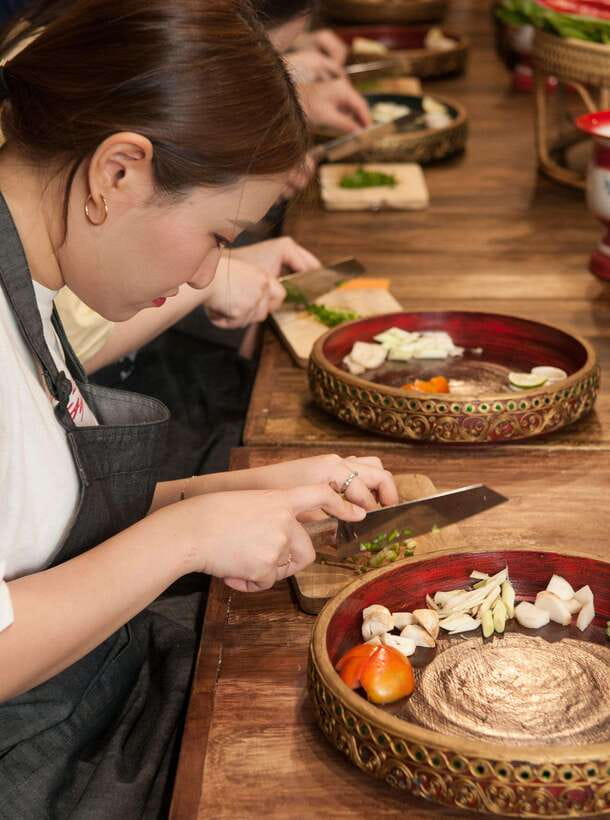
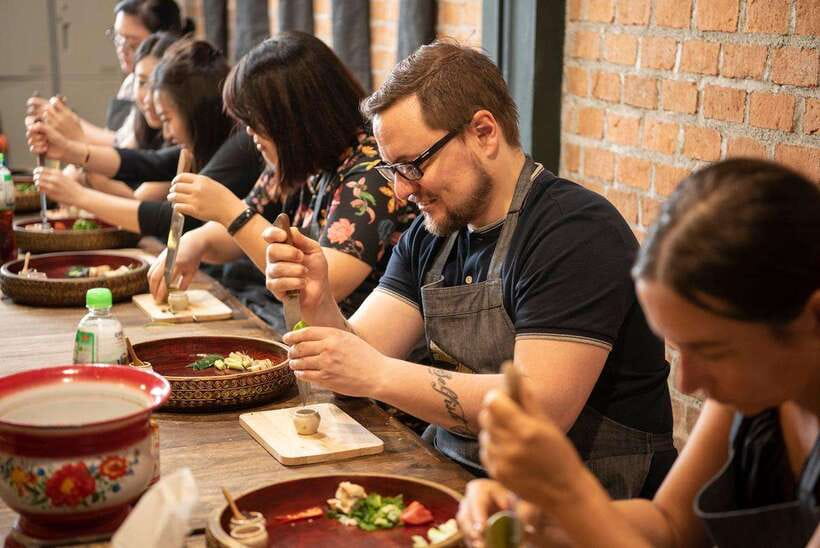
House of Taste Thai Cooking School offers a useful mix of food, instruction, and local context. You are not simply watching a chef cook while standing at the edge of a kitchen. You work with the ingredients, make curry paste from scratch, cook each dish, and eat it soon after it leaves the pan.
That matters in Thailand, where the balance of sweet, sour, salty, spicy, and creamy flavors is easier to understand when you handle the ingredients yourself. You learn what goes into coconut milk, curry paste, herbs, rice, vegetables, and spices. The lesson connects the raw ingredients to the food on your plate.
The class lasts 210 minutes, with about two hours devoted to cooking. That is long enough to give you real kitchen time without turning the activity into an all-day commitment. You will want to arrive hungry. Four dishes add up to a very filling meal, and the food is served one dish at a time while it is still hot.
The format suits both confident cooks and people who rarely touch a frying pan. Several instructors are praised for explaining each step clearly and adjusting their pace for different skill levels. If you are cooking with a partner or family member, each person can take part instead of watching one person do all the work.
More Cooking Classes with a Market Tour in Bangkok
- Bangkok: Maliwan Thai Cooking Class with Market Tour
★ 4.9 · 1,133 reviews - Hands on Thai Cooking Class and Market Tour
★ 5.0 · 660 reviews - Tingly Thai Cooking Class with Morning Market Tour
★ 5.0 · 589 reviews
Starting near Asoke: the morning market visit
For the morning class, meet at street level by BTS Asoke Exit 3 and MRT Sukhumvit Exit 3. The nearby location is easy to identify using Hey! Coffee MRT Sukhumvit as the meeting point.
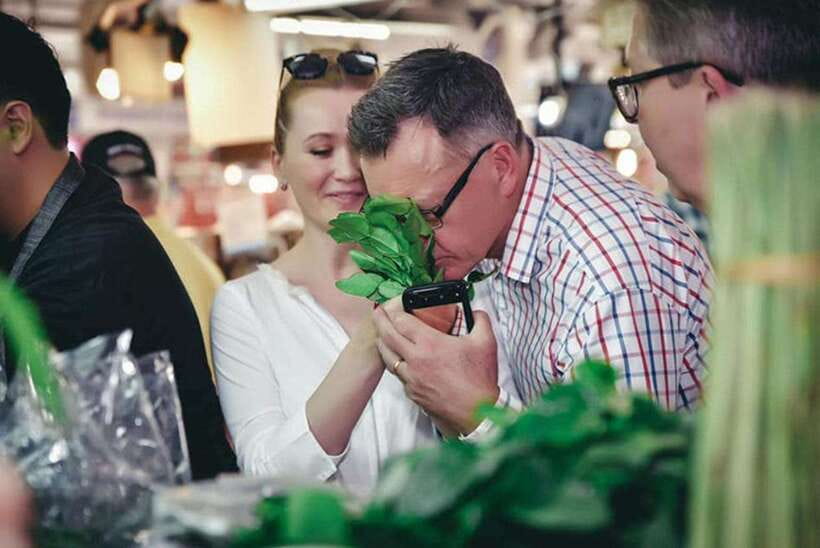
The guided market visit introduces the ingredients before you start cooking. You look at vegetables, herbs, spices, rice, and other Thai staples, then learn how these items fit into the day’s recipes. This is a smart teaching choice. A list of ingredients on a workbench tells you what you need, but seeing them in a local shopping setting gives the food more context.
Keep your expectations sensible. This is not always a large traditional wet market with endless lanes and seafood counters. Some participants found the visit closer to a couple of stalls and a dry-ingredient shop behind the BTS station. If you want a major market expedition, this part may feel brief.
I would still choose the morning class if ingredients and local shopping interest you. You get a useful introduction, and the market walk helps you recognize products you may later want to buy at home. Wear comfortable shoes, since the morning begins with walking before the cooking starts.
The class begins at 8:30 AM for the morning session. That early start also means you cook and eat a substantial meal before the hottest part of the day. For some people, that is ideal. For others, a large Thai meal first thing in the morning may require a little adjustment.
Afternoon and evening classes: mango carving instead
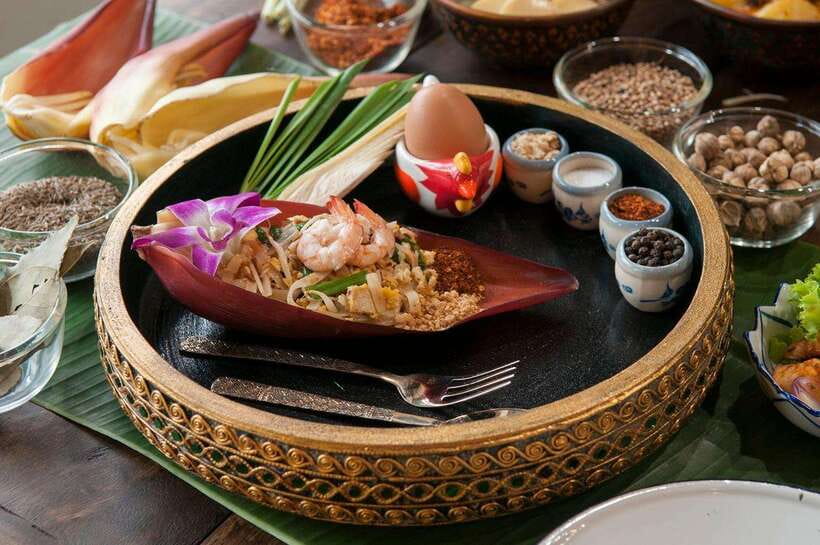
The afternoon and evening classes meet at the school in Sukhumvit 4. These sessions do not include the market walk. Instead, the introduction to ingredients takes place at the school, and mango carving is added as the final activity.
This gives you a different kind of experience. You lose the neighborhood shopping stop, but you gain a hands-on fruit presentation lesson. Mango carving is a playful finish, and several participants particularly enjoyed learning it with instructors such as Pitch.
Choose these sessions if you prefer a later start, want to avoid a morning appointment, or like the idea of learning a decorative Thai food skill. Just do not book an afternoon or evening class expecting a market visit. The two formats are not interchangeable.
The school meeting point in Sukhumvit 4 is especially important to note when arranging your day. The morning group meets near the transit stations, while later classes begin at the cooking school itself.
Four dishes, with a new menu each day
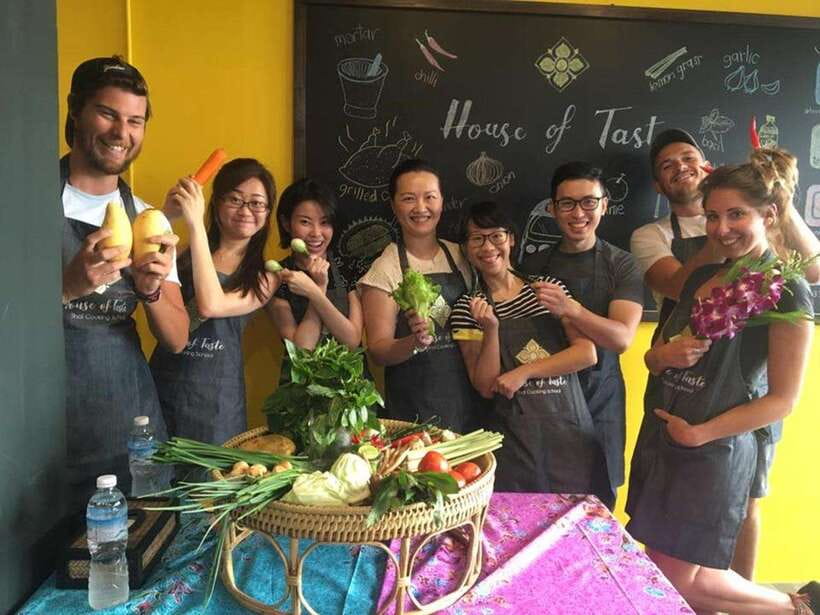
The menu changes according to the day of the week. Every schedule includes four dishes, with mango sticky rice as the dessert each day.
More Cooking Classes with a Market Tour in Thailand
- Hands-on Thai Cooking Class & Market Tour in Sukhumvit
★ 5.0 · 571 reviews - Pink Chili – Thai Cooking Class and Market Tour in Bangkok
★ 5.0 · 416 reviews - Authentic Thai Cooking with the Largest market visit &TukTuk ride
★ 5.0 · 350 reviews - Bangkok: White Lotus Thai Cooking Class with Market Tour
★ 5.0 · 285 reviews
Monday
You make Thai papaya salad, pad Thai with shrimp, green curry with chicken, and mango sticky rice. This is a classic introduction to Thai cooking, moving from the fresh crunch and heat of som tum to noodles, curry, and coconut-based dessert.
Tuesday
The menu includes tom kha gai, stir-fried Thai basil chicken, red curry with chicken, and mango sticky rice. This day gives you two different curry profiles and a fragrant coconut soup.
Wednesday
You prepare tom yum goong, pad see ew with chicken, green curry with chicken, and mango sticky rice. The sharp, hot soup pairs well with the sweeter, darker flavors of flat rice noodles.
Thursday
The menu features larb gai, pad Thai with shrimp, panang curry with chicken, and mango sticky rice. Larb adds a spicy minced chicken salad to the mix, while panang curry offers a thicker, milder style than some other Thai curries.
Friday
You make som tum, stir-fried Thai basil chicken, red curry with chicken, and mango sticky rice. This is a good choice if you want a lively mix of fresh salad, savory stir-fry, curry, and dessert.
Saturday
The class prepares tom kha gai, pad Thai with shrimp, green curry with chicken, and mango sticky rice. It is a friendly weekend menu with several familiar dishes.
Sunday
You cook tom yum goong, pad see ew with chicken, panang curry with chicken, and mango sticky rice. This schedule offers a nice spread of sour soup, noodles, curry, and dessert.
The changing schedule gives you a reason to check the day before booking. If tom yum, pad see ew, or panang curry is your priority, select the day carefully. You also receive recipes by email, and the recipe collection includes dishes made on other days, so you are not limited to the menu you cook in class.
What you actually do at the stove
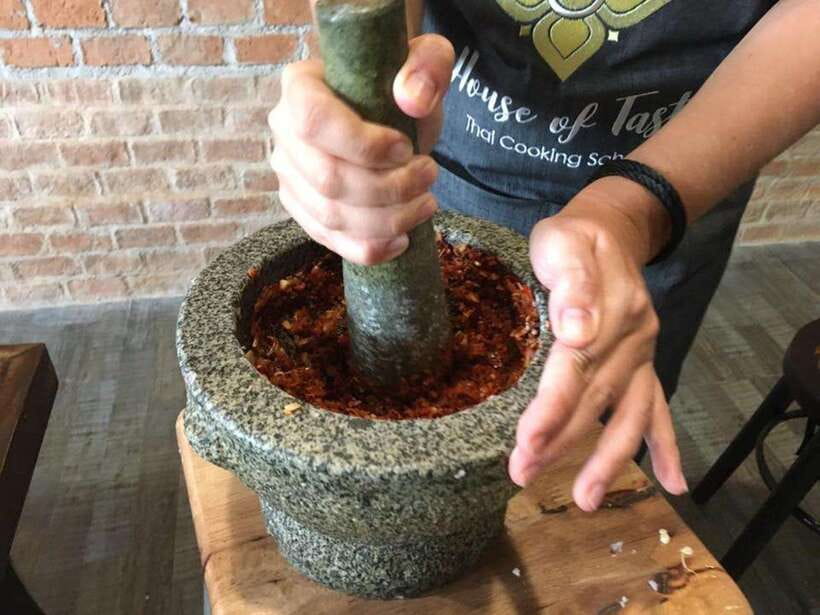
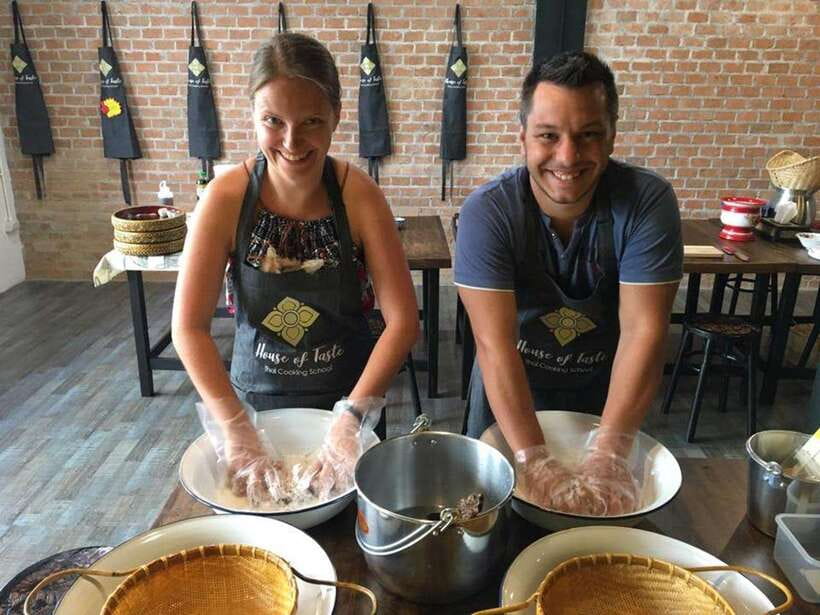
The best part of the class is that you make the food yourself. The instructor first explains the ingredients and method, then guides you through preparation and cooking. You get your hands into the curry paste rather than relying on a ready-made jar.
That step is especially useful because curry paste is a foundation of Thai cooking. You can see how herbs and spices combine, how texture changes as you work them, and how the paste affects the final curry. The same practical approach applies to soups, salads, and stir-fries.
You eat each dish separately as it is completed. This keeps the food hot and lets you taste the results without waiting for all four courses to be finished. It also gives you a chance to ask about flavor balance while the dish is still in front of you.
The instructors are a major part of the experience. Jay is praised for being patient and informative, while Pitch is noted for explaining cultural details as well as cooking steps. April is described as funny, clear, and easy to follow. Other instructors, including Jane and Jen, receive similar praise for making beginners feel comfortable.
The class is taught in English and Thai. The repeated praise for clear explanations is important if you are nervous about cooking. You do not need advanced skills, and the lesson is designed so you can follow along at each stage.
Flavor, portions, and the value of making your own meal
At $45 per person, the price is strong for Bangkok. You receive a 210-minute class, all ingredients, cooking equipment, drinking water, a personal locker, four dishes, and recipes sent by email. The food itself would make a substantial meal, but the instruction and practical skills are what make the price worthwhile.
You also avoid paying for a separate lunch or dinner during the class. The meal is not a token tasting. You make enough food to leave full, so plan the rest of your day accordingly.
The school does not use MSG. That may matter to you if you prefer to know how flavor is built in the kitchen. The class focuses on fresh ingredients, curry paste, herbs, spices, and cooking technique rather than simply adding seasoning at the end.
Alcohol is not included, though it is available to buy. Water is provided. Bring comfortable shoes and avoid arriving after a heavy meal. You will be walking in the morning option and eating plenty in either format.
Dietary needs and practical planning
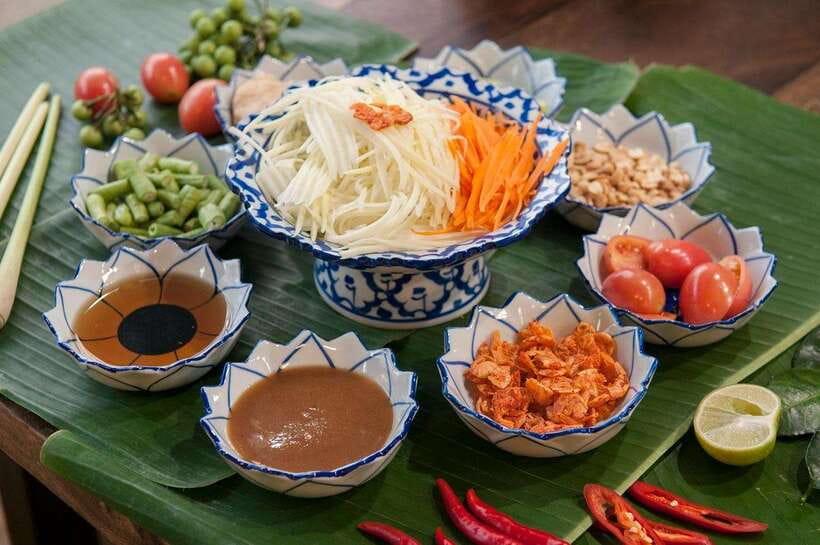
Vegetarian, halal, kosher, and allergy-related substitutions are available with advance notice. This is worth arranging before the class rather than assuming the instructor can make last-minute changes during a busy lesson.
One useful example is the school’s flexibility with low FODMAP requirements. A participant received ingredient changes and was still able to take part fully. You should still state your needs clearly when booking, including specific allergies and ingredients you must avoid.
The standard menu uses chicken and shrimp on several days. If you do not eat either, ask for substitutions ahead of time. The supplied information confirms that alternatives can be arranged, but it does not promise that every dish will be identical to the standard menu.
A personal locker is included, which is handy when you are carrying a day bag through central Bangkok. Comfortable shoes are recommended, particularly for the morning class and its market walk.
Cancellation is flexible: you can cancel up to 24 hours in advance for a full refund. You can also reserve and pay later, useful if your Bangkok schedule is still shifting.
Who will enjoy it most
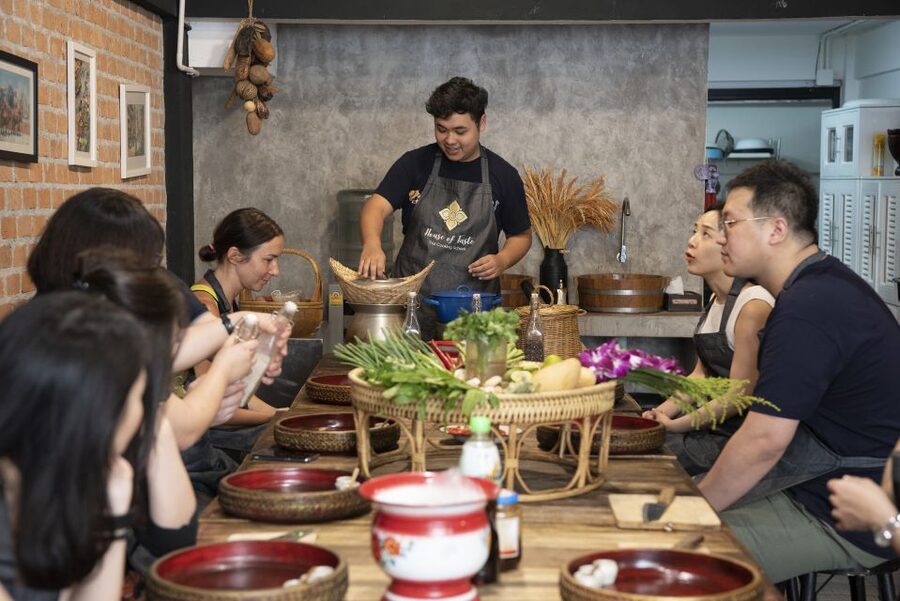
I would recommend this class to first-time visitors who want a food activity with actual participation. It is also a good fit for couples, families, solo diners, and anyone who wants Thai recipes that can be attempted at home.
You do not need to be a serious cook. In fact, beginners may get the most from the clear demonstrations and one-on-one help. Several people who rarely cook found the process manageable and satisfying.
Food lovers should compare the daily menus before booking. If you want a morning market walk, choose the 8:30 AM session. If mango carving appeals more than shopping, pick the afternoon or evening class.
This may be less suitable if you want a long, traditional market tour. The morning visit is useful but can be short and limited in scale. It is best understood as an ingredient introduction attached to a cooking lesson, not as a full market excursion.
Should you book House of Taste?
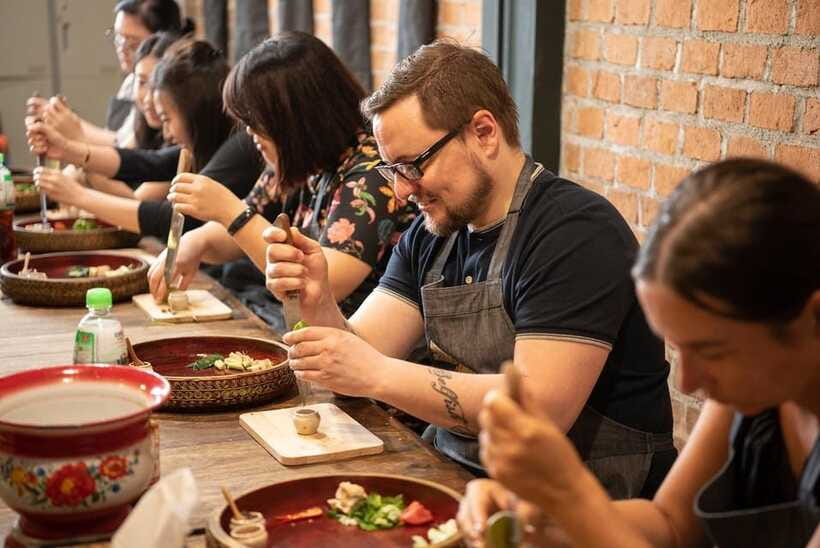
Yes, if you want to eat well and learn something you can use after Bangkok. The class earns its price through hands-on work, generous portions, clear teaching, and a menu that changes by day.
Book the morning session for the market component, but keep your expectations modest about its size. Choose afternoon or evening for mango carving and a later start. Tell the school about dietary needs in advance, wear comfortable shoes, and come hungry.
For $45, this is one of the more practical ways to turn a Bangkok meal into a skill you take home.
FAQ
How long does the Bangkok cooking class last?
The experience lasts 210 minutes, or three and a half hours. About two hours are spent preparing and cooking the four dishes.
What is included in the price?
The price includes the cooking class, instructor, four-course meal, drinking water, ingredients, equipment, a personal locker, and recipes sent by email. The morning class also includes the market tour, while afternoon and evening classes include mango carving.
Does every class include a market tour?
No. The market tour is available only with the 8:30 AM morning class. Afternoon and evening classes replace it with mango carving.
Where does the morning class meet?
The morning meeting point is at street level by BTS Asoke Exit 3 and MRT Sukhumvit Exit 3. Hey! Coffee MRT Sukhumvit can also be used as the meeting point.
Where do afternoon and evening classes meet?
Afternoon and evening classes meet at House of Taste Thai Cooking School in Sukhumvit 4.
What dishes will I cook?
The dishes depend on the day. Menus include Thai papaya salad, pad Thai, green curry, tom kha gai, pad krapow gai, red curry, tom yum goong, pad see ew, larb gai, and panang curry. Mango sticky rice is included every day.
Can the class accommodate dietary restrictions?
Yes. Vegetarian, halal, kosher, and allergy-related substitutions can be arranged with advance notice. Specific needs should be provided before the class.
Is the class taught in English?
Yes. The listed teaching languages are English and Thai.
What should I bring?
Bring comfortable shoes and arrive with an empty stomach. Alcoholic drinks are not included, though they are available for purchase.
More Thai Cooking Classes in Bangkok
- Bangkok: Tingly Thai Cooking School Half-Day Cooking Class
★ 4.9 · 1,191 reviews - Tingly Thai Cooking School Evening Class
★ 5.0 · 335 reviews - Tingly Thai Cooking School Afternoon Class
★ 5.0 · 291 reviews - Thai Cooking Class with Market Visit by Maliwan
★ 5.0 · 276 reviews
Just added around Bangkok
- Bangkok Udomsuk Thai Cooking Class with local market tour★ 5.0 · 5 reviews
- Thai cooking class experience in Bangkok with Tingly Thai cooking school★ 5.0 · 59 reviews
- Thai Cooking Class★ 5.0 · 25 reviews
- Thai Cooking Class in Bangkok★ 5.0 · 23 reviews
- Hands-On Thai Cooking Class Bangkok with Local Chef (Small Group)★ 5.0 · 119 reviews
- White Lotus Thai Cooking Class in Bangkok★ 5.0 · 31 reviews
- Baipai Thai Cooking School: Authentic Cooking Class Tour★ 5.0 · 3 reviews
- Sompong Thai Cooking School: Hands-On Culinary Experience★ 5.0 · 4 reviews
Cooking Classes with a Market Tour, compared.
Hanoi Cooking Class: Culture, Local Market & Meaning CSR Impact
Read our review →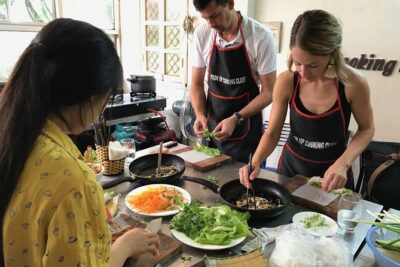
5 Traditional Dishes Hanoi Cooking Class with Market Trip
Read our review →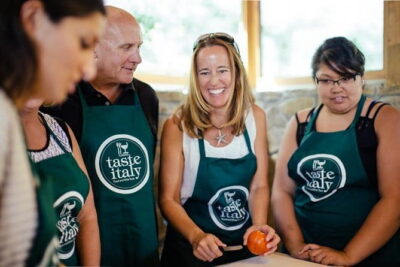
Cooking Class and Lunch at a Tuscan Farmhouse with Local Market Tour from Florence
Read our review →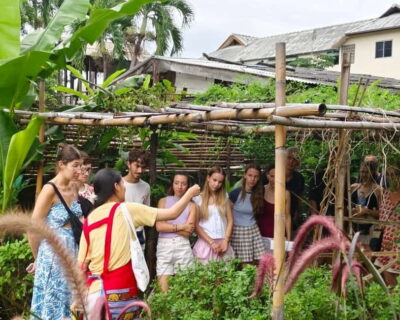
Cooking Class, Market & Thai Herbs Garden Tour
Read our review →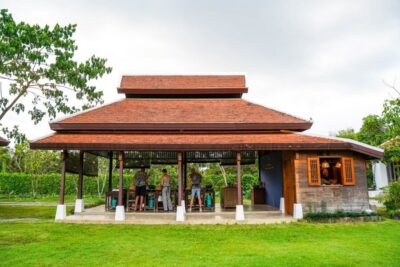
Authentic Cooking Class with Market & Farm Visit
Read our review →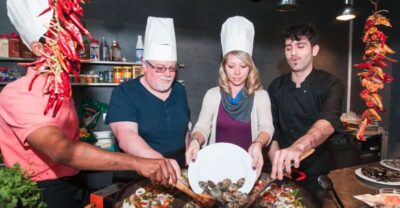
Paella Cooking Experience & Boqueria Market Tour
Read our review →
Cooking Class Hoi An:Local Market, Basket Boat, Fishing & Cooking
Read our review →