
REVIEW · SOUTHEAST REGION, BRAZIL, BRAZIL
Rio de Janeiro: Brazilian Cooking Class with Hotel Pickup
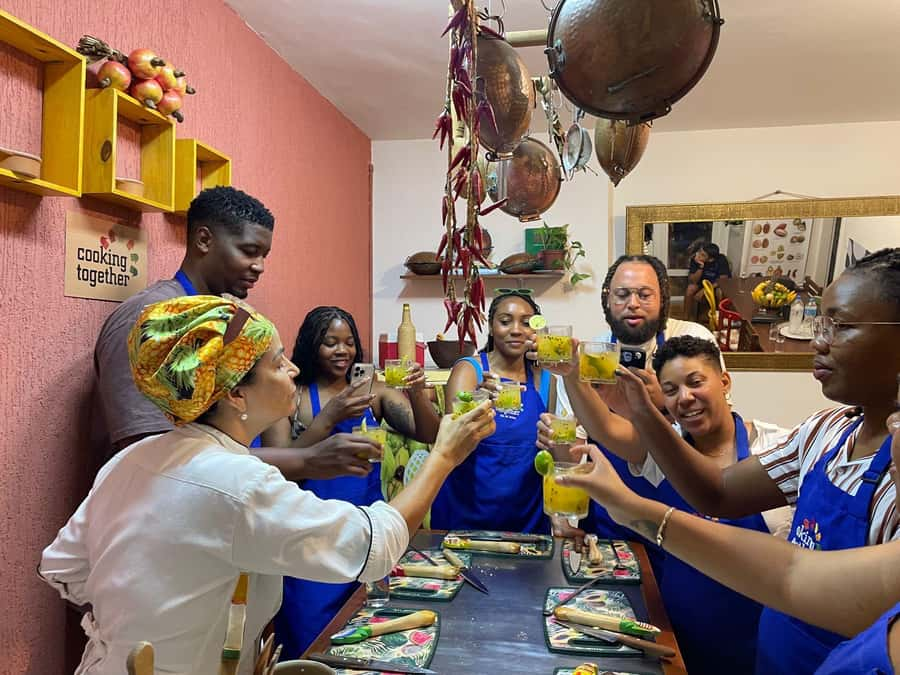
Come to Rio hungry and curious. This four-hour cooking class in Copacabana gives you a welcome break from beaches and viewpoints, with time to prepare Brazilian dishes, hear the stories behind them, and sit down to eat what you made. Hotel pickup and return transport keep the afternoon simple.
I especially like the choice between feijoada and seafood moqueca, since it lets you pick a dish that suits your taste. I also like the small touches, including coalho cheese with pepper jelly, sausage flambéed with cachaça, brigadeiro, caipirinha, and a coconut shake. The main consideration is the price: at $117 per person, this is not a cheap meal, though the cooking lesson, ingredients, drinks, and round-trip transfer add real value.
The class has received strong praise for its patient teaching. Elaine singled out Carina as a fantastic chef and teacher, while LaToya praised Chef Simone for explaining the cultural meaning of each dish. One especially useful detail comes from Brent, who booked the class with his husband after visiting Rio before and found it a good way to see a different side of the city.
Key points at a glance
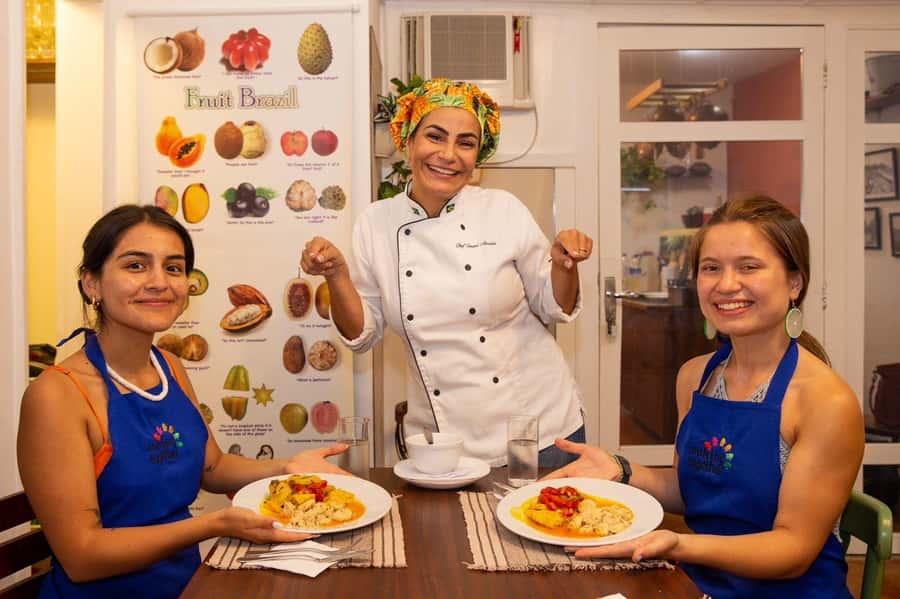
- Choose your main dish: Prepare either feijoada, a black bean and pork stew, or seafood moqueca with coconut milk.
- Learn from local chefs: Carina and Chef Simone have been praised for clear explanations, patience, and a fun teaching style.
- Make more than dinner: The menu also includes coalho cheese with pepper jelly, cachaça-flambéed sausage, brigadeiro, and drinks.
- Hotel pickup is included: Transfers cover most hotels in Leblon, Ipanema, Copacabana, Leme, Botafogo, Flamengo, and Centro, plus the cruise port.
- Expect a hands-on format: You help prepare the food instead of simply watching a chef cook.
- Allow extra time in high season: Rio traffic and heavy crowds can make the four-hour schedule run longer.
Arriving in Copacabana by hotel transfer
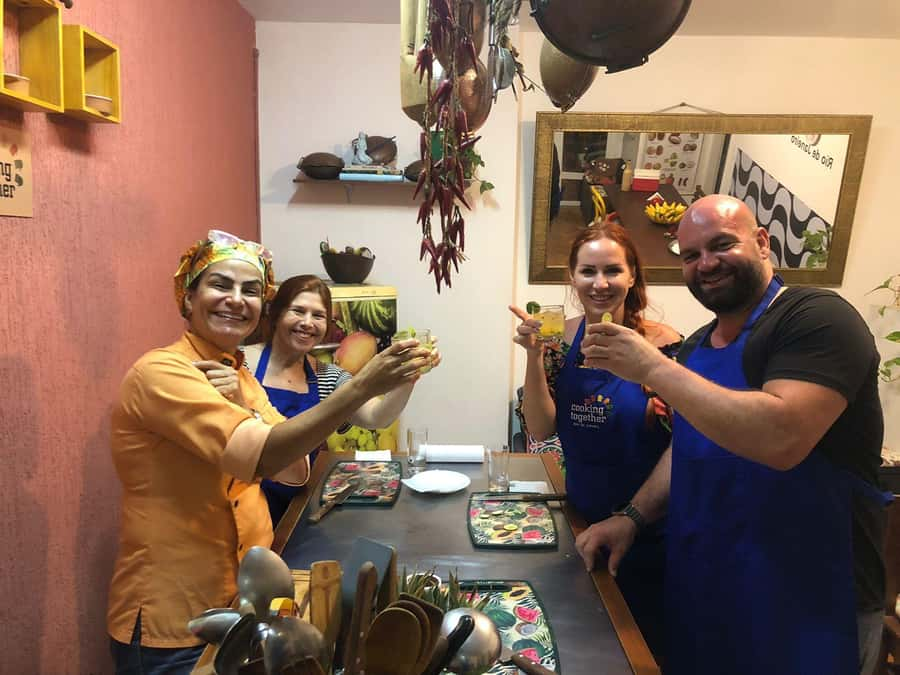
Your afternoon begins with pickup from most hotels in several central Rio areas. Covered neighborhoods include Leblon, Ipanema, Copacabana, Leme, Botafogo, Flamengo, and Centro. Pickup is also available at the cruise port, but you need to provide your location in advance and confirm the meeting time.
This matters in Rio. A cooking class can be enjoyable, but getting across the city at the wrong hour can eat into your afternoon. Having transport arranged removes one more task, especially if you are unfamiliar with local streets or are carrying bags from a cruise ship.
The transfer is round trip, so you return to your hotel after the meal. One booking described the driver as easy to spot and careful on the road, which is useful when you are trying to find a vehicle in a busy city.
Pickup from Barra da Tijuca or Recreio dos Bandeirantes costs an additional $10 or 40 Brazilian reais per person. An adapted vehicle costs an additional $100 or 500 Brazilian reais. If you use a wheelchair or have reduced mobility, notify the provider before booking so the transport can be arranged properly.
A few more cooking classes around the world worth a look
- Half-Day Thai Cooking Class at Organic Farm in Chiang Mai
★ 5.0 · 19,087 reviews - Florence: Pasta Cooking Class with Unlimited Wine
★ 4.9 · 10,285 reviews - 3 in 1 Cooking Class near Navona: Fettuccine, Ravioli & Tiramisu
★ 5.0 · 7,376 reviews
Choosing between feijoada and seafood moqueca
At the kitchen, the chef presents the ingredients and helps you choose your main dish. This decision shapes the meal, so it is worth understanding the difference.
Feijoada is a substantial black bean stew with pork. It is one of Brazil’s best-known comfort foods, with a dark, savory flavor and a filling texture. Pick it if you want something hearty and traditional, or if you enjoy slow-cooked bean dishes and pork.
Seafood moqueca is a fish stew made with coconut milk. It offers a lighter, more coastal character, with creamy coconut flavor and seafood at the center. It is a good choice if you prefer fish or want a dish that feels closer to Rio’s seaside setting.
The class gives you more than a recipe card. The chef explains how to select fresh ingredients and discusses why the dishes matter in Brazilian cooking. That context is one of the strongest reasons to take the class instead of simply ordering feijoada or moqueca in a restaurant.
The choice may depend on what you can eat. The information provided does not list substitutions or allergy arrangements, so contact the operator ahead of time if you have dietary restrictions. Do not assume that a dish can be changed at the kitchen.
Cooking the main dish with Carina or Chef Simone
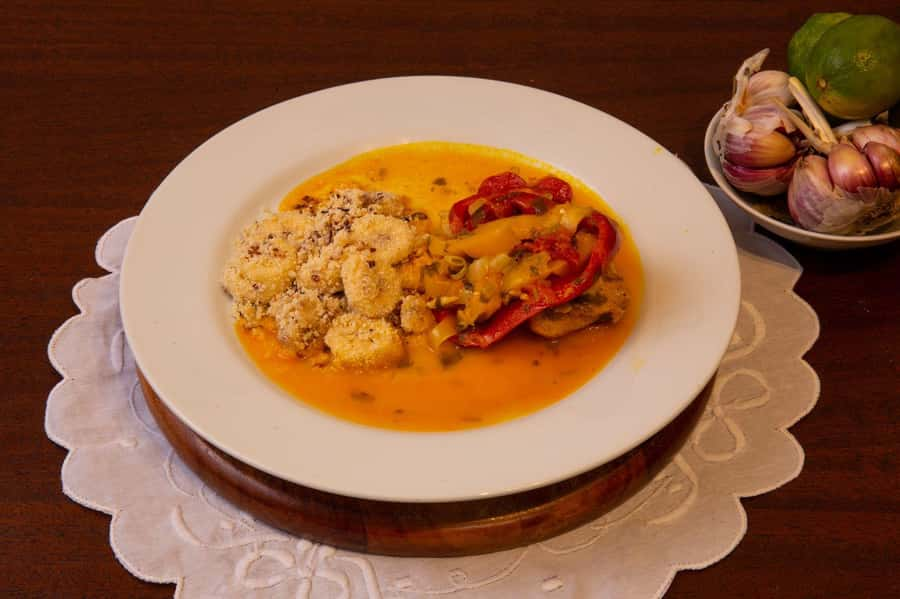
The class is led in Portuguese, Spanish, or English. You can expect instruction from a local chef who guides you through the preparation rather than leaving you to guess what to do next.
Carina has been praised for making the class fun while still teaching a lot about Brazilian cuisine. Chef Simone has also received high praise for being thoughtful, engaging, and patient. Those qualities matter in a cooking class because timing and technique can be hard to follow when several steps happen at once.
The format suits people with different levels of kitchen confidence. If you cook often, you will have a chance to ask about ingredients and methods. If you rarely cook, the patient teaching style should make the process less intimidating. One participant specifically said that both home cooks and people without much cooking experience can learn a great deal.
You can bring your own set of knives if you want. That is optional, not a requirement. For most people, the bigger benefit is the chance to practice the steps under guidance and then taste the result at the table.
The precise group size is not stated. One booking was a private class for a married couple, but you should not assume every departure is private. Ask the provider if the size of your particular class matters to you.
Small plates that make the class worthwhile
The main course is only part of the menu. You also prepare several smaller dishes, and these add variety to the afternoon.
Coalho cheese with pepper jelly combines salty cheese with a sweet and spicy accent. It is a simple dish, but it introduces a Brazilian ingredient that you might not otherwise encounter during a standard city visit.
Sausage with onion flambéed in cachaça adds a bit of showmanship to the cooking. Cachaça is Brazil’s sugarcane spirit, and using it with onions and sausage connects the dish to local flavors in a direct, practical way.
Brigadeiro is a beloved Brazilian sweet made with condensed milk and chocolate. The supplied details list brigadeiro as part of the cooking session, but they also state that dessert is not included. That is an unusual wording conflict. If the brigadeiro matters to you, confirm exactly what is included before booking. You should not assume that every sweet mentioned is included in the final price.
The extra dishes also make the meal feel like a proper Brazilian dinner rather than a single recipe lesson. You get several flavors and techniques in one afternoon, which helps explain the $117 price.
Same place, a different thing to cook:
- Florence: Pasta & Tiramisu Cooking Class with Unlimited Wine
★ 4.9 · 6,708 reviews - Hanoi Cooking Class: Culture, Local Market & Meaning CSR Impact
★ 5.0 · 5,147 reviews - 5 Traditional Dishes Hanoi Cooking Class with Market Trip
★ 5.0 · 4,890 reviews - Cooking Class and Lunch at a Tuscan Farmhouse with Local Market Tour from Florence
★ 5.0 · 4,831 reviews
Mixing caipirinha and coconut shake
Drinks are part of the hands-on work. You mix a classic caipirinha and a refreshing coconut shake to serve with the food.
The caipirinha brings cachaça into the lesson in a different form from the sausage dish. Preparing it yourself gives you a better sense of how Brazil’s best-known cocktail fits with the meal. The coconut shake offers a nonalcoholic contrast and a cooler, sweeter option.
The details say additional drinks are not included. This likely means the listed class drinks are covered, while anything beyond them costs extra. If you want more alcohol or another beverage, budget separately and ask the chef or operator about the charge.
Drinking is not the main point of the class, but these recipes help connect the food to everyday Brazilian eating and drinking habits. They also give you something easy to repeat at home after your trip.
Sitting down to eat what you prepared
After the cooking is finished, you sit down and eat the meal in a social setting. That final step is important. You are not just watching a demonstration or carrying a recipe home. You get to see how the dishes work together on the table.
The meal also gives you time to talk with the chef and other participants. The atmosphere is described as convivial, with stories shared around the food. For a solo visitor, that social element can be a welcome change from eating alone. For couples, it offers a shared activity that feels more distinctive than another restaurant reservation.
The food will not be presented as a formal tasting menu. You are eating the dishes you helped prepare, so the reward comes from the process as much as from presentation. If you prefer polished service and no kitchen work, a restaurant is a better fit.
For someone who has already seen Rio’s main sights, the class offers a different kind of afternoon. Brent and his husband had visited Rio before and chose this activity specifically to find a new angle on the city. That is a useful clue: this is particularly appealing on a second visit, a rainy afternoon, or a day when you want a break from sightseeing.
What the $117 price really covers
At $117 per person, the class sits in the special-occasion range for a four-hour activity. The price includes round-trip transportation, the cooking class, and ingredients for the dishes.
I see the value in three parts:
- You are paying for instruction from a local chef, not just for a meal.
- You avoid arranging your own transport to and from the kitchen.
- You prepare several dishes and drinks, which gives you more time and content than a short demonstration.
The price is less attractive if you only want to eat Brazilian food. You can usually spend less on a restaurant meal, though a restaurant will not give you the same practical lesson or direct contact with the chef.
The included transport matters most if you are staying in the listed central neighborhoods. If you are based in Barra da Tijuca or Recreio dos Bandeirantes, the added transfer charge raises the total. The adapted vehicle fee is also substantial, so confirm the arrangement and cost early if you need one.
The food costs are not the only thing to consider. You are also paying for an organized afternoon, a local guide through the cuisine, and the chance to repeat the recipes later. For people who enjoy cooking, that makes the price easier to justify.
Timing, language, and practical limits
The advertised duration is four hours, with afternoon start times available according to the date you select. High-season traffic and large crowds in Rio can make the tour longer, so avoid scheduling a tight connection or another fixed appointment immediately afterward.
English, Spanish, and Portuguese are available. If language is important to you, confirm your preferred language when arranging pickup. The experience depends on understanding cooking instructions and cultural explanations, so this is not the place to leave communication until the last minute.
Free cancellation is available up to 24 hours before the activity for a full refund. You can also reserve and pay later, which helps if your plans are still changing.
The operator is Rio Carioca Tours & Service. Pickup details need to be confirmed, particularly if your hotel has a complicated entrance or sits outside the usual coverage area.
Who should book this cooking class?
I would recommend it most strongly to you if you:
- Enjoy hands-on activities more than passive sightseeing.
- Want to learn dishes you can try again at home.
- Have already visited Rio’s main attractions and want a different kind of afternoon.
- Like meeting a chef and hearing the cultural meaning behind food.
- Prefer an arranged transfer instead of finding your own way around the city.
- Are happy with a substantial four-hour commitment.
Families may enjoy the cooking format, but the supplied information does not give a minimum age or child pricing. Ask before booking if you are traveling with children.
This is also a good pick for couples. The private booking described by Brent and his husband shows that a small, personal class can be available, but you should confirm whether your departure is private or shared.
I would hesitate if you dislike cooking, have a tight schedule, or mainly want a quick introduction to Brazilian food. The class takes four hours, and traffic can stretch that further.
Should you book it?
Book this class if you want to understand Brazilian food by making it, not just ordering it. The choice between feijoada and moqueca, the extra dishes, the cocktails, and the chef-led explanations give the afternoon real substance.
The strongest reason to go is the teaching. Carina and Chef Simone have been praised for patience, cultural explanations, and an ability to make the class enjoyable for both experienced cooks and beginners. The main cautions are the fairly high price, possible traffic delays, and the need to clarify exactly what dessert and extra drinks include.
For a first visit, this works well as a relaxed afternoon away from the usual Rio checklist. For a return visit, it may be even better: you get a local meal, new cooking skills, and a different way to connect with the city.
FAQ
How long does the Brazilian cooking class last?
The scheduled duration is four hours. In high season, traffic and large crowds in Rio can make the activity take longer.
What dishes can I choose to prepare?
You can choose between feijoada, a black bean stew with pork, and seafood moqueca, a fish stew made with coconut milk.
Are hotel transfers included?
Yes. Round-trip transfer is included from most hotels in Leblon, Ipanema, Copacabana, Leme, Botafogo, Flamengo, and Centro, as well as from the cruise port.
Is pickup available from Barra da Tijuca or Recreio dos Bandeirantes?
Yes, but pickup from those areas costs an additional $10 or 40 Brazilian reais per person.
Which languages are available?
The class is offered in Portuguese, Spanish, and English.
Can I cancel the booking for a refund?
You can cancel up to 24 hours in advance for a full refund.
Can I bring my own kitchen knives?
Yes. You may bring your own set of knives if you wish, though the information does not say that doing so is required.
Just added around the world
- Aroidee’s Farm-Fresh Thai Cooking Experience★ 5.0 · 8 reviews
- Signature Thai Cooking Course★ 5.0 · 79 reviews
- Private Half-Day Thai Cooking Class in Chiang Mai★ 5.0 · 4 reviews
- Half Day Guided Thai Cooking Class in Chiang Mai★ 5.0 · 13 reviews
- Online Thai and Akha Cooking Class★ 5.0 · 70 reviews
- Private Virtual Thai Cooking Class★ 5.0 · 9 reviews
- Northern Thai Cooking Class in Chiang Mai in a Countryside Home★ 5.0 · 2 reviews
- 5 Hour Morning Thai Cooking Course★ 5.0 · 31 reviews
Cooking Classes, compared.

Half-Day Thai Cooking Class at Organic Farm in Chiang Mai
Read our review →

3 in 1 Cooking Class near Navona: Fettuccine, Ravioli & Tiramisu
Read our review →
Pasta & Tiramisu Cooking Class with Unlimited Wine
Read our review →
Hanoi Cooking Class: Culture, Local Market & Meaning CSR Impact
Read our review →
5 Traditional Dishes Hanoi Cooking Class with Market Trip
Read our review →
Cooking Class and Lunch at a Tuscan Farmhouse with Local Market Tour from Florence
Read our review →