
REVIEW · UMBRIA, ITALY
Perugia: Cooking Class at a Local’s Home
Good food makes a better souvenir. This three-hour Perugia cooking class takes you into a local family home, where you learn three Umbrian recipes from a certified home cook and eat what you prepare with regional wine. I like the personal setting and the chance to work from family recipes rather than a standard restaurant menu. I also like that the meal, wine, water, and coffee are included.
The main point to consider is the private-home format. You do not receive the full address until after booking, and the local partner sends meeting instructions later. That is sensible for privacy, but it gives you less detail upfront than a class held in a named cooking school.
Key points at a glance
- Three recipes in three hours: You cook three local dishes, then sit down to taste the complete meal.
- A real home setting: The class takes place in a local family’s home, not a large commercial kitchen.
- Wine is part of the meal: Red and white local wines are included, along with water and coffee.
- English or Italian instruction: You can take the class with an instructor speaking either language.
- Flexible start times: Classes usually begin at 10:00 AM or 5:00 PM, with other timing possible if arranged ahead.
- Best for pairs and food-focused visitors: At least two people are required, making this a natural choice for couples, friends, or family members.
Why a home kitchen changes the experience
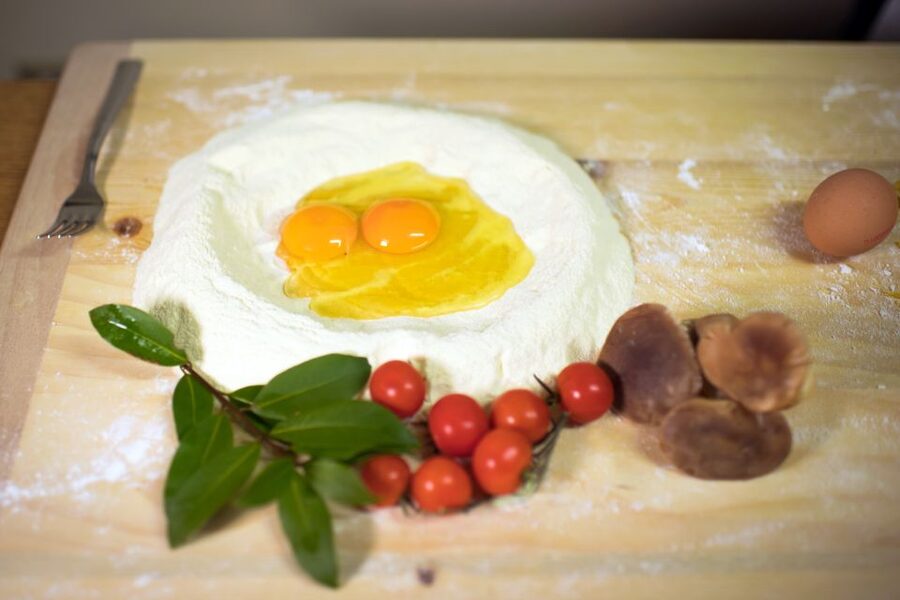
A cooking class in a private home gives you a different kind of contact with Umbria. You are not simply watching a chef work behind a counter. You have your own workstation, utensils, and ingredients, then take part in the preparation from the start.
That personal setting matters because the host can explain how the recipes fit into everyday Italian cooking. The class is designed around local family cookbooks, so the focus is on food made at home rather than restaurant showpieces.
I like this approach for a first visit to Umbria. Perugia has plenty of historic streets and grand buildings, but food gives you a more ordinary, useful connection with the region. You leave with cooking skills you can use at home, not just another photograph or bottle that may not survive the flight.
The home format also means the class may feel more intimate than a larger group lesson. The available information does not state the maximum group size, so you should ask the local partner if that matters to you. The class does require at least two people.
A few more cooking classes around Italy worth a look
- Florence: Pasta Cooking Class with Unlimited Wine
★ 4.9 · 10,285 reviews - 3 in 1 Cooking Class near Navona: Fettuccine, Ravioli & Tiramisu
★ 5.0 · 7,376 reviews - Florence: Pasta & Tiramisu Cooking Class with Unlimited Wine
★ 4.9 · 6,708 reviews
Meeting your host and getting started

The exact address is provided after you book. The local partner contacts you with instructions about where to meet, then the activity begins at the host family’s home.
This arrangement protects the family’s privacy, but it also means you should not plan your route around a specific neighborhood until the address arrives. If you are staying in Perugia, check the location as soon as you receive it and allow enough time to reach the meeting point.
Classes usually start at 10:00 AM or 5:00 PM. The morning option works well if you want a substantial lunch afterward, while the late afternoon class can lead naturally into dinner. You can request a different time in advance, but flexibility depends on what the host can arrange.
The beginning of the class is likely to cover the recipes, ingredients, and basic tasks before you start cooking. The supplied details do not name the dishes, so do not book this expecting a guaranteed pasta shape, sauce, or dessert. Instead, view the menu as a local surprise shaped by the host and the season.
Three local recipes, explained as you cook
The host teaches the methods behind three traditional regional dishes. You are not only handed ingredients and told to follow instructions. The cook explains the small techniques that make the recipes work, including the practical tricks passed down through family cooking.
That is where the class earns its value. A recipe on paper can tell you what to add, but a home cook can show you how a mixture should look, when a dough feels ready, or how to avoid a common mistake. The information provided does not list the exact techniques, so I would expect guidance to be adapted to the dishes selected for your session.
Your workstation comes equipped with the utensils and ingredients needed for the class. This is useful for beginners, since you do not need to bring special equipment or purchase supplies before arriving.
The hands-on setup also makes the three-hour length feel appropriate. You have enough time to prepare several dishes without turning the class into a rushed demonstration. Still, you should expect an active session. You will be cooking, handling ingredients, and following directions, not sitting back for a show.
If you have food allergies, follow a special diet, or avoid certain ingredients, tell the operator before the class. The host can cater for dietary requirements only when you provide that information in advance.
Sitting down to eat what you made
The best part comes after the cooking. You sit around the table and taste all three dishes you prepared. Water, local red and white wines, and coffee are included.
This shared meal gives the class a clear finish. You get to see how the separate recipes work together, and you can ask questions while eating rather than rushing away as soon as the cooking ends.
I also like the fact that wine is included rather than treated as an extra purchase. The experience is built around the meal, so the drinks help complete the Italian home-dining setting. If you do not drink alcohol, the included water and coffee still give you alternatives, but the activity clearly places wine at the center of the meal.
The exact wine selection is not specified. You should think of it as a local pairing chosen for the food, not a formal tasting with detailed vineyard information. This is a cooking experience first.
Same place, a different thing to cook:
- Cooking Class and Lunch at a Tuscan Farmhouse with Local Market Tour from Florence
★ 5.0 · 4,831 reviews - Rome: Pasta Making Class with Wine, Limoncello, and Dessert
★ 4.9 · 3,177 reviews - Pastamania – Florence Pasta Making Class
★ 5.0 · 3,050 reviews - Rome Cooking Class: Make Pasta and 3 Spritz Cocktails
★ 5.0 · 2,937 reviews
The host matters more than the menu
The recipes are important, but the host will shape the mood of the afternoon or evening. The available feedback gives the host the strongest praise, describing the person as very friendly and well informed, with the experience itself called great.
That is encouraging because a home class depends on warmth and communication. A skilled cook can explain a recipe, but a friendly host makes it easier to ask questions, make mistakes, and enjoy the meal.
Instruction is available in English or Italian. If you speak some Italian, you may enjoy hearing food terms in their original setting. If you do not, English instruction should make the practical steps accessible.
No individual host name is provided, and the host is assigned through the local provider, Cesarine. For that reason, do not choose this activity because of a particular chef’s reputation. Choose it for the format, the home setting, and the chance to share a meal with a local cook.
Is $164.26 a fair price?
At $164.26 per person, this is not a budget meal. The price makes more sense when you count everything included: a three-hour class, instruction, ingredients, three prepared dishes, wine, water, coffee, and local taxes.
You are also paying for access to a private home and a host who gives personal attention. A simple restaurant meal may cost less, but it will not teach you how to recreate the food. A standard cooking school may offer a more predictable venue, but the home setting is the main reason to choose this activity.
Value depends on how you spend your time in Perugia. If you want a quick lunch, this is too expensive and too long. If you enjoy food, like learning by doing, and want an activity with a lasting benefit, the price is easier to justify.
The strongest value is for someone who will actually use the recipes later. You may forget the details of a museum visit, but a cooking technique can return to your kitchen for years. Just remember that the menu is not published in advance, so the price is for the experience and instruction rather than a guaranteed list of dishes.
Who should book this Perugia class?
I would recommend it to couples, friends, and families who enjoy cooking together. The minimum of two people makes it unsuitable for a solo booking unless you can join another party or arrange an exception with the provider.
It is also a good match for visitors who want contact with local life without committing to a full-day food tour. Three hours is long enough to cook and eat, but short enough to fit around other plans in Perugia.
Beginners should feel comfortable booking. The class supplies the workspace, utensils, and ingredients, and the host explains the recipes as you go. You do not need to arrive as an experienced cook.
Experienced home cooks may enjoy it for a different reason. You can compare your own habits with Umbrian methods and pick up details from family recipes. Still, anyone looking for advanced culinary training should ask about the level of instruction before booking, since the activity is presented as a welcoming local cooking lesson rather than a professional certification course.
This may not suit you if you prefer a fixed itinerary, a named venue, or a menu announced months ahead. The private address arrives after booking, and the dishes depend on the host’s selection.
Timing, cancellation, and practical planning
You should plan on three hours from the start of the class until you finish at the meeting point. The activity ends where it begins, at the host’s home.
The morning class usually starts at 10:00 AM. The later class generally begins at 5:00 PM. If you need another time, tell the operator in advance rather than waiting until the day of the class.
You can reserve now and pay later, which helps if your Perugia schedule is still changing. You can also cancel up to 24 hours before the experience for a full refund.
Give dietary information at booking. This is one of the few details that can directly affect what the host prepares, so it should not be left until arrival.
Because the meeting address is confirmed after booking, check your messages before setting out. The local partner provides the instructions, and you should keep that information available on the day.
How this compares with a restaurant meal
A restaurant gives you a finished plate. This class gives you a role in making it.
That difference sounds simple, but it changes the pace of the experience. You will spend time preparing food before eating it, and the result may not look as polished as a chef’s plate. That is part of the point. You learn through the process, including the small errors and adjustments that make home cooking feel real.
The home meal also creates a closer connection with Italian family food. You are not just consuming a regional dish. You are learning how the host presents and prepares it, then sharing the result at the same table.
The tradeoff is predictability. A restaurant menu tells you exactly what you will order. This class gives you a more personal setting, but less certainty about the recipes and the address before booking.
Final verdict: book it if you want skills, not just lunch
Book this Perugia cooking class if you value personal contact, hands-on learning, and a meal you help create. The friendly host, three local recipes, included wine, and family-home setting make it a strong choice for food-minded couples and small groups.
Skip it if you need a named venue, a guaranteed menu, or the lowest possible meal price. For everyone else, $164.26 is a reasonable spend for three hours of instruction, food, drinks, and a useful souvenir that fits in your memory and your kitchen.
FAQ
Where does the cooking class take place?
The class takes place in a local family’s home in the Perugia area. The full address is provided after booking, and the local partner sends meeting instructions.
How long does the experience last?
The cooking class lasts three hours. It begins and ends at the meeting point in the host family’s home.
What time does the class usually begin?
Classes usually begin at 10:00 AM or 5:00 PM. You can request a different time in advance, depending on availability.
How many dishes will I prepare?
You will learn to prepare three local dishes and taste everything you make during the shared meal.
Are drinks included?
Yes. Water, local red and white wines, and coffee are included in the experience.
Is the class available in English?
Yes. Instruction is available in English or Italian.
Can I cancel the booking?
Yes. You can cancel up to 24 hours before the experience for a full refund. You can also reserve now and pay later.
Just added around Italy
- Cooking Class in a Sicilian countryhouse★ 5.0 · 5 reviews
- Cesarine: Home Cooking Class & Meal with a Local in Catania★ 4.5 · 10 reviews
- Cesarine: Market Tour & Home Cooking Class in Catania★ 4.0 · 6 reviews
- Cooking Class in Taormina with Lunch Included★ 5.0 · 2 reviews
- Cooking Class and Wine Pairing in Capri★ 5.0 · 57 reviews
- Cooking class in Capri for small groups★ 4.0 · 4 reviews
- Private Cooking Class Experience in Reggio Calabria★ 5.0 · 5 reviews
- Lezione di Cucina : Pasta Fresca★ 5.0 · 12 reviews
Cooking Classes, compared.

Half-Day Thai Cooking Class at Organic Farm in Chiang Mai
Read our review →

3 in 1 Cooking Class near Navona: Fettuccine, Ravioli & Tiramisu
Read our review →
Pasta & Tiramisu Cooking Class with Unlimited Wine
Read our review →
Hanoi Cooking Class: Culture, Local Market & Meaning CSR Impact
Read our review →
5 Traditional Dishes Hanoi Cooking Class with Market Trip
Read our review →
Cooking Class and Lunch at a Tuscan Farmhouse with Local Market Tour from Florence
Read our review →