
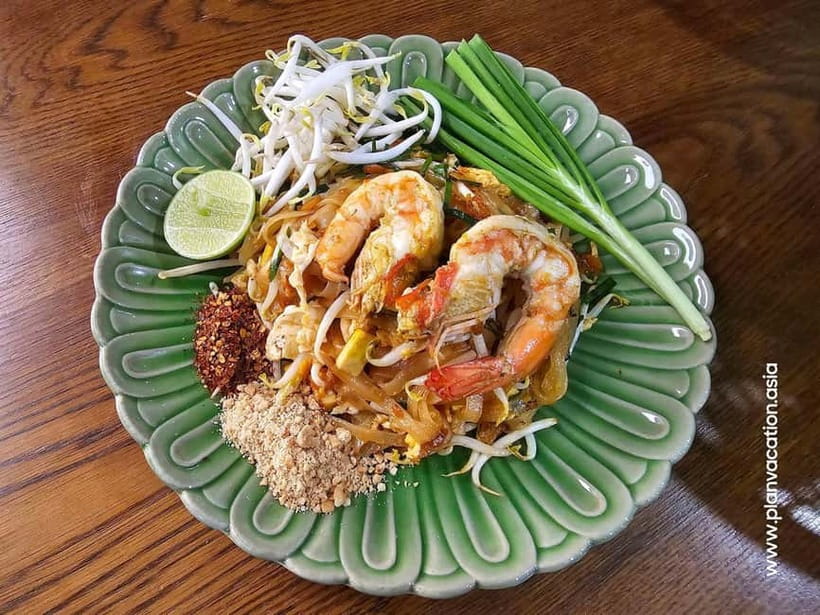
REVIEW · CENTRAL THAILAND, THAILAND
Mini Group: Uncle and Aunty Cooking House Afternoon Class
Thai food begins at the market. This five-hour Bangkok experience pairs a visit to Huai Khwang Market with a home-style cooking lesson, so you learn not only how Thai dishes are cooked, but also how ingredients are chosen. I especially like the market visit and the chance to make curry paste and coconut milk from scratch. One consideration is the long afternoon: the cooking can be tiring, especially in an outdoor kitchen, and the daily menu changes.
I also like the personal scale of the class. Guides such as Sunee and Ann have been praised for their warm welcome, patient instruction, and ability to explain unfamiliar vegetables and herbs. The main practical drawback is that you must make your own way to MRT Huai Khwang, Exit 4, and the activity finishes back at the station around 19:00.
Key points to know before booking
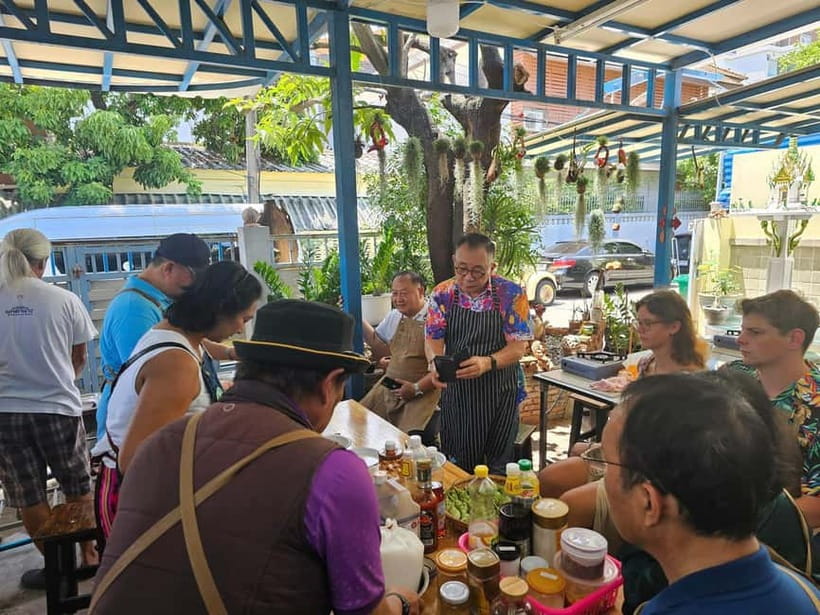
- Begin at a real Bangkok market: Shop for ingredients at Huai Khwang Market, rather than visiting a staged food display.
- Visit the Ganesha Shrine: The first stop adds a useful look at local spiritual life before the food lesson begins.
- Make Thai basics yourself: You learn to prepare curry paste, coconut milk, and sticky rice from raw ingredients.
- Cook a changing daily menu: Dishes include curries, soups, stir-fries, salads, noodles, and Thai desserts.
- Expect personal attention: Some sessions have only two students, creating a nearly private lesson.
- Plan for a full afternoon: The class runs from approximately 14:00 to 19:00, with dinner made during the lesson.
A Bangkok cooking class that starts before the kitchen
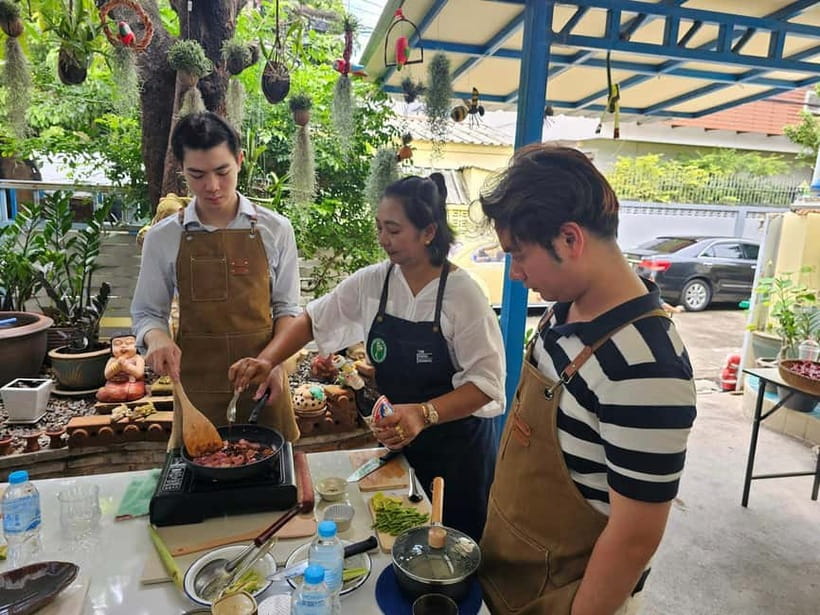
Many cooking classes begin when you tie on an apron. This one starts earlier, at 14:00, when you meet your English or German-speaking host at MRT Huai Khwang, Exit 4.
That meeting point matters. Hotel pickup is not included, so you need to reach the station yourself. The tour finishes near the same MRT area, which keeps the day fairly simple once you arrive. The return transfer is included, but the activity does not provide hotel drop-off.
I like this arrangement because the class connects food with place. You are not simply handed measured ingredients in a classroom. You first see where some of those ingredients are bought, then learn how they are turned into dinner.
A few more cooking classes around Bangkok worth a look
- Bangkok: Hands-on Thai Cooking Class and Market Tour
★ 4.9 · 1,614 reviews - Bangkok: Tingly Thai Cooking School Half-Day Cooking Class
★ 4.9 · 1,191 reviews - Bangkok: Maliwan Thai Cooking Class with Market Tour
★ 4.9 · 1,133 reviews
The Ganesha Shrine adds a quiet cultural stop
The first walk takes you to a Ganesha Shrine, a sacred community site respected by local residents. This is not presented as a long temple tour, and you should not expect a major sightseeing stop. Its value is more modest and local.
The shrine gives you a glimpse of the spiritual side of everyday Bangkok. It also creates a gentle transition from the MRT station to the market, showing that neighborhood life here includes worship, shopping, cooking, and family routines close together.
Follow your guide’s lead about behavior. Feeding animals and making noise are not allowed during the activity. That is useful guidance at any sacred place, and it helps keep the visit respectful rather than treating it as a quick photo stop.
Huai Khwang Market is the real lesson
From the shrine, you walk to Huai Khwang Market. This is where the experience earns its cultural claim. You shop for ingredients that will be used later, while your guide explains the vegetables, herbs, sauces, and other staples behind Thai cooking.
The market is especially helpful if you have eaten Thai food for years but still cannot identify the raw ingredients. A cooking book can show you a picture of galangal or holy basil. At the market, you begin to understand how these foods look, feel, and fit into a working kitchen.
One review describes learning about produce that the students had never seen before. That is exactly the sort of detail that makes this stop worthwhile. You are not only buying food. You are learning how a local cook thinks about freshness, timing, and the right ingredients for a dish.
The market visit also gives you a better idea of how Thai meals are built. A curry, soup, salad, or stir-fry depends on the balance of herbs, heat, salt, sweetness, and texture. Seeing the ingredients first makes the later cooking lesson easier to follow.
The drawback is that a market is a working place, not a quiet museum. You may find it crowded or warm, and the walk between stops requires comfortable shoes. Keep your belongings secure and leave room in your schedule for the market to take longer than a quick shopping trip.
Local transport takes you to the cooking studio
After the market, you use local transport to reach the cooking location. One detailed account describes taking a tuk-tuk, though the exact vehicle can vary. This short transfer is part of the local feel, but it also means the experience is less polished than a private car tour.
At the cooking studio, you are introduced to the ingredients and the basic building blocks of the meal. The schedule allows time to prepare coconut milk, sticky rice, and curry paste from scratch before the main cooking sessions begin.
This is the part I value most. Coconut milk from a can is convenient, but making it yourself shows the ingredient in its original form. The same goes for curry paste. You learn that Thai flavor does not come from adding a single bottle of sauce at the end. It begins with pounding and combining herbs, spices, and aromatics in the right proportions.
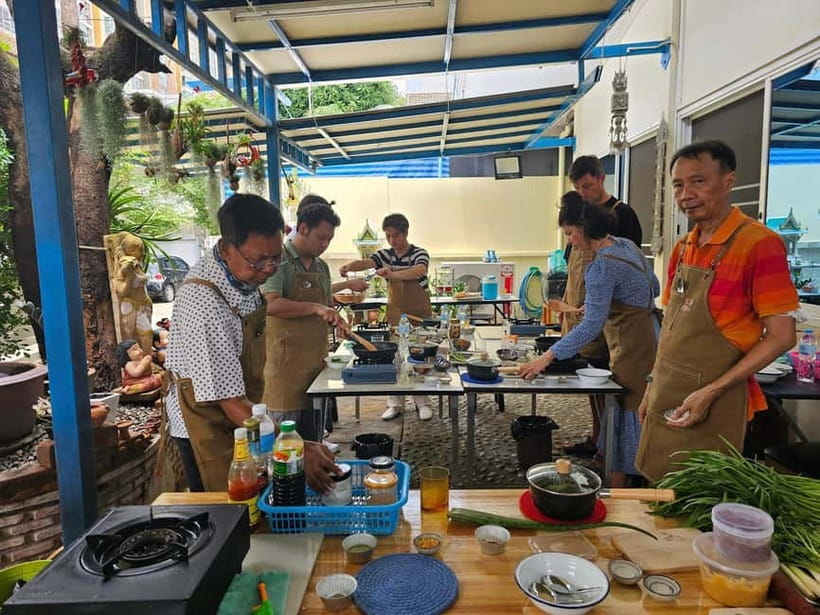
The class takes place in an outdoor kitchen on a terrace, according to one account. That setting can make the lesson feel more like cooking with a family than attending a formal culinary school. It can also be warm and physically demanding, so dress for Bangkok weather and avoid arriving hungry enough to lose patience.
Same place, a different thing to cook:
- Hands on Thai Cooking Class and Market Tour
★ 5.0 · 660 reviews - Tingly Thai Cooking Class with Morning Market Tour
★ 5.0 · 589 reviews - Hands-on Thai Cooking Class & Market Tour in Sukhumvit
★ 5.0 · 571 reviews - Pink Chili – Thai Cooking Class and Market Tour in Bangkok
★ 5.0 · 416 reviews
Four cooking sessions, plus dessert
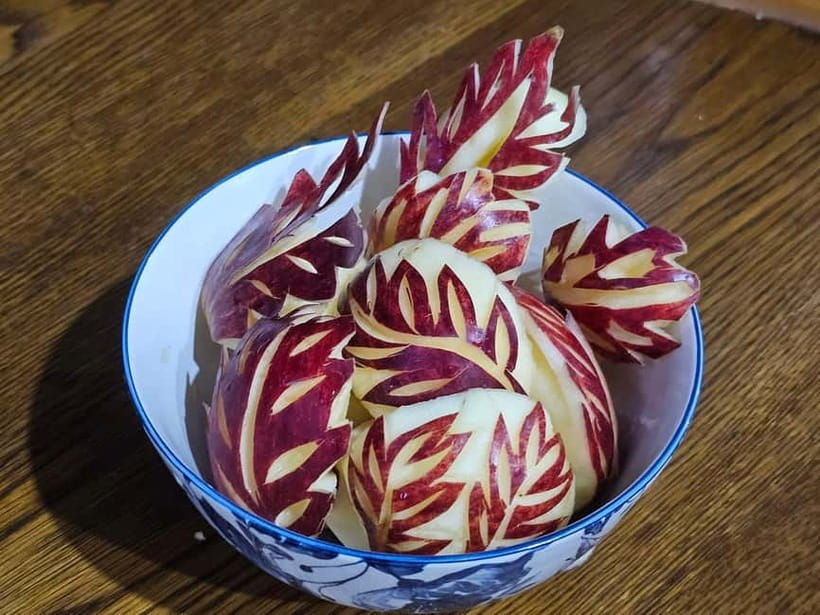
The listed schedule breaks the cooking into short stages:
- Around 15:00, you learn about vegetables, rice, and herbs, then prepare coconut milk, sticky rice, and curry paste.
- Around 16:00, you begin the first soup or stir-fried dish.
- Around 16:30, you prepare a salad.
- Around 17:00, you cook the curry.
- Around 17:30, you make dessert and eat the food you have prepared.
- Around 18:00, you finish eating before returning to the meeting area.
The description sometimes refers to four dishes and elsewhere lists five dishes. The practical way to understand it is that you receive a full meal built around several cooking sessions, often including a dessert. The exact menu changes by day, and the class may prepare an additional item depending on the group and the program.
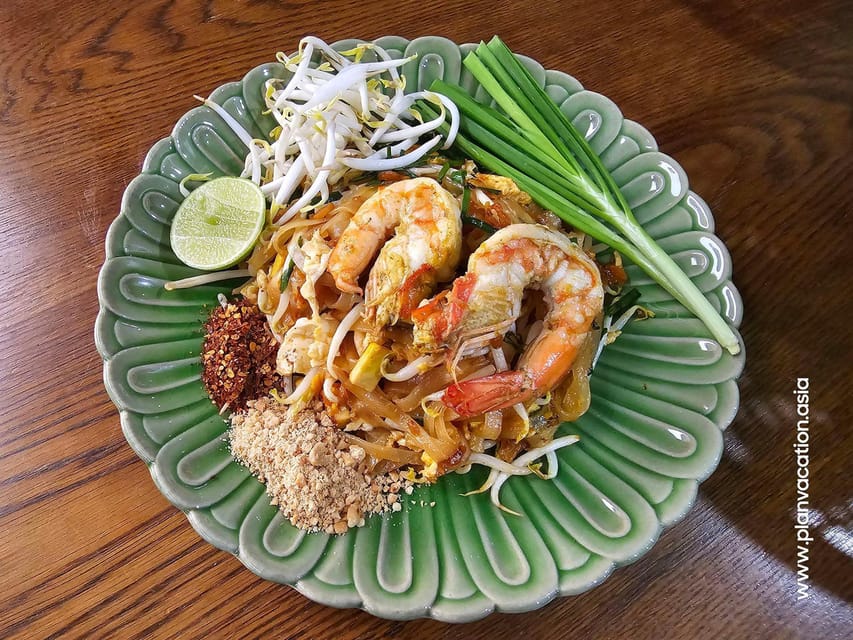
That daily rotation is a strong feature. You are not locked into one fixed menu every afternoon. Monday may include pork Panang curry, morning glory, poached eggs, pork with yellow curry paste, and Khanom Tom, a boiled Thai snack. Tuesday may bring Tom Kha Gai, tofu with bean sprouts, herb-fried pork, pork fried rice, and steamed pandan cake.
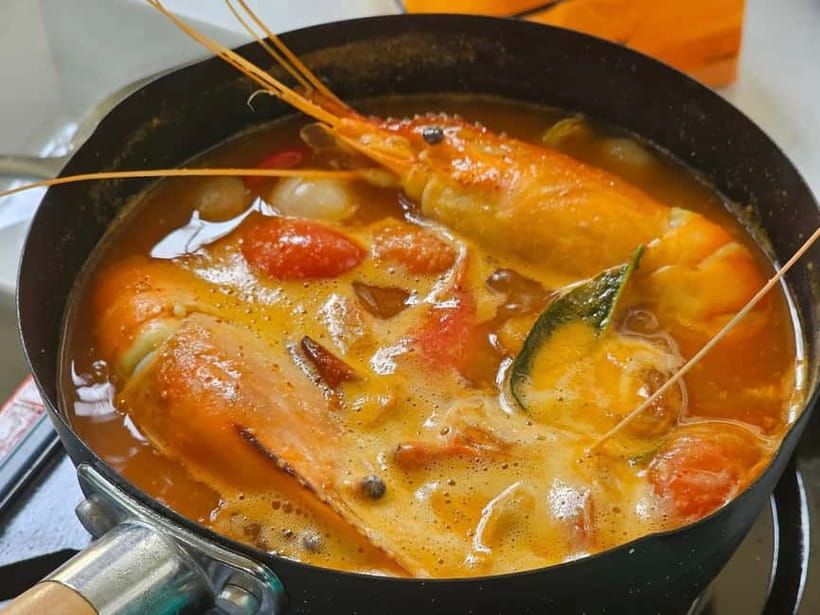
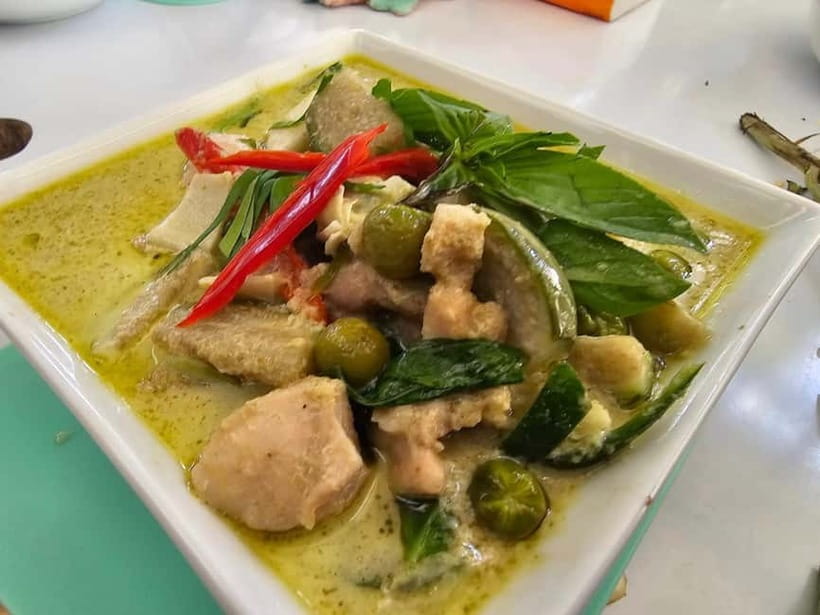
Other days feature familiar Thai favorites. Wednesday includes hot and sour soup with shrimp, chicken with holy basil, a Thai omelet, fried noodles, and Kanom Tuay, a steamed coconut dessert. Friday focuses on green curry, crispy pork with kale, garlic pepper pork, soy-sauce rice noodles, and a soft mung-bean crepe.
The menus also include dishes such as Som Tum, spicy minced pork salad, Tom Yum Gai, clear tofu soup, stir-fried bamboo shoots, fried chicken with Thai herbs, and banana in coconut milk. This gives you a good spread of Thai cooking styles, from quick wok dishes to soups, curries, salads, and sweets.
Because the menu depends on the day, check the date before booking if you have a favorite dish in mind. The published menu is useful as a guide, but you should not assume every item appears on every afternoon.
The hosts are the heart of the experience

The strongest part of this class is the personal teaching. Sunee has been described as friendly, kind, punctual, and able to explain the food clearly. She also speaks German, while the listed host languages are English and German.
Ann has also been praised as an excellent cook and guide. The class is not just a demonstration where you watch someone else prepare food. You cook under instruction, ask questions, and receive tips as you work.
Some sessions are very small. One pair found themselves as the only students, which turned the class into a private lesson. That is not guaranteed, but the mini-group format gives you a better chance of receiving direct help than a large cooking school would.
The welcome can extend beyond the class itself. One account describes meeting Sunee’s mother, husband, and another staff member, with the family offering personal gifts from the mother’s garden. Details like this cannot be promised, but they show why the experience feels more personal than a standard commercial kitchen.
Communication appears to work well in English and German, though no class can guarantee the same language ability from every member of staff. If you have questions about ingredients, spice levels, or techniques, ask as you cook. That is when the instruction is most useful.
What you actually learn about Thai food
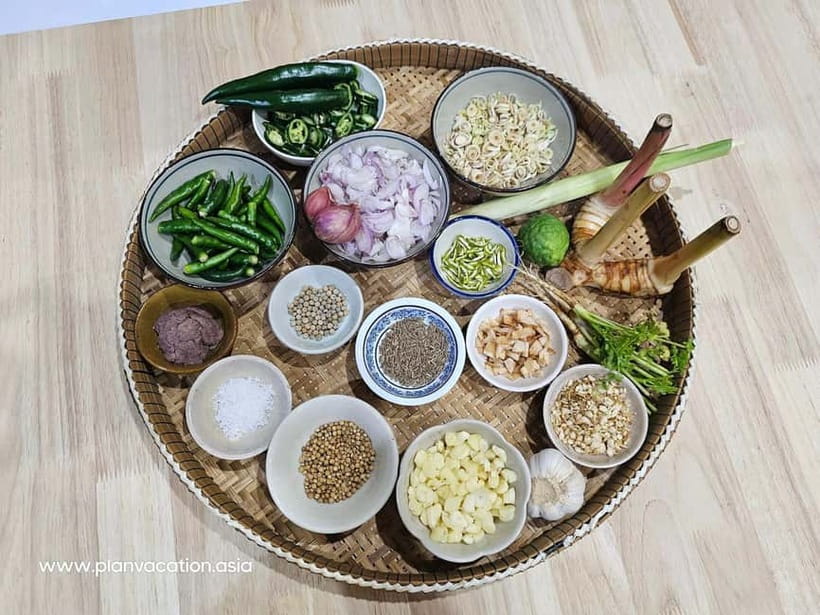
This class is most useful for people who want techniques they can repeat at home. You learn how to make curry paste, coconut milk, and sticky rice, then use those preparations in complete dishes.
You also see how Thai meals balance different tastes. A soup may rely on sourness and heat. A curry brings together aromatics, coconut, and spice. A stir-fry depends on high heat and quick timing. A salad such as Som Tum shows how fresh ingredients and dressing can carry a dish without long cooking.
The menu also teaches variety. You may prepare pork, chicken, shrimp, tofu, vegetables, rice, noodles, and desserts across the different daily programs. This is more useful than spending five hours on one curry because you leave with a broader sense of Thai home cooking.
The food is eaten fresh and hot as it is finished. That means dinner is part of the lesson, not a separate restaurant meal at the end. You taste what you made while the method is still clear in your mind.
How the $46 price works out
At $46 per person, the price is reasonable if you value the full afternoon rather than just the meal. It includes the market visit, local transfer from and back to the MRT meeting area, ingredients, drinking water, dinner, and travel insurance.
You are also paying for instruction and access to a local kitchen. A restaurant meal would cost less, but it would not show you how the curry paste was made, where the ingredients came from, or how the dishes were assembled.
The value improves if your group is small. A mini-group or private session gives you more time to ask questions and receive corrections. One account also describes the staff allowing luggage to be stored between trips, which was a kind gesture, but you should confirm this in advance because it is not listed as a standard inclusion.
The main cost is your time and energy. This is a five-hour activity, and one account found the afternoon long and tiring, even while considering it worthwhile. If you want a quick evening class, this is not the right choice. If you want dinner plus a market visit and practical instruction, the price is easier to justify.
Dietary needs, comfort, and practical planning
Vegetarian and vegan options are available with advance notice. Tell the operator when you book, rather than waiting until you arrive at the market. The published menus contain meat, seafood, fish-based possibilities, and eggs, so advance communication matters.
The experience is listed as wheelchair accessible, but the route includes a walk to the market, local transport, and a cooking location. If you use a wheelchair, confirm the exact arrangements before booking so the market route and vehicle meet your needs.
Pets are not allowed, although assistance dogs are permitted. The activity also prohibits feeding animals and making excessive noise.
Wear comfortable clothes and shoes suitable for walking and cooking. The class is not described as formal, and the outdoor kitchen setting suggests practical clothing is better than anything delicate. Bring a little patience for Bangkok traffic, market conditions, and the changing pace of a small household-style lesson.
Free cancellation is available up to 24 hours before the activity for a full refund, and you can reserve now and pay later. Those terms are useful if your Bangkok schedule is still moving, but check the booking conditions at the time you reserve.
Who should book this afternoon class?
I would choose this experience if you want to connect Thai food with ordinary neighborhood life. It suits first-time visitors who want more than a restaurant meal, home cooks who want to learn the foundations of curry paste and coconut milk, and couples or small groups who prefer personal instruction.
It is also a good choice if you enjoy asking questions and trying unfamiliar ingredients. The market visit rewards curiosity, while the cooking session gives you several chances to taste, adjust, and learn.
I would think twice if you dislike heat, walking, outdoor cooking, or long hands-on activities. It may also be less suitable if you need a fixed menu, since the dishes change by day. People with dietary restrictions should contact the operator before booking, even though vegetarian and vegan adaptations are offered.
Should you book the Uncle and Aunty Cooking House class?
Book it if you want a generous afternoon that combines a market, a shrine, local transport, cooking instruction, and a freshly prepared dinner. The strongest reasons are the small-group feel, the warm teaching style associated with Sunee and Ann, and the chance to make curry paste and coconut milk rather than relying on ready-made products.
Skip it if you only want a short cooking demonstration or a polished restaurant-style setting. This is a hands-on neighborhood experience, and its rough edges are part of the deal. At $46, it offers good value for a full afternoon, especially when the group is small and you take an interest in the ingredients.
FAQ
Where does the activity begin?
You meet your guide at MRT Huai Khwang, Exit 4, at approximately 14:00.
Where does the activity end?
The activity returns to the Huai Khwang MRT area and ends around 19:00.
Is hotel pickup included?
No. Hotel pickup and hotel drop-off are not included. You must reach the MRT meeting point yourself.
How long does the experience last?
The activity lasts about five hours, from approximately 14:00 until 19:00.
What languages are available?
The host or greeter languages are English and German.
How many dishes will I cook?
The class schedule includes soup or stir-fried food, salad, curry, and dessert sessions. The full daily menu generally lists five dishes, although the exact number may vary by program.
Does the menu change by day?
Yes. Different days feature different dishes, including curries, soups, noodles, salads, stir-fries, rice dishes, and Thai desserts.
Can I request vegetarian or vegan food?
Yes. Vegetarian and vegan options are available, but you must inform the operator in advance.
Is the activity wheelchair accessible?
The activity is listed as wheelchair accessible. Since the program includes walking, local transport, and a cooking location, confirm the arrangements before booking.
What is included in the price?
The price includes transfers from and back to MRT Huai Khwang Exit 4, cooking ingredients, drinking water, the dinner you prepare, and travel insurance.
Just added around Bangkok
- Bangkok Udomsuk Thai Cooking Class with local market tour★ 5.0 · 5 reviews
- Thai cooking class experience in Bangkok with Tingly Thai cooking school★ 5.0 · 59 reviews
- Thai Cooking Class★ 5.0 · 25 reviews
- Thai Cooking Class in Bangkok★ 5.0 · 23 reviews
- Hands-On Thai Cooking Class Bangkok with Local Chef (Small Group)★ 5.0 · 119 reviews
- White Lotus Thai Cooking Class in Bangkok★ 5.0 · 31 reviews
- Baipai Thai Cooking School: Authentic Cooking Class Tour★ 5.0 · 3 reviews
- Sompong Thai Cooking School: Hands-On Culinary Experience★ 5.0 · 4 reviews
Cooking Classes, compared.

Half-Day Thai Cooking Class at Organic Farm in Chiang Mai
Read our review →

3 in 1 Cooking Class near Navona: Fettuccine, Ravioli & Tiramisu
Read our review →
Pasta & Tiramisu Cooking Class with Unlimited Wine
Read our review →
Hanoi Cooking Class: Culture, Local Market & Meaning CSR Impact
Read our review →
5 Traditional Dishes Hanoi Cooking Class with Market Trip
Read our review →
Cooking Class and Lunch at a Tuscan Farmhouse with Local Market Tour from Florence
Read our review →
Cooking Class, Market & Thai Herbs Garden Tour
Read our review →Lists this class appears in