
REVIEW · SOUTH EAST ENGLAND, UNITED KINGDOM
London: Indian Cooking Masterclass with Market Tour
Spice shopping comes before the cooking. This small-group Indian cooking class takes you from Hounslow West tube station to a local food shop and then into chef Monisha’s home kitchen. I like the direct look at specialist ingredients such as dried fenugreek and black cardamom, and I like that you eat the meal you help prepare. The main consideration is location: Hounslow is about 25 minutes from central London by Piccadilly Line, so this is not a quick central-city activity.
Monisha’s teaching gets especially high marks for being clear, friendly, and practical. You learn how to blend spices, make curry pastes, and balance flavors without filling your kitchen with a cupboard’s worth of ingredients. The 150-minute format gives you enough time to cook and talk, but not enough time for a long, leisurely meal or a broad tour of Indian cuisine.
Key details before you book
- Meet at Hounslow West tube station: The class begins in the station foyer, about 25 minutes from central London on the Piccadilly Line.
- Shop for hard-to-find spices: A short visit to a local Indian food shop introduces ingredients rarely found in central London, including dried fenugreek and black cardamom.
- Cook in Monisha’s home: The class moves to her home a few minutes away, where you prepare and eat the meal together.
- Learn useful kitchen methods: The focus is on spice blending, curry pastes, flavor balance, and healthy meals that can be made in a short time.
- Keep the group small: A maximum of eight people allows for hands-on instruction rather than a demonstration from the back of a crowded room.
- Plan for an adult audience: Children under 15 cannot join, and the class is taught in English.
Meeting Monisha at Hounslow West
The practical starting point is Hounslow West tube station. You meet in the foyer, not at a central London landmark, so allow time for the Piccadilly Line journey and do not cut it close with a tight reservation elsewhere.
The trip takes about 25 minutes from central London. That makes the class easy to reach by public transportation, but the outward journey is part of the commitment. If you are staying near the West End, Covent Garden, or South Kensington, you will need to leave central London and return afterward.
That change of setting is useful. Instead of remaining in a polished visitor district, you begin in an area with a strong Indian food presence. The experience is built around everyday food culture, not just a restaurant meal prepared for you.
Monisha is an award-winning food author and chef. Her role matters here because the class is not simply a recipe demonstration. She explains how Indian food became part of British eating over more than 200 years, giving you some context before you start cooking.
The teaching language is English. Her approach, according to the available feedback, is easy to follow and approachable. Katherine from the United Kingdom praised Monisha as a great teacher and said the recipes were good enough to use again at home. Heather from the United States, who had attended cooking classes in several cities, rated this among the best. Those comments point to the class’s strongest feature: instruction that stays useful after your London visit.
More Indian Cooking Classes in the world:
- Indian Cooking Class in an Authentic Local Home – Learn 6 Dishes
★ 5.0 · 195 reviews - New Delhi: Indian Cooking Class in a Local Home
★ 5.0 · 65 reviews - Mumbai: Indian Cooking Class & Cultural Delights
★ 5.0 · 38 reviews
The Hounslow Indian food shop
The first stop is a local Indian shop, a few minutes from the station. This is not a full market tour in the grand London sense. It is a focused visit to learn about ingredients, smells, and the building blocks of Indian cooking.
You get a chance to look at products such as dried fenugreek and black cardamom, spices that may be difficult to find in central London. For a home cook, this is one of the most valuable parts of the experience. A recipe can tell you to use a spice, but it does not always explain what it smells like, how it differs from a familiar spice, or why it matters to the finished dish.
The shop visit also helps separate Indian home cooking from the simplified version often served in restaurants. You are introduced to ingredients in their shop setting before using them in a kitchen. That sequence gives the class a sensible rhythm: first learn what you are looking at, then learn what to do with it.
You should expect walking between the station, the shop, and Monisha’s home. The distances are described as short, but you will not remain seated for the entire class. The activity is wheelchair accessible, though anyone needing a very specific route or level of access should confirm the details before booking, since the class includes movement between locations.
Cooking curry pastes and balancing flavor
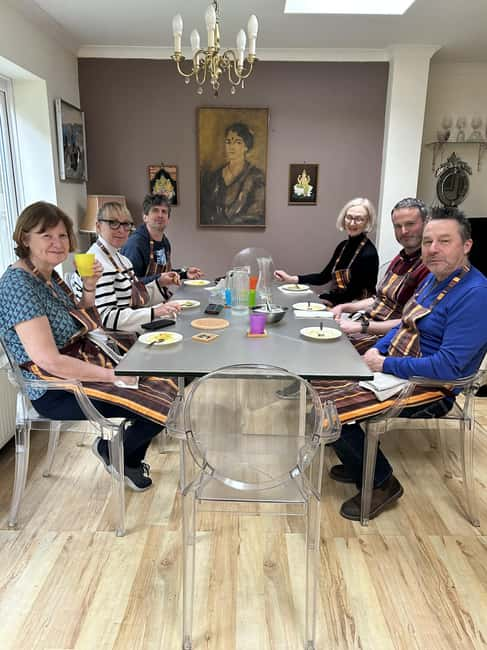
After the shop visit, you walk a couple of minutes to Monisha’s home. The cooking is hands-on, so you are not just watching a chef work while trying to remember the steps.
The key lessons include blending spices, creating curry pastes, and balancing flavors. These are the parts of Indian cooking that can seem mysterious when you only eat the finished dish. Monisha breaks them into manageable techniques, showing you how a small number of well-used ingredients can do more work than a crowded spice shelf.
The class also focuses on healthy and quick cooking. That is a practical angle, especially if you enjoy Indian food but assume it requires a long shopping list or hours at the stove. You learn tips for putting together a flavorful meal in a short time, rather than being pushed toward elaborate restaurant-style cooking.
The supplied details do not name the exact dishes on the menu. That is worth knowing before you book. You can expect to prepare an Indian meal, but you should not choose this class because you are set on learning one particular curry or regional recipe.
The small group size is a real advantage. With no more than eight participants, you should have a better chance to handle ingredients, ask questions, and keep up with the process. It also creates a more personal setting than a large cooking school. The trade-off is that a home kitchen may feel less formal than a purpose-built culinary studio, though that is also part of the appeal.
Sharing the meal in Monisha’s home
At the end, everyone eats the meal together. Lunch is included, along with the ingredients used in the class and a welcome drink of masala chai.
That shared meal gives the activity a clear payoff. You are not sent away with a small tasting portion after watching someone else cook. You help prepare the food, then sit down and eat it as a group. The format also makes room for the kind of informal conversation that is difficult to create in a busy restaurant.
The discussion covers the difference between Indian home cooking and Indian restaurant food. That distinction is important. Restaurant dishes often need to be bold, consistent, and suited to a wide audience. Home cooking can be more flexible, quicker, and shaped by the ingredients already in the kitchen.
The meal is also a chance to ask about the techniques while they are still fresh. If a curry paste tasted balanced, you can connect that result to the steps you just followed. If a spice seemed unfamiliar, you can place it in the context of the finished food.
Alcohol is not included. That is not a problem for most people, since the focus is cooking and conversation, but you should not expect a wine pairing or a drink package. The welcome masala chai is the included beverage.
More Cooking Classes with a Market Tour in the world:
- Hanoi Cooking Class: Culture, Local Market & Meaning CSR Impact
★ 5.0 · 5,147 reviews - 5 Traditional Dishes Hanoi Cooking Class with Market Trip
★ 5.0 · 4,890 reviews - Cooking Class and Lunch at a Tuscan Farmhouse with Local Market Tour from Florence
★ 5.0 · 4,831 reviews - Chiang Mai: Cooking Class, Market & Thai Herbs Garden Tour
★ 4.9 · 4,824 reviews
What the $119 price really covers
At $119 per person, this is more expensive than simply ordering an Indian lunch in London. The comparison is not quite fair, though, because your fee covers a professional chef, the market-style shop visit, ingredients, instruction, masala chai, lunch, and a small group capped at eight.
The value depends on what you want. If you mainly want to eat Indian food, a restaurant is cheaper and easier. If you want to understand the ingredients and take home methods you can repeat, the class makes a stronger case.
You are also paying for access to Monisha’s home kitchen and her experience as a food author and chef. Katherine specifically planned to use the recipes again, while Heather found the instruction unusually strong compared with cooking classes in other cities. That suggests the value is in the teaching, not just the meal.
The 150-minute length is well suited to a half-day plan. It is long enough for the shop visit, cooking, lunch, and conversation. It is short enough to fit beside other London plans, although the trip to Hounslow and back means you should budget more than the stated class time for the complete outing.
Who will enjoy this class most
I would recommend this experience to you if you enjoy food culture more than sightseeing checklists. It suits home cooks, curious eaters, and people who want a meal connected to a neighborhood rather than a restaurant designed mainly for visitors.
It is also a good choice if you have tried Indian food but want a better sense of how the flavors are built. The lessons on spice blending and curry pastes offer useful starting points for your own kitchen.
The class works well for a couple, friends, or solo participants who are comfortable cooking with a small group. Since the maximum is eight, solo participants should not be lost in a crowd. The available feedback also suggests that first-time cooking-class participants and people with plenty of previous class experience can both get something from Monisha’s teaching.
Children under 15 are not permitted. Families with younger children will need another activity. The class is in English, so you should be comfortable following spoken instruction and taking part in conversation.
This may not suit you if you want a grand food market, a long list of dishes, or a central London location. It is also not the best pick for someone who prefers to sit back and watch. You will be expected to cook and then eat the meal with the group.
Timing, access, and planning tips
Allow enough time to reach the meeting point at Hounslow West. The class starts in the station foyer, and the activity includes walking to both the food shop and Monisha’s home.
Wear something comfortable for cooking and walking. The information provided does not specify a dress code or equipment list, so you should not assume that special clothing or personal ingredients are required. The cooking ingredients are included.
The class can be canceled up to 24 hours before the start time for a full refund. You can also reserve now and pay later, which helps if your London schedule is still changing. Starting times vary, so check availability for your chosen date.
Wheelchair access is listed, but because the route includes multiple stops, it is sensible to confirm the exact access arrangements if you have mobility needs. The group is limited to eight, and the class is taught in English.
Should you book the Indian cooking class?
Book it if you want practical cooking skills, a local Indian food shop, and a shared homemade meal led by Monisha. The best reasons to go are the small group, the focus on ingredients that are hard to find in central London, and teaching that appears to be clear enough to use at home.
Skip it if you want a central London activity or a standard restaurant meal with no hands-on work. At $119, the price only makes sense if you value instruction and food culture as much as lunch.
For most food-focused visitors, I think the class is a good use of half a day. Just plan for the journey to Hounslow, arrive ready to cook, and treat the shop visit and conversation as equal parts of the experience.
FAQ
Where does the Indian cooking class meet?
You meet in the foyer of Hounslow West tube station.
How far is Hounslow West from central London?
Hounslow West is about 25 minutes from central London on the Piccadilly Line.
How long does the experience last?
The activity lasts 150 minutes.
What happens during the market tour?
You visit a local Indian food shop and learn about specialist ingredients, including dried fenugreek and black cardamom.
Where does the cooking take place?
After visiting the shop, you walk a couple of minutes to Monisha’s home for the cooking class and shared meal.
Is lunch included?
Yes. You cook and eat the meal together, and lunch is included in the price.
Is masala chai included?
Yes. A welcome drink of masala chai is included.
How many people can join the class?
The group is limited to eight participants.
Can children attend?
Children under 15 years old cannot attend.
Just added around the world
- Aroidee’s Farm-Fresh Thai Cooking Experience★ 5.0 · 8 reviews
- Signature Thai Cooking Course★ 5.0 · 79 reviews
- Private Half-Day Thai Cooking Class in Chiang Mai★ 5.0 · 4 reviews
- Half Day Guided Thai Cooking Class in Chiang Mai★ 5.0 · 13 reviews
- Online Thai and Akha Cooking Class★ 5.0 · 70 reviews
- Private Virtual Thai Cooking Class★ 5.0 · 9 reviews
- Northern Thai Cooking Class in Chiang Mai in a Countryside Home★ 5.0 · 2 reviews
- 5 Hour Morning Thai Cooking Course★ 5.0 · 31 reviews
Cooking Classes with a Market Tour, compared.

Hanoi Cooking Class: Culture, Local Market & Meaning CSR Impact
Read our review →
5 Traditional Dishes Hanoi Cooking Class with Market Trip
Read our review →
Cooking Class and Lunch at a Tuscan Farmhouse with Local Market Tour from Florence
Read our review →
Cooking Class, Market & Thai Herbs Garden Tour
Read our review →
Authentic Cooking Class with Market & Farm Visit
Read our review →
Paella Cooking Experience & Boqueria Market Tour
Read our review →
Cooking Class Hoi An:Local Market, Basket Boat, Fishing & Cooking
Read our review →
Hoi An Cooking Class(Market,BasketBoat Crabfishing&Cooking Class)
Read our review →Lists this class appears in