
REVIEW · DODECANESE, GREECE
Kos Cooking Classes by Mama Contessa
Food tastes better from the source. Kos Cooking Classes by Mama Contessa connects Greek food with the land that produces it, taking you from coffee and finger foods to an estate walk, olive oil tasting, family factory visit, and hands-on cooking. I especially like the estate-to-plate approach and the chance to taste the family’s own extra virgin olive oil. The main drawback is that the experience covers several activities, so the pace and exact start time may vary.
I also like that you finish with a complete meal, a Greek recipe booklet, and a bottle of the family’s olive oil. The private-group format should make the day more personal, though the $101 price is best value if you want a full cultural outing, not just a short cooking lesson.
Key points about Mama Contessa’s Kos cooking class
- Four Greek recipes plus dessert: The cooking demonstration gives you a proper look at a family kitchen rather than one isolated dish.
- From olive grove to factory: You visit the estate, see the family’s olive trees and growing areas, then tour the place where products are processed and stored.
- Blind olive oil tasting: You can compare different oils and think about flavor, quality, and use in Greek cooking.
- Coffee and finger foods on arrival: The welcome starts gently, with a taste of Greek hospitality before the main activities begin.
- Private group with English support: The host or greeter speaks English, and the private format suits families, couples, and small groups seeking a more direct experience.
- Useful take-home gifts: A recipe booklet and family-produced olive oil let you repeat part of the experience at home.
Why the estate-to-plate idea works so well
Many cooking classes begin with ingredients already measured and waiting on a table. This one takes a wider view. You first see where much of the food comes from, then watch it move through production, and finally eat dishes prepared during the demonstration.
That sequence gives the meal more meaning. Olive oil is not just a bottle placed beside the bread. You see the trees, learn how the family handles its products, taste the oil on its own, and then use the wider farm setting to understand Greek cooking.
I like this approach because it suits Kos particularly well as a food destination. The activity is not only about copying a recipe. It shows how family agriculture, food production, hospitality, and the kitchen fit together.
The estate includes vegetable and cereal areas, as well as around 7,000 olive trees. Those numbers help you understand the scale of the family operation. This is not simply a decorative garden attached to a cooking studio. It is a working agricultural property with its own products and production facilities.
A few more cooking classes around Greece worth a look
- Athens: Classic Cooking Class with Market Visit and Wine
★ 5.0 · 1,101 reviews - Athens: Food Market Visit and Cooking Class with Wine
★ 4.9 · 1,087 reviews - Greek Cuisine Cooking Class in Santorini with Recipes and Wine
★ 5.0 · 969 reviews
Arrival with Greek coffee and finger foods
Your visit begins with a welcome from the staff and a small taste of Greece. You are offered Greek finger foods and Greek coffee before the main tour and demonstration begin.
This opening matters more than it may seem. It gives you time to settle in, meet the hosts, and get a first taste of local flavors without rushing straight into instructions. The coffee and cookies described during one visit suggest a simple, friendly start rather than a formal restaurant-style reception.
I would treat this first stage as an introduction to the family’s way of hosting. You are not arriving at a classroom where the teacher launches into a speech. You are being received with food, conversation, and the everyday warmth that makes a family-run experience feel different from a standard group excursion.
Because the program includes several parts, the welcome also helps set the rhythm for the day. You can enjoy the first snacks, listen to the hosts, and prepare for an outing that moves between the estate, factory, and kitchen.
Walking through the working estate
After the welcome, you take a tour of the property where the family produces its products. The walk includes growing areas for vegetables and cereals, along with the family’s olive trees.
The olive grove is the key feature. With about 7,000 trees, it gives you a real sense of the work behind the oil you will taste later. Greek olive oil is often treated as a familiar table item, but the estate visit shows how much land, care, and processing lie behind that everyday ingredient.
The tour also helps explain why the class uses many basic ingredients from its own production. You are not only watching someone prepare traditional food. You are seeing the source of some of the ingredients that appear in the dishes.
In one account, the group was driven around the wider property by bus, stopping to look at the vegetable and cereal areas and the olive trees. That suggests the estate may cover too much ground for a simple walk at every stage. The exact arrangement can depend on the day, so you should check the available start time and any instructions when booking.
For me, this is one of the strongest parts of the experience. It gives the cooking class a sense of place. You can learn recipes in many destinations, but you cannot recreate the connection between the dishes and this particular family property.
Inside the family factory
The next stage takes you into the family factory, where the products are processed and stored. This is a useful addition because it fills in the part of the story that many food activities skip.
Seeing the production side helps you understand that extra virgin olive oil is not simply pressed and poured into a bottle without careful handling. The factory visit lets the family explain how its products are processed and kept before sale or use.
You should not expect a large industrial attraction. The appeal is the family connection and the chance to see the place behind the food on your table. The factory is part of the family’s working operation, not a staged museum display.
The visit may be especially useful if you are curious about Greek agriculture, food businesses, or the difference between buying olive oil at home and tasting it at the source. It also adds practical context to the olive oil tasting that follows.
Same place, a different thing to cook:
- Naxos: Half-Day Cooking Class at Basiliko Family Tavern
★ 5.0 · 887 reviews - Greek Cooking Class in Athens Including Rooftop Dinner with Acropolis View
★ 5.0 · 826 reviews - Greek Small-Group Athens Cooking Class & Dinner
★ 5.0 · 574 reviews - Exclusive Cooking Experience in our Cave Home by Petra Kouzina
★ 5.0 · 572 reviews
The olive oil tasting and blind comparison
The tasting is one of the most distinctive parts of the program. You are offered the family’s extra virgin olive oil, and the tasting can include a blind comparison of different types of olive oil.
A blind tasting makes you pay attention. Without relying on a label or price, you can focus on aroma, flavor, bitterness, and the finish. You do not need to be an oil expert to enjoy it. The point is to notice differences and understand why the family takes pride in its own production.
I like that this is not treated as a quick sample before moving on. It links the grove, factory, and kitchen. Olive oil becomes a subject you can examine, not just an ingredient you are told to admire.
The tasting also adds value to the $101 price. A basic cooking class may give you recipes and lunch, but this program adds a farm visit and a guided look at a product made on site. If olive oil interests you, that extra context may make the cost feel reasonable.
The wording about a standardized olive oil souvenir indicates that you receive a packaged bottle from the family’s production. It is a practical keepsake, and it should be more useful than a decorative trinket. You can take it home and remember the tasting when you use it in your own kitchen.
Four recipes and a Greek dessert
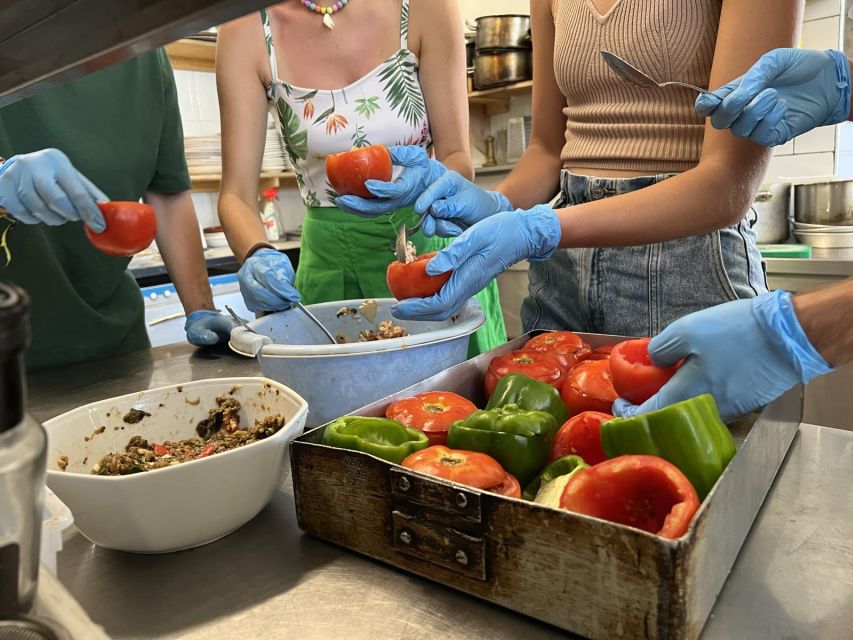
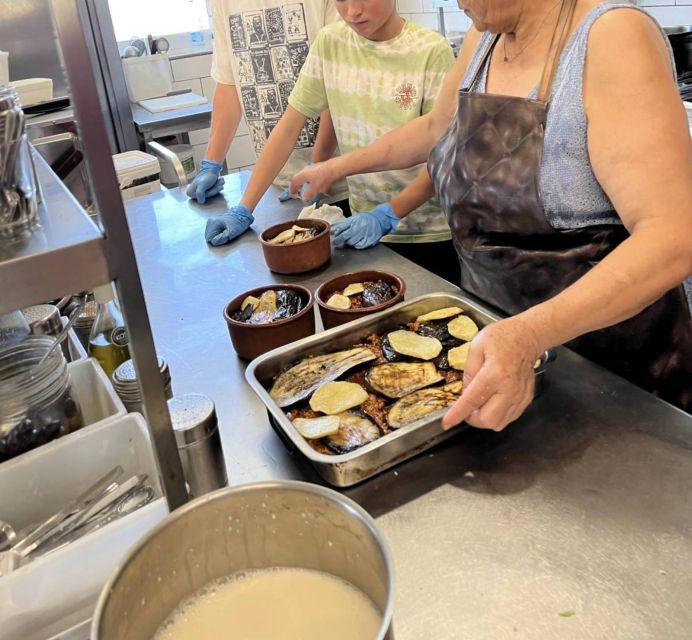
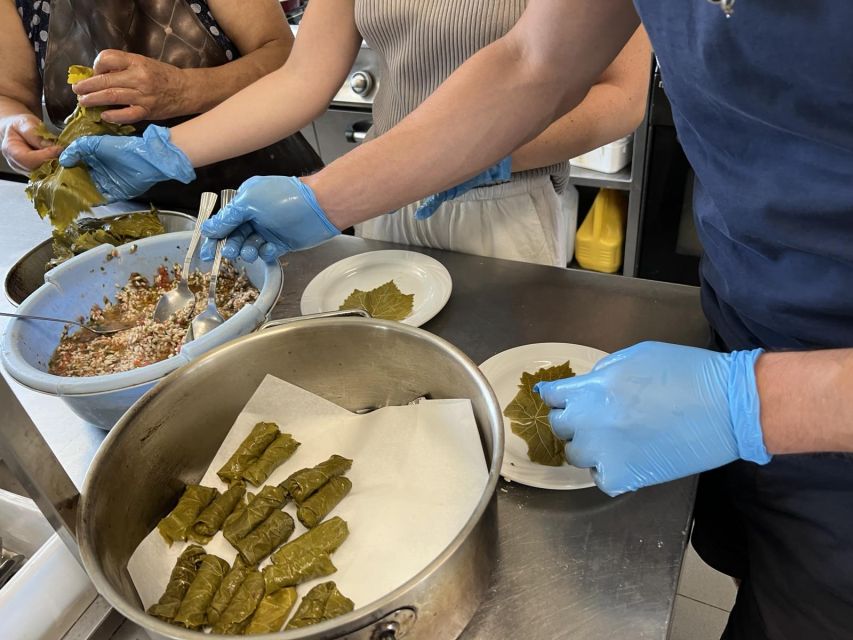
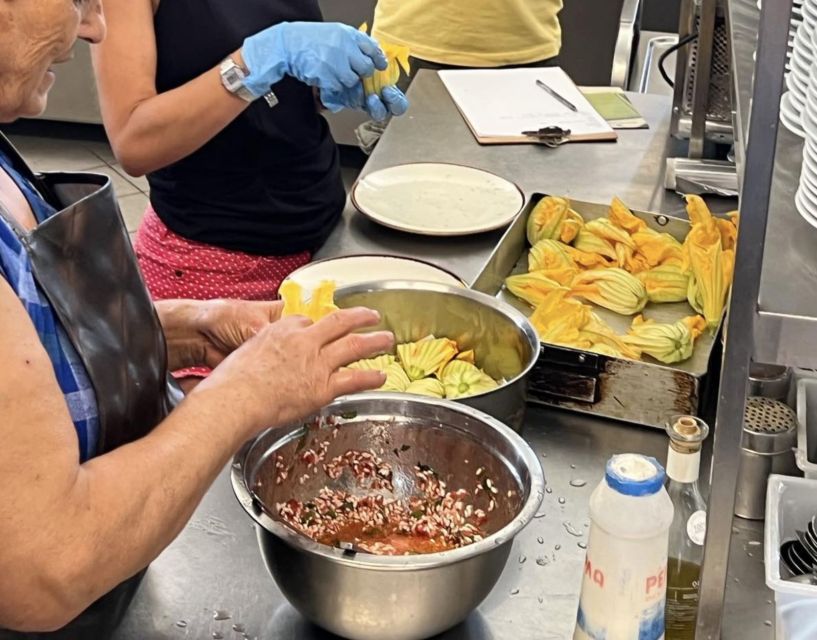
The cooking demonstration moves into Mama Contessa’s kitchen, where you watch four different Greek recipes being prepared, followed by a Greek dessert. The class draws on decades of family cooking experience, which is a major part of its character.
The format allows you to choose how involved you want to be. One account describes some people joining in while others watched. That flexibility is helpful for mixed groups. A confident home cook can take part, while someone who prefers to observe can still follow the process.
I would not book this expecting a tightly timed professional workshop where every participant prepares every dish from start to finish. The description centers on a cooking demonstration, and the group account confirms that participation may vary. Instead, think of it as a family kitchen lesson with hands-on opportunities.
The four-recipe format gives the class useful range. You get to see more than one technique or flavor combination, and the dessert adds a proper finish. Since the recipes are typical Greek dishes, the session should help you understand how local food is built around familiar ingredients rather than complicated restaurant tricks.
The hosts’ English support is important here. The experience is offered in English, and one account describes Mama Contessa’s son explaining the activities clearly in English. That makes the class easier to follow, especially during the cooking steps and olive oil tasting.
You should still keep an open mind about the teaching style. A family demonstration may feel more relaxed and conversational than a formal culinary school lesson. For many people, that is the point. You are seeing how food is actually shared and prepared in a family setting.
Sitting down to the meal you helped create
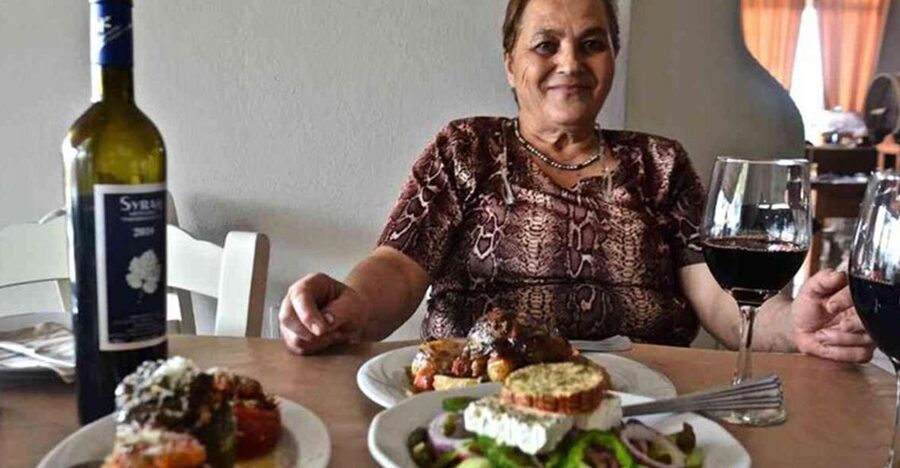
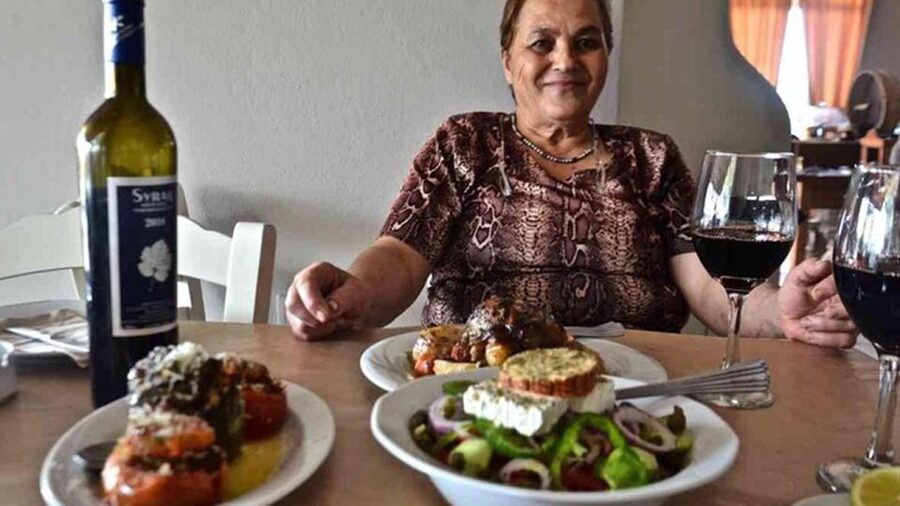
At the end, the staff serves a complete meal made from the dishes prepared during the class. This is a satisfying finish because you do not simply watch food being cooked and then leave with a printed recipe.
The meal turns the demonstration into a shared occasion. You can taste the results, compare the dishes, and see how the recipes work together on a Greek table. It also gives you time to enjoy the food without the pressure of chopping, stirring, or taking notes.
I value this part because it makes the activity feel generous. The meal is not an afterthought. It is the reward for following the process and the clearest way to understand the recipes.
The menu is not specified in detail, so you should not book based on a particular dish. What is clear is that the meal includes the recipes prepared during the demonstration, along with a Greek dessert.
What the $101 price really buys you
At $101 per person, this is more expensive than a simple cooking lesson. The price makes more sense when you count the full program: welcome snacks and coffee, estate tour, growing areas, olive grove, family factory, olive oil tasting, cooking demonstration, complete meal, recipe booklet, and bottled olive oil.
You are paying for a longer cultural experience, not just instruction. The family’s own production gives the program something that a hotel kitchen class cannot easily copy.
The private-group format also matters. You are not joining an unspecified large crowd, and the host can focus on your group. That should appeal to couples, families, and small groups who prefer direct contact with the people running the activity.
Still, the value depends on your interests. If you only want to learn one or two dishes quickly, $101 may feel high. If you enjoy food production, farm visits, local families, and a relaxed meal, the price is easier to justify.
The 4.6 rating from 17 reviews points to a strong overall response, but I would still read the format carefully before booking. The program has many moving parts, and the exact balance between watching, participating, touring, and eating may vary.
Who will enjoy this Kos experience most
I would recommend this for anyone who wants more than a standard beach day in Kos. It suits people who enjoy seeing how food is produced and who like meeting local families through a meal.
It is also a good choice for mixed-age groups. The estate and factory provide interest beyond the kitchen, while the cooking demonstration lets you take part as much or as little as you prefer.
Food-focused visitors will get the most from the olive oil tasting and the family production story. You do not need prior cooking experience, since the class includes a demonstration and English explanations.
This may not suit you if you want a short, tightly scheduled lesson with a guaranteed menu and a specific start time. The activity is available for one day, but you need to check availability for the actual starting time. Since the program includes several parts, it is wise to allow room in your day rather than plan another fixed appointment immediately afterward.
Booking details worth knowing before you go
The experience is offered in the Dodecanese region of Greece, on Kos, and the host or greeter speaks English. It is organized as a private group rather than an open group with unknown participants.
You can reserve now and pay later, which helps if you are still arranging your Kos plans. Cancellation is free up to 24 hours in advance for a full refund.
The exact duration is listed as valid for one day rather than a fixed number of hours. Check the available starting times before committing, especially if you have a ferry, evening booking, or another excursion planned.
The available information does not specify transport from your hotel, dietary arrangements, or accessibility details. If any of those matters to you, ask the provider before booking instead of assuming they are included.
Should you book Mama Contessa’s cooking class?
I would book it if you want a full food-and-farm experience with a personal family feel. The strongest reasons are the estate-to-plate structure, the 7,000 olive trees, the factory visit, the blind olive oil tasting, and the meal made during the class.
I would skip it if your main goal is a quick recipe lesson or a highly formal culinary course. This is broader and more relaxed, with several connected activities rather than one narrow workshop.
For most food-loving visitors to Kos, the $101 price is fair when you use the whole program. You leave with a meal, a recipe booklet, and family-produced olive oil, but the best souvenir is the clearer sense of how Greek food moves from the land to the table.
FAQ
Where does the cooking class take place?
The experience takes place on Kos in the Dodecanese region of Greece, at the family property where Mama Contessa’s products are produced.
How much does the experience cost?
The listed price is $101 per person.
How long is the experience?
It is valid for one day, but a fixed number of hours is not provided. You should check availability to see the starting times.
What language is used?
The host or greeter speaks English, and the experience is offered in English.
Is this a private activity?
Yes. It is organized as a private group experience.
What food is included at the beginning?
You are welcomed with Greek finger foods and Greek coffee.
How many recipes are prepared?
The cooking demonstration includes four different Greek recipes and a Greek dessert.
Is olive oil tasting included?
Yes. The experience includes a tasting of the family’s extra virgin olive oil, with different oils available for comparison during a blind tasting.
What do I take home?
You receive a booklet of Greek recipes and a standardized bottle of the family’s olive oil production as a souvenir.
Just added around Greece
- Authentic and Traditional Cooking Class in Chania Crete★ 5.0 · 5 reviews
- Private Cooking Class – A Culinary Journey in Argostoli★ 5.0 · 2 reviews
- Chania Cooking Class in Crete with rustic, delicious and homely Cretan food!★ 4.5 · 14 reviews
- Private Greek Cooking Class in Athens-Learn to Cook with Angelina★ 5.0 · 3 reviews
- Cook with Katerina: Authentic Greek Home Cooking Class in Athens★ 5.0 · 15 reviews
- Private Walking Meze Cooking Course★ 5.0 · 6 reviews
- Cooking Class in Athens: Learn the Art of Phyllo with Christina★ 5.0 · 24 reviews
- Greek Cooking Class with Acropolis View★ 5.0 · 76 reviews
Cooking Classes, compared.

Half-Day Thai Cooking Class at Organic Farm in Chiang Mai
Read our review →

3 in 1 Cooking Class near Navona: Fettuccine, Ravioli & Tiramisu
Read our review →
Pasta & Tiramisu Cooking Class with Unlimited Wine
Read our review →
Hanoi Cooking Class: Culture, Local Market & Meaning CSR Impact
Read our review →
5 Traditional Dishes Hanoi Cooking Class with Market Trip
Read our review →
Cooking Class and Lunch at a Tuscan Farmhouse with Local Market Tour from Florence
Read our review →
Cooking Class, Market & Thai Herbs Garden Tour
Read our review →Lists this class appears in