
REVIEW · KERALA, INDIA
Kerala Traditional village cooking class (Munnar)
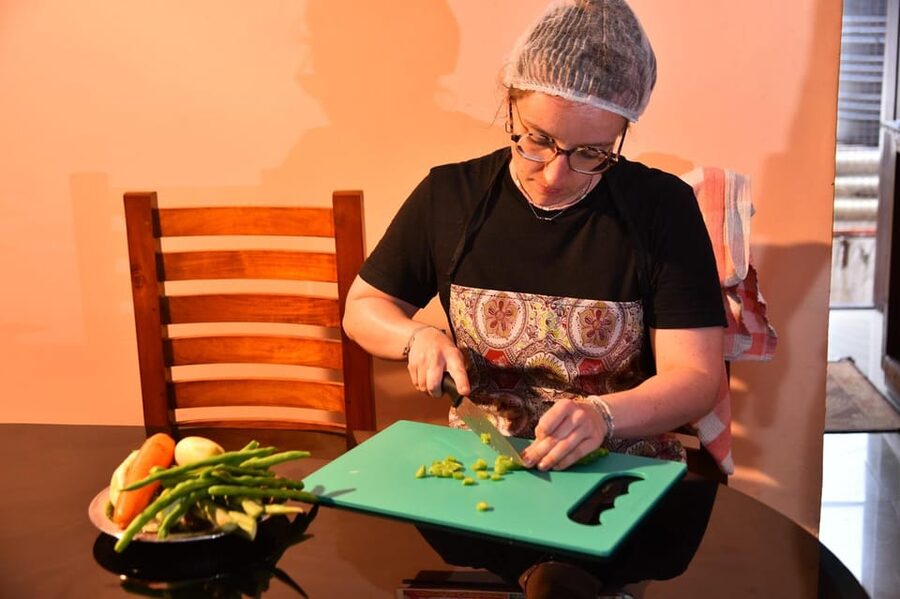
Come hungry, leave with a new recipe book. This four-hour Munnar cooking class takes you into the home of Raveendra Kumar and Selvi, a welcoming couple who have served food since 2001. I like the mix of market shopping, family cooking, local ingredients, and a proper sit-down meal. You are not simply watching a chef work behind a counter. You are learning how Kerala food fits into daily village life.
I also like the flexibility. You can choose from vegetarian and non-vegetarian dishes, ask for particular recipes, and learn in English, Tamil, or Malayalam. The main consideration is timing: the class may run an hour or more beyond four hours, especially if you choose many dishes. Pickup is free only within a two-kilometre radius of Munnar town, with extra charges for farther hotels.
Key points at a glance
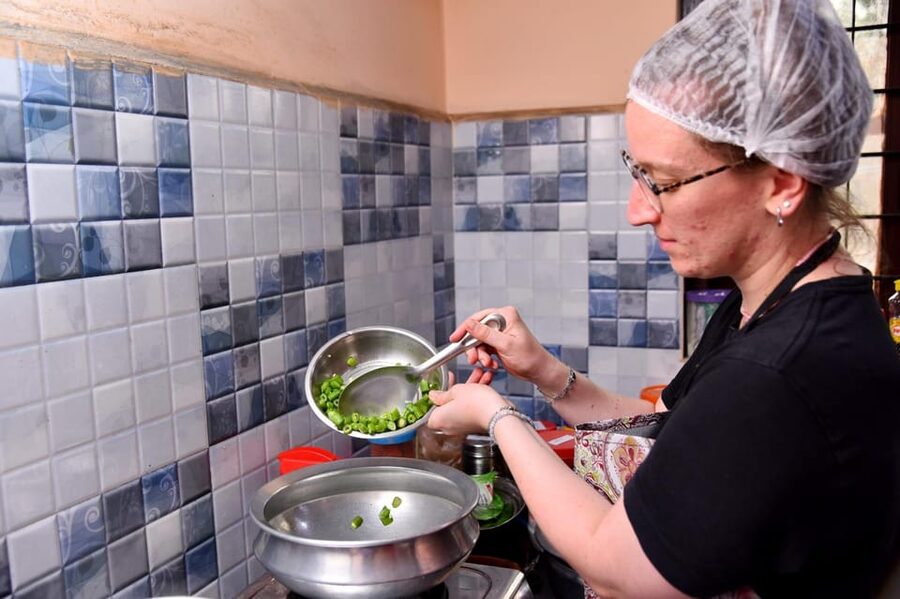
- A family home replaces a formal cooking studio: Raveendra Kumar and Selvi host the class in their own home, with help from other family members on some sessions.
- The market visit comes first: You can see local produce, spices, and everyday Munnar shopping before cooking begins.
- The menu is flexible: Choose from vegetarian, non-vegetarian, snack, welcome drink, and dessert options, then confirm the menu at least 12 hours before class.
- Expect a serious amount of food: Past sessions have included six to eight dishes, along with fried bananas and masala chai.
- The class costs $21 per person: That includes the lesson, meal, snacks, water, equipment, market visit, and travel guidance.
- Plan extra time: The advertised length is four hours, but the cooking can continue for an hour or more.
What makes this Munnar cooking class different
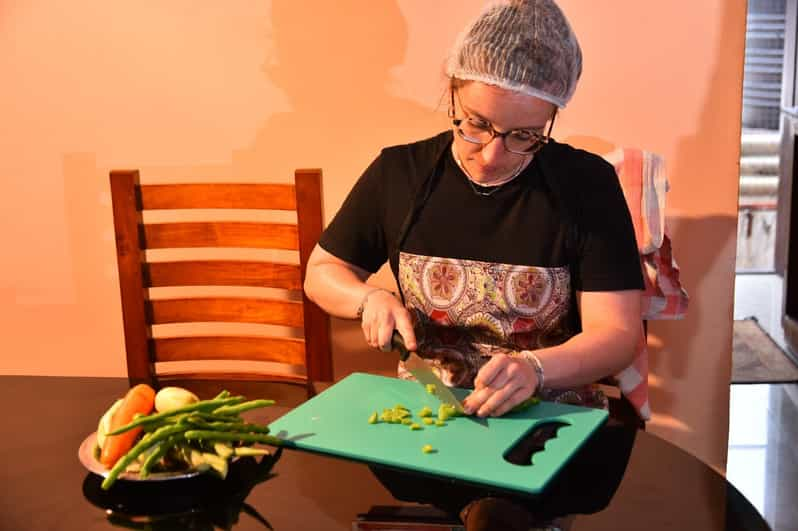
Many cooking classes give you a recipe, a workstation, and a quick meal. This one is more personal. Raveendra and Selvi open their home kitchen to you, explain how the ingredients are used, and share parts of village life along the way.
That setting matters. Kerala food is closely tied to the home kitchen, where coconut, curry leaves, vegetables, rice, and spices are used in practical ways rather than treated as restaurant decoration. You get to see how dishes are assembled step by step, and you can ask why a spice is added at a certain point instead of merely copying a printed instruction.
The couple has been serving food since 2001. That long experience gives the class a sense of continuity, even though the session remains friendly and informal. Some classes also include Selvi, Indira, Simla, or another family helper, so the exact teaching team may vary.
I would choose this experience if you want more than a meal. It works especially well for people who enjoy meeting local families, asking questions, and learning through conversation.
More Farm Cooking Classes in India:
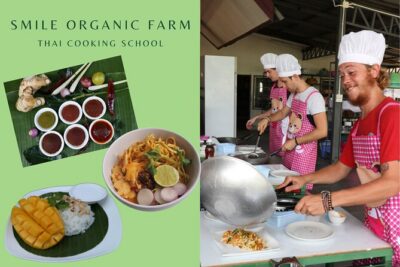
- Half-Day Thai Cooking Class at Organic Farm in Chiang Mai
★ 5.0 · 19,087 reviews - Cooking Class and Lunch at a Tuscan Farmhouse with Local Market Tour from Florence
★ 5.0 · 4,831 reviews - Chiang Mai: Authentic Cooking Class with Market & Farm Visit
★ 4.9 · 4,546 reviews
Starting at the Munnar market
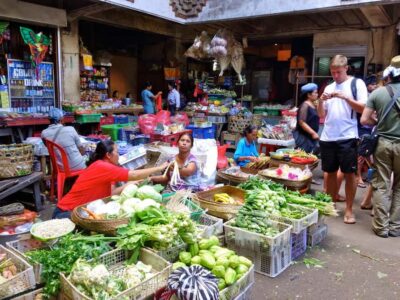
The market visit gives the class a useful beginning. Instead of meeting the ingredients only after they have been washed and placed in bowls, you can see produce in its everyday setting and help select items for the cooking session.
This is one of the most valuable parts for anyone unfamiliar with Kerala food. You may encounter local fruits, vegetables, herbs, and spices that you would otherwise pass in a shop without recognizing. Raveendra can also provide context and travel guidance, making the market visit useful beyond the cooking itself.
The market is not just a photo stop. It helps explain why Kerala cooking tastes the way it does. Fresh coconut, curry leaves, mustard seeds, turmeric, coriander, and cumin each have a clear role, and the shopping stage shows that these ingredients are part of ordinary home cooking.
Allow the schedule to breathe here. The class is private, but the exact pace depends on how much you discuss, what you select, and how many dishes you prepare. If you prefer a quick lesson with no pauses, this may feel slow. I see that as part of the value, but it is worth knowing before you book.
Tea, fried bananas, and a warm welcome
Cooking usually begins with a small welcome before the main dishes. Past sessions have included fried banana snacks and masala chai, sometimes described as chai with a cardamom-style spiced flavor.
This opening is simple, but it sets the tone. You get time to meet the hosts, settle in, and ask questions before handling a knife or standing over a cooking pot. The banana snack also gives you an early taste of the local ingredients before the full meal arrives.
Water is included, and the class provides a knife, apron, cutting board, pen, and paper. The equipment is practical rather than fancy. Bring attention and curiosity, and you will get more from the session than if you treat it as a demonstration followed by lunch.
Learning the building blocks of Kerala food
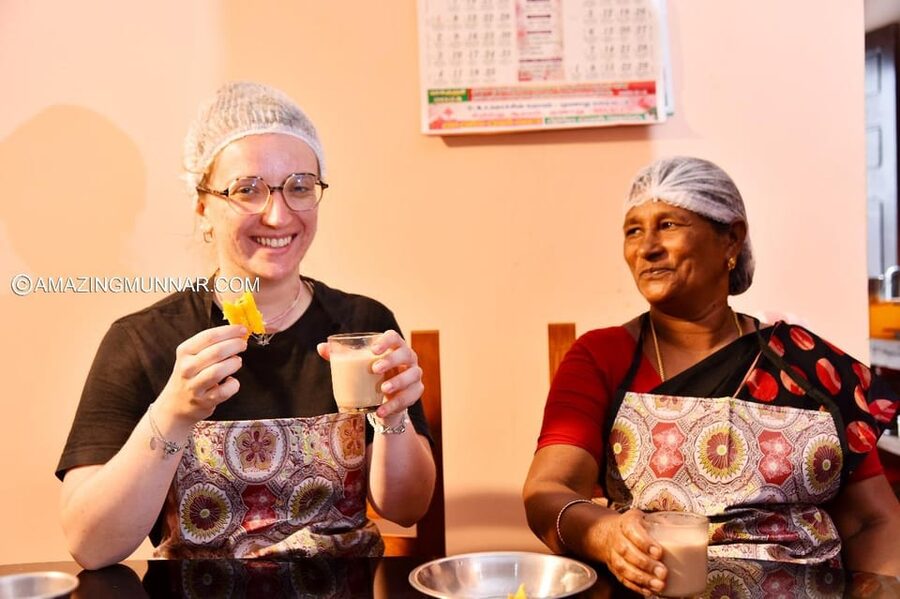
Before the live cooking begins, the hosts introduce the core ingredients used in Kerala cuisine. Expect discussion of coconut milk, curry leaves, mustard seeds, turmeric, coriander, and cumin.
This explanation is important because the same ingredients can behave very differently depending on when they enter the pan. The class covers the order of adding ingredients, basic preparation, and ways to develop the familiar Kerala flavor.
I particularly like this part for first-time Indian food cooks. A dish may look simple on the plate, but its flavor depends on small choices: when spices are added, how coconut is used, and how vegetables or fish are treated. The hosts explain these choices in a home-cooking context, not as a restaurant performance.
The class also presents food as part of local wellness. Its stated purpose includes exploring medicinal supplements and traditional village dishes. That does not mean you should treat any ingredient as medical advice. It means the session may connect food with the ways local families think about nourishment and everyday health.
A few more cooking classes around India worth a look
- Pink City Cooking Class
★ 5.0 · 452 reviews - Five Course Cooking Class & Meal
★ 5.0 · 250 reviews - Veg and Non veg : Private Cooking Class in Delhi home (7 meal)
★ 5.0 · 226 reviews - Indian Cooking Class in an Authentic Local Home – Learn 6 Dishes
★ 5.0 · 195 reviews
Choosing your menu before class
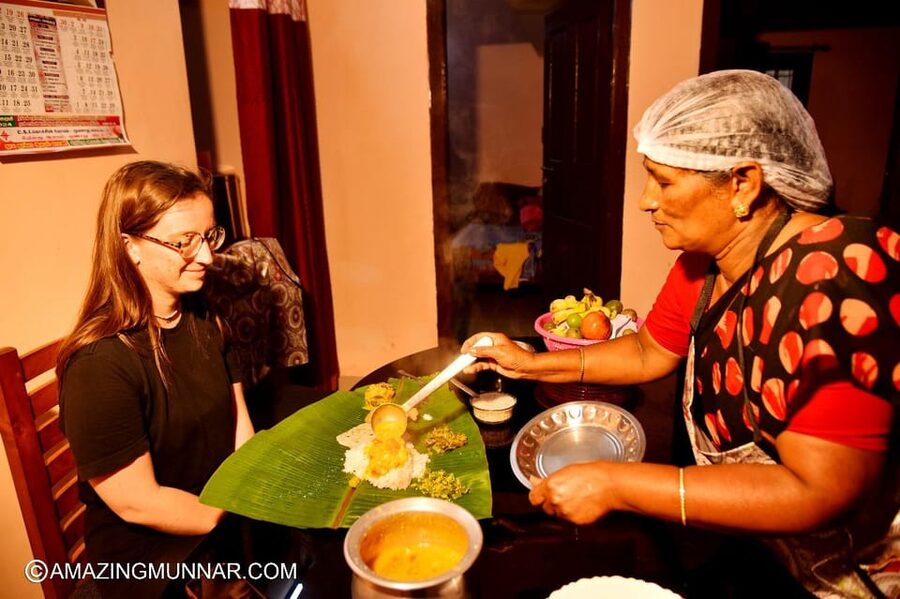
You should finalize your menu at least 12 hours before the session. This is not a minor booking detail. It gives the hosts time to prepare ingredients and plan the order of cooking.
Possible dishes include:
- Appam and stew
- Fish curry
- Avial
- Puttu and kadala curry
- Vegetarian main dishes
- Non-vegetarian dishes
- Snacks, welcome drinks, and dessert
The exact combination depends on your choice and the hosts’ arrangements. You should state dietary preferences early, especially if you want a vegetarian class. A vegetarian session has worked well in the past, with several vegetable-based courses showing how much variety Kerala home cooking can offer.
If fish curry interests you, ask about it when confirming the menu. It has been a highlight in one session, but it should not be assumed as part of every booking. The same applies to appam, puttu, stew, snacks, and dessert.
The large menu can be both a strength and a weakness. Six to eight dishes give you a generous meal and many techniques to take home. They also make the class longer and leave less time for slow, detailed practice on each recipe.
Watching the live cooking demonstration
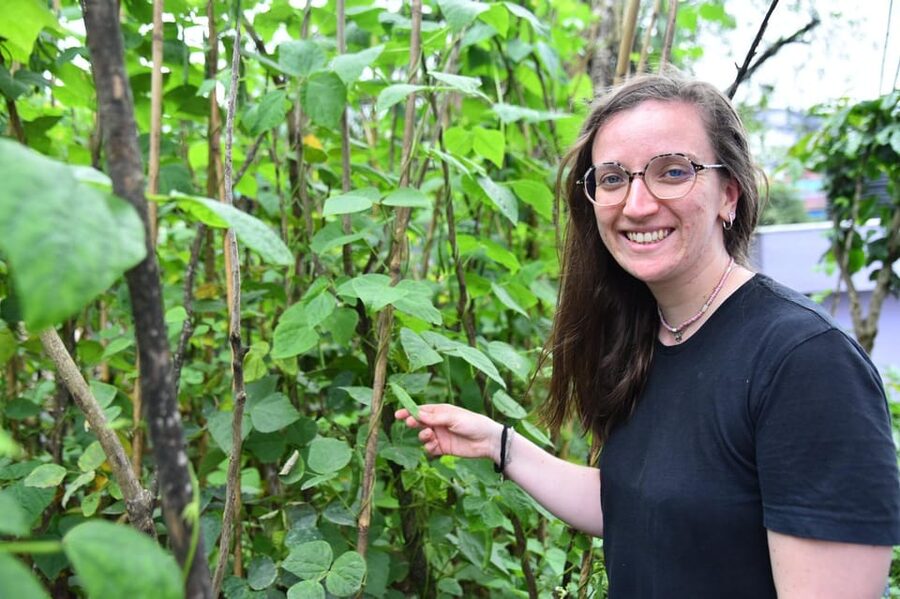
The hosts prepare the selected dishes step by step. They explain the procedure, show when ingredients are added, and offer tips for achieving the proper flavor.
You can ask questions throughout. That is useful because cooking by observation is not always enough. If you want to know how to adjust seasoning, recognize a cooked spice, or handle a particular vegetable, ask while the dish is in progress.
Raveendra often helps with communication and translation during the session. The available languages are English, Tamil, and Malayalam. English instruction has worked well for international visitors, though the pace and amount of explanation may vary depending on the group and the number of dishes.
The demonstration is especially useful if you plan to recreate the food at home. Bring the pen and paper provided, and write down the names of dishes, ingredient combinations, and steps you know you will forget. You can also use the question period at the end to clarify measurements and cooking order.
Getting your hands dirty in the kitchen
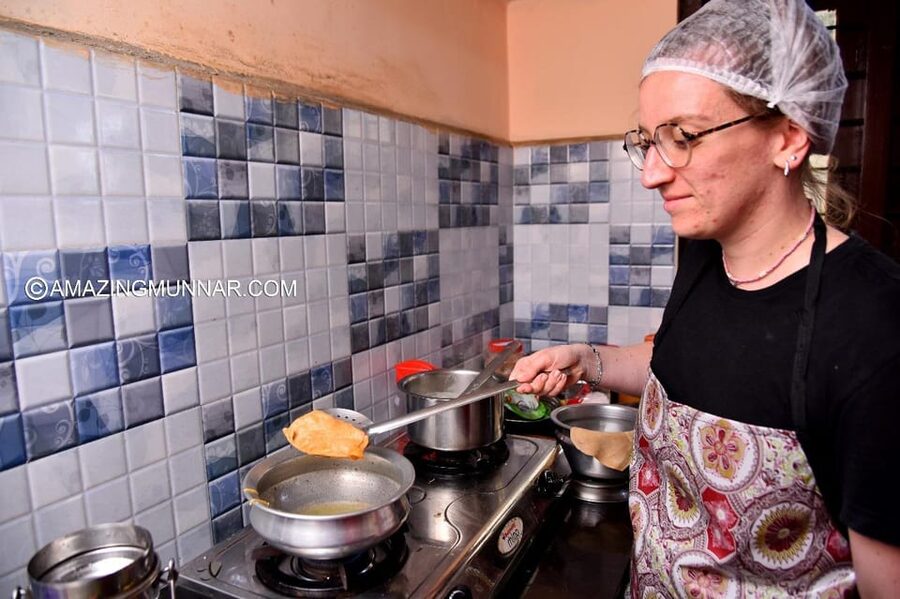
After the demonstration, you take part in the cooking. You may work in small groups, with each group assigned a dish, while the hosts offer help when needed.
This hands-on section makes the class more memorable than simply watching someone else cook. You learn how the ingredients feel, how the preparation is organized, and how several dishes can be managed together.
It is also where the private-group format helps. You are not competing for a place at a crowded counter. You can ask for help and receive guidance suited to your level. The class is still hosted in a real home, so do not expect a polished training kitchen with a separate station for every person.
That home setting is part of the charm, but it can also mean a more informal rhythm. If you need a highly structured class with exact measurements and formal instruction, ask questions early and keep notes as you go.
The final feast: from kitchen work to Kerala meal
Once the cooking is complete, everyone sits down to taste the food. The meal may include the dishes you prepared, snacks, drinks, and dessert, depending on the menu you selected.
This is where the class feels complete. You can compare flavors, textures, and aromas while the recipes are still fresh in your mind. You also see how separate dishes work together as a meal rather than as isolated samples.
The portions and number of courses can make this a substantial meal. If you also plan a large restaurant dinner, keep that in mind. I would schedule this experience as your main meal of the day rather than squeezing it between two other food stops.
The meal is also a chance to discuss what you cooked. Ask the hosts which dishes are common at home, which ingredients can be substituted, and how the recipes change from one part of Kerala to another. The class encourages this question-and-answer style, and the conversation is one of its best features.
How the $21 price holds up
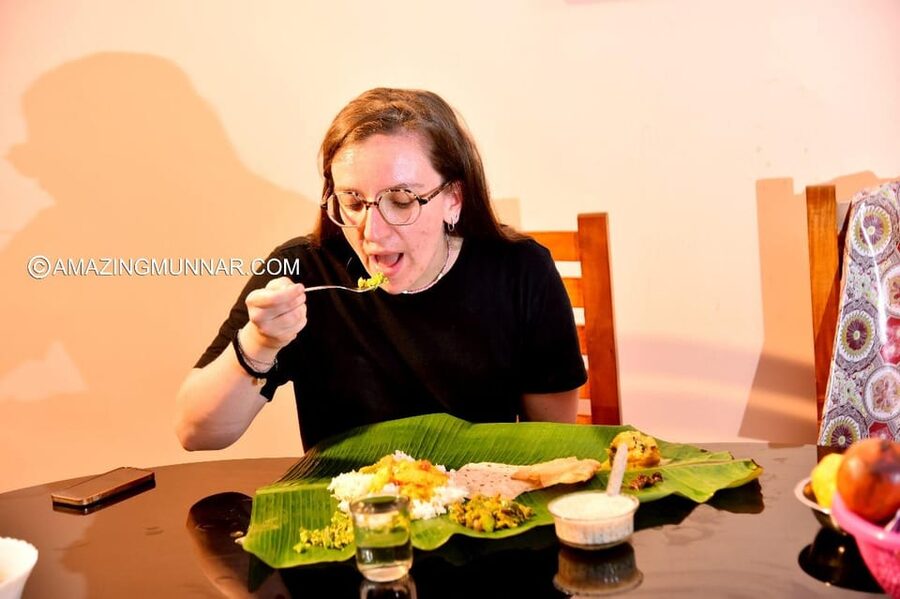
At $21 per person, this is strong value if you make use of the full experience. The price includes the lecture and demonstration, hands-on cooking, meal, snacks, bottled water, the market visit, travel guidance, and the basic kitchen equipment.
The value comes from the combination, not just the food. A meal alone might be cheaper, but it would not include the market visit, instruction, recipes, family setting, or the chance to prepare several dishes yourself.
The price does not include hotel pickup and drop-off outside the free two-kilometre area around Munnar town. The activity information says pickup and drop-off are free within that radius, while hotels farther away require an additional charge. Confirm the exact meeting point and transport price in advance. One session became confusing because the agreed pickup location did not match where the group ultimately met.
Booking is flexible: you can reserve now and pay later, and cancellation is free up to 24 hours before the activity for a full refund. The class is a private group, which makes the $21 price even more attractive for people who prefer a personal setting.
Timing, transport, and practical planning
The published duration is four hours, but the cooking can continue for an hour or more depending on the menu. Do not book a tight connection, a fixed sightseeing appointment, or a bus immediately afterward.
Pickup is included only within two kilometres of Munnar town. If your hotel is farther away, arrange paid pickup in advance rather than assuming it is covered. Raveendra has collected people from hotels in some cases, but the cost and arrangement depend on distance.
You may also hear about add-on activities such as tea trekking. A half-day tea plantation trek has been combined with the cooking experience, and Raveendra has provided advice about tea plantations and spice gardens. Treat those as separate arrangements unless they are clearly included in your booking.
The activity is listed as wheelchair accessible. At the same time, it is marked as not suitable for people with visual or hearing impairments. If you have specific access needs, confirm the kitchen layout, transport, and communication arrangements before paying.
Pets, alcohol, drugs, fireworks, explosives, alcoholic drinks in the vehicle, and nudity are not allowed. These rules are straightforward and fit the family-home setting.
Who will enjoy this class most
I would recommend this experience to you if you:
- Want a personal introduction to Kerala food
- Prefer a local home to a formal cooking school
- Enjoy markets, conversation, and hands-on tasks
- Want a vegetarian menu with several vegetable dishes
- Like learning recipes as part of a wider cultural experience
- Have enough time for a flexible four-hour session that may run longer
It is less suitable if you want a quick activity, a fixed end time, or a polished restaurant-style kitchen. It may also be difficult if you need visual or hearing support, since the activity is specifically marked as unsuitable for those needs.
The class suits couples, families, and small private groups. It also works for solo visitors, since the hosts can guide you through the process rather than leaving you to observe from the side.
Should you book the Munnar village cooking class?
Yes, if your idea of a good food experience includes people, place, and practical cooking. The strongest reasons to book are the family-home setting, the market visit, the flexible menu, and the generous number of dishes for $21.
Before booking, confirm your menu at least 12 hours ahead, state any vegetarian or dietary preference, and settle the pickup point and extra transport cost. Leave an extra hour or more in your schedule.
Book this class if you want to understand how Kerala food is made at home, not just eat it in a restaurant. Skip it only if you dislike informal settings, need strict timing, or want a short demonstration with no hands-on work.
FAQ
How long does the Kerala cooking class last?
The stated duration is four hours, but the activity may extend by one hour or more depending on the dishes prepared.
What dishes can I learn to cook?
Possible dishes include appam and stew, fish curry, avial, puttu and kadala curry, along with other vegetarian dishes, non-vegetarian dishes, snacks, welcome drinks, and dessert.
When should I confirm my menu?
You should finalize the menu at least 12 hours before the class begins.
Is hotel pickup included?
Free pickup and drop-off are available within a two-kilometre radius of Munnar town. Pickup from hotels farther away requires an additional charge.
What is included in the price?
The price includes the lecture and demonstration, meal and snacks, a water bottle, market visit, travel guidance, a knife, apron, cutting board, pen, and paper.
What languages are spoken during the class?
Instruction is available in English, Tamil, and Malayalam.
Can I cancel the booking?
You can cancel up to 24 hours in advance for a full refund. You can also reserve now and pay later.
Just added around India
- Private tour to learn Traditional Indian Art, craft & Cooking★ 5.0 · 4 reviews
- Chennai Super Market Tour and Cooking Class with a Fun Local★ 5.0 · 9 reviews
- Neighborhood Market Tour & South Indian Cooking Class in Chennai★ 5.0 · 7 reviews
- Traditional Chettinad Cooking Class in a Local Home near Chennai★ 4.5 · 12 reviews
- Chennai Dosa Making Class & Home-Dining Experience with Jyashree★ 5.0 · 8 reviews
- Cooking experience in Bangalore, a half day tour★ 5.0 · 5 reviews
- Discover Bangalore’s Cuisine: Private Half-Day Cooking Experience★ 5.0 · 3 reviews
- Traditional Gowda Cooking Class and Meal in a Bangalore Home★ 5.0 · 31 reviews
Farm & Countryside Cooking Classes, compared.

Half-Day Thai Cooking Class at Organic Farm in Chiang Mai
Read our review →
Cooking Class and Lunch at a Tuscan Farmhouse with Local Market Tour from Florence
Read our review →
Authentic Cooking Class with Market & Farm Visit
Read our review →

Hands-On Cooking Class & Farmhouse Tour on the Amalfi Coast
Read our review →Lists this class appears in