
REVIEW · CHIANG MAI, THAILAND
6-Hour Akha Tribe Culture and Cooking Class in Chiang Mai
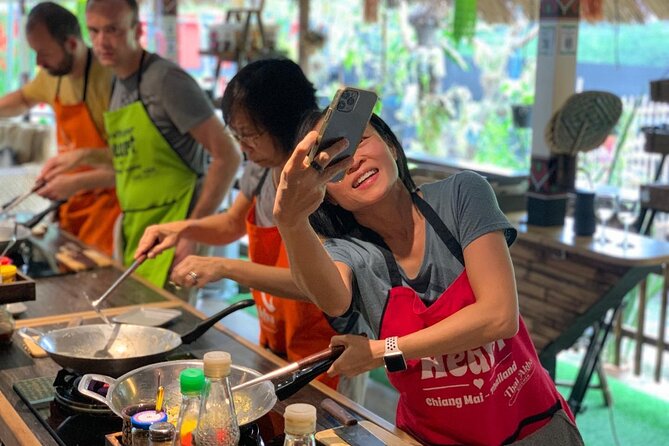
Come hungry, leave with recipes. This six-hour Chiang Mai experience combines a local market visit, Thai cooking, and an introduction to Akha traditions in one practical half-day outing. I like the chance to see ordinary market shopping in the morning, and I like that the class goes beyond familiar Pad Thai by including Akha dishes such as Sapi Thong, Akha salad, and Akha soup.
The menu is generous, with up to 10 dishes prepared and eaten during the session. That is excellent value for $48.83 per person, especially with a recipe book included. The main consideration is the amount of food and time involved: six hours of cooking and eating may feel long if you want only a quick class.
Key points at a glance
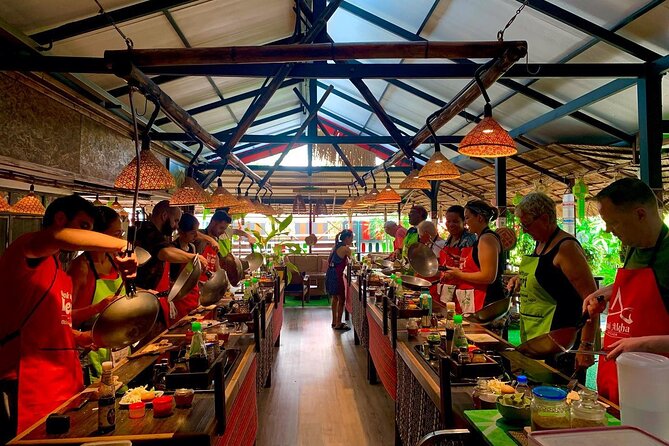
- Morning market visit: Shop for ingredients in a local market and see everyday produce sold at different prices.
- Thai and Akha cooking: Learn dishes from both traditions, including Akha tomato dipping sauce, Akha salad, and Akha soup.
- Ten dishes to prepare and eat: The menu includes appetizers, soups, stir-fries, curries, and desserts.
- Two class times: Choose a morning course with market shopping or an evening course that fits around a full day in Chiang Mai.
- Outdoor kitchen and air-conditioned dining room: Cook in an open setting, then sit down to eat in a cooler indoor room.
- Small maximum group: The class is limited to 15 people, which should allow useful contact with the instructor.
Why this class offers more than a standard Thai cooking lesson
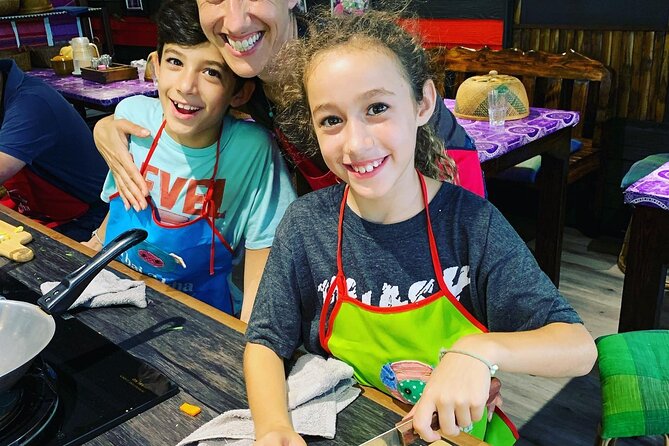
Many cooking classes focus on a few famous dishes and send you home after lunch. This one adds a cultural thread by introducing you to the Akha people, a community that immigrated to Thailand in the 1900s. Food becomes the way into that story.
You are not only chopping vegetables and stirring sauce. You also learn how Thai and Akha food traditions differ, and how food can explain parts of Thailand’s past. That makes the class more useful for anyone who wants context along with a plate of noodles.
I especially like the balance between familiar and less familiar dishes. Pad Thai, green curry, spring rolls, and mango with sticky rice are easy choices for first-time visitors. Akha salad, Sapi Thong, and Akha soup give you something you may not encounter on a typical restaurant menu.
The class is also practical. You prepare the food yourself, eat what comes from your station, and receive a recipe book. You can use that booklet later, which matters more than a souvenir apron that ends up in the back of a cupboard.
A few more cooking classes around Chiang Mai worth a look
- Half-Day Thai Cooking Class at Organic Farm in Chiang Mai
★ 5.0 · 19,087 reviews - Chiang Mai: Cooking Class, Market & Thai Herbs Garden Tour
★ 4.9 · 4,824 reviews - Chiang Mai: Authentic Cooking Class with Market & Farm Visit
★ 4.9 · 4,546 reviews
Choosing between the morning and evening sessions
The morning class is the better pick if you want the full food-shopping experience. You visit a local market and see how people buy produce for everyday meals. The goal is not a polished tourist market prepared for photographs. You see the same ingredients sold at different prices, with no special tourist treatment.
That can be a useful lesson in how local markets work. Thai markets may feel different from Western supermarkets, particularly in the way produce is displayed and priced. You should be ready for an active sensory experience, not a quiet stroll through neatly labeled aisles.
The market visit also gives the class a sensible beginning. You see the raw ingredients before learning what they become in the kitchen. That simple connection helps you understand Thai cooking as a daily practice rather than a list of restaurant dishes.
The evening class works better if you want to keep your daytime schedule open. You can spend the day on another Chiang Mai activity, then arrive for your first home-cooked Thai dinner in Thailand. The outdoor kitchen is said to be cooler in the evening, while the dining room has air-conditioning.
That timing may be especially welcome in Chiang Mai’s warmer months. Cooking over an outdoor setup can be tiring in the heat, so an evening start has a practical advantage. You also avoid having to decide where to eat dinner. Your meal is already part of the class.
The trade-off is clear. The evening course does not include the morning market visit described for the daytime session. Choose the morning option if market life matters most. Choose the evening option if you value cooler temperatures and an easier fit with a busy sightseeing day.
Starting at Wat Pan Whean in Chiang Mai
The listed meeting point is Wat Pan Whean, at 50 Phra Pok Klao Road, Soi 4, in the Phra Sing area of Chiang Mai. The activity ends back at the meeting point.
Pickup is offered, but you should check the exact pickup arrangement when you book. Since the meeting point is also the end point, this is not a one-way excursion to a distant cooking school. The activity keeps its focus on the class and market rather than adding a long drive outside the city.
Confirmation is provided when you book, and the activity is near public transportation. You receive a mobile ticket, which is convenient when you are moving around Chiang Mai with your phone rather than carrying printed paperwork.
The group maximum is 15 people. That is not a private lesson, but it is small enough to give the instructor a workable class size. If the group fills, you should expect a shared cooking environment rather than one-on-one instruction.
The local market: same produce, different prices
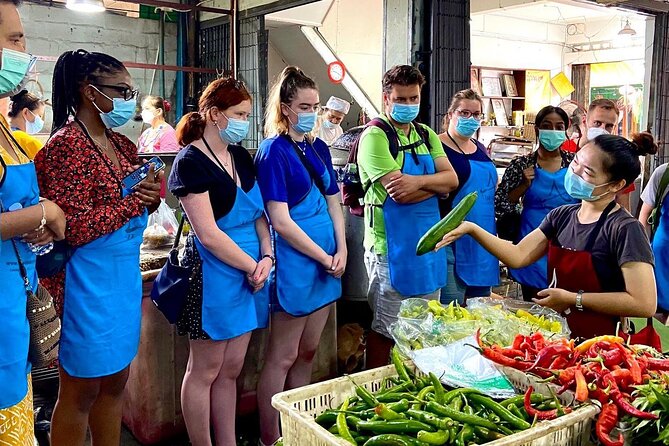
The market visit is one of the most useful parts of the morning program. You see produce at several prices, summed up by the class idea of same same, but different. That detail offers a small window into how shopping decisions work in Thailand.
This is not presented as a special market display created to increase tourist spending. You are treated like a local shopper, which may mean the experience feels less polished and less predictable than a guided food tour designed only for visitors. That is a benefit if you want daily life rather than a staged demonstration.
You may also find the market challenging if you prefer an orderly, quiet setting. Thai markets can be crowded and unfamiliar to people used to Western shops. The supplied information does not promise a food tasting tour or a long guided market lecture, so think of this stop mainly as ingredient shopping and cultural observation.
The class then turns those ingredients into a meal. That link gives the market visit a purpose. You are not looking at produce simply to take pictures. You are seeing the starting point for the dishes you will cook.
Same place, a different thing to cook:
- Thai and Akha Cooking Class in Chiang Mai
★ 5.0 · 4,358 reviews - Chiang Mai: Cooking Class with Market and Pickup
★ 4.9 · 1,365 reviews - Chiang Mai: Cooking Class with Organic Farm at Mama Noi
★ 4.9 · 1,151 reviews - Full Day Thai Cooking at Farm (Chiang Mai)
★ 5.0 · 1,127 reviews
Cooking ten dishes across several Thai food groups
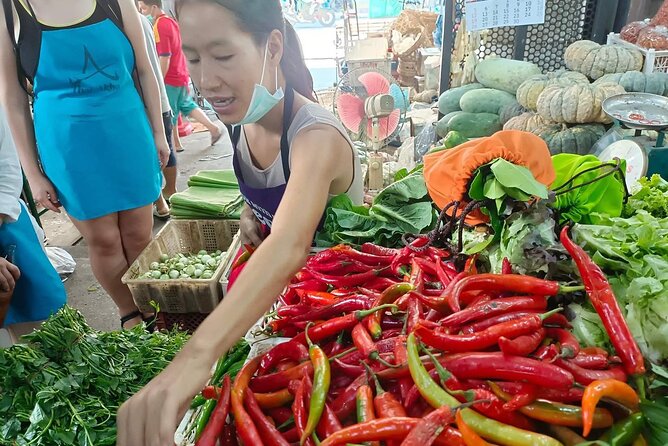
The class promises a large meal, with 10 dishes created and eaten during the session. That is a serious amount of food for one cooking course. One past participant specifically praised the easy recipes and advised arriving hungry, which is sound advice here.
The menu covers several categories:
- Appetizers: Papaya salad and spring rolls
- Akha dishes: Sapi Thong, an Akha tomato dipping sauce, Akha salad, and Akha soup
- Stir-fries: Sweet and sour vegetables, cashew nut with chicken, chicken with hot basil, and Pad Thai
- Soups: Chicken in coconut milk, hot and sour prawn soup, and clear soup with egg tofu
- Curries: Green curry, red curry, Panaeng curry, and Massaman curry
- Desserts: Mango with sticky rice and pumpkin in coconut milk
The full list is much longer than 10 items, so the exact selection may depend on the class format. Do not assume you will prepare every dish listed. The important point is the breadth: you get exposure to salads, dipping sauces, soups, stir-fries, curry pastes, curries, and sweets.
That variety helps explain Thai cooking beyond Pad Thai. You see how sour, salty, sweet, spicy, creamy, and fresh flavors work in different combinations. Even if you are not a confident cook, the recipes are described as easy, and the class is designed around hands-on preparation.
The Akha dishes are the special reason to choose this class over a standard Thai cooking course. Sapi Thong gives you a tomato-based dipping sauce, while Akha salad and Akha soup show a different food tradition alongside well-known Thai recipes. The meal becomes a comparison of two culinary cultures rather than a single national menu.
From curry paste to dessert
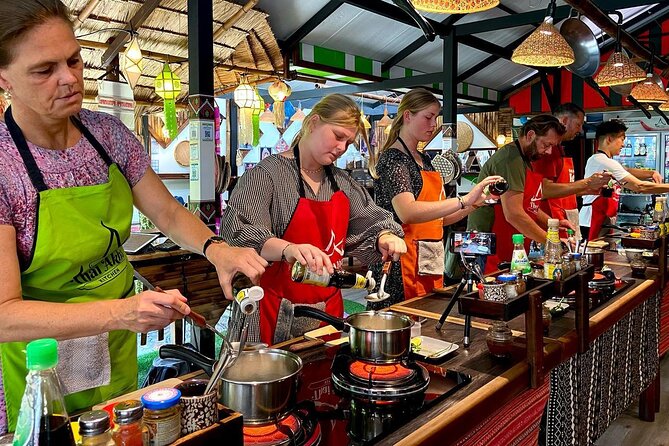
The curry section is another strong part of the class. Green curry, red curry, Panaeng curry, and Massaman curry each have a different balance and character. Learning to prepare curry paste helps you see that curry is not simply a sauce poured over meat or vegetables.
The class also includes practical stir-fry dishes. Cashew nut with chicken, chicken with hot basil, and sweet and sour vegetables are familiar restaurant choices, but making them yourself shows how quickly ingredients come together in a hot pan. Pad Thai gives you a recognizable dish to take home in your cooking memory.
Soups broaden the meal further. Chicken in coconut milk brings a creamy style, hot and sour prawn soup adds sharper flavors, and clear soup with egg tofu offers a lighter option. These dishes are useful for comparison because they show how Thai meals can move from rich and fragrant to clean and mild.
Dessert is not an afterthought. Mango with sticky rice is one of Thailand’s best-known sweets, while pumpkin in coconut milk offers a less predictable finish. Eating dessert after preparing the savory dishes gives the class a proper meal structure, not just a collection of unrelated samples.
What the cooking setup means for comfort
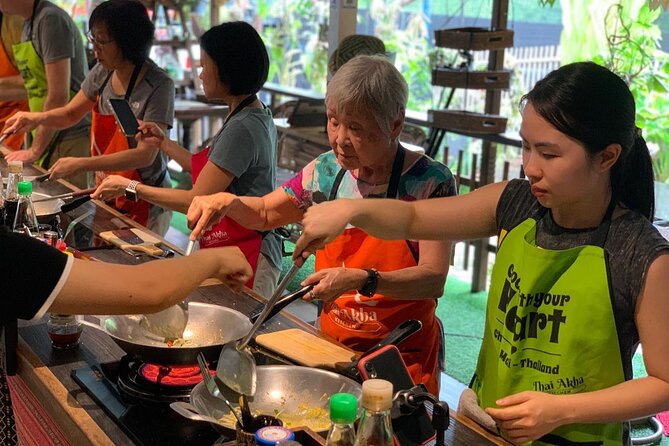
The kitchen is outdoors and has a mix of Thai and Akha cultural elements. That setting should feel more connected to the subject than a generic indoor classroom. You are cooking in an environment designed to reflect the traditions being discussed.
The dining room is air-conditioned, so you can cool down while eating. This division matters. Cooking outdoors may add atmosphere, but it can also make the six-hour session feel warm, especially during the day. If you are sensitive to heat, the evening class is likely the more comfortable choice based on the information provided.
The class is not described as a formal demonstration where you sit back and watch. You should expect to take part in preparing the meal. That is a benefit if you want useful skills, but it requires more energy than a simple food tasting.
A recipe book is included. That small detail adds real value because the dishes are varied and the recipes are described as easy. You can try to repeat the meal later, though the availability of specific ingredients at home will depend on where you live.
Dietary needs and group suitability
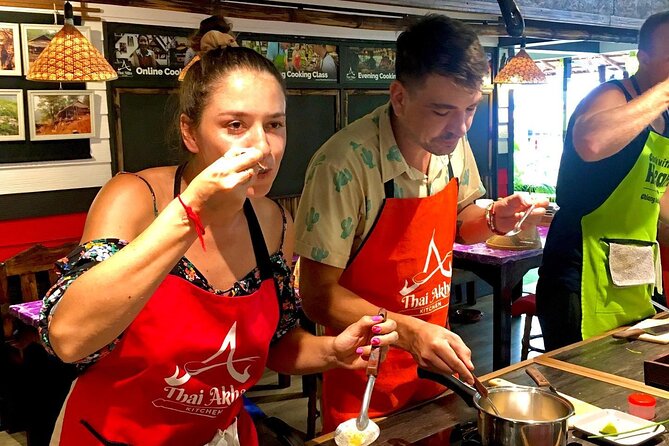
Special dietary requirements can be accommodated, including allergies, gluten intolerance, vegetarian diets, and other dietary needs. You should provide those details when booking rather than waiting until you arrive. The class can only prepare properly if the instructor knows what you need in advance.
The experience suits curious first-time visitors, food-focused couples, families, and anyone who wants a structured introduction to Chiang Mai cuisine. It is also a good choice if you enjoy learning through doing instead of simply listening to a guide.
It may be less suitable if you dislike cooking, cannot comfortably spend six hours around food, or want a short evening meal with little instruction. The large menu is a strength, but it also means the pace may feel full.
The group limit of 15 keeps the experience more manageable than a large commercial class. Still, the supplied details do not promise private workstations or individual attention, so you should expect to share the cooking environment.
Is $48.83 good value?
At $48.83 per person, the price is fair for a six-hour experience that combines market shopping, instruction, a large meal, cultural background, and a recipe book. The value improves if you choose the morning option and want both the market and cooking class in one booking.
The evening session also makes financial sense if it replaces a separate dinner. You receive a cooked meal and an organized activity, rather than paying for a class and then finding a restaurant afterward.
The value depends on how much of the food you eat and how much you care about the Akha content. If you only want to learn one or two famous Thai dishes, a shorter class may be more efficient. If you want a broad menu and a cultural component, this price is easier to justify.
The experience is commonly booked well ahead, with an average booking time of 47 days before the date. That is a useful warning for popular travel periods. If your Chiang Mai dates are fixed, reserve early rather than treating this as a last-minute option.
Booking details and cancellation
Free cancellation is available if you cancel at least 24 hours before the local start time. Changes or cancellations inside that 24-hour window are not accepted for a refund.
The activity requires good weather. If poor weather forces cancellation, you are offered another date, an alternative tour, or a full refund. The provider also notes that extra charges may apply if the booking details do not match reality at arrival, such as a child’s age or the number of people, so enter those details accurately.
Should you book the Akha cooking class?
Book this experience if you want a full food-focused half-day, not just a quick recipe lesson. The strongest reasons are the local market visit, the chance to cook both Thai and Akha dishes, and the unusually broad menu that includes soup, curry, stir-fries, appetizers, and dessert.
I would choose the morning course for the market and the evening course for comfort and scheduling. The evening option is especially practical after a busy day in Chiang Mai, while the morning option gives you the fuller connection between shopping and cooking.
Arrive hungry, tell the provider about dietary needs ahead of time, and keep your schedule open for the full six hours. If you want a class with easy recipes, a recipe book, a real meal, and more cultural context than a typical tourist cooking lesson, this is a strong choice.
FAQ
How long does the Akha culture and cooking class last?
The activity lasts approximately six hours.
How much does the experience cost?
The listed price is $48.83 per person.
Where does the activity start and end?
It starts at Wat Pan Whean, 50 Phra Pok Klao Road, Soi 4, in Chiang Mai, and ends back at the meeting point.
Is pickup available?
Pickup is offered. The listed meeting point is Wat Pan Whean, so confirm the exact pickup details when booking.
Does the morning class include a market visit?
Yes. The morning class includes a visit to a local market to see everyday shopping and source ingredients for the cooking class.
What is different about the evening class?
The evening class fits around a busy daytime schedule, provides a home-cooked dinner, and takes place when the outdoor kitchen is cooler. The dining room has air-conditioning.
How many dishes will I cook?
You will create 10 dishes during the cooking course. The available menu includes appetizers, Akha dishes, soups, stir-fries, curries, and desserts.
Can dietary requirements be accommodated?
Yes. The activity can accommodate allergies, gluten intolerance, vegetarian diets, and other dietary needs. Give the provider this information when booking.
How far in advance can I cancel for a full refund?
You can cancel at least 24 hours before the local start time for a full refund. Cancellations or changes made less than 24 hours before the start are not accepted for a refund.
Just added around Chiang Mai
- Aroidee’s Farm-Fresh Thai Cooking Experience★ 5.0 · 8 reviews
- Signature Thai Cooking Course★ 5.0 · 79 reviews
- Private Half-Day Thai Cooking Class in Chiang Mai★ 5.0 · 4 reviews
- Half Day Guided Thai Cooking Class in Chiang Mai★ 5.0 · 13 reviews
- Online Thai and Akha Cooking Class★ 5.0 · 70 reviews
- Private Virtual Thai Cooking Class★ 5.0 · 9 reviews
- Northern Thai Cooking Class in Chiang Mai in a Countryside Home★ 5.0 · 2 reviews
- 5 Hour Morning Thai Cooking Course★ 5.0 · 31 reviews
Cooking Classes, compared.

Half-Day Thai Cooking Class at Organic Farm in Chiang Mai
Read our review →

3 in 1 Cooking Class near Navona: Fettuccine, Ravioli & Tiramisu
Read our review →
Pasta & Tiramisu Cooking Class with Unlimited Wine
Read our review →
Hanoi Cooking Class: Culture, Local Market & Meaning CSR Impact
Read our review →
5 Traditional Dishes Hanoi Cooking Class with Market Trip
Read our review →
Cooking Class and Lunch at a Tuscan Farmhouse with Local Market Tour from Florence
Read our review →
Cooking Class, Market & Thai Herbs Garden Tour
Read our review →Lists this class appears in