
REVIEW · PHUKET, THAILAND
Thai Cooking Class in Phuket
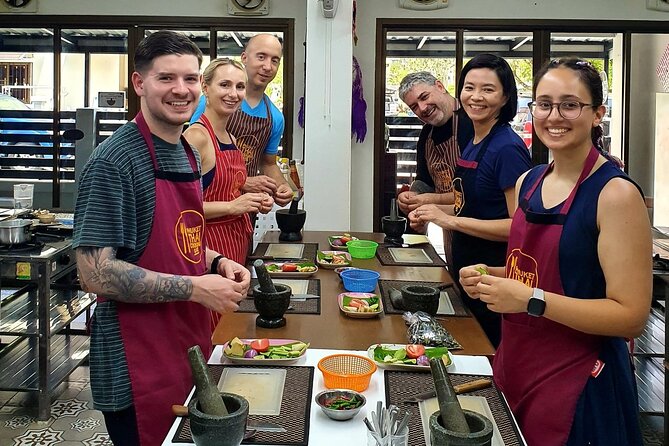
Fresh curry begins with a mortar. This Phuket cooking class takes you from Mae Somchit Kata Fresh Market to a clean kitchen, where you prepare a full Thai meal rather than simply watch a chef. I like the market visit with fruit tasting, and I like that each person gets a cooking station and makes curry paste from scratch. The one concern is transport, since a pickup was reported as 30 minutes late.
You’ll cook, eat, and take home recipes for dishes such as tom yum soup, noodles, curry, and mango sticky rice. English-speaking chefs explain ingredients clearly and suggest substitutes for items you may not find at home. At about three hours and $65.22 per person, this is a solid value if you want lunch plus a useful food lesson, though it may feel busy for anyone hoping for a slow, small-group class.
Key points to know before booking
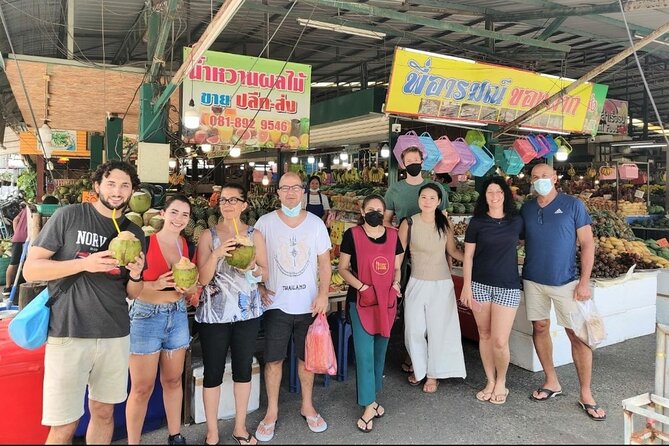
- Start at Mae Somchit Kata Fresh Market: Classes with the market option begin by looking at local produce, seafood, poultry, fruit, and Thai cooking ingredients.
- Make curry paste by hand: You use a mortar and pestle, with no MSG and no ready-made curry paste.
- Cook at your own station: You chop and cook the food yourself while the chef gives step-by-step guidance.
- Eat the meal you prepare: Lunch includes the dishes made by your group, with leftovers available to take away.
- Transfers cover key beach areas: Round-trip pickup is available from Kata, Kata Noi, Karon, Rawai, Patong, and Nai Harn, with conditions for some locations.
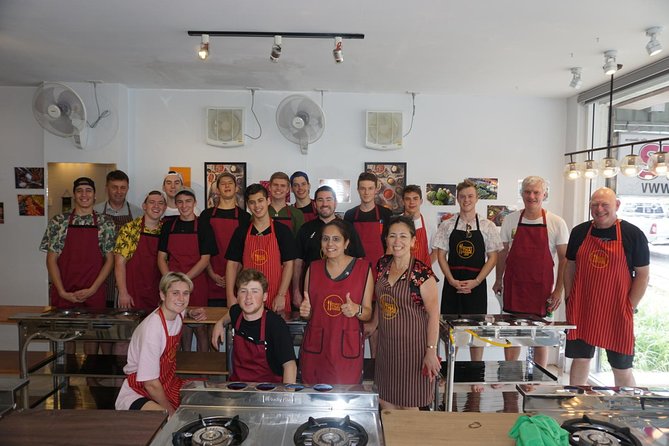
- Class size can reach 20 people: That is manageable for a practical lesson, but it is not a private cooking session.
Why this Phuket cooking class is worth your time
Thai food is easy to eat and harder to recreate. A bowl of tom yum or a plate of noodles can look simple, but the flavor depends on fresh ingredients, the right balance of sour, salty, sweet, and spicy notes, and the order in which everything goes into the pan.
This class gives you a useful look at those decisions. You are not placed at a table to watch someone else cook. You chop, pound, stir, and prepare the food yourself. That makes the lesson more useful once you are back home with a supermarket shelf instead of a Thai market nearby.
The cooking class lasts about three hours. That is enough time to visit the market when that option is included, learn about the ingredients, prepare several dishes, and sit down for lunch. You should arrive hungry. One especially practical tip is not to eat beforehand, since the meal can be generous.
The class is run by Phuket Thai Cooking Class by Chef VJ. The instructors speak English very fluently, so you can ask about unfamiliar ingredients, cooking methods, and substitutions without relying on guesswork. VJ is also named in the class feedback, with individual participants describing a friendly and educational morning with him.
More Thai Cooking Classes in Phuket:
- Phuket Thai Cooking Class with Market Tour Option
★ 5.0 · 2,665 reviews - Hands-on Thai Cooking Class Phuket with Market Tour Option!
★ 5.0 · 808 reviews - Phuket: Half Day Easy Thai Cooking Class & Local Market Tour
★ 4.9 · 725 reviews
Starting at Mae Somchit Kata Fresh Market
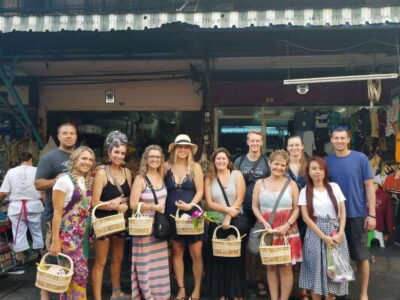
The market visit is an important part of the class. It gives you a chance to see Thai ingredients before they are cleaned, chopped, and placed in cooking bowls. You may learn what certain herbs, vegetables, seafood, poultry, fruit, and curry ingredients look like in their original setting.
This matters because many Thai recipes use ingredients that can be confusing outside Thailand. A recipe may call for a particular type of chili, basil, eggplant, or curry component, but a Western supermarket may offer several possible replacements. The market walk helps connect the name, appearance, and use of each ingredient.
Fruit tasting adds a lighter part to the visit. It is a good way to break up the ingredient lesson and notice the difference between familiar fruit and varieties that may be less common at home. The market is also more useful than a generic sightseeing stop because everything you see relates directly to the meal ahead.
The market portion is not included in every version of the class. For sessions without the market tour, the ingredients are brought into the cooking class and explained there. That version still gives you the food lesson, but you miss the chance to see how the ingredients are sold locally.
If the market option matters to you, confirm that you are selecting the class with the market tour when booking. The stated itinerary lists Mae Somchit Kata Fresh Market as the stop, while the meeting point is on Patak Road in Karon.
Meeting the ingredients before the cooking begins
After the market or ingredient introduction, the chef explains the role of the Thai foods used in the class. This is where the session becomes more than a recipe demonstration.
You can ask why one ingredient is used instead of another, what to do if a product is unavailable, and how to adjust the recipe at home. The substitution advice is one of the most useful parts for home cooks. You may not find every Thai ingredient in your local shop, but you can still learn which replacements will preserve the main flavor.
The chefs also explain the cooking instructions step by step. That approach suits beginners, and it helps if you are cooking with children or teenagers who need clear tasks. One family group particularly enjoyed the class because the teenagers could take part in each stage rather than simply sit and watch.
The kitchen is described as clean, and everyone has an individual cooking station. That arrangement matters. You can follow the process with your own ingredients and equipment instead of standing behind another person or waiting for a turn with one shared chopping board.
A class of up to 20 people is not intimate. Still, separate stations make the group size more workable. If you want a private lesson with constant one-to-one attention, this is probably not the right format. If you want a social class with enough structure to keep things moving, the setup should suit you.
Making curry paste with a mortar and pestle
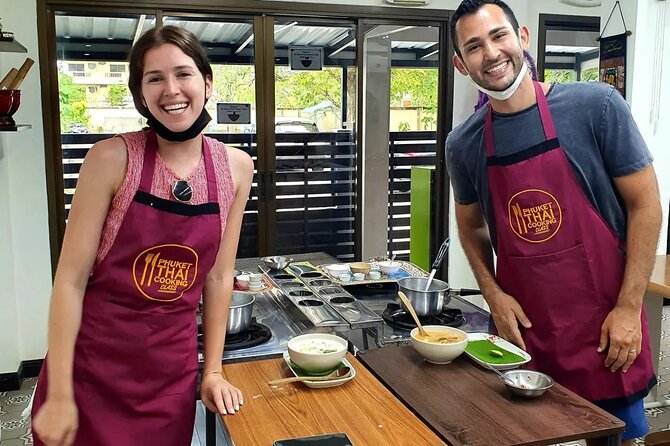
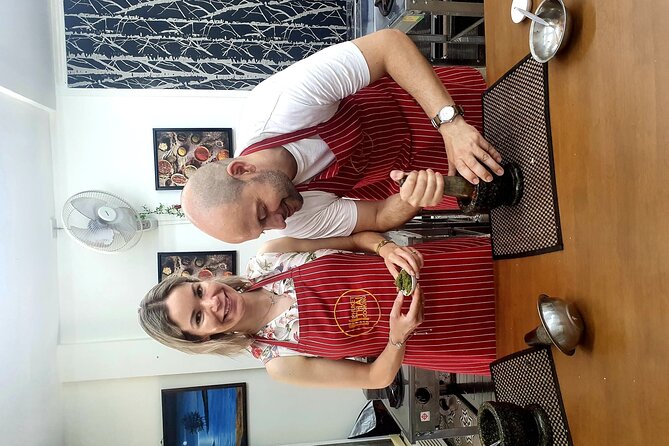
The most hands-on part of the class is making curry paste from scratch. You use a traditional mortar and pestle rather than opening a packet or buying a prepared paste from the market.
This takes more effort, but that is exactly the point. Pounding the ingredients helps you understand the texture, smell, and strength of the paste. It also shows why homemade curry can taste different from a quick version made with a jarred product.
The class does not use MSG or ready-made curry paste for this step. That does not mean the lesson is anti-convenience. Instead, it gives you the traditional method first, then helps you understand how Thai flavor is built.
You can ask questions while you work. If the paste takes longer than expected, that is part of the lesson, not a problem to hide. The mortar and pestle connect the finished curry to the ingredients in a way a quick demonstration cannot.
A few more cooking classes around Phuket worth a look
- Phuket: Elephant Sanctuary Tour, Cooking Class & Lunch
★ 4.9 · 856 reviews - Thai Cooking Class with Market & Garden Tour
★ 4.9 · 249 reviews - Half day Thai cooking Class + Market tour+Garden tour
★ 5.0 · 237 reviews - Thai Cooking Class in Phuket
★ 5.0 · 234 reviews
Cooking your own Thai lunch
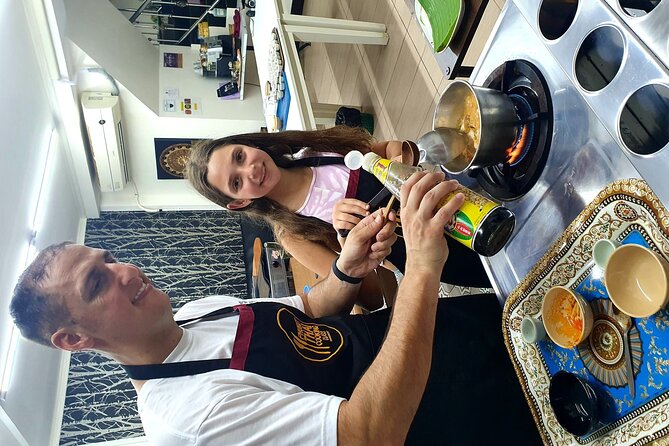
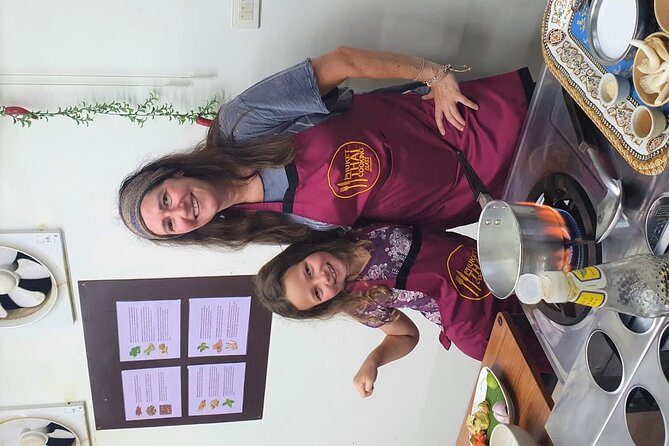
Once the ingredients are prepared, you chop and cook the food yourself. The exact menu can vary, but the food made in the class has included tom yum soup, noodles, curry, and mango sticky rice.
That combination gives you a useful range of Thai cooking techniques. Tom yum introduces the balance of hot, sour, and aromatic flavors. Noodles show how a quick dish comes together. Curry makes use of the homemade paste, while mango sticky rice gives the meal a sweet finish.
You then sit down to eat the lunch prepared by your group. This is a strong feature of the class because the meal is not an afterthought. You get to taste the results while the methods and ingredient names are still fresh in your mind.
Portions may be substantial. If you cannot finish, you can take the rest with you. That is especially helpful after a morning of cooking, when you may want to sample everything but discover that four dishes make a serious lunch.
Tea, ground coffee, and unlimited bottled water are available throughout the course. A welcome drink is also included. These are small details, but they make the three-hour session more comfortable, especially in Phuket’s warm conditions.
What makes the instruction useful at home
A good cooking class should leave you with more than a pleasant meal. This one sends recipes after the class, giving you a way to repeat the dishes once your holiday is over.
The recipe follow-up is useful because Thai cooking can involve unfamiliar measurements and ingredients. You may remember the broad idea of a curry, but the written recipe helps you rebuild the dish with less guesswork.
The ingredient substitution advice adds even more value. The chef can explain what to use when a key item is unavailable at home. That helps you avoid abandoning the recipe simply because you cannot find the exact Thai product.
I also like that the class includes introductions to all the Thai ingredients used. You are not expected to memorize every name during a busy cooking session. You can focus on the food, then use the recipes and your notes later.
The instruction is aimed at practical cooking, not a formal culinary qualification. You should expect clear guidance, hands-on preparation, and plenty of questions, rather than advanced professional techniques.
Transfers, meeting point, and timing
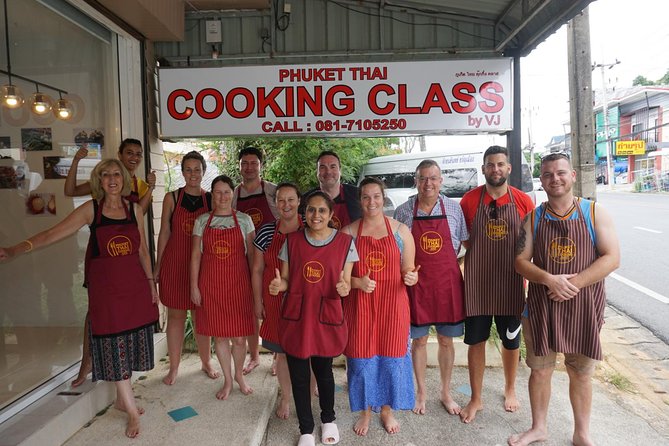
The activity begins at Phuket Thai Cooking Class by Chef VJ, at 31 Patak Road in Karon, and ends back at the meeting point. The location is near public transportation.
Free round-trip transfers are available from Kata, Kata Noi, and Karon. Pickup is also listed for Patong, Rawai, and Nai Harn, with a minimum of two people for some of those areas. For Kamala Beach and Surin Beach, the meeting point is Hard Rock Cafe Patong, also with a minimum of two people.
Check your pickup details carefully before the class. The transport arrangement is helpful, especially if you are staying in one of the listed beach areas, but it is not a reason to assume every Phuket hotel has door-to-door service.
Allow a little patience for the transfer. A 30-minute delay was reported, so you should avoid booking another fixed activity immediately afterward. The class itself is about three hours, but transport can add time at either end.
The activity accepts mobile tickets, and confirmation is provided at booking. Free cancellation is available if you cancel at least 24 hours before the local start time. Changes or cancellations inside that window are not refunded.
Is $65.22 a fair price?
At $65.22 per person, the price is reasonable if you use the full program. You are paying for a market visit when selected, instruction, ingredients, your meal, drinks, recipes, and the chance to cook several dishes at your own station.
A restaurant lunch alone would cost less in some parts of Phuket, but it would not teach you how to make the food. A cooking class also gives you a practical souvenir: recipes and the confidence to try the dishes again.
The value is strongest for people who enjoy active experiences. If you only want a quick meal, the price may seem high. If you want lunch, a market lesson, a cultural explanation, and a skill you can use later, the cost is easier to justify.
The group limit of 20 is worth factoring into your decision. You receive an organized class rather than a private chef session. That keeps the price more accessible, but it can also mean less personal attention during the busiest moments.
Who should book this class?
I would recommend it to first-time visitors who want a direct connection to Thai food. It also suits couples, families, solo participants, and teenagers who like doing something rather than sitting through a talk.
Solo participants are welcome. The class format makes it easier to take part without needing your own group, and the individual stations give you a clear role from the beginning.
Families should find the hands-on structure appealing, especially if older children or teenagers can chop, pound, and cook under instruction. The meal gives everyone a shared reward at the end.
You should think twice if you dislike strong flavors, group activities, or practical kitchen work. This is not a passive tasting. You will be involved from ingredient preparation through lunch, and the class may be too active for anyone looking for a quiet half-day.
Should you book the Phuket Thai Cooking Class?
Book it if you want to learn by doing. The strongest reasons are the fresh-market connection, the homemade curry paste, individual cooking stations, clear English instruction, and recipes sent afterward.
Choose the market option if seeing the ingredients at Mae Somchit Kata Fresh Market is important to you. Plan for a filling lunch, allow extra time in case of transport delays, and confirm your pickup area and class type before paying.
For $65.22, this is a useful Phuket activity rather than just another meal. It gives you food to eat, skills to repeat, and a better understanding of what is on the plate.
FAQ
How long does the Thai cooking class in Phuket last?
The class lasts approximately three hours, including the cooking activities and meal.
What dishes might I cook?
The dishes can include tom yum soup, noodles, curry, and mango sticky rice. The exact menu may vary.
Is a market tour included?
A market tour and fruit tasting are included with classes that offer the market option. Classes without the market tour bring the ingredients to the class and explain them there.
Where does the class start and finish?
The class starts at Phuket Thai Cooking Class by Chef VJ, 31 Patak Road, Karon. The activity ends back at the meeting point.
Is transportation provided?
Free round-trip transportation is available from Kata, Kata Noi, Karon, Patong, Rawai, and Nai Harn, subject to the stated minimum requirements. For Kamala Beach and Surin Beach, the meeting point is Hard Rock Cafe Patong, with a minimum of two people.
Do I cook the food myself?
Yes. You receive your own cooking station and chop and cook the food yourself with step-by-step instruction from the chef.
Can I cancel for a refund?
You can cancel at least 24 hours before the experience start time for a full refund. Cancellations or changes made less than 24 hours before the start time are not refunded.
Just added around Phuket
- Phuket: Thai Cooking Class with 4 Dishes and Market Visit★ 5.0 · 16 reviews
- Phuket: Authentic Thai Cooking Class★ 4.8 · 145 reviews
- Phuket: Half Day Thai Cooking Experience with Market Tour★ 5.0 · 11 reviews
- Phuket – Blue Elephant Thai Cooking Class with Market Tour★ 5.0 · 11 reviews
- Dinner from cooking class & enjoy local night market★ 5.0 · 2 reviews
- Half day Thai cooking Class + Market tour+Garden tour★ 5.0 · 237 reviews
- Thai Cooking Class in Phuket★ 5.0 · 234 reviews
- Thai Cooking Class with Market & Garden Tour★ 4.9 · 249 reviews
Thai Cooking Classes, compared.
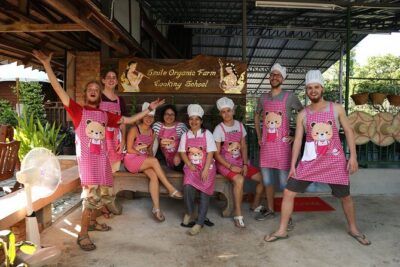
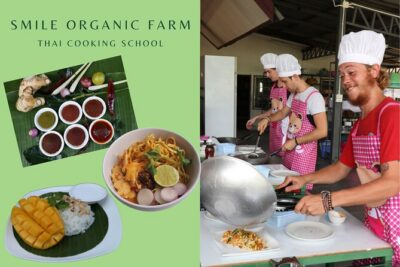
Half-Day Thai Cooking Class at Organic Farm in Chiang Mai
Read our review →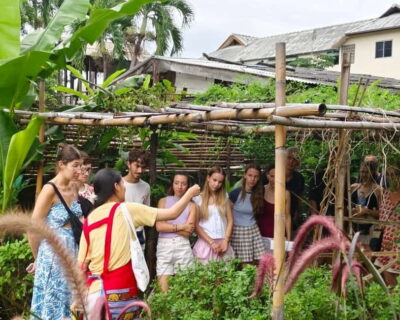
Cooking Class, Market & Thai Herbs Garden Tour
Read our review →
Phuket Thai Cooking Class with Market Tour Option
Read our review →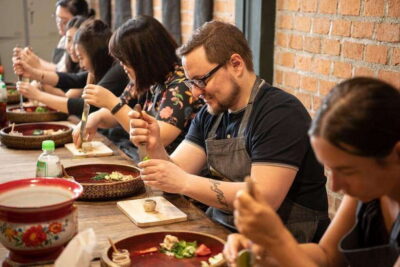
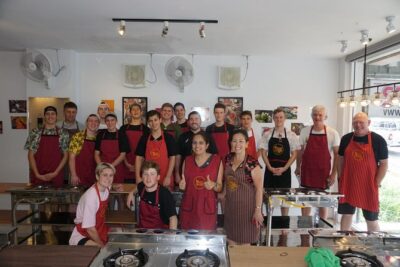
Tingly Thai Cooking School Half-Day Cooking Class
Read our review →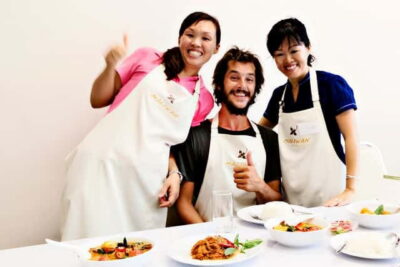
Lists this class appears in