
REVIEW · TARANTO, ITALY
Puglia Cooking class “Le orecchiette, che pasta!”
Pasta tastes better when you make it yourself. This four-and-a-half-hour cooking class in a countryside trullo home gives you hands-on practice with orecchiette, Puglia’s ear-shaped pasta, plus a generous meal of local food and wine. I especially like the relaxed home setting and Simona Ciccarese’s personal way of linking pasta, family customs, and Puglian history. The main thing to consider is the pace: this is a long social meal and cooking session, not a quick pasta lesson.
You will make fresh pasta, prepare sauces, help with other dishes, and sit down to eat what you have cooked. I also like that the class welcomes children and can accommodate vegetarian, vegan, pescatarian, celiac, and lactose-intolerant diners when you give notice. Group size can reach 15, and some sessions have run longer than the advertised four and a half hours, so plan this as a half-day commitment.
Key points before you book
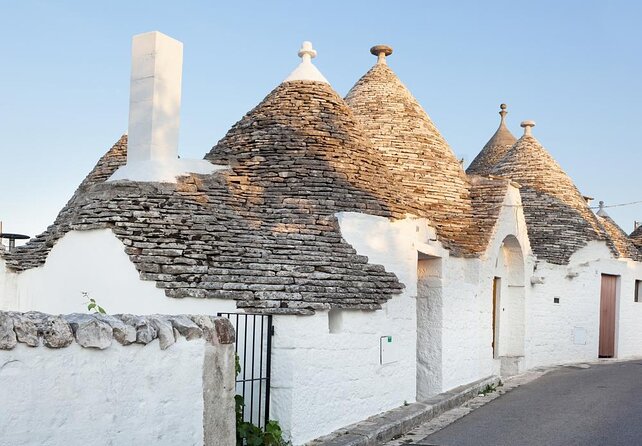
- A real trullo setting: The class takes place at Simona’s country home, with a short tour of the distinctive conical-roofed building.
- More than orecchiette: You may work with several pasta shapes, sauces, seasonal vegetables, and a meat dish.
- A full meal is included: Expect an appetizer, pasta, a second course, fruit, coffee or tea, local wine, and water.
- Simona is central to the experience: Her storytelling covers pasta, food customs, Puglia, and the trulli themselves.
- Outdoor cooking is part of the charm: The class usually uses a patio or garden-side area, with an indoor kitchen available in bad weather.
- Plan your route carefully: The meeting point is near Ceglie Messapica, not in central Taranto, Alberobello, or Ostuni.
Arriving at the trullo near Ceglie Messapica
The cooking class is based at Nord Salento Tour, at Via Padula del Cimitero in Ceglie Messapica, with GPS coordinates 40.654339, 17.503607. The activity begins and ends at this meeting point, and you can park at the property.
This matters because the experience is associated with Taranto and the wider Itria Valley, but the practical meeting point is in the countryside near Ceglie Messapica. If you are staying in Alberobello, Ostuni, Brindisi, or Lecce, check your driving time carefully. Hotel pickup and drop-off are not included.
One useful arrival tip is to follow the main road into the gated area marked for Nord Salento Tour. A navigation app may try to send you left between two houses and down a gravel road, which is not the right approach. This is the sort of small detail that can save you a frustrating start.
The dress code is smart casual, but comfort matters more than fashion. You will be working with dough, sitting down to eat, and possibly spending much of the class outdoors.
More Pasta Making Classes in Italy:
- Florence: Pasta Cooking Class with Unlimited Wine
★ 4.9 · 10,285 reviews - 3 in 1 Cooking Class near Navona: Fettuccine, Ravioli & Tiramisu
★ 5.0 · 7,376 reviews - Florence: Pasta & Tiramisu Cooking Class with Unlimited Wine
★ 4.9 · 6,708 reviews
The trullo tour and the story behind the house
Before or during the cooking session, Simona gives you a short tour of the trullo where she lives. These traditional Puglian buildings are instantly recognizable by their round stone walls and pointed roofs made from layered slabs.
The building tour adds useful context. You are not simply cooking in a rented studio with a rustic design. You are being welcomed into a home tied to the local building tradition. That personal setting helps explain why this class feels closer to a family meal than a formal culinary school.
The trullo tour is not a full architectural lecture, and it should not be treated as a substitute for visiting Alberobello, the best-known center of trulli. Still, it gives you a more domestic view of the style. You see how the building functions as a home, not just as a postcard subject.
The setting is also a good fit for families. Children are welcome, and the pasta shaping gives younger cooks something practical to do with their hands. Simona has been praised for patiently helping children and beginners get their dough to the right texture.
Turning semolina dough into orecchiette
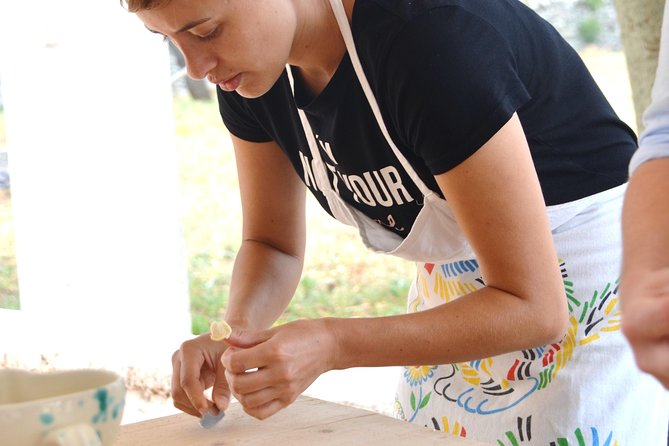
The heart of the class is learning how to make orecchiette. The name means little ears, and the pasta gets its familiar shape from a simple movement of dragging and turning a small piece of dough with a knife or fingertip.
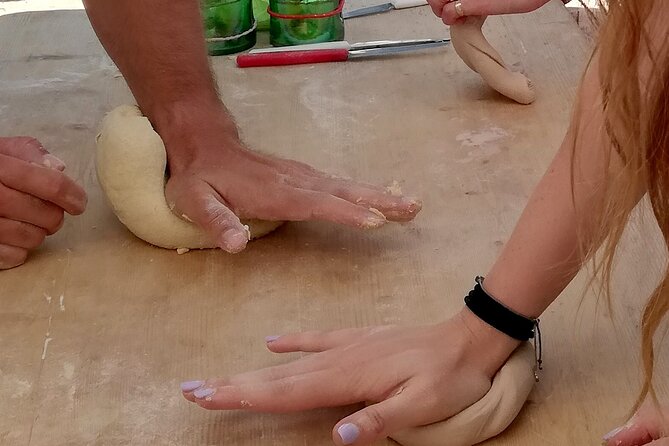
You will receive the equipment and ingredients needed for the class. The teaching goes beyond making one type of pasta. Depending on the day and season, you may shape several kinds of pasta and use natural colors to create different shades and forms.
One especially playful version of the class has involved making a rainbow of noodles with natural coloring, then using all the pasta in the meal. That kind of activity works well for mixed-age groups because it gives everyone a chance to experiment, rather than forcing the whole class to produce identical pieces.
Do not worry if your first orecchiette looks more like a tiny shell or a misshapen coin. The point is to learn the movement, the dough texture, and the reason the shape works with a particular sauce. Simona’s teaching also covers how pasta shapes differ between Italian regions and why certain sauces suit certain forms.
The pasta lesson is hands-on, but this is not a class where you prepare every single part of the meal from scratch without help. Simona and her assistants handle some of the cooking and preparation. One less enthusiastic assessment found that the pasta shaping received more attention than the other cooking tasks. If you want a technical chef-training session, you may find the format light. If you want to learn a useful pasta skill while enjoying a long meal, it fits well.
From frisa to brasciole: what you may eat
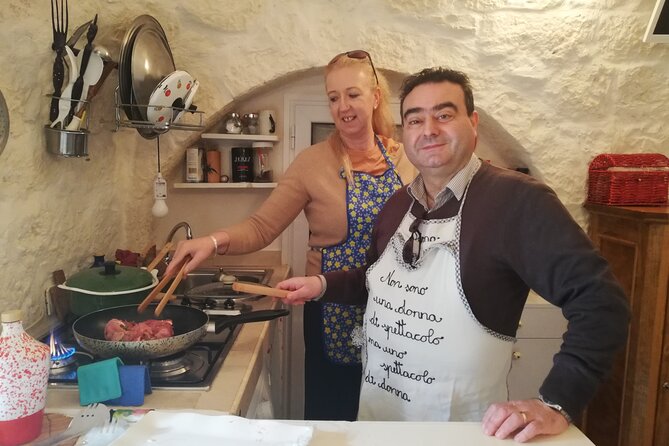
The meal is built around seasonal Puglian ingredients. A typical sequence includes an appetizer, orecchiette with sauce, a meat or vegetable second course, seasonal vegetables, fruit, and coffee or tea.
The opening dish may be frisa, a twice-baked ring of bread softened with water and topped with local ingredients. It is simple, sturdy food with a long history in southern Italy. You may also encounter acqua sala, another traditional bread-based preparation.
The pasta course features your orecchiette. Plain tomato sauce is always available as an alternative, which is helpful for children and anyone who prefers familiar flavors. Depending on the season, the sauce may include brasciole, rolled meat cooked in sauce, or cime di rapa, the leafy vegetable often paired with orecchiette in Puglia.
The second course centers on meat and seasonal vegetables, though plant-based diners receive suitable alternatives when requested. The exact menu changes with the time of year. That is a strength, since the meal reflects what is available rather than pretending that Puglia serves one fixed menu all year.
You might also be offered homemade or locally produced extras such as olive oil, sun-dried tomatoes, almonds, figs, pickled onions, jam pastries, cucumbers, zucchini, or chili sauce. These items can vary, so think of them as part of the house table rather than guaranteed menu courses.
The food is accompanied by local red wine such as Negroamaro, Salice, or Primitivo, along with bottled water. Coffee and tea are included. Non-drinkers and younger diners can still take part fully, since the food and social setting are the focus.
A few more cooking classes around Italy worth a look
- Cooking Class and Lunch at a Tuscan Farmhouse with Local Market Tour from Florence
★ 5.0 · 4,831 reviews - Rome Cooking Class: Make Pasta and 3 Spritz Cocktails
★ 5.0 · 2,937 reviews - Rome: 3-in-1 Fettuccine, Ravioli, and Tiramisu Cooking Class
★ 4.9 · 2,704 reviews - Rome: Fettuccine Pasta Cooking Class in Rome’s City Center
★ 4.8 · 2,414 reviews
Lunch, dinner, and the long-table rhythm
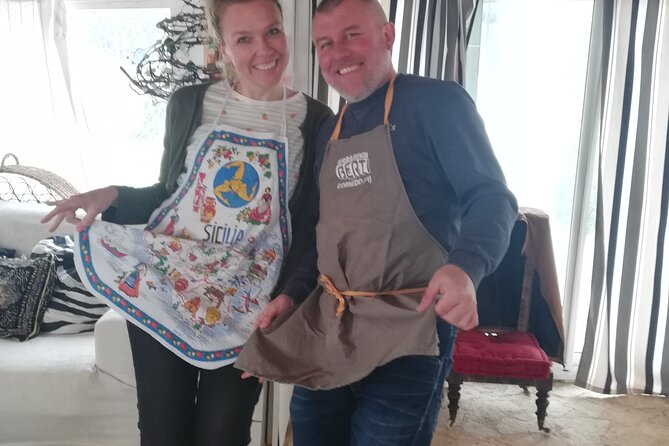
The class is offered on different days and at different times. Wednesday and Saturday sessions begin at 10:00 in the morning and include lunch. Monday sessions begin at 16:30 and include dinner.
The advertised duration is about four and a half hours, including the meal. In practice, allow more time if the group is enjoying conversation, extra dishes, music, or the property tour. Some sessions have lasted five and a half to six hours.
That longer rhythm is part of the appeal. You are not rushed from one station to the next. There is time to chat with people from other countries, taste local products, and let the meal unfold. At some sessions, the atmosphere has included dancing and plenty of laughter.
It can also be tiring if you have evening plans or a tight sightseeing schedule. I would not pair this with a timed museum visit immediately afterward. Treat it as your main activity for the day.
The patio and garden-side cooking area are a major part of the experience. In warm weather, the open-air setting provides a pleasant place to work and eat, and the countryside breeze can keep the area comfortable. If the weather turns bad, the class moves into a heated or cooled kitchen-living room.
Because the experience depends on suitable weather, poor conditions may lead to a new date or a full refund. That policy is sensible for a class designed around outdoor cooking, but keep it in mind if your Puglia schedule is short.
How the surrounding Puglia sights fit in
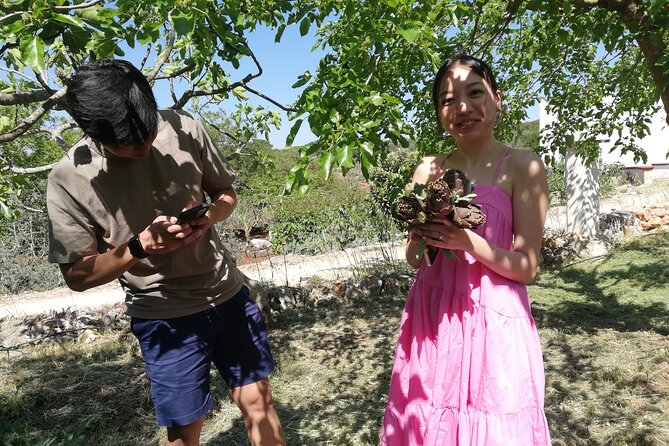
The wider itinerary names several places in the Valle d’Itria and surrounding Salento area. They provide useful context for planning your trip, but they are not all separate stops included in the cooking class.
Alberobello and the trulli
Alberobello is the famous UNESCO World Heritage Site for trulli. It is the best-known place to see whole streets of these buildings, while Simona’s home offers a smaller, more personal look at living in one.
The two experiences work well together. Visit Alberobello for scale and visual impact, then use the cooking class to understand the building style in a domestic setting. Do not assume the class includes transport or a guided visit to Alberobello.
Ostuni
Ostuni, often called the white city, is a natural addition to a Puglia road trip. Its old town sits on a hill and is known for whitewashed lanes and broad views across the surrounding countryside.
It is not part of the cooking class itself. If you plan to combine Ostuni with the class, allow enough driving time and avoid treating the cooking session as a short lunch stop.
Grottaglie
Grottaglie is associated with ceramics and traditional craft production. It makes a good companion stop for anyone interested in Puglian kitchenware, especially after learning about food and local cooking.
The class can also provide practical ideas for ceramic shopping, according to the kind of local recommendations Simona shares during the experience. Still, shopping in Grottaglie requires its own time and transport.
Manduria
Manduria is known for Primitivo wine, one of the red wines that may be served during the meal. It lies farther into the Salento area and is useful for wine-focused trip planning.
You should not expect a winery visit as part of this cooking experience. The wine is served with lunch or dinner, giving you a taste of local production without turning the class into a wine tour.
Oria and the Parco Rupestre Lama D’Antico
Oria offers medieval streets and a hilltop setting, while the Parco Rupestre Lama D’Antico is known for rock-cut dwellings and cave churches. These places show a different side of southern Puglia, far from the dining table and trulli.
They are best treated as separate sightseeing choices. The cooking class gives you a base near several cultural sites, but no hotel transfer or multi-stop excursion is included.
Chiesa di San Vito Martire
The Church of San Vito Martire is another nearby cultural point of interest named in the area. It may suit you if you are building a route around small religious and historic sites, but it is not a scheduled part of the cooking lesson.
This distinction is important. The class offers a short trullo tour and a food lesson. It does not function as a sightseeing bus tour through all the surrounding towns.
Who gets the best value for $78.64?
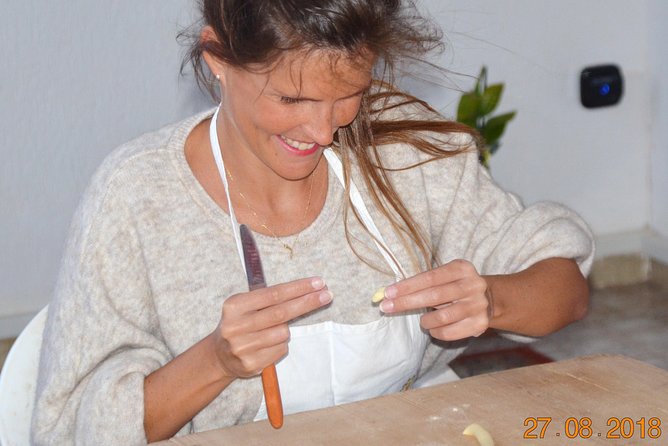
At $78.64 per person, the price covers roughly four and a half hours of instruction, a full three-course meal, wine, water, coffee or tea, ingredients, and the trullo visit. That is solid value if you are looking for both a cooking activity and a substantial meal.
You are also paying for the setting and the personal hosting. The experience takes place in a country home rather than a standard classroom, and Simona spends time explaining food customs, local ingredients, pasta shapes, and Puglian life.
The value is strongest for:
- Couples who want a relaxed food-centered day
- Families with children
- Solo visitors who enjoy meeting people around a shared table
- Vegetarians and vegans who report dietary needs in advance
- Anyone staying near Ceglie Messapica and exploring the Itria Valley by car
- Diners who want more than a restaurant meal but do not need professional chef training
The value is weaker if you want a short, tightly timed lesson, a private class, or a formal menu with every dish fixed in advance. The group may reach 15 people, and one session had closer to 16 to 18 participants, which can reduce individual attention.
Most sessions appear to be smaller, but you should be prepared for a social group format. The best part of the class is often the shared table. The tradeoff is that you will not have the same personal instruction as you would in a private lesson.
Food requirements and family suitability
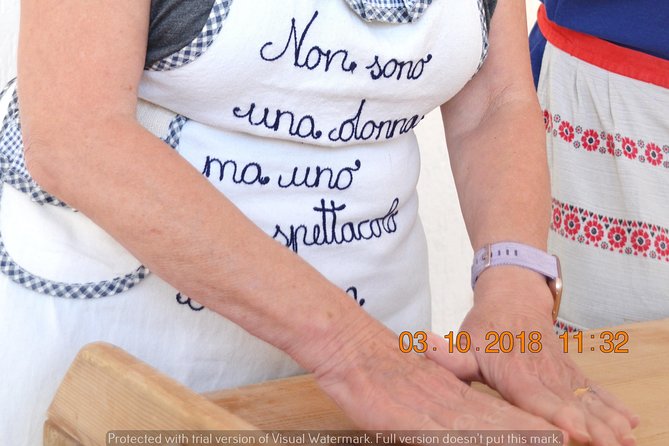
Children must be accompanied by an adult, but kids are welcome. The dough work is accessible and gives younger participants a clear role, though the long duration may test the patience of very young children.
Vegetarian, vegan, pescatarian, celiac, and lactose-intolerant diners can be accommodated when requirements are provided at booking. The kitchen does not serve raw fish or milk. You should still state all allergies and dietary needs clearly before arrival rather than relying on a last-minute explanation.
The class follows traditional and organic cultivation practices, and the menu changes with the season. That means you may not receive the exact sample menu described in advance. It also means the meal has a genuine connection to the time of year.
Should you book Le orecchiette, che pasta?
Book it if you want to spend a long, easygoing half-day cooking in a Puglian home, meeting other people, and eating a meal that you helped prepare. The strongest reasons are Simona’s warm hosting, the trullo setting, and the way the pasta lesson opens into a wider conversation about southern Italian food.
Think twice if you need private instruction, a fixed schedule, or a quick activity between major sights. Also check the meeting point carefully, since this is near Ceglie Messapica and hotel transport is not included.
For most food-loving visitors with enough time in the Itria Valley, I would choose this over a polished but impersonal cooking studio. It gives you a practical pasta skill, a look inside a traditional home, and a meal that can shape how you order food for the rest of your Puglia trip.
FAQ
Where does the cooking class take place?
It takes place at Nord Salento Tour, Via Padula del Cimitero, Ceglie Messapica, BR, Italy. The GPS coordinates are 40.654339, 17.503607.
How long does the experience last?
The scheduled duration is approximately four and a half hours, including lunch or dinner. Some sessions may last longer.
What days and times is the class offered?
Lunch sessions begin at 10:00 on Wednesdays and Saturdays. Dinner sessions begin at 16:30 on Mondays.
Is food and drink included?
Yes. The meal includes an appetizer, orecchiette, a meat or vegetable second course, seasonal vegetables, fruit, coffee or tea, local red wine, and bottled water.
Can children participate?
Yes. Children are welcome, but they must be accompanied by an adult.
Can dietary requirements be accommodated?
Vegetarian, vegan, pescatarian, celiac, and lactose-intolerant options are available. You must report your requirements when booking.
Is transportation from my hotel included?
No. Hotel pickup and drop-off are not included. The activity begins and ends at the meeting point, where parking is available.
Just added around Italy
- Cooking Class in a Sicilian countryhouse★ 5.0 · 5 reviews
- Cesarine: Home Cooking Class & Meal with a Local in Catania★ 4.5 · 10 reviews
- Cesarine: Market Tour & Home Cooking Class in Catania★ 4.0 · 6 reviews
- Cooking Class in Taormina with Lunch Included★ 5.0 · 2 reviews
- Cooking Class and Wine Pairing in Capri★ 5.0 · 57 reviews
- Cooking class in Capri for small groups★ 4.0 · 4 reviews
- Private Cooking Class Experience in Reggio Calabria★ 5.0 · 5 reviews
- Lezione di Cucina : Pasta Fresca★ 5.0 · 12 reviews
Pasta Making Classes, compared.
3 in 1 Cooking Class near Navona: Fettuccine, Ravioli & Tiramisu
Read our review →
Pasta & Tiramisu Cooking Class with Unlimited Wine
Read our review →
Pasta Making Class with Wine, Limoncello, and Dessert
Read our review →
Rome Cooking Class: Make Pasta and 3 Spritz Cocktails
Read our review →
3-in-1 Fettuccine, Ravioli, and Tiramisu Cooking Class
Read our review →
Fettuccine Pasta Cooking Class in Rome’s City Center
Read our review →Lists this class appears in