
REVIEW · BASILICATA, ITALY
Matera: Pasta Cooking Class Old Farmer Style in Sassi Cellar
Matera serves lunch in a cave. This three-hour cooking class combines a restored Sassi cellar with hands-on pasta making, local recipes, and a relaxed farmer-style meal. You meet local hosts including Lorenzo and Chef Cosimo, hear family food stories, and prepare dishes tied to Basilicata’s rural traditions.
I especially like the setting and the personal teaching style. Cooking inside an old wine cellar, with sections of the original cave still visible, gives the class a strong sense of place. Lorenzo and Cosimo also appear to treat the session like a long lunch with friends, rather than a formal demonstration. The main drawback is practical: this is not suitable for anyone with gluten intolerance, and the three-hour format may feel long if you only want a quick cooking lesson.
The class costs $80.55 per person and is limited to eight people. That price is fair if you value a meal, local storytelling, a guided look at a traditional cave home, and instruction all in one activity. It is less compelling if your only goal is to learn one pasta shape as quickly as possible.
Key Points Before You Book
- Cook inside Cava Marlò: Look for the arch and large green door at Recinto Santa Maria, 8.
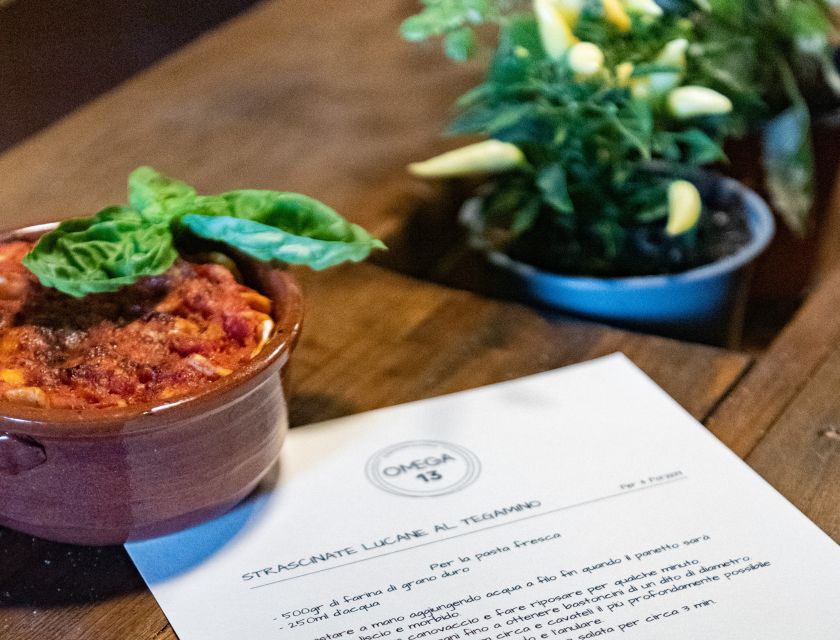
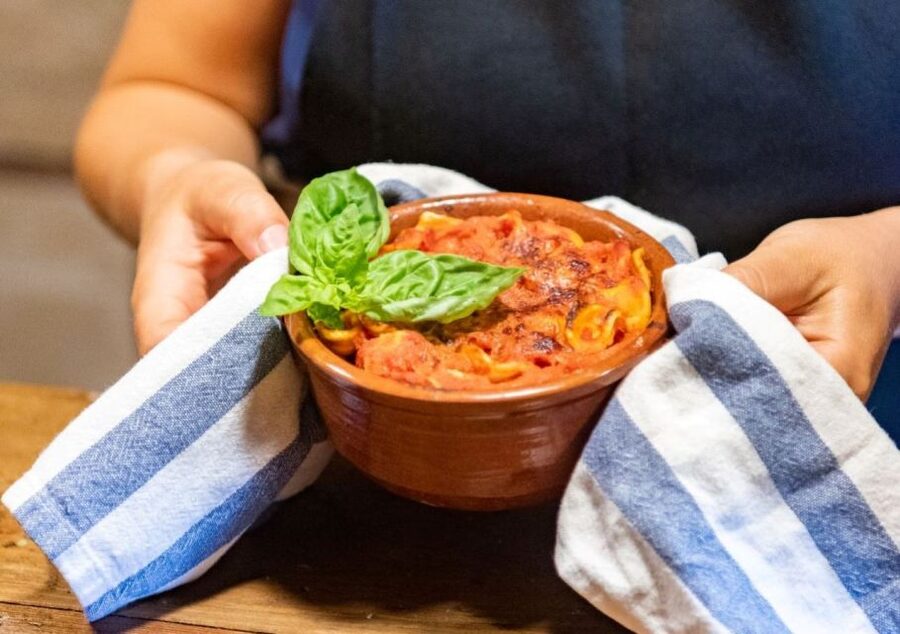
- Learn local pasta methods: You knead dough, shape fresh pasta, and prepare traditional dishes such as bruschetta and strascinate al tegamino.
- Meet Matera locals: Lorenzo and Chef Cosimo bring family memories, food customs, and stories about growing up with recipes from their mothers and grandmothers.
- Enjoy a full farmer-style meal: The food tasting follows the workshop, so you eat what you helped prepare along with regional ingredients.
- Small groups matter: With no more than eight people, you should have a better chance to ask questions and get hands-on help.
- Allow a full morning or afternoon: The schedule includes a short cave tour, 90-minute workshop, break, and one-hour tasting.
Why the Sassi Cellar Makes This Class Special
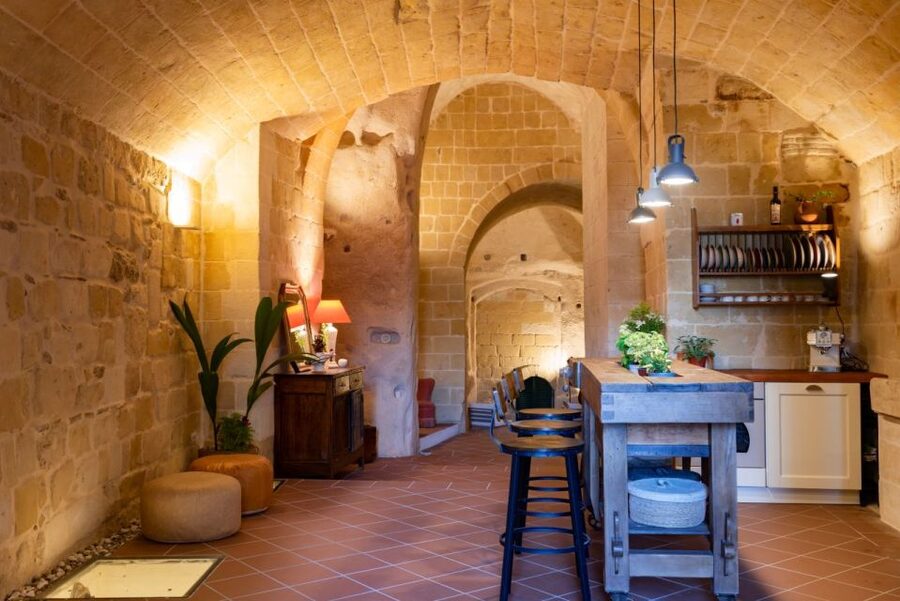
Matera’s Sassi are famous for homes and buildings carved into soft stone. This class takes place in a traditional ex-wine cellar that has been restored for modern use while keeping parts of the original cave structure visible. You are not simply cooking in a generic restaurant kitchen. The walls, shape, and atmosphere connect the meal to Matera’s past.
The cave also changes the mood of the class. The stone setting feels intimate, and one account describes it as a comfortable place during hot summer weather. The room has been renovated, but the older sections remain part of the design. That balance gives you a useful look at how Matera’s former cave homes can be adapted without wiping away their character.
You may also have views toward the paleolithic caves of Matera. The setting is not just decoration. It helps explain why food, family, and household space mattered so much in the old Sassi communities. A meal prepared in a cave feels more connected to the city than a pasta lesson held in an ordinary cooking studio.
More Pasta Making Classes in Italy:
- Florence: Pasta Cooking Class with Unlimited Wine
★ 4.9 · 10,285 reviews - 3 in 1 Cooking Class near Navona: Fettuccine, Ravioli & Tiramisu
★ 5.0 · 7,376 reviews - Florence: Pasta & Tiramisu Cooking Class with Unlimited Wine
★ 4.9 · 6,708 reviews
Finding Cava Marlò at Recinto Santa Maria, 8
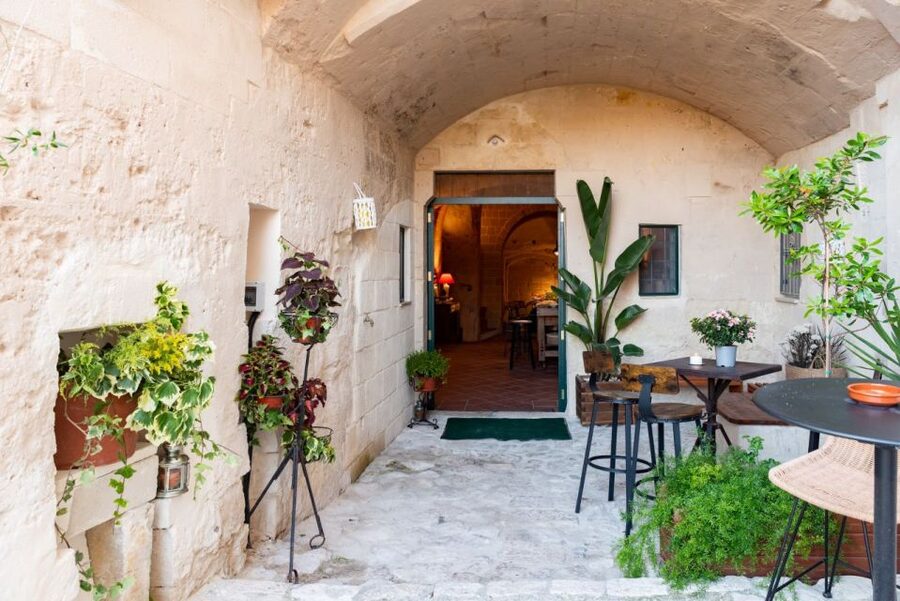
The meeting point is the cave itself at Recinto Santa Maria, 8. Search for Cava Marlò on a map, then look for an arch and a large green door. The directions are specific, but the Sassi can be confusing, so give yourself enough time to find the entrance.
There is no separate transport segment in the schedule. You make your own way to the starting point, and the activity ends there after the meal. That is convenient if you are staying in or near the Sassi, but you should not expect a pickup from your hotel.
The small group limit of eight is one of the class’s practical strengths. You are likely to work at a shared pace, hear the instructors clearly, and get help with kneading and shaping. The format should suit solo visitors, couples, and families who want conversation rather than a large demonstration.
The class is offered in English, Italian, and Spanish. If your group includes people with different language needs, check the available session before booking.
A Short Introduction to Matera Before You Cook
The class begins with a guided look lasting about 20 minutes. This is a useful opening because it gives the food a local setting before you start handling flour. Lorenzo shares stories and anecdotes about Matera, while the cave itself provides a visual lesson in how local families once lived and worked.
The tour is short, so do not expect a detailed city walk or a full archaeological visit. Its purpose is to explain the room and connect it to Matera’s customs. That limited length works well for a cooking class. You get enough context to understand the place without using up your kitchen time.
The hosts also draw on personal memories. Several sessions have included stories about cooking with mothers and grandmothers, and about the role of food in family life. This is where the class goes beyond a recipe sheet. You learn why certain dishes matter, not just which ingredients go into them.
Rolling Dough and Shaping Fresh Pasta
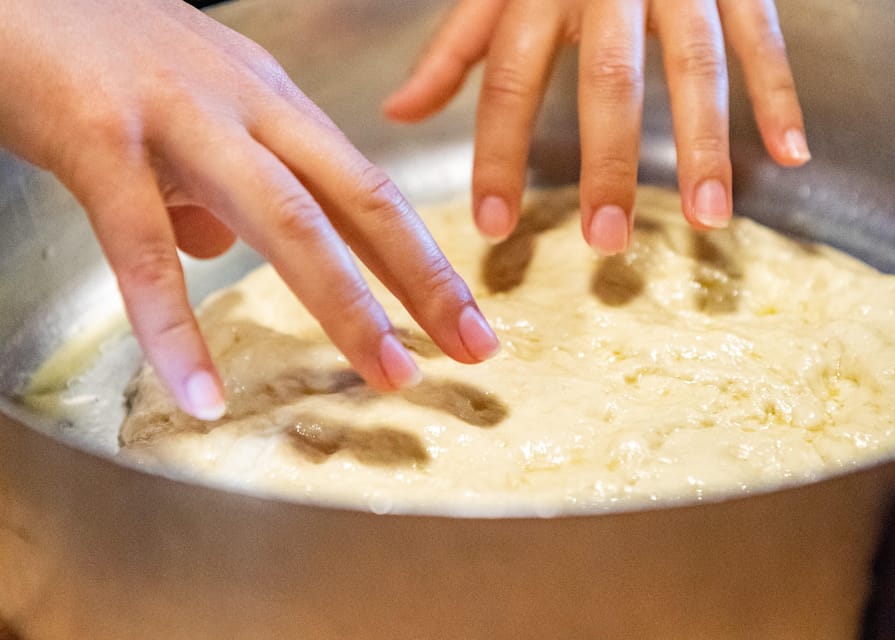
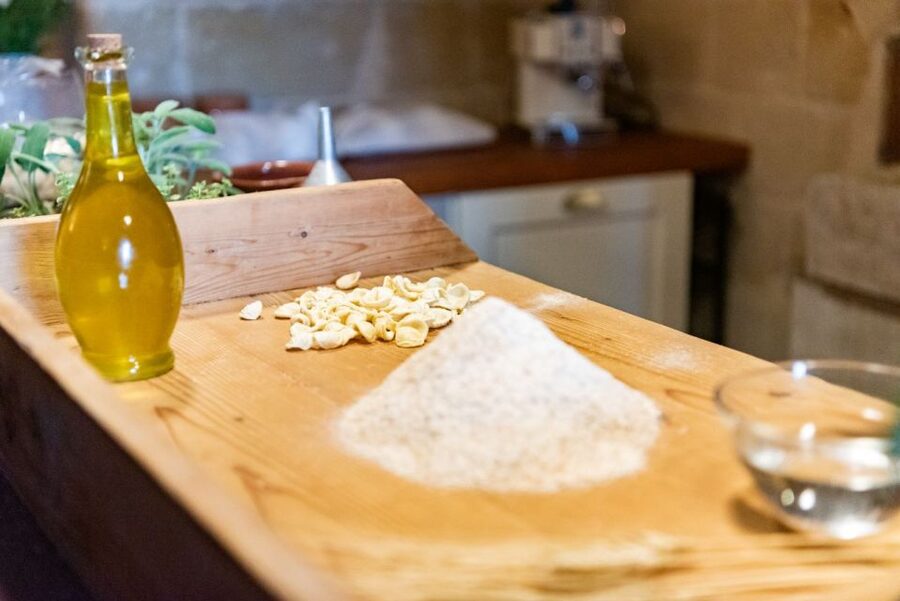
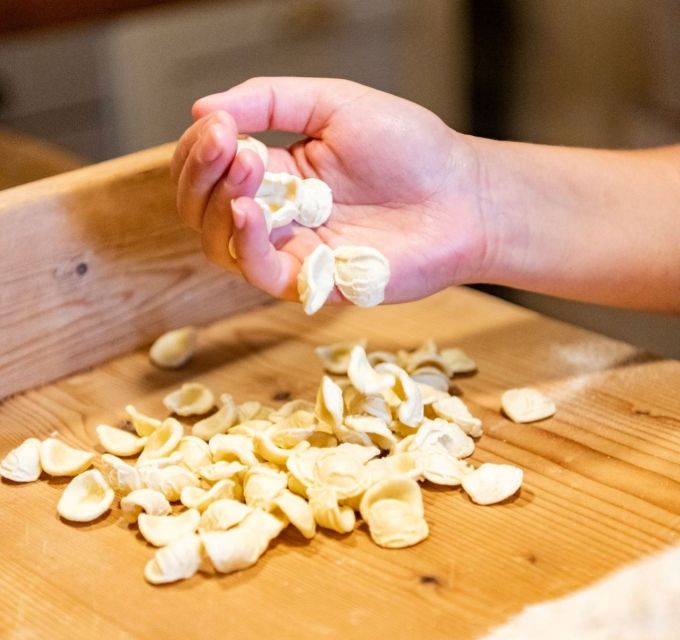
The main workshop lasts about 90 minutes. You roll up your sleeves, knead the dough, and learn to shape the pasta by hand. Chef Cosimo guides the process, explaining techniques that have been passed through local families.
The instruction sounds practical rather than overly technical. The dishes are kept manageable, and the hosts take time to answer questions. That makes the class suitable even if your pasta-making skills begin and end with opening a packet from the supermarket.
The pasta is connected to the food traditions of Basilicata. You may work with the shape known as strascinate, a local style associated with rustic southern Italian cooking. The point is not perfect restaurant presentation. It is learning how simple dough, careful shaping, and good ingredients create a satisfying meal.
I like that the activity involves your hands from the start. A demonstration can be pleasant, but it is easy to forget. Kneading and shaping give you something you can repeat at home, even if your first pieces look a little uneven. In this setting, homemade pasta is treated as everyday food, not a performance.
A few more cooking classes around Italy worth a look
- Cooking Class and Lunch at a Tuscan Farmhouse with Local Market Tour from Florence
★ 5.0 · 4,831 reviews - Rome Cooking Class: Make Pasta and 3 Spritz Cocktails
★ 5.0 · 2,937 reviews - Rome: 3-in-1 Fettuccine, Ravioli, and Tiramisu Cooking Class
★ 4.9 · 2,704 reviews - Rome: Fettuccine Pasta Cooking Class in Rome’s City Center
★ 4.8 · 2,414 reviews
Bruschetta, Strascinate, and Local Farm Recipes
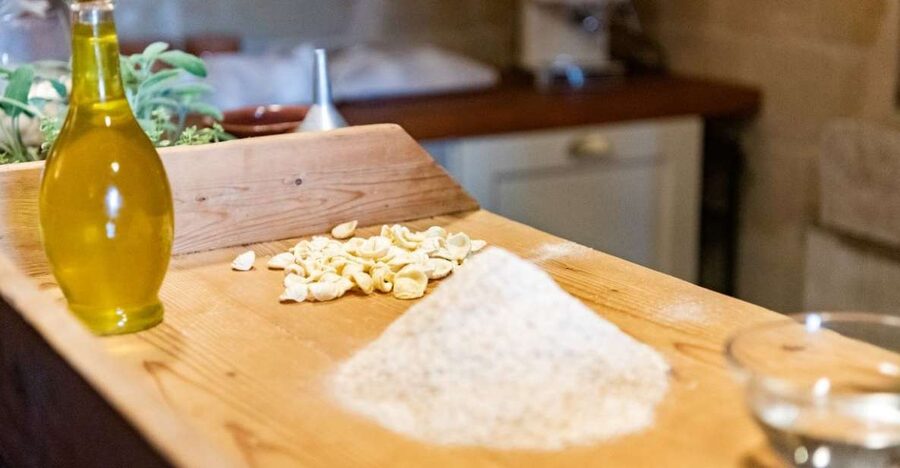
The class includes bruschetta and strascinate al tegamino, along with other traditional dishes prepared during the session. The food is based on local and family recipes, with an emphasis on straightforward ingredients and strong flavors.
The word farmer-style is important here. This is not presented as a highly polished tasting menu. The cooking reflects rural food traditions, where bread, pasta, vegetables, olive oil, and seasonal products need to be used carefully. You get a better feel for Basilicata when the meal is hearty and practical rather than fussy.
The hosts also explain small cooking habits and techniques that can be repeated at home. One session included a traditional salad known as cialledda, and another involved focaccia, showing that the precise menu can vary. The core promise remains the same: local food, handmade preparation, and time at the table.
You should arrive ready to eat. Bruschetta and other food may appear before the pasta work is finished, and the final tasting lasts about an hour. Water and wine have been provided during some sessions, adding to the long-lunch feeling, though you should confirm current inclusions when you reserve.
The Break and the Final One-Hour Meal
After the cooking workshop, you get a short break of about 10 minutes for photos and a pause in the cave. This is a small part of the schedule, but it helps break up the hands-on work before the meal.
The final hour is devoted to tasting regional food. You sit down with the dishes prepared during the class and enjoy the results in the same cave setting. This is the part that turns the lesson into a social meal.
The hosts’ style appears to be warm and informal. Lorenzo handles much of the local context, while Cosimo brings energy to the cooking and talks about family recipes. The combination works well because you are not left alone with instructions or rushed from one task to another.
The food is described as hearty, fresh, and made with simple local products. That is the right expectation. You are paying for a complete cultural meal, not a luxury restaurant dinner. The value comes from preparation, conversation, and place as much as from the food itself.
What Makes the Hosts Important
A cooking class depends heavily on the people leading it. Here, Lorenzo and Cosimo seem to be central to the appeal. Lorenzo explains the cave and Matera, while Chef Cosimo teaches the cooking and shares memories of his family kitchen.
Their personal stories help the class feel less like a packaged activity. Food traditions become easier to understand when they are tied to a grandmother’s recipe, a childhood meal, or the way a family once gathered around the table. That human element is repeatedly praised and is probably the biggest reason the class feels different from a standard pasta workshop.
The atmosphere is also relaxed. You can expect conversation, jokes, questions, and time to work at a comfortable pace. That will suit you if you like social activities and informal teaching. If you prefer a quiet, highly structured lesson with exact measurements and printed instructions, this may feel loose.
Adeline or Adalina may also assist depending on the session. The supplied details use both spellings, so I would not rely on a particular host being present unless confirmed at booking.
Is $80.55 a Fair Price?
At $80.55 per person, the price sits above a basic pasta lesson but includes much more than pasta. You receive a short tour of a traditional wine cellar, stories about Matera, a small-group workshop, a food tasting, and several hours of hosting.
For me, the strongest value comes from combining the cave setting with the meal. If you paid separately for a city history walk, a cooking class, and lunch, the total could easily approach this amount. The group limit also matters. Eight people is small enough to keep the session personal without making it a private class.
The price may feel high if you do not drink wine, do not eat much, or already plan several food-focused activities in Matera. It is also not the best choice for someone who wants a quick lesson and plans to leave immediately. You are paying for time and atmosphere as much as for the recipe.
The cancellation policy reduces some booking risk. You can cancel up to 24 hours in advance for a full refund, and you can reserve now and pay later. Check the current starting time because sessions are offered at different times.
Who Should Take This Class?
I would recommend it most strongly to:
- Couples looking for a relaxed shared activity
- Families who enjoy hands-on food preparation
- Solo visitors who like meeting local hosts
- Anyone interested in Matera’s cave homes and food customs
- People who want to recreate southern Italian dishes at home
- Visitors who prefer a small group to a large tour
The class may be less suitable for young children who cannot comfortably handle a three-hour activity. That is not stated as a formal restriction, but the schedule includes sustained cooking, a break, and a long meal. You should also avoid it if you have gluten intolerance, since the activity centers on wheat-based pasta and bread.
This is a good rainy-day option, too, since much of the time is spent indoors. The cave can also offer a welcome change from Matera’s hot streets in summer.
Small Details That Improve the Day
Wear clothes you do not mind getting a little flour on. The activity is hands-on, and you will be kneading and shaping dough rather than watching from the side.
Arrive with an appetite, but do not skip breakfast if you are taking a morning session. Food may be served during the workshop, and the final tasting comes later. The meal is a major part of the activity, so plan your schedule around it rather than treating it as a quick snack.
Keep the rest of your day flexible. The official duration is three hours, and the social pace may encourage conversation before and after the cooking. Since the activity ends at the same cave where it begins, you can continue exploring the Sassi afterward without arranging another transfer.
I would also save the name of the pasta shape and write down any cooking tips you want to remember. The class is designed to help you bring the dishes home, but a few notes or photos will make that easier.
Should You Book the Matera Pasta Class?
Book it if you want more than a recipe. The strongest parts are the restored cave, the small group, the local hosts, and the chance to connect food with Matera’s family traditions. Lorenzo and Cosimo make the class feel personal, and the farmer-style meal gives the afternoon or morning a clear sense of place.
Skip it if you have gluten intolerance, dislike group cooking, or want a short technical lesson with no storytelling. For everyone else, the $80.55 cost is reasonable for three hours of cooking, food, and local culture in one of Matera’s most distinctive settings.
FAQ
Where does the pasta class take place?
The class takes place at Cava Marlò in the Sassi area of Matera. The address is Recinto Santa Maria, 8. Look for an arch and a large green door.
How long does the activity last?
The activity lasts three hours. It includes a 20-minute guided tour, about 90 minutes of cooking, a 10-minute break, and about one hour of food tasting.
What food do you prepare?
The class includes fresh pasta, bruschetta, and strascinate al tegamino. The exact dishes may vary, and some sessions have included other regional preparations such as focaccia or cialledda salad.
Is lunch included?
Yes. The activity includes a farmer-style meal and food tasting using the dishes prepared during the class and other regional foods.
What languages are offered?
The instructors speak English, Italian, and Spanish.
How large is the group?
The activity is limited to eight participants.
Is the class suitable for someone with gluten intolerance?
No. The activity is not suitable for people with gluten intolerance because it centers on pasta and other wheat-based foods.
Can I cancel the booking?
You can cancel up to 24 hours in advance for a full refund. The activity also offers a reserve-now, pay-later option.
Just added around Italy
- Cooking Class in a Sicilian countryhouse★ 5.0 · 5 reviews
- Cesarine: Home Cooking Class & Meal with a Local in Catania★ 4.5 · 10 reviews
- Cesarine: Market Tour & Home Cooking Class in Catania★ 4.0 · 6 reviews
- Cooking Class in Taormina with Lunch Included★ 5.0 · 2 reviews
- Cooking Class and Wine Pairing in Capri★ 5.0 · 57 reviews
- Cooking class in Capri for small groups★ 4.0 · 4 reviews
- Private Cooking Class Experience in Reggio Calabria★ 5.0 · 5 reviews
- Lezione di Cucina : Pasta Fresca★ 5.0 · 12 reviews
Pasta Making Classes, compared.


3 in 1 Cooking Class near Navona: Fettuccine, Ravioli & Tiramisu
Read our review →
Pasta & Tiramisu Cooking Class with Unlimited Wine
Read our review →
Pasta Making Class with Wine, Limoncello, and Dessert
Read our review →
Rome Cooking Class: Make Pasta and 3 Spritz Cocktails
Read our review →
3-in-1 Fettuccine, Ravioli, and Tiramisu Cooking Class
Read our review →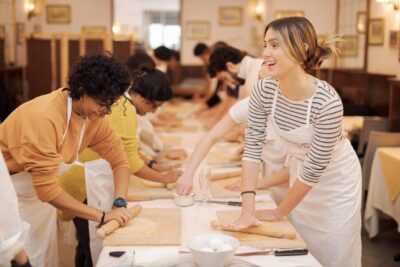
Fettuccine Pasta Cooking Class in Rome’s City Center
Read our review →Lists this class appears in