
REVIEW · CHIANG MAI PROVINCE, THAILAND
Chiang Mai: Ethical Elephant Sanctuary & Thai Cooking Class
Elephants and Thai food make a fine pair. This 11-hour Chiang Mai day combines two strong experiences: a hands-on cooking class with instructor Aim and a visit to Joy Elephant Sanctuary, where you feed and observe elephants rather than ride them. I especially like the ethical observation program and the chance to make several Thai dishes with fresh ingredients, including vegan and vegetarian choices. The included recipes also give you a useful souvenir for your kitchen.
The day has a lot packed into it, so the long schedule is both its strength and its weakness. You will spend about three hours cooking, three hours at the sanctuary, and several more hours in vans. I also like the quiet waterfall stop with herbal tea, but the early start, long return ride, and rough final road section may feel tiring if you prefer a slow-paced outing.
Key things to know before you book
- Cooking with Aim: The instructor has more than 10 years of experience and keeps the class active, social, and easy to follow.
- No elephant riding: The program centers on preparing food, feeding elephants, watching them forage, and learning about their care.
- A two-vehicle journey: You travel in an air-conditioned 12-seater van, then switch to a roofed 4×4 truck for the last 10 minutes.
- Waterfall tea break: You can rest with herbal tea while elephants move through the nearby jungle.
- Useful food choices: Vegan and vegetarian meals are available, and the ingredients, drinking water, and electronic recipes are included.
- Plan for a full day: Pickup begins in Chiang Mai, and the return trip includes a 1.5-hour van ride after the sanctuary.
Why this Chiang Mai day works so well
Many day trips ask you to choose between food and nature. This one gives you both, but in clearly different settings. The cooking class takes place in the Muang Chiang Mai area, while the elephant program takes you to Mae Wang District, where the surroundings become quieter and more rural.
The combination has a sensible rhythm. You start with a market visit and cooking, then head into the hills for wildlife viewing and cultural activities. That order matters. After a morning spent preparing and eating food, the afternoon gives you space to walk, watch elephants, and take a break beside a waterfall.
The highest praise goes to two parts of the day: the cooking class and the sanctuary. Aim receives particular credit for making the food lesson fun and interactive. The cooking choices are not limited to one fixed dish, so you can select from several options for much of the meal. That gives the class more appeal than a quick demonstration followed by a plate of food.
The elephant experience also gets strong approval, especially because it is based on observation and care. You are not promised a circus-style encounter. Instead, you help prepare food, feed the elephants, and watch their natural behavior as they walk and forage.
More Thai Cooking Classes in Chiang Mai:
- Half-Day Thai Cooking Class at Organic Farm in Chiang Mai
★ 5.0 · 19,087 reviews - Chiang Mai: Cooking Class, Market & Thai Herbs Garden Tour
★ 4.9 · 4,824 reviews - Thai and Akha Cooking Class in Chiang Mai
★ 5.0 · 4,358 reviews
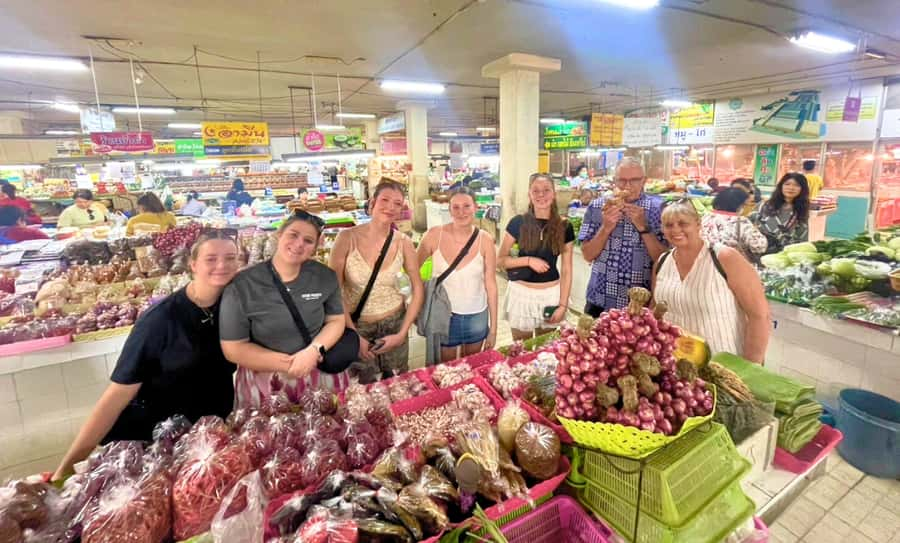
The morning begins at Chiang Mai’s food market
Pickup is available from accommodation within 5 kilometers of Chiang Mai’s Old City. The ride to the market takes about 30 minutes, and transport is provided in a 12-seater, air-conditioned van. If you are staying farther out, an extra transport charge applies, so check your location before booking.
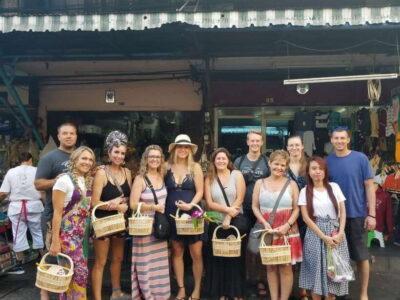
The market visit lasts about 30 minutes. This is a short stop, but it gives the cooking class a useful local setting. You can see the ingredients before they are prepared and get a better sense of the everyday produce used in Thai food.
Do not expect a long guided market tour. Half an hour passes quickly, and the main purpose is to gather ingredients and set the tone for the cooking session. Still, I prefer this approach to walking past ingredients with no connection to the meal ahead.
Three hours of cooking with Aim
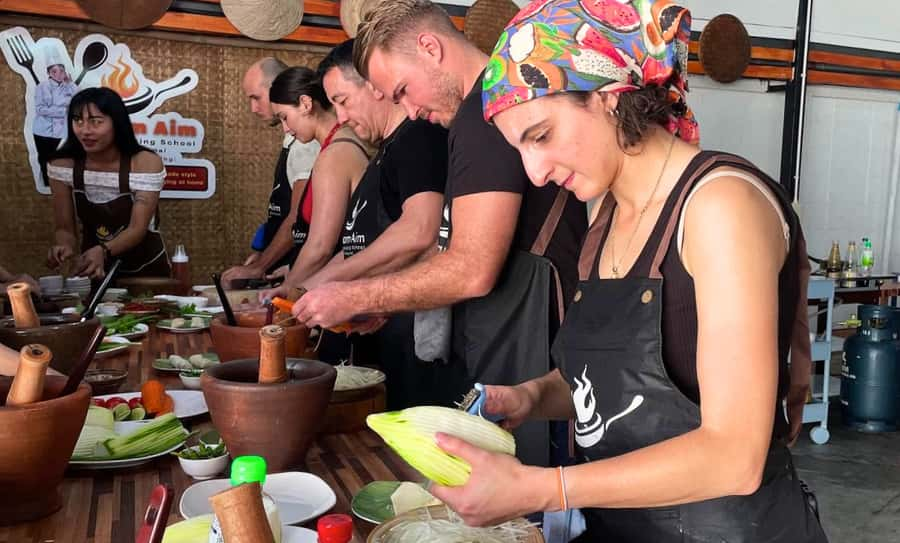
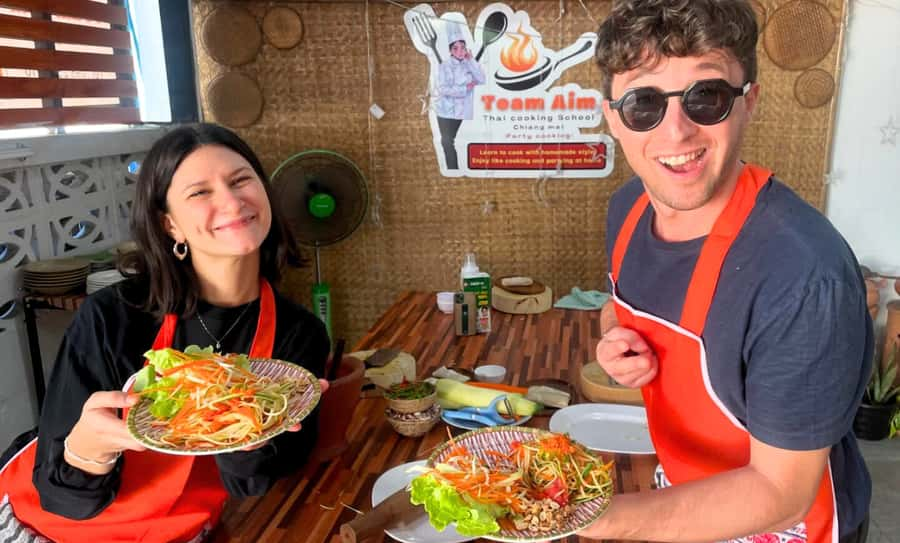
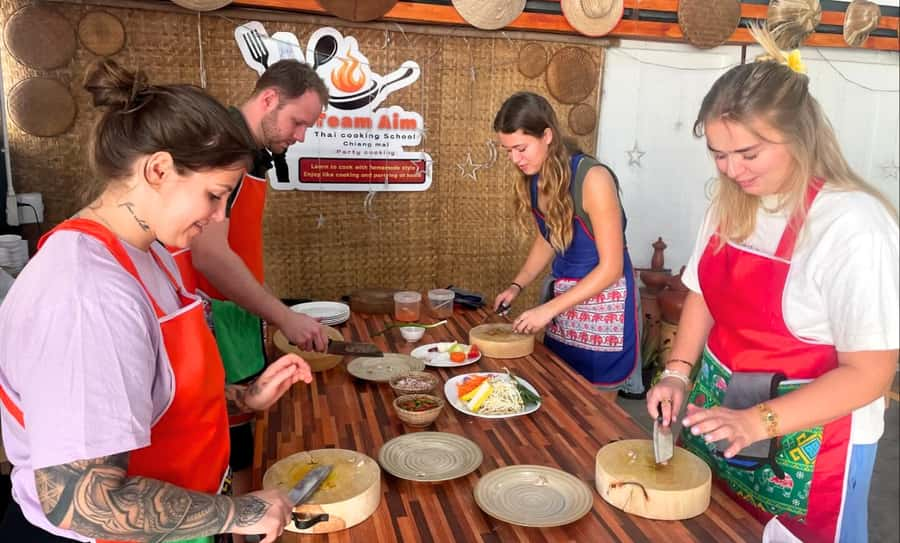
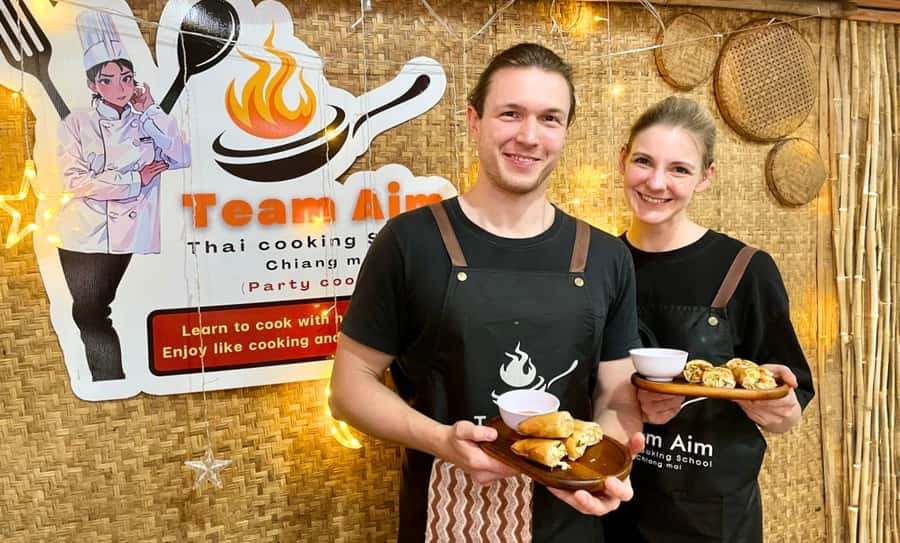
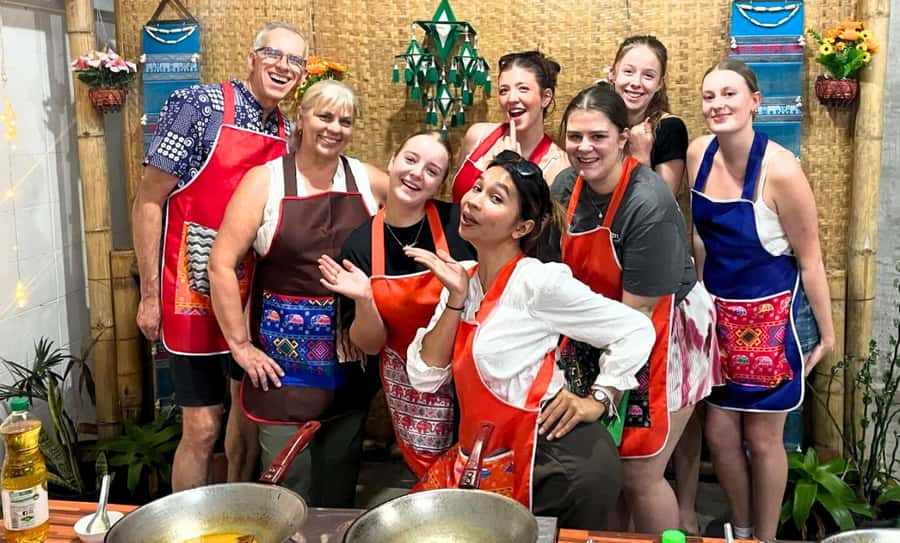
The cooking class lasts about three hours and includes lunch. Aim, the English-speaking instructor, has more than 10 years of experience and is known for keeping the lesson lively. The class is described as fun and interactive, which is important because three hours of cooking can feel long if you are only watching.
You will work with the necessary ingredients and prepare authentic Thai dishes. Several course choices are available, so the meal has some flexibility rather than forcing every participant to cook the same menu. Vegan and vegetarian options are available, making this a practical choice for people with different diets.
The food lesson is one of the best value points in the program. You are not simply eating lunch. You are learning methods, handling ingredients, and receiving electronic recipes to use at home. Those recipes turn the cooking class into something that lasts beyond the day itself.
A practical note: tell the provider about dietary needs before the food is prepared, and bring any allergy medication you require. The program specifically advises you to carry your own allergy medicine. That is good planning for any food-focused activity.
The meal is included, along with drinking water and cooking ingredients. This keeps the price easier to judge because you are not adding separate costs for the class, lunch, or basic refreshments. Personal expenses are not included, so bring money for anything extra you may want.
The road to Mae Wang and the final 4×4 ride
After cooking, you spend about an hour in the van traveling toward Mae Wang District. This is the point where the day becomes more countryside-focused. The transport is air-conditioned, but the schedule is still long, and you should be comfortable sitting for extended periods.
For the last 10 minutes, you switch to a roofed 4×4 truck to reach the sanctuary. The change is practical because the final road is not suited to the regular minivan. It also signals that the afternoon setting is more remote and less built up.
The 4×4 is roofed, but you should still dress for heat, dust, and outdoor conditions. Comfortable shoes, sunscreen, insect repellent, and sandals are sensible choices. The supplied packing advice also recommends swimwear and a change of clothes, which are useful if you spend time near the waterfall.
A few more cooking classes around Chiang Mai worth a look
- Chiang Mai: Authentic Cooking Class with Market & Farm Visit
★ 4.9 · 4,546 reviews - Chiang Mai: Cooking Class with Market and Pickup
★ 4.9 · 1,365 reviews - Chiang Mai: Cooking Class with Organic Farm at Mama Noi
★ 4.9 · 1,151 reviews - Full Day Thai Cooking at Farm (Chiang Mai)
★ 5.0 · 1,127 reviews
Joy Elephant Sanctuary focuses on watching, not performing
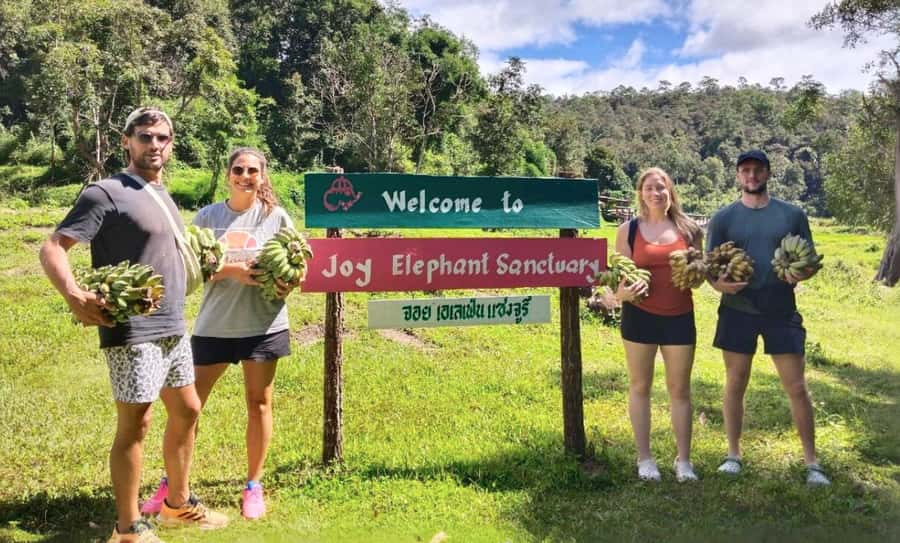
The elephant program lasts about three hours and includes a guided tour, walking, wildlife viewing, tea, and a cultural workshop. You begin by changing into traditional Karen clothing, then help prepare food for the elephants.
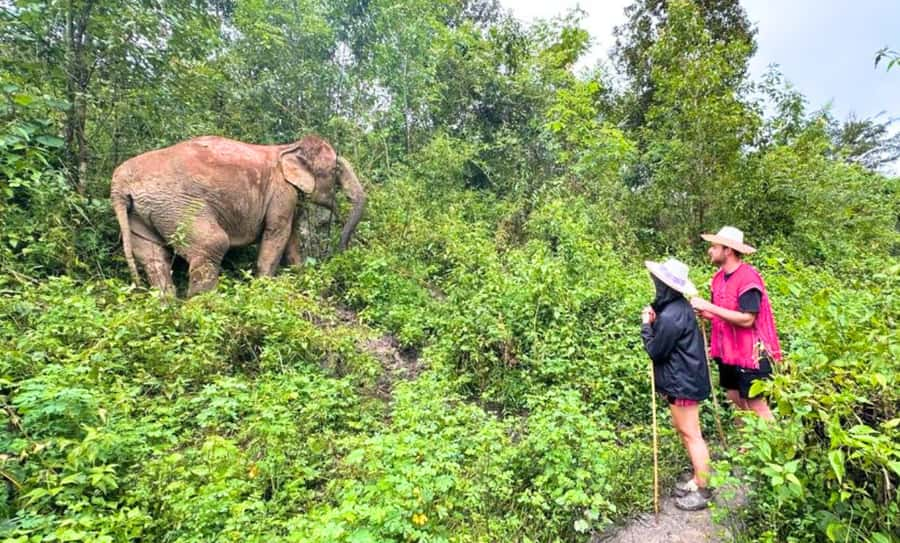
Feeding is part of the experience, but it is not the whole point. You also watch the elephants as they walk and forage in the jungle. That gives you a better chance to see ordinary behavior rather than a staged trick or forced activity.
This distinction matters. Ethical elephant tourism can be difficult to judge from a short description, but the activities here are centered on observation, food preparation, and care. There is no elephant riding listed, and the program presents the animals in their natural habitat. The Italian review specifically praised the sanctuary as genuinely ethical, while the British review called the setting beautiful.
You should still follow the guide’s instructions closely. Elephants are large, powerful animals, even during a quiet feeding session. The value of this visit lies in watching their behavior and learning how they are cared for, not in trying to get the closest possible photograph.
The program includes elephant food and snacks, so you do not need to bring your own treats. A towel is also provided, although you should still bring a change of clothes if you expect to get wet or muddy.
Waterfall tea offers the day’s quietest moment
The waterfall stop gives the afternoon a welcome pause. You can sit with herbal tea, take a break, and watch elephants moving nearby. This is a different kind of elephant encounter. Instead of concentrating on feeding, you can simply observe the animals at a greater distance while enjoying the setting.
The stop is especially useful after the cooking class and the road journey. You have already spent hours sitting, preparing food, and traveling, so a short rest helps keep the afternoon enjoyable.
Swimwear is on the recommended packing list, but the supplied details do not promise swimming. Bring it if you want to be prepared for water near the waterfall, but do not book the day solely for a swim. The main focus remains the elephant program and the tea break.
A small Karen clothing and craft connection
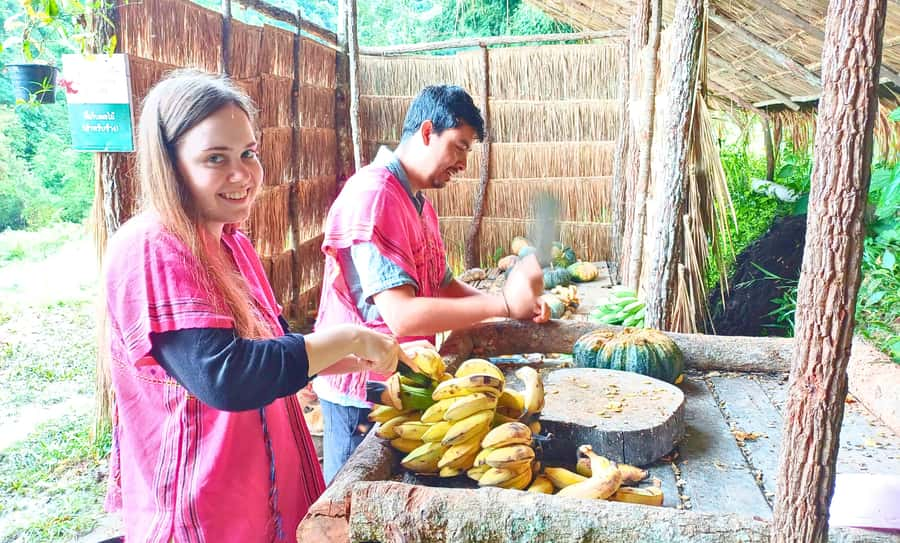
Changing into traditional Karen clothing adds a cultural element to the elephant visit. It is a simple activity, but it helps connect the afternoon to local traditions rather than treating the sanctuary as only a wildlife stop.
The program also includes making a handmade Thai cultural souvenir. This is a modest but meaningful touch. You create something yourself instead of buying a generic item from a shop, and it gives you a physical reminder of the day.
The available details do not specify the exact craft, so you should not expect a particular object. Think of it as a short workshop within the sanctuary program, not a full craft course. Its value is in the hands-on connection to Thai culture.
Dinner, then the long ride back
After the sanctuary program, the itinerary includes a 30-minute dinner stop in Mae Wang District. The day already includes lunch through the cooking class, so this later meal helps carry you through the long evening return.
The program lists a complimentary local meal, but it does not spell out every dinner dish. If you have strict dietary needs, confirm how the evening meal will be handled. Vegan and vegetarian options are available for the cooking class, but the safest approach is to state your needs clearly before the tour.
The ride back to Chiang Mai takes about 1.5 hours by van. Combined with the morning transfers and the one-hour trip to Mae Wang, you will spend a sizable portion of the day in transit. That is the main drawback for anyone who wants a compact activity.
Still, the long schedule is understandable. The sanctuary is outside the Old City, and the route includes a final 4×4 section. At $88 per person, the price includes return transport, admission, a guide, food, water, elephant snacks, insurance, towels, cooking ingredients, and recipes. For a full day with two major activities, that is a fair package, especially if you would otherwise pay separately for a cooking class and an elephant visit.
What to bring for a smoother day
Wear clothing that can handle heat and outdoor activity. Comfortable shoes are best for walking, while sandals are useful near the waterfall. Sunscreen and insect repellent should be in your day bag.
Pack swimwear and a change of clothes because the waterfall area may be wet. Bring your own allergy medication if needed, since the program specifically places that responsibility on you.
The tour includes drinking water, elephant food, snacks, a towel, and cooking supplies. You do not need to carry a large amount of equipment, but a small bag for personal items will make the day easier.
Pets and explosive substances are not allowed. Children under 5 and wheelchair users cannot take part, so this is not a suitable choice for very young children or anyone needing wheelchair access.
Who should book this experience?
I would choose this for a first visit to Chiang Mai if you want food, nature, and culture in one day. It suits people who like active participation more than passive sightseeing. You will cook, walk, change clothing, help prepare elephant food, and watch wildlife.
It also works well for couples, friends, and solo visitors who enjoy meeting people during a group activity. The cooking class has enough flexibility to suit different food preferences, and the sanctuary offers a slower outdoor contrast.
I would think twice if you dislike long road journeys or need a relaxed schedule. Eleven hours is a serious commitment, and the return trip can feel long after a full afternoon outside. The program is also not suitable for children under 5 or wheelchair users.
The strongest reason to book is the pairing of an engaging cooking lesson with an elephant visit that avoids riding and staged entertainment. The strongest reason to skip it is the amount of time spent moving between places.
Should you book this Chiang Mai elephant and cooking day?
Book it if you want a full, varied day and care about how elephants are treated. The cooking class with Aim is the standout for food lovers, while the sanctuary offers a quieter way to watch elephants feed and forage.
At $88, the package gives you a lot: transport, a guide, admission, meals, ingredients, water, elephant food, insurance, and recipes. Just arrive ready for a long day, outdoor conditions, and a final ride in a roofed 4×4 truck. If those details suit your travel style, this is a useful way to experience several sides of Chiang Mai without arranging each part yourself.
FAQ
How long does the experience last?
The full experience lasts 11 hours, including transport from Chiang Mai, the market visit, cooking class, elephant program, dinner, and the return journey.
Where is pickup available?
Round-trip pickup is available from accommodation within 5 kilometers of Chiang Mai’s Old City. Transport from outside that area costs extra.
What type of vehicle is used?
You travel in a 12-seater, air-conditioned van for most of the route. The final 10 minutes to the sanctuary are by roofed 4×4 truck.
Is elephant riding included?
No elephant riding is listed. The program includes preparing food, feeding elephants, observing their behavior, and watching them walk and forage.
Are vegetarian and vegan options available?
Yes. Vegan and vegetarian options are available for the cooking class.
Is food included?
Yes. The experience includes a complimentary local meal, cooking ingredients, drinking water, elephant food, and snacks. A dinner stop is also included in the schedule.
What should I bring?
Bring comfortable shoes, sandals, sunscreen, insect repellent, swimwear, and a change of clothes. You should also bring any allergy medication you need.
Can I cancel the booking?
You can cancel up to 24 hours in advance for a full refund. The activity also offers reserve now and pay later booking.
Just added around Chiang Mai
- Aroidee’s Farm-Fresh Thai Cooking Experience★ 5.0 · 8 reviews
- Signature Thai Cooking Course★ 5.0 · 79 reviews
- Private Half-Day Thai Cooking Class in Chiang Mai★ 5.0 · 4 reviews
- Half Day Guided Thai Cooking Class in Chiang Mai★ 5.0 · 13 reviews
- Online Thai and Akha Cooking Class★ 5.0 · 70 reviews
- Private Virtual Thai Cooking Class★ 5.0 · 9 reviews
- Northern Thai Cooking Class in Chiang Mai in a Countryside Home★ 5.0 · 2 reviews
- 5 Hour Morning Thai Cooking Course★ 5.0 · 31 reviews
Thai Cooking Classes, compared.

Half-Day Thai Cooking Class at Organic Farm in Chiang Mai
Read our review →
Cooking Class, Market & Thai Herbs Garden Tour
Read our review →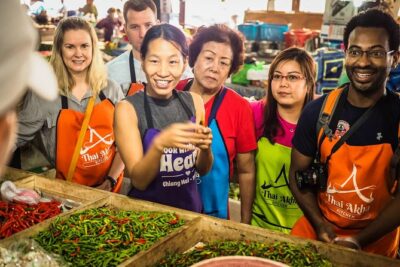
Phuket Thai Cooking Class with Market Tour Option
Read our review →
Tingly Thai Cooking School Half-Day Cooking Class
Read our review →
Lists this class appears in