REVIEW · APULIA, ITALY
Lecce: Pasta Making Class in 1400s-Era Courtyard with Wine
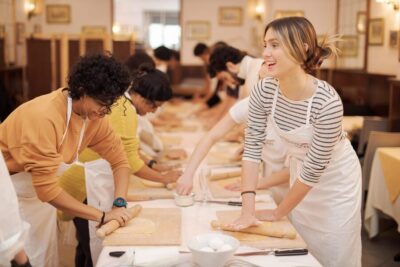
Pasta tastes better when you make it yourself. This Lecce class brings you into the Faggiano Archaeological Museum, where a local cook teaches you to shape Apulian orecchiette and sagne in a courtyard dating to the 1400s. You then eat what you made with wine, snacks, and conversation.
I like the hands-on teaching and the warm, social mood. The instructors, including Luciana, Therese, and Nonna Teresa, are praised for patience, humor, and clear English. The main drawback is group size: sessions can reach around 20 people, so the class may feel lively rather than intimate.
Key Points Before You Book
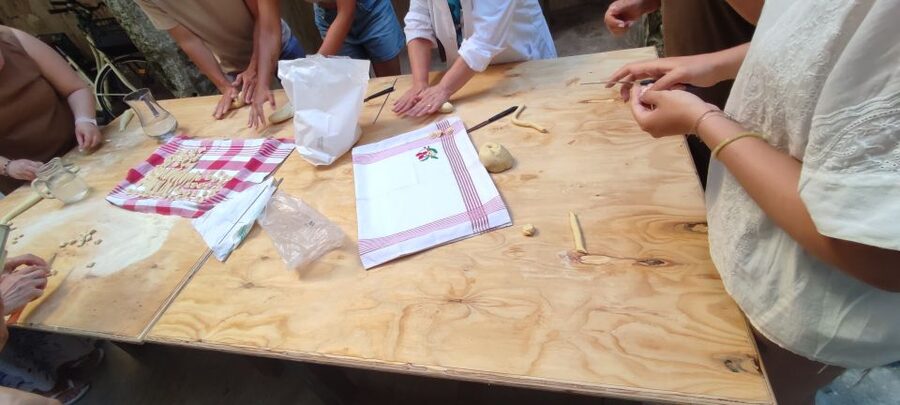
- Historic setting: You make pasta inside the Faggiano Archaeological Museum in central Lecce, in a courtyard with 1400s character.
- Two Apulian shapes: The class covers orecchiette and sagne, also described by some participants as maccheroni.
- Eat your own work: Your handmade pasta is cooked and served with wine, with snacks, dessert, or an aperitivo included in some sessions.
- Friendly multilingual instruction: Classes are offered in Italian, English, and French, with guides who help translate and demonstrate.
- A social group activity: The class is a good way to meet people from several countries, though groups can be fairly large.
- Good value at $68: For 2.5 hours of instruction, a meal, wine, and a central historic venue, the price is reasonable.
What Happens at the Faggiano Museum
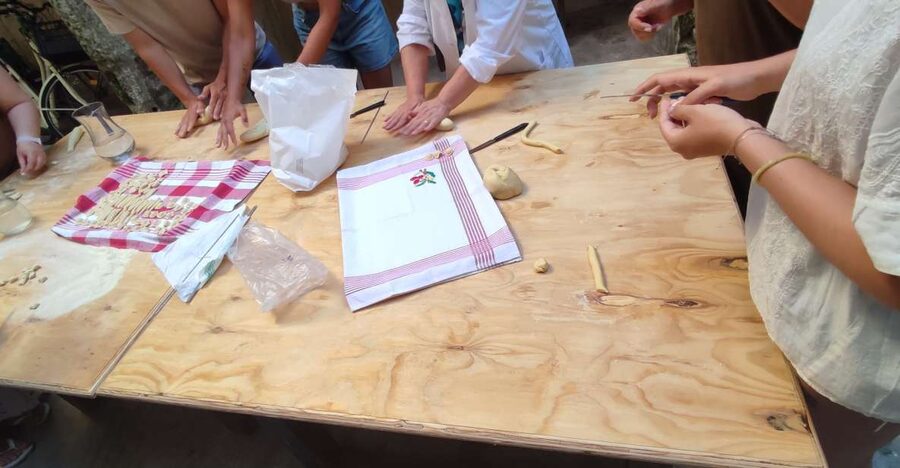
The meeting point is Via Ascanio Grandi 58, at the Faggiano Archaeological Museum in Lecce’s center. You arrange your own way there, but the location is central and easy to pair with an evening walk through the old town.
The museum adds more than a pretty backdrop. You are making pasta in a working kitchen set within an old courtyard, rather than in a generic cooking studio. The age of the building gives the class a strong sense of place, and the setting becomes part of the evening instead of something you simply pass on the way to dinner.
The courtyard is atmospheric, but it is not a private dining room designed for a tiny class. Around 20 people may attend, especially in the busy season. That can mean some crowding around the work area, although the sessions are generally organized so everyone has a place to work.
I would arrive a little early. The experience begins at the stated meeting point, and a museum entrance can be easier to find when you are not rushing through Lecce’s narrow old-town streets.
More Cooking Classes with Wine Tasting in Italy
- Florence: Pasta Cooking Class with Unlimited Wine
★ 4.9 · 10,285 reviews - Florence: Pasta & Tiramisu Cooking Class with Unlimited Wine
★ 4.9 · 6,708 reviews - Rome: Pasta Making Class with Wine, Limoncello, and Dessert
★ 4.9 · 3,177 reviews
Mixing Flour and Water the Apulian Way
The class starts with the basic dough. You follow a local cook as she shows you how to mix flour and water, handle the dough, and use the simple tools of the trade.
That simplicity is part of the lesson. There is no elaborate equipment hiding the process. You work with your hands, and the texture of the dough tells you what to do next. The instructors demonstrate, then correct your technique as you practice.
The shaping looks easy when Nonna Teresa or another pasta maker does it. It is less easy when you try it yourself. Several participants found that making pasta required more precision than expected, especially when creating a consistent shape. That is not a flaw in the class. It is one of the useful parts. You quickly see why experienced pasta makers can work so fast.
The teachers may be firm when your dough or shaping needs attention. One participant described the instructors as stern but funny, while another admitted that the pasta ladies became a little annoyed at repeated mistakes. Take that in the right spirit: this is practical instruction, not a demonstration where you quietly watch a professional do everything.
Luciana and Therese have received particular praise for their English and their ability to keep the class moving. The available languages are Italian, English, and French. If you need a demonstration repeated, the class format allows for help and explanation rather than leaving you to guess.
Learning Orecchiette and Sagne
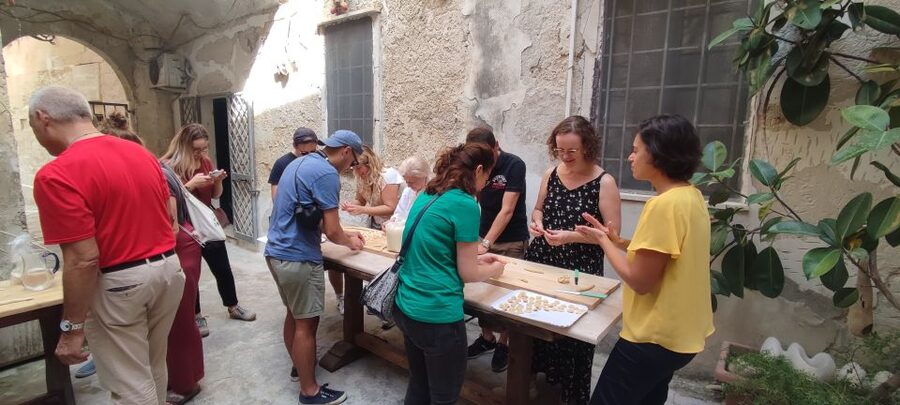
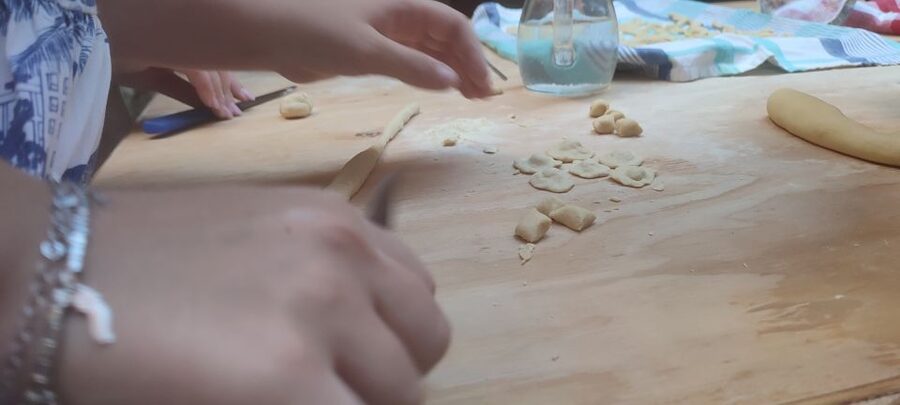
Orecchiette means little ears, a name that fits the small concave shape. It is closely associated with Puglia, and the class gives you a direct lesson in how the pasta is formed by hand.
You learn to turn portions of dough into small pieces and shape them with the proper motion. The aim is not simply to produce something edible. You are learning a traditional form that depends on touch, pressure, and repetition.
The second shape is listed as sagne, while several participants describe it as maccheroni. The exact shape and local naming may vary, but the useful point is that you practice two different Apulian pasta techniques rather than making one form for the entire session.
This gives the class more value than a quick orecchiette demonstration. You leave with a better sense of how southern Italian pasta differs from the egg-based varieties many people know from northern Italy. The dough is simple, the forms are distinctive, and the hand movements matter.
Do not expect every piece to look identical. Your first batch may be uneven, thick, or oddly shaped. That is normal. The instructors can help you improve, and the finished meal makes even the imperfect pieces worthwhile.
From Worktable to Shared Meal
After the shaping, the pasta is cooked and served back to you. This is the payoff, but it also changes the mood of the evening. The worktable becomes a shared dinner, and you get to taste the result with wine.
Past participants describe eating orecchiette and maccheroni with a simple tomato and basil sauce. Other sessions have included snacks, an aperitivo, dessert, and paired wines. The exact food beyond your pasta may vary, so I would treat the meal as a generous part of the experience rather than expect a fixed restaurant menu.
The meal is served in the same old setting, which helps the class feel like one complete evening. You are not rushed out after the final pasta shape. There is time to talk, compare results, and enjoy the wine.
This social part is one of the strongest reasons to book. People have met classmates from six or seven different countries, and the group often eats together after the lesson. If you are traveling alone, it gives you an easy way to share an evening without arranging a separate dinner companion.
Some sessions have included local music while the pasta cooked. That was described as a surprise rather than a guaranteed part of every class, so do not book specifically for music. The dependable features are the pasta lesson, the meal, the wine, and the group setting.
More Pasta Making Classes in Italy:
- 3 in 1 Cooking Class near Navona: Fettuccine, Ravioli & Tiramisu
★ 5.0 · 7,376 reviews - Pastamania – Florence Pasta Making Class
★ 5.0 · 3,050 reviews - Rome Cooking Class: Make Pasta and 3 Spritz Cocktails
★ 5.0 · 2,937 reviews - Rome: 3-in-1 Fettuccine, Ravioli, and Tiramisu Cooking Class
★ 4.9 · 2,704 reviews
How Personal Is a Class of 20?
The class works best if you enjoy shared activities. You will not have a private chef giving you one-on-one attention for the full 2.5 hours. Instead, the cook demonstrates to the group, then moves around to assist.
A group of roughly 20 can create energy and laughter. It also means you may need to wait briefly for individual help, and the work area can feel crowded. One useful point is that participants have still found the instruction personal even in a large group, because the teachers circulate and correct techniques.
I would avoid this activity if your ideal cooking class means a quiet table for two and long personal coaching. You may prefer it if you like meeting people, learning by doing, and sharing a meal at a communal table.
Families can also consider it. A class with children and teenagers has gone well, including participants aged 10 and 14. The course is hands-on, but younger children may need help with the dough and shaping. The activity is wheelchair accessible, which makes it practical for more visitors, though the booking provider is the best source for any specific mobility questions about the courtyard.
Is $68 a Fair Price?
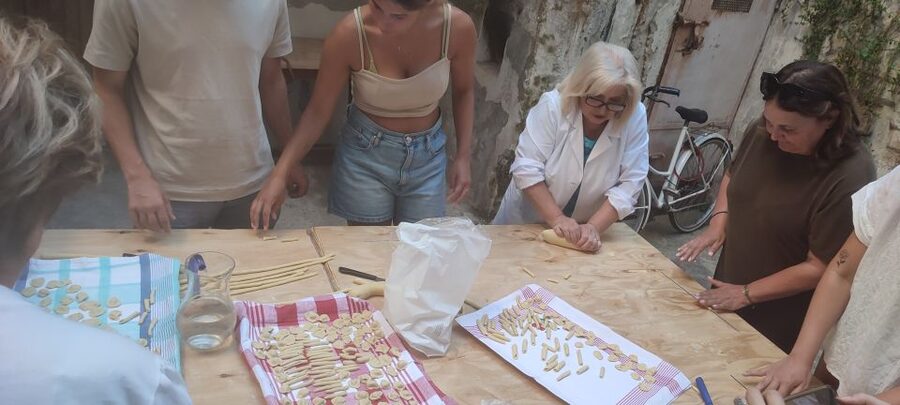
At $68 per person, this is a solid value for Lecce. The fee covers a professional local cook, cooking equipment, the museum setting, the pasta lesson, your meal, and wine.
You are paying for more than food. A restaurant dinner in Lecce would give you a polished plate, but not the chance to learn how the pasta was made or take part in the preparation. A short demonstration without dinner might cost less, but it would not offer the same amount of hands-on practice.
The value is strongest if you count the evening as both a cooking class and a social meal. The historic courtyard, local instructors, and shared table add character that a standard kitchen classroom may lack.
The price is less compelling if you want advanced culinary training or a small private lesson. The emphasis is on fun, tradition, and participation. You will learn useful techniques, but you should not expect a professional pasta qualification or a detailed lesson in regional cuisine beyond the featured shapes.
Timing, Weather, and Practical Details
The class lasts 2.5 hours, so it fits comfortably into an evening in Lecce. You can schedule it after a day of sightseeing without giving up an entire day, but leave enough time to reach Via Ascanio Grandi 58.
The experience runs rain or shine. Much of the appeal comes from the old courtyard, so rain may affect the atmosphere even if the class continues. Bring your passport or ID card, as this is listed among the required items.
Transport is not included. You need to make your own way to the museum, and there is no pickup service listed. The central location is helpful if you are staying in or near Lecce’s old town.
You can cancel up to 24 hours before the activity for a full refund, and the reserve-now, pay-later option allows you to keep your plans flexible. The course may be canceled if the minimum number of participants is not reached, in which case you are notified and refunded.
One small point to keep in mind: a participant expected photographs and had not received them at the time of writing. If photos matter to you, ask the guide directly during the class rather than assuming they are guaranteed.
Who Will Enjoy This Lecce Cooking Class?
I would recommend it to you if you want a relaxed introduction to Apulian food and prefer making dinner over simply ordering it. It suits couples, families with older children, solo visitors, and groups of friends.
It is especially good for people who enjoy conversation. The class brings together people from different countries, and the shared meal gives you an easy reason to talk. The instructors add personality, and the friendly atmosphere is one of the most consistently praised parts of the experience.
You should think twice if you dislike group activities, crowded workspaces, or being corrected while learning a manual skill. Shaping orecchiette is trickier than it looks, and the class is active rather than passive.
The experience also suits repeat visitors to Italy who have already taken a general pasta class. You are focusing on pasta linked specifically to Puglia, in a museum courtyard in Lecce, with local cooks who can explain the regional tradition.
Final Verdict: Book It for Food, Place, and Company
I would book this class if I had one free evening in Lecce and wanted something more memorable than a standard restaurant meal. The combination of fresh handmade pasta, local instruction, wine, and a 1400s courtyard gives the evening a clear sense of place.
The main tradeoff is the group size. This is not a private culinary lesson, and the room may feel busy. But if you enjoy a communal atmosphere, the larger group becomes part of the fun rather than a serious problem.
For $68, you receive a full 2.5-hour experience with food and drink, not just a quick demonstration. Come ready to make mistakes, accept a little firm guidance from the pasta makers, and enjoy the meal you helped create.
FAQ
Where does the pasta-making class meet?
The meeting point is at the Faggiano Archaeological Museum, Via Ascanio Grandi 58, in central Lecce.
How long does the experience last?
The class lasts 2.5 hours.
How much does the class cost?
The listed price is $68 per person.
Which types of pasta will I learn to make?
You will learn to make orecchiette and sagne. Some descriptions and participant accounts refer to the second shape as maccheroni.
Is food included after the class?
Yes. You eat the pasta you make after the lesson, with wine. Some sessions have also included snacks, an aperitivo, or dessert.
What languages are available?
The instructors offer the experience in Italian, English, and French.
Is the activity wheelchair accessible?
Yes, the activity is listed as wheelchair accessible.
What should I bring?
Bring your passport or ID card. Transport to the meeting point is not included, and the class takes place rain or shine.
Just added around Italy
- Cesarine: Home Cooking Class & Meal with a Local in Catania★ 4.5 · 10 reviews
- Cooking Class in a Sicilian countryhouse★ 5.0 · 5 reviews
- Cesarine: Market Tour & Home Cooking Class in Catania★ 4.0 · 6 reviews
- Cooking Class in Taormina with Lunch Included★ 5.0 · 2 reviews
- Cooking Class and Wine Pairing in Capri★ 5.0 · 57 reviews
- Cooking class in Capri for small groups★ 4.0 · 4 reviews
- Private Cooking Class Experience in Reggio Calabria★ 5.0 · 5 reviews
- Lezione di Cucina : Pasta Fresca★ 5.0 · 12 reviews
Pasta Making Classes, compared.
3 in 1 Cooking Class near Navona: Fettuccine, Ravioli & Tiramisu
Read our review →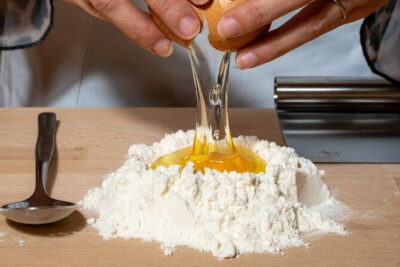
Pasta & Tiramisu Cooking Class with Unlimited Wine
Read our review →
Pasta Making Class with Wine, Limoncello, and Dessert
Read our review →
Rome Cooking Class: Make Pasta and 3 Spritz Cocktails
Read our review →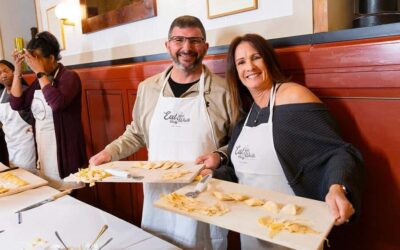
3-in-1 Fettuccine, Ravioli, and Tiramisu Cooking Class
Read our review →