
REVIEW · CHIANG MAI PROVINCE, THAILAND
We Cook Thai Home Garden Cooking School
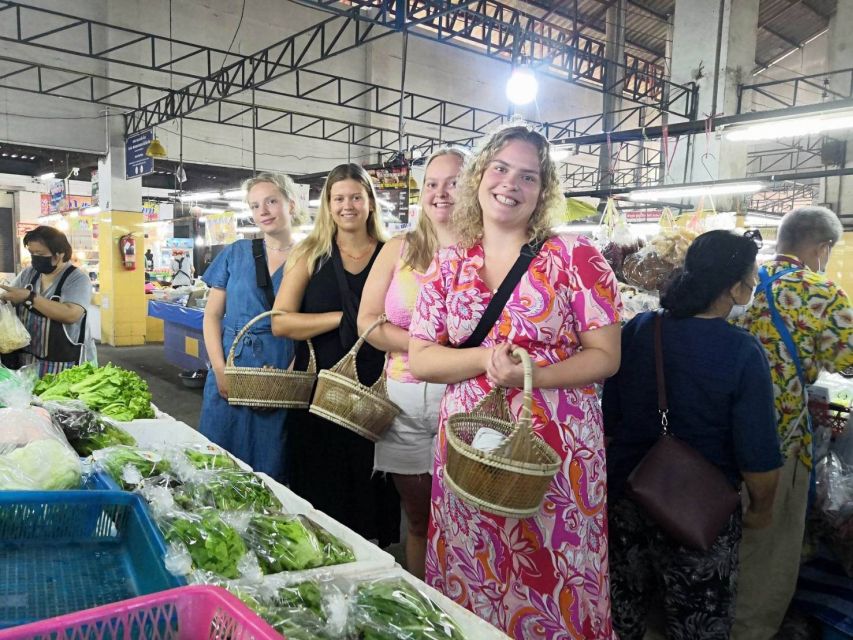
Thai food is best learned with all your senses. At We Cook Thai Home Garden Cooking School, Mam begins at a local market, where you see, smell, and handle the herbs, vegetables, spices, and sauces that give Thai food its punch. Then you return to her home garden kitchen and cook a full meal, one wok per person.
I especially like the market visit, which gives the cooking real local context instead of treating ingredients as anonymous items on a recipe sheet. I also like the generous hands-on format: you choose dishes by category and cook them yourself, with Mam guiding each step.
The main thing to consider is the amount of food. You may prepare five or six dishes, depending on the class format, and the portions are generous. Several people needed takeaway boxes, so skip a large breakfast or lunch before you arrive.
Key points to know
- Mam leads both the market tour and cooking class, giving the experience a personal, home-based feel.
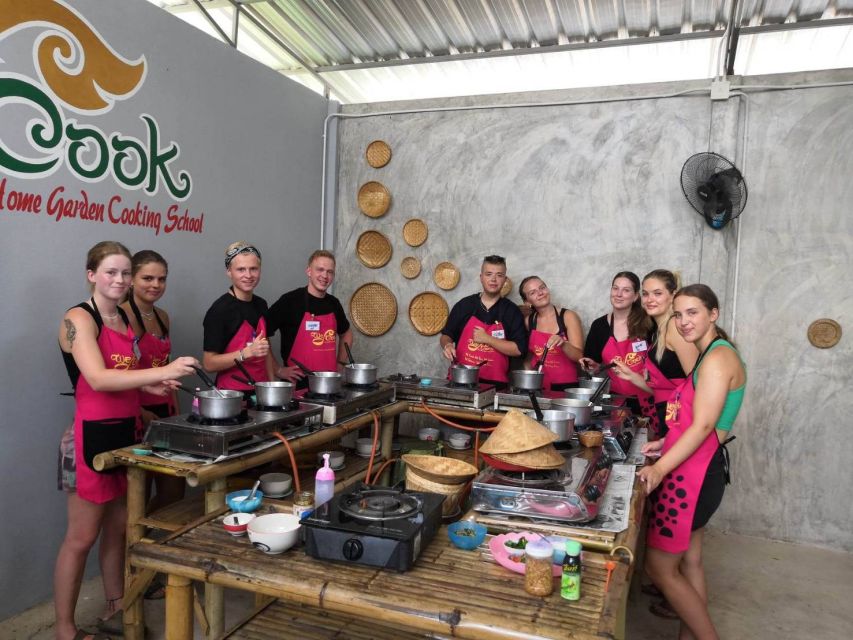
- You get your own wok, so this is not a demonstration where you simply watch someone else cook.
- The menu covers several Thai food categories, including curry, soup, noodles or rice, a starter, salad, and dessert.
- The local market is more than a shopping stop, with explanations of herbs, eggplants, basil, fruit, spices, and Thai cooking flavors.
- The class suits beginners and confident cooks, with patient guidance and room to choose dishes around dietary needs.
- The price is strong value at $32 per person, especially when the market tour, ingredients, meal, recipe book, certificate, and eligible transport are included.
Starting at the local market with Mam
The class begins with a visit to a local market, usually before you reach the home cooking school. This is a smart first step. Thai recipes can feel mysterious when you meet ingredients only after they have been chopped, fried, and mixed together. At the market, you see what those ingredients look like in their original form.
Mam points out the herbs, vegetables, fruit, spices, and other items used in Thai cooking. You can expect to learn about different types of eggplant, basil, rice, and fresh produce. The useful part is the sensory lesson. You get to touch and smell ingredients, not just hear their names in English.
This market stop also gives you a better sense of how Thai meals are built. You begin to notice the contrast between hot, sour, salty, sweet, fresh, and fragrant elements. That matters later, when Mam asks you to judge a dish by taste, sight, and feel rather than relying only on exact cooking times.
The market may be the most valuable part for anyone planning to cook Thai food at home. A recipe can tell you to add basil or curry paste, but it cannot always explain which ingredient to look for or what it should smell like. Mam fills in that missing piece.
The tradeoff is that market conditions can vary. This is a real local market visit, not a polished food museum, so you should expect a practical shopping trip rather than a formal sightseeing tour. That is part of its appeal, but keep your expectations focused on learning ingredients and local food habits.
More Thai Cooking Classes in Chiang Mai:
- Half-Day Thai Cooking Class at Organic Farm in Chiang Mai
★ 5.0 · 19,087 reviews - Chiang Mai: Cooking Class, Market & Thai Herbs Garden Tour
★ 4.9 · 4,824 reviews - Thai and Akha Cooking Class in Chiang Mai
★ 5.0 · 4,358 reviews
Cooking in a home garden kitchen
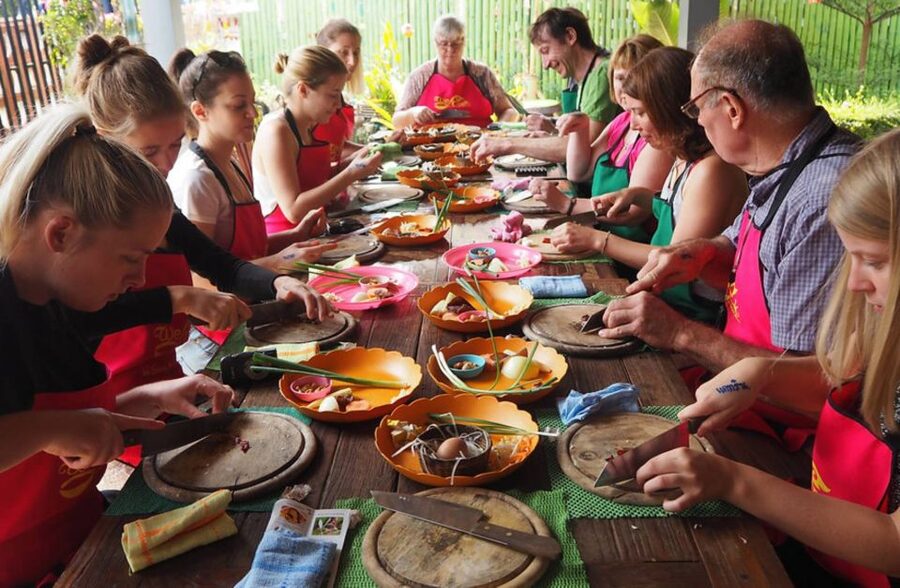
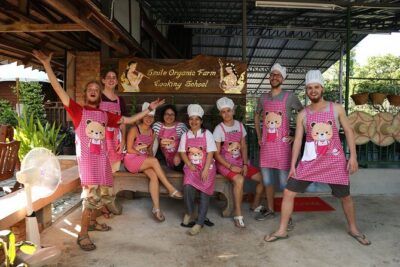
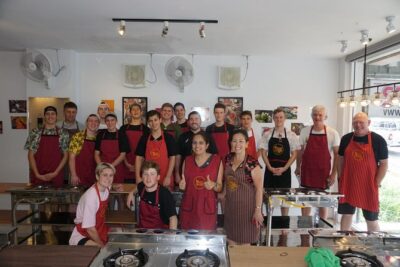
After the market, you head to Mam’s home, where the cooking takes place in a garden setting. The atmosphere is more personal than a large commercial cooking school. Several classes have been small, with groups of three, four, eight, or around ten people, although the stated capacity can reach twelve.
A smaller class gives Mam more time to help each person. That is useful when you are learning to balance chili, lime, fish sauce, coconut milk, or curry paste. It also helps if you have never cooked with a wok before.
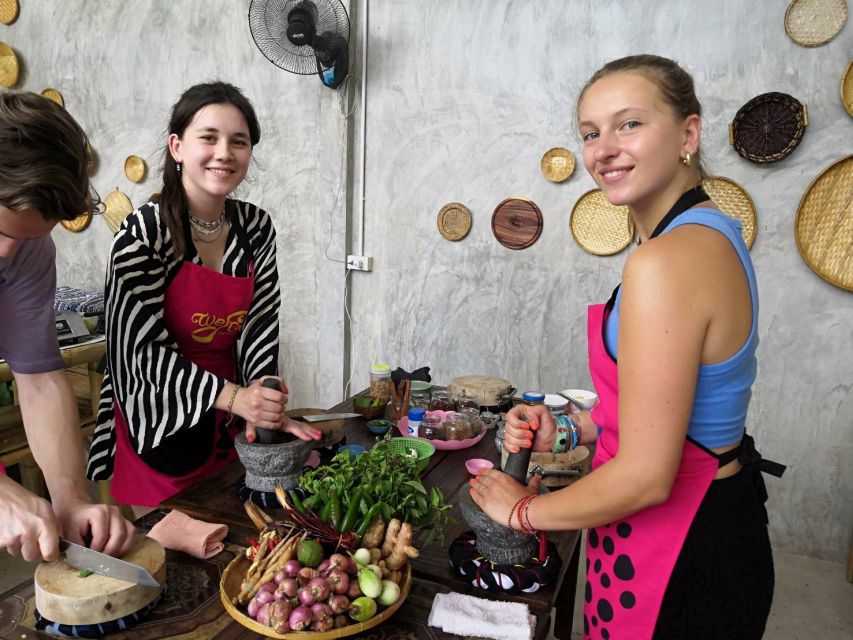
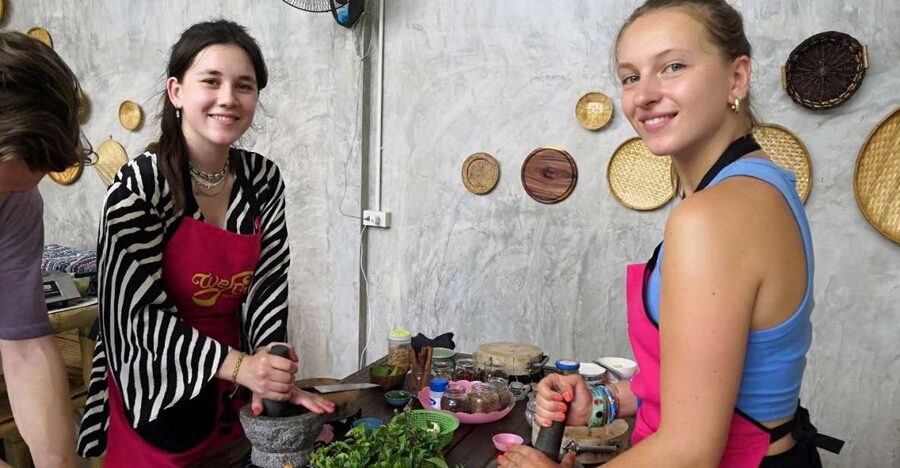
The kitchen is arranged for hands-on work. You get one wok per person and the ingredients needed for the dishes. You are not simply watching Mam prepare a sample plate while everyone else stands back. You chop, stir, fry, season, and adjust your own food with her help.
The home setting adds warmth to the experience. The garden includes an outdoor dining area, and one class even included feeding the fish in the pond. These small touches help the class feel like a visit to a local home rather than a production line for cooking demonstrations.
The setting may not suit you if you want a highly formal culinary school with professional restaurant equipment and a strict lecture format. This class is friendly, practical, and relaxed. You come to cook a lot of food, learn useful techniques, and enjoy the company.
Choosing five or six Thai dishes
The menu is organized by food categories. You select one dish from each category, creating a full meal rather than focusing on only one recipe. The information for the experience describes six categories, while several class accounts describe preparing five dishes. Some participants specifically made six, so the final number can depend on the class arrangement and available menu.
Typical choices can include:
- A starter such as vegetable spring rolls
- A soup such as Tom Yum or Thai noodle soup
- A curry such as Massaman curry or Khao Soi
- A main dish such as Pad Thai or Khao Pad Gai, Thai chicken fried rice
- A salad such as papaya salad
- A dessert such as mango sticky rice
You are not locked into one fixed menu. That is a major strength. If you have already eaten plenty of Pad Thai during your trip, you can choose something different. If you want to recreate a favorite Thai dish at home, you can often select it from the menu.
The variety also shows how Thai meals work as a group. You are not making six versions of the same flavor. You may move from a sharp salad to a creamy curry, then to a fragrant soup and a sweet dessert. This gives you a better lesson in balance than a single-recipe class would.
Dietary needs can be accommodated, including vegetarian choices. One participant with food issues received suitable adjustments, and another class used vegetarian alternatives. Still, you should tell the provider about your needs in advance so the ingredients can be prepared properly.
What the hands-on cooking is really like
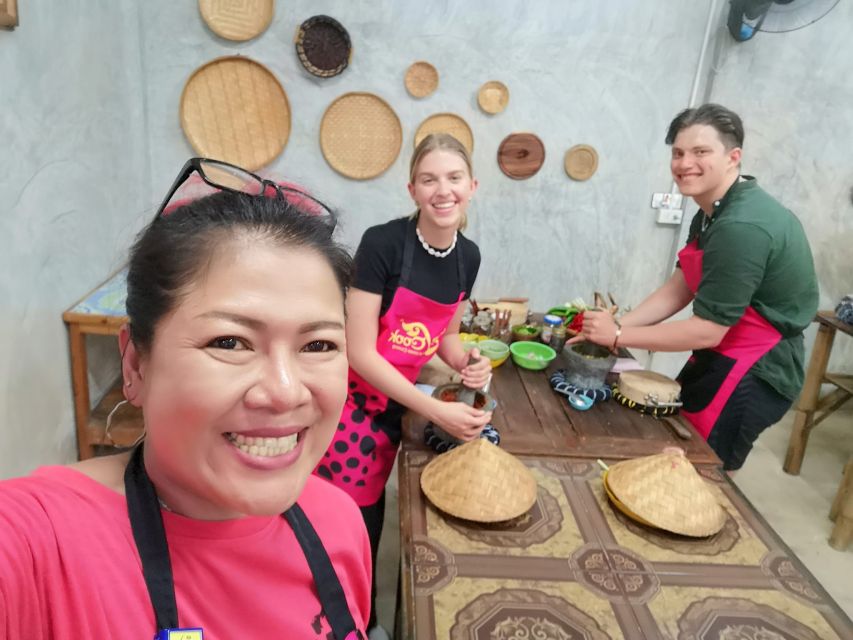
Mam’s teaching style is patient and encouraging. She explains each stage, demonstrates when needed, and helps you correct mistakes without making the class feel like an exam. That makes the experience suitable for someone who rarely cooks, including older participants and families with teenagers.
You will learn more than a list of ingredients. Mam explains how Thai spices, sauces, herbs, and vegetables work together. She also encourages you to watch for signs during cooking, such as changes in color, texture, aroma, and consistency.
That approach is useful because Thai cooking often depends on judgment. A recipe might say to cook something for a set number of minutes, but your wok, heat level, and ingredient size can change the result. Learning what the food should look and smell like gives you a better chance of reproducing it at home.
You should still be ready to participate. This is not the best choice if you want to sit quietly and receive a prepared lunch. The fun comes from doing the work yourself, and the class moves through many dishes in a half-day session.
Each person having a wok is another strong point. In some cooking classes, one person stirs while the rest of the group watches. Here, you get your own cooking station, which means you can season your dish to suit your taste and take responsibility for the final result.
A few more cooking classes around Chiang Mai worth a look
- Chiang Mai: Authentic Cooking Class with Market & Farm Visit
★ 4.9 · 4,546 reviews - Chiang Mai: Cooking Class with Market and Pickup
★ 4.9 · 1,365 reviews - Chiang Mai: Cooking Class with Organic Farm at Mama Noi
★ 4.9 · 1,151 reviews - Full Day Thai Cooking at Farm (Chiang Mai)
★ 5.0 · 1,127 reviews
Sitting down to eat the results
The meal at the end is part of the reward. After cooking in the kitchen area, you sit down in the dining space and eat what you have prepared. The separation between cooking and dining gives the meal a proper finish instead of having you eat while standing beside a hot stove.
Expect a lot of food. Several people found it difficult to finish everything, and takeaway boxes were available for leftovers. Mango sticky rice was one dish that commonly ended up being saved for later.
This is why I would avoid a heavy meal beforehand. The morning class can finish with a substantial amount of food before early afternoon, and an evening class is just as generous. Come hungry, but not so hungry that you rush through the market or cooking.
The final meal also lets you compare results with the rest of the group. You may have chosen a different curry or noodle dish from the person beside you, so the table becomes a small tour of Thai flavors.
Morning or evening class?
You can choose a morning or evening session. The morning class is a good fit if you want the rest of the day free for temples, museums, or a walk around Chiang Mai. It also places the market and cooking activity early, when you may find the market calmer.
The drawback is obvious: breakfast becomes a strategic decision. Several participants found the five-course meal hard to manage before 1 p.m. A light breakfast, or no breakfast if that suits you, makes more sense than arriving full.
The evening course starts with pickup around 4:00 to 4:30 p.m. This works well after a morning of sightseeing and gives you a relaxed food-focused plan for the evening. The class lasts about 270 minutes to five hours, so do not schedule a tight appointment afterward.
Free transport is included for residences within three kilometers of central Chiang Mai. The information specifically lists pickup for the evening course, so confirm the exact arrangement for a morning session and for accommodation outside that radius.
Price, value, and what you receive
At $32 per person, the class offers good value for a five-hour activity. You receive an English-speaking guide, the market visit, a welcome snack or seasonal fruit, all cooking ingredients, your own wok, the meal, a cookbook, and a certificate.
The ingredient cost alone does not tell the whole story. You are also paying for Mam’s instruction, the market explanation, transportation within the stated area, and the chance to cook several complete dishes. For someone interested in Thai food, this is more useful than a short demonstration followed by one small tasting plate.
The certificate is a pleasant extra, but the cookbook has more lasting value. It gives you a way to repeat the dishes after your holiday, when the smells and flavors are still fresh in your mind.
The value is strongest if you plan to cook at home. If you only want a quick meal or a short cultural stop, the five-hour length may feel like too much. You should book this for the experience, not just the lunch.
Who will enjoy this class most?
I would recommend it to first-time Thai cooking students, couples, families with taller children, solo visitors who enjoy meeting people, and anyone who wants more context for the food they are eating in Chiang Mai.
It also suits mixed-skill groups. A beginner can follow Mam’s step-by-step help, while a more confident cook can pay closer attention to seasoning, texture, and technique.
The class is not suitable for participants under 120 centimeters, roughly 3 feet 9 inches, because of the wok height and safety. A shorter child or accompanying parent can join as a visitor for THB300 per person and receive two dishes in one cooking course.
The experience is wheelchair accessible, according to the activity information. For transport, remember the three-kilometer limit from central Chiang Mai.
Practical tips before you book
- Wear clothes you can cook in. You will spend several hours working around food and heat.
- Arrive hungry but sensible. The meal is large, and five or six dishes add up quickly.
- Think about your menu before class. Choose dishes you genuinely want to learn, not only the most familiar names.
- Tell Mam about dietary needs early. Vegetarian options are available, and food adjustments may be possible.
- Leave room in your schedule. The class can run from 270 minutes to five hours.
- Use the market lesson later. Pay attention to the look and smell of basil, eggplant, curry ingredients, and herbs. That knowledge will help you shop at home.
- Plan for leftovers. You may not finish everything, especially if you choose several filling dishes.
Free cancellation is available up to 24 hours before the activity, and you can reserve now and pay later. Those terms are helpful if your Chiang Mai plans are still shifting.
Should you book We Cook Thai Home Garden Cooking School?
Yes, if you want a warm, hands-on introduction to Thai food and have half a day to spare. The combination of market visit, personal instruction, one wok per person, several dishes, and a sit-down meal gives you both cultural context and useful cooking skills.
I would be especially keen to book if Mam is leading the class. Her patient teaching, energy, and clear explanations are central to the experience. The main caution is the size of the meal and the long session. Come prepared to cook seriously, eat generously, and leave with more food knowledge than you can fit in your suitcase.
FAQ
How long does the cooking class last?
The activity lasts about 270 minutes to five hours. Check the available starting time when booking.
Is there a morning and evening class?
Yes. You can choose between morning and evening sessions, subject to availability.
What time is pickup for the evening class?
Evening pickup is listed between 4:00 and 4:30 p.m.
Is transportation included?
Free transportation to and from your residence is included within a three-kilometer radius of central Chiang Mai. Pickup is specifically listed for the evening course.
How many dishes will I cook?
You select one dish from each food category. The activity describes six categories, while some class formats prepare five dishes. The exact number can vary.
Do I get my own cooking station?
Yes. The experience includes one wok per person and all ingredients needed for cooking.
Is the class suitable for beginners?
Yes. No cooking experience is required, and the instruction is designed for all skill levels.
Are vegetarian options available?
Yes. Vegetarian options are available. Tell the provider about your dietary needs in advance.
Can children join the class?
Participants must be at least 120 centimeters tall for safety reasons. A person under that height can join as a visitor for THB300 per person and receive two dishes in one cooking course.
What is included besides the food?
The price includes an English guide, local market tour, welcome snack or seasonal fruit, cooking ingredients, your own wok, a cookbook, and a certificate. Personal expenses are not included.
Just added around Chiang Mai
- Aroidee’s Farm-Fresh Thai Cooking Experience★ 5.0 · 8 reviews
- Signature Thai Cooking Course★ 5.0 · 79 reviews
- Private Half-Day Thai Cooking Class in Chiang Mai★ 5.0 · 4 reviews
- Half Day Guided Thai Cooking Class in Chiang Mai★ 5.0 · 13 reviews
- Online Thai and Akha Cooking Class★ 5.0 · 70 reviews
- Private Virtual Thai Cooking Class★ 5.0 · 9 reviews
- Northern Thai Cooking Class in Chiang Mai in a Countryside Home★ 5.0 · 2 reviews
- 5 Hour Morning Thai Cooking Course★ 5.0 · 31 reviews
Thai Cooking Classes, compared.
Half-Day Thai Cooking Class at Organic Farm in Chiang Mai
Read our review →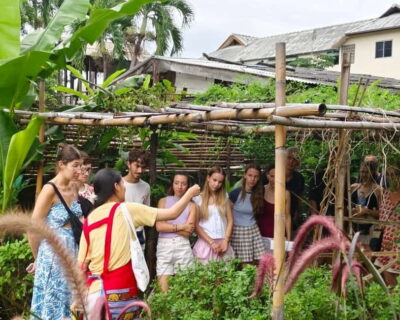
Cooking Class, Market & Thai Herbs Garden Tour
Read our review →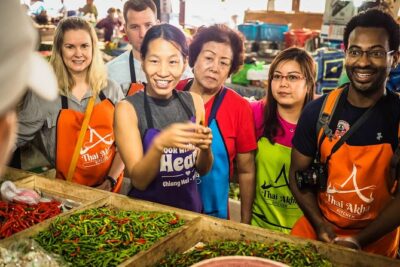
Phuket Thai Cooking Class with Market Tour Option
Read our review →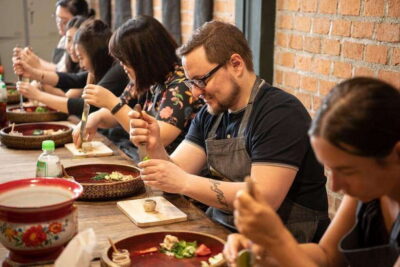
Tingly Thai Cooking School Half-Day Cooking Class
Read our review →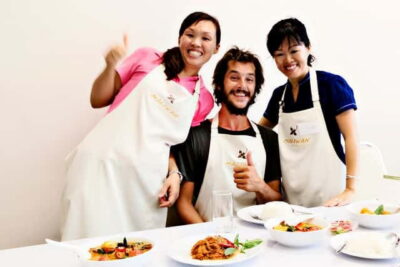
Lists this class appears in