
REVIEW · LAZIO, ITALY
Rome: Pasta Cooking Class in a Professional Pasta Laboratory
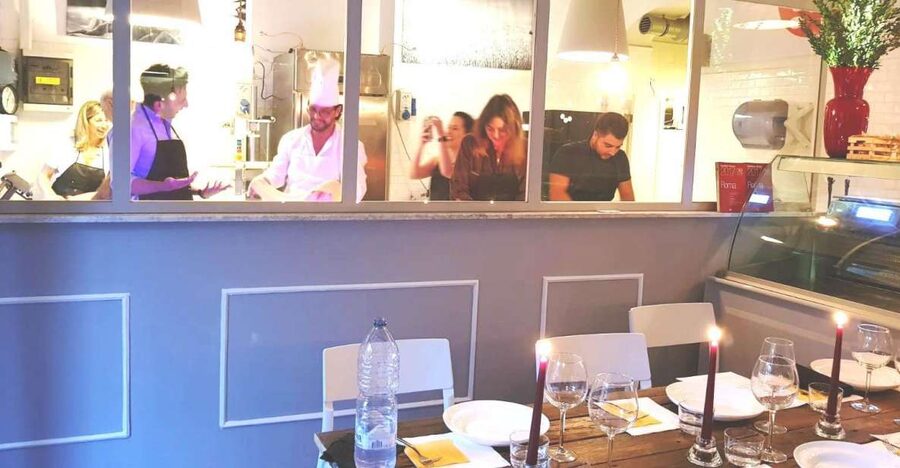
Pasta tastes better when you make it. This three-hour class takes you inside Pastificio Faini, a working pasta laboratory on Via dei Latini, where Chef Angelo and his team teach traditional techniques in a small, friendly setting. You work with three different grains, shape several kinds of pasta, prepare sauces, and eat the results with Italian wine.
I especially like the hands-on rolling-pin method, since you learn how to feel and shape the dough instead of simply feeding it through a machine. I also like the serious attention to different diets, including gluten-free and vegan pasta. The main consideration is that the class packs a lot into three hours, so some parts, such as the Thursday gnocchi session, may be more demonstration than full practice.
You pay about $66.84 per person. That is not Rome’s cheapest cooking lesson, but it includes ingredients, equipment, recipes, a chef’s hat and apron, wine, water, and a full meal at the end. For a pasta lover who wants useful skills rather than a quick tourist photo, the price feels fair.
Five things that make this pasta class different
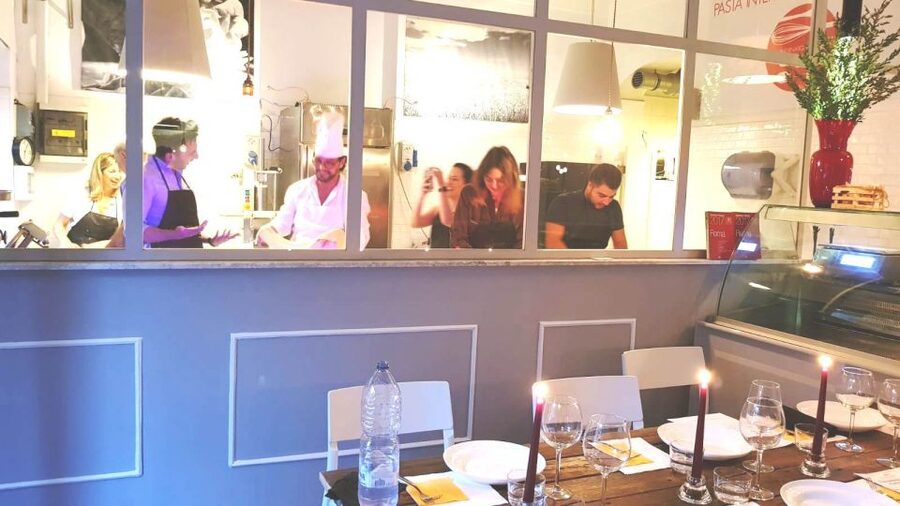
- You cook inside a real professional pastificio, not a generic classroom set up for tourists.
- Three grains shape the lesson, including ancient Triticum Monococcum, Senatore Cappelli, and gluten-free buckwheat.
- A rolling pin does the work, giving you a better feel for handmade dough than a machine-only class.
- You prepare several pasta styles and Roman sauces, including ravioli, thin pasta sheets, and carbonara, cacio e pepe, or gricia.
- You sit down to eat what you made, with Italian wine and conversation after the cooking is finished.
Arriving at Pastificio Faini on Via dei Latini
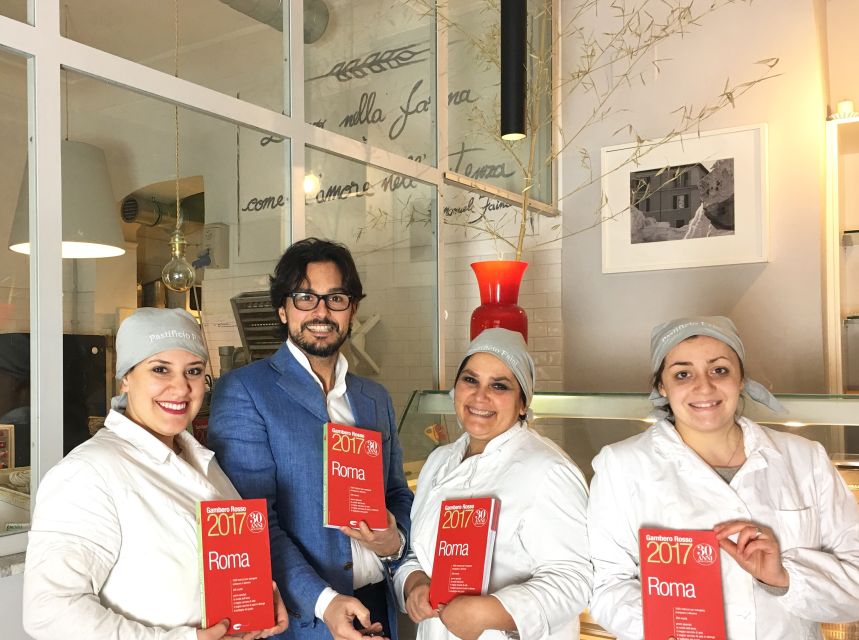
The class begins at Pastificio Faini, 13 Via dei Latini, Rome, 00185. You return to the same place after the meal, so there is no second meeting point to find at the end of the evening.
The setting matters. You are not just mixing flour in a rented studio. You are working inside a professional pasta laboratory, which gives the lesson a stronger connection to the food you are learning to make. The atmosphere is practical and informal, with the equipment, work surfaces, and pace of a real pasta business around you.
The class is offered in English and Italian. The group is limited to nine participants, although some information describes a maximum of ten. Either way, this is a small class, not a large cooking show. You should have a fair chance to see the demonstrations and receive help at your own work surface.
The instructors include Chef Angelo, who is highlighted as the main teacher, along with Emanuele Faini and his team. Emanuele is praised for his warm, funny teaching style and his family connection to pasta making. That personal touch is one reason the class feels less like a formal lecture and more like being welcomed into someone’s food tradition.
More Pasta Making Classes in Rome
- 3 in 1 Cooking Class near Navona: Fettuccine, Ravioli & Tiramisu
★ 5.0 · 7,376 reviews - Rome: Pasta Making Class with Wine, Limoncello, and Dessert
★ 4.9 · 3,177 reviews - Rome Cooking Class: Make Pasta and 3 Spritz Cocktails
★ 5.0 · 2,937 reviews
The opening lesson: flour, safety, and the Roman approach
The class begins with a welcome drink and an introduction to safe food-cutting procedures. This is a small but useful detail. You will handle knives and fresh ingredients, so learning the correct way to cut before the cooking gets busy makes sense.
The teachers demonstrate each stage first, then have you follow along. That rhythm works well for beginners. You do not need professional cooking skills, and the instructions are designed to be clear enough for someone who has never made pasta before.
Expect a lively room rather than a silent technical workshop. The instructors use humor, music, and plenty of encouragement. Emanuele is repeatedly praised for being patient and attentive, especially when helping individual participants who need a little extra guidance.
If you are hoping for a serious culinary-school lesson, keep your expectations in check. You will learn useful methods and pasta basics, but the class is also social. You cook with people from different countries, then sit together to eat. The experience is meant to be practical and enjoyable, not an examination.
Three grains, three ways to understand pasta dough
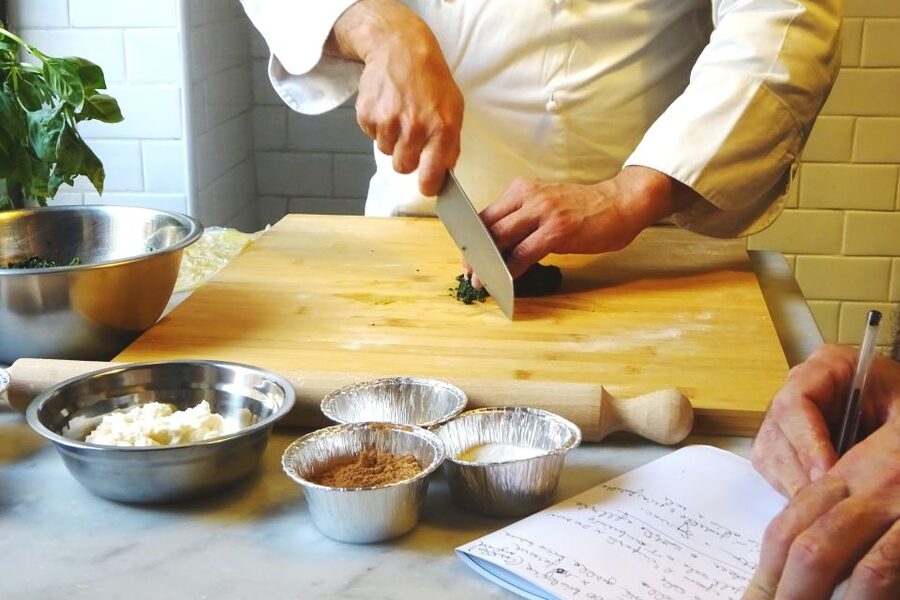
One of the class’s most interesting features is its use of three different grains. You work with Triticum Monococcum, Senatore Cappelli, and buckwheat flour.
Triticum Monococcum, also known as einkorn, is described as one of the first cereals cultivated by people, dating back roughly 7,500 BC. You do not need to memorize that date to enjoy the dough, but the ingredient adds a useful link between old grain traditions and the pasta on your plate.
Senatore Cappelli has its own unusual story. Nazareno Strampelli selected the grain in 1915. It later disappeared from common use in the 1960s before being brought back by a small farmer. Using it in class gives you a chance to compare more than one standard white flour and notice how grain affects texture and handling.
The third flour is buckwheat, or Grano Saraceno. It is gluten-free and gives the class a way to include participants who cannot eat ordinary wheat pasta. The gluten-free student in one family group was taught to make a separate pasta, rather than simply being offered a substitute dish.
That is a real strength. You should advise the provider about dietary requirements before the class, but gluten-free participants are specifically accommodated. One pasta is also made without egg, making it vegan. This is especially useful for mixed groups, where one person may have a dietary restriction and everyone else still wants to cook together.
Rolling the dough by hand instead of using a machine
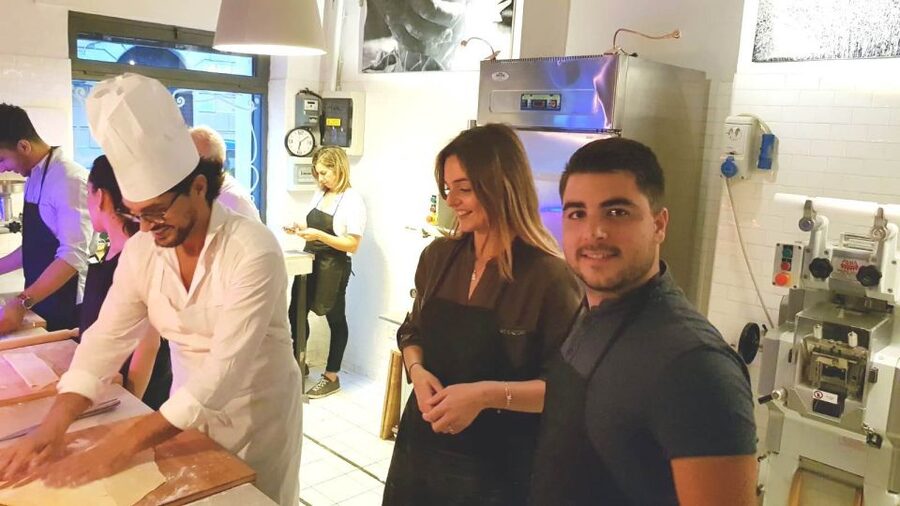
The rolling-pin method is a major reason to choose this class. You make thin sheets of dough by hand, learning to press, roll, turn, and judge the thickness as you go.
A pasta machine can produce neat sheets quickly, but it can also hide the basic skill. With a rolling pin, you learn how the dough changes under pressure. You see when it is too thick, too dry, or uneven. Those are the details that help when you try the recipes at home.
The teachers demonstrate first, then move around the room to help. That balance is important. A completely hands-off class can leave you guessing, while a demonstration-only lesson gives you little to take home. Here, you do the work, with corrections and advice when needed.
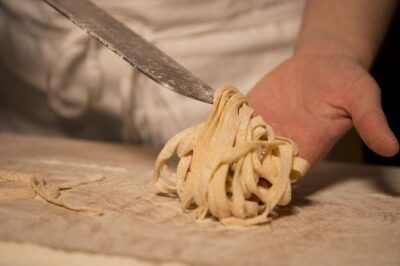
You will shape several kinds of pasta, including thin pasta and filled pasta. The exact mix may vary, but the lesson includes three types of ravioli and the preparation of fillings. You may also make fettuccine or a similar cut, depending on the day’s plan.
This is not the right class for someone who wants to toss dough through an electric machine while drinking wine. It is better suited to you if you want to understand how pasta sheets are rolled, cut, shaped, and filled by hand.
Same place, a different thing to cook:
- Rome: 3-in-1 Fettuccine, Ravioli, and Tiramisu Cooking Class
★ 4.9 · 2,704 reviews - Rome: Fettuccine Pasta Cooking Class in Rome’s City Center
★ 4.8 · 2,414 reviews - Fettuccine & Tiramisù: Cooking Class with Wine & Limoncello
★ 4.9 · 2,103 reviews - Pasta Cooking Class Near the Colosseum with 3 Spritz Cocktails
★ 5.0 · 1,686 reviews
Ravioli, fillings, and the satisfaction of making dinner
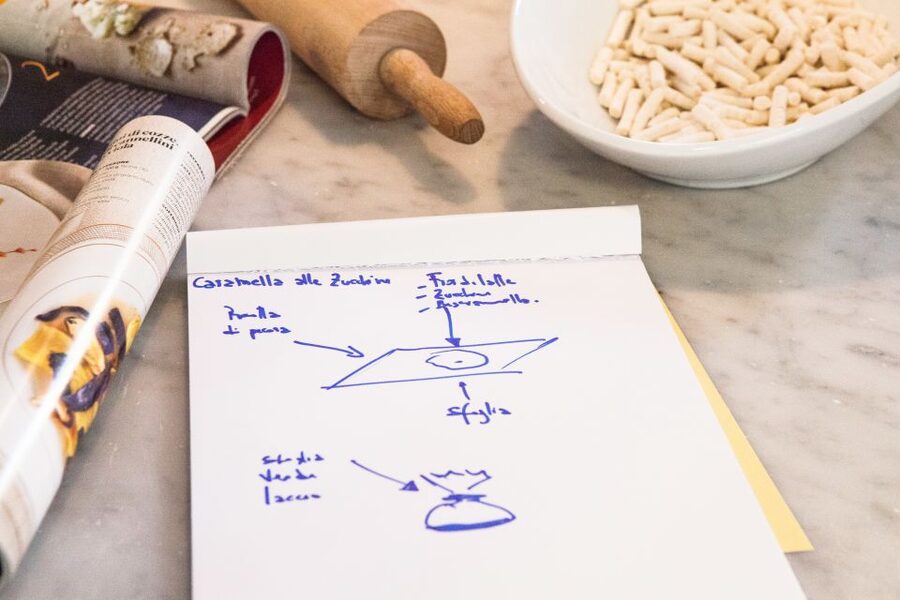
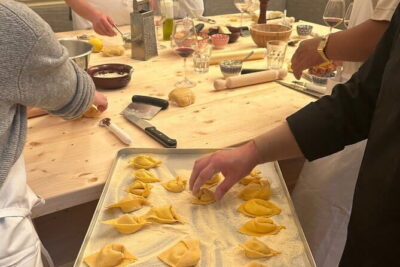
Filled pasta is where the class becomes especially useful. You learn how to create the sheets, portion the filling, close the ravioli, and avoid the common problems that can ruin them.
The basic challenge is not just making attractive shapes. The filling must be placed carefully, excess air needs to be pressed out, and the edges must seal properly. The teachers guide you through these steps so you can repeat them at home.
You also prepare sauces to go with the pasta. The Roman options include carbonara, cacio e pepe, and gricia. These are simple-looking sauces, but they depend on timing and texture. A good class should help you see how the sauce comes together rather than treating it as something poured over the finished pasta.
You may also prepare a simple tomato sauce. That is a practical addition because it is easy to repeat at home and works well for many kinds of fresh pasta.
Do not expect every participant to produce identical shapes. Handmade pasta has small variations, and that is part of its appeal. The goal is to understand the process well enough to make a good meal, not to create factory-perfect pieces.
Thursday changes the lesson to homemade gnocchi
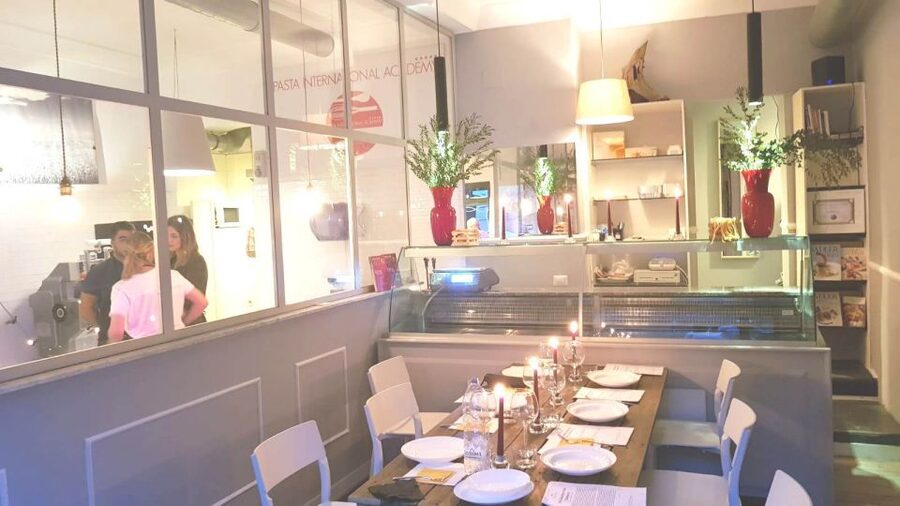
Thursday classes include homemade Italian gnocchi with fresh potatoes. This gives you a different kind of lesson, since gnocchi dough behaves very differently from pasta dough.
The Thursday option may appeal to you if gnocchi is the dish you most want to learn. There is one practical warning, though. The potato dough portion has been described as more of a quick demonstration than a full chance for every participant to bring the dough together and receive feedback.
That limitation appears to come from the three-hour schedule. The class already covers several pasta shapes, fillings, sauces, and the final meal. If you choose Thursday mainly for intensive gnocchi practice, you may find the hands-on time limited.
For a broad introduction to handmade Italian food, Thursday still sounds worthwhile. If your priority is learning the rolling-pin method and making ravioli, another day may give you a better fit.
Eating your own pasta with wine
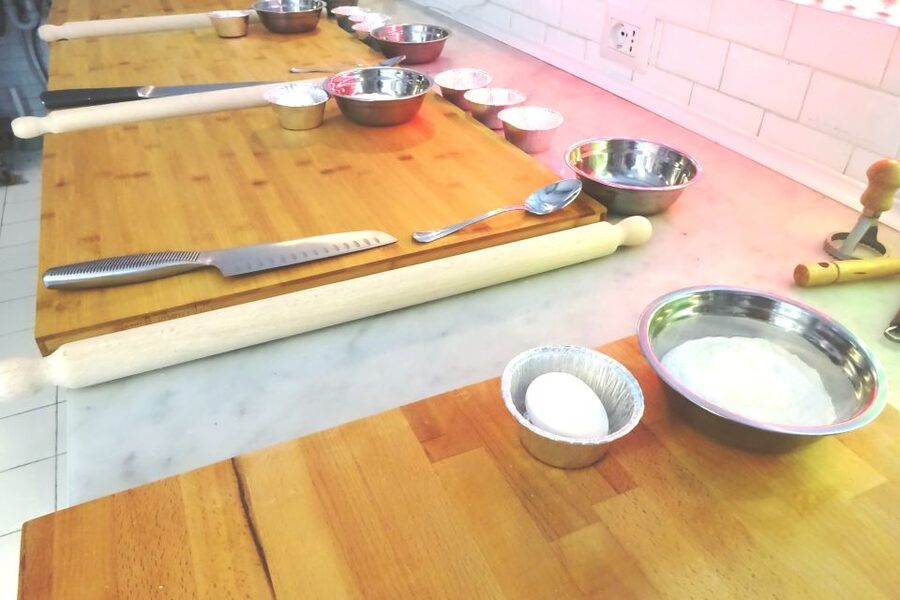
After the cooking, the pasta is cooked and served back to the group. You sit down at the same location and eat what you prepared, along with the sauces and a glass of Italian wine. Water is also included.
This meal is more than a reward. It lets you taste the effect of your work while the instructions are still fresh. You can see how thin the pasta should be, how the filling balances with the sauce, and which shapes hold sauce best.
The shared table also gives the class its social side. You may begin as a room full of strangers, but the meal creates an easy reason to talk. The atmosphere has been described as warm and intimate, with the hosts eating and chatting alongside the group.
Wine is included, but this is not a wine-tasting tour. The focus remains on pasta. If you prefer a class where you can concentrate on technique without a large drinking component, this format should suit you.
A surprise dessert has occasionally been included, but it should not be treated as a guaranteed part of the experience. The confirmed food is the pasta, fillings, sauces, wine, and water.
Chef hats, recipes, and skills you can use at home
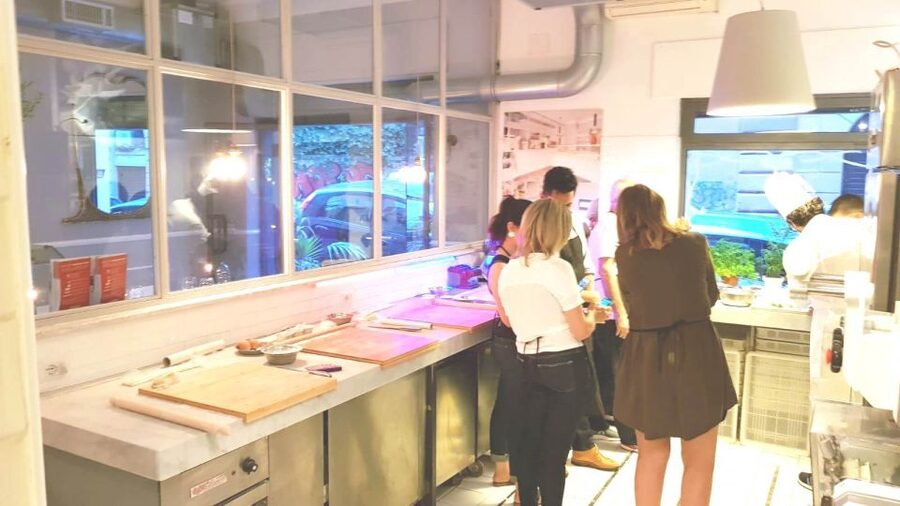
You receive a professional branded chef hat and an apron signed by the chef. These are fun keepsakes, though the real souvenir is the set of recipes and techniques.
The recipes are included, along with the ingredients and equipment used during the class. That makes the lesson more valuable than a one-time meal. You can return home with a plan for making fresh pasta, ravioli, sauces, and a vegan pasta without egg.
The class is especially useful for families and first-time cooks. Children and adults can work together, and the teachers are used to helping people at different skill levels. A family with a coeliac child was able to make gluten-free pasta during the same session, which shows how the format can work for mixed dietary needs.
You should still disclose every dietary requirement in advance. The class specifically caters for gluten-free participants, but the kitchen needs that information before you arrive.
Is $66.84 a fair price in Rome?
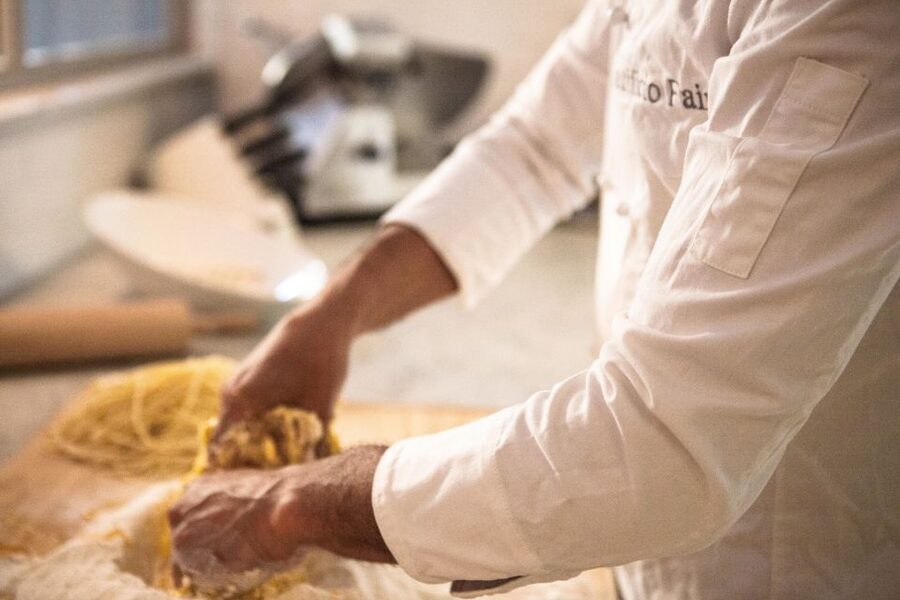
At about $66.84 per person, this class sits in the middle range for a Rome cooking experience. You are not paying only for a plate of pasta or a short demonstration.
The price includes three hours of instruction, ingredients, equipment, recipes, a chef’s hat and apron, wine, water, and the meal you prepare. You also get the setting of a professional pastificio and a small class capped at nine participants.
The strongest value comes from the amount of participation. If you only want to eat fresh pasta, a Roman trattoria may cost less. If you want a short social activity with a glass of wine, other options may also be cheaper.
But if you want to learn a repeatable skill, the price is easier to justify. The rolling-pin work, three grains, filled pasta, sauces, and take-home recipes give you plenty to use later. I would consider it good value for a pasta enthusiast, particularly during a longer Rome stay when you want one activity away from monuments and museums.
Who should book this experience?
I would choose this class if you:
- Want to make pasta by hand rather than use a machine
- Prefer a small group with direct help from the chef
- Are a beginner and want step-by-step instruction
- Enjoy learning about grains and traditional ingredients
- Need gluten-free or vegan options
- Want to eat a proper meal after cooking
- Like meeting other people in a relaxed setting
- Plan to recreate the recipes at home
I would think twice if you want a highly advanced culinary lesson, a private class, or a class focused only on gnocchi. The session is social and covers several dishes, so no single technique receives unlimited practice time.
Pets are not allowed. The class lasts three hours, and starting times vary, so check the available schedule before booking. You can cancel up to 24 hours ahead for a full refund, and a reserve-now, pay-later option is available.
Should you book the Rome pasta laboratory class?
Book it if you want more than a quick cooking demonstration. The best parts are the small group, the patient teaching, the hand-rolled dough, and the chance to eat several dishes you helped make.
I would especially recommend it to first-time pasta makers, families with mixed dietary needs, and anyone who wants to take a practical piece of Rome home. Choose a non-Thursday session if your main goal is hands-on pasta shaping, or choose Thursday if the gnocchi theme matters more to you.
The class is not perfect for every cooking style. It moves quickly, and the gnocchi work may be brief. Still, the mix of professional setting, useful instruction, generous food, and friendly teaching makes this one of the more worthwhile food activities in Rome.
FAQ
Where does the pasta cooking class meet?
The class begins and ends at Pastificio Faini, 13 Via dei Latini, Rome, 00185.
How long does the class last?
The experience lasts three hours. Starting times vary, so check availability for the date you want.
How many people are in each class?
The class is limited to nine participants. Some descriptions refer to a maximum of ten, but you should expect a small group.
Is the class taught in English?
Yes. The instructors teach in English and Italian.
Do I need professional cooking experience?
No. You do not need specific professional skills. The class is designed for people who enjoy pasta, including beginners.
Can gluten-free participants join?
Yes. The class caters for gluten-free participants, who make gluten-free pasta with buckwheat flour. You should provide dietary information in advance.
What happens on Thursdays?
On Thursdays, the class includes homemade Italian gnocchi made with fresh potatoes.
What is included in the price?
The price includes ingredients, equipment, recipes, wine, water, and a professional branded chef hat and apron signed by the chef. You also eat the pasta and sauces prepared during the class.
Just added around Rome
- Testaccio: Home Cooking Cacio e Pepe, Amatriciana, Carbonara★ 4.9 · 57 reviews
- Super Fun Pasta and Gelato Cooking Class by the Vatican★ 5.0 · 6 reviews
- Spritz and Spaghetti Traditional Cooking Class in Rome★ 4.9 · 30 reviews
- ROME:Hands-On Lasagna & Marsala Tiramisu Cooking Experience”★ 5.0 · 3 reviews
- Rome: Trastevere Pasta Making Class★ 4.9 · 33 reviews
- Rome: Vatican Food Tours, Cooking classes & Free Tours★ 4.9 · 11 reviews
- Rome: Traditional Pasta and Tiramisu Cooking Class★ 5.0 · 4 reviews
- Rome: Small Group Pasta cooking class near Piazza Navona★ 4.9 · 8 reviews
Pasta Making Classes, compared.
3 in 1 Cooking Class near Navona: Fettuccine, Ravioli & Tiramisu
Read our review →
Pasta & Tiramisu Cooking Class with Unlimited Wine
Read our review →
Pasta Making Class with Wine, Limoncello, and Dessert
Read our review →
Rome Cooking Class: Make Pasta and 3 Spritz Cocktails
Read our review →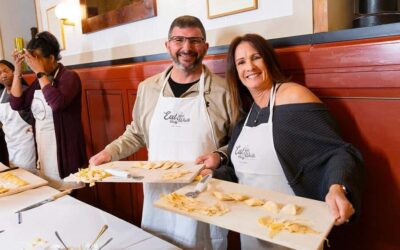
3-in-1 Fettuccine, Ravioli, and Tiramisu Cooking Class
Read our review →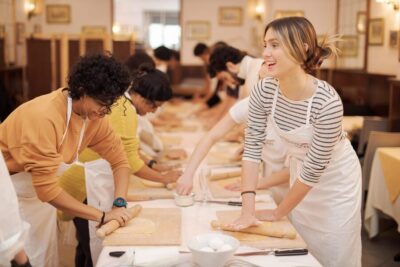
Fettuccine Pasta Cooking Class in Rome’s City Center
Read our review →Lists this class appears in