REVIEW · LAZIO, ITALY
Rome & Milan: Cooking class & wine pairing at Come Na Vorta
Fresh pasta makes Rome taste better. This three-hour class at Come Na Vorta turns family recipes into a hands-on meal, with fettuccine, gnocchi, tiramisu, prosecco, bruschette, and wine. I like the warm family story behind the cooking, and I like that you learn how to judge pasta dough rather than simply copy a recipe. The main consideration is that the exact meeting point and wine selection depend on your booking option.
The class has earned a strong 4.9 rating from 21 bookings, with particular praise for hosts including Lorenza, Alice, and Luciana. It is a good fit for couples, families, solo visitors, and small groups, but anyone expecting a quiet restaurant meal should know that much of the first two hours is active preparation.
Key points to know before booking
- Three generations of Roman cooking: The class focuses on family methods, including the small details behind dough, gnocchi, and tiramisu.
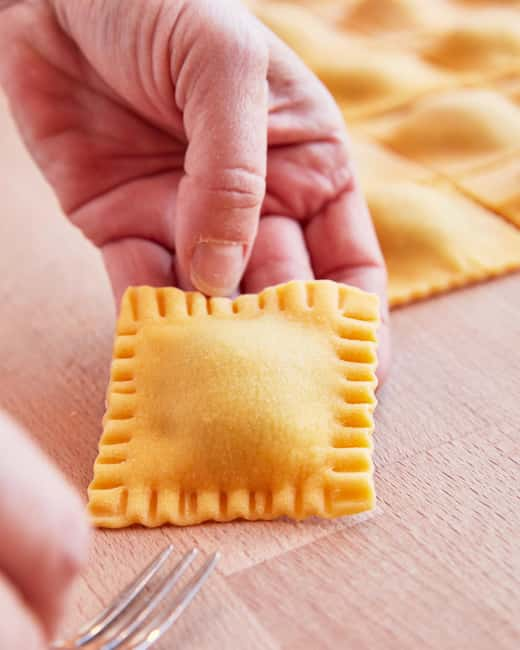
- Two pasta dishes per person: You prepare fresh fettuccine and gnocchi, then eat both with a choice of traditional Roman sauces.
- A social three-hour format: Prosecco and bruschette begin the class, and the shared meal encourages conversation with the rest of the group.
- Wine packages vary: Bronze includes one glass of local wine, Silver includes two glasses of traditional Italian wine, and Gold includes two glasses from prestigious producers.
- Rome or Milan location: In Rome, the class takes place in the Trastevere area. In Milan, it takes place around the Navigli district.
- Useful take-home extras: You receive recipes to download and an individual certificate of participation.
What the Come Na Vorta class is really about
This is not only a pasta lesson. It is a family food story built around recipes passed down through three generations. That matters because the instructor aims to explain why the food works, not only what to stir, knead, or shape.
You learn to recognize good ingredients and understand the texture of a successful dough. You also hear about the family business and the habits behind its cooking. For a first pasta class, that practical guidance is more useful than a pile of complicated recipes.
The format works best if you want to meet people while eating. One German participant described a class of four, then went on to explore Trastevere with the other pair from the group. That gives you a sense of the social tone: small enough to talk, but not so private that you miss the fun of cooking together.
The class is held in English when people have booked from different countries. Italian and Spanish are also available, and Arabic, French, or Romanian sessions can be arranged by contacting the provider directly. The listed instructor languages are English, Italian, and Spanish.
More Cooking Classes with Wine Tasting in Italy
- Rome: Pasta Making Class with Wine, Limoncello, and Dessert
★ 4.9 · 3,177 reviews - Fettuccine & Tiramisù: Cooking Class with Wine & Limoncello
★ 4.9 · 2,103 reviews - Pasta Making & Wine Tasting with Dinner in Frascati from Rome
★ 5.0 · 1,326 reviews
Starting with prosecco and bruschette
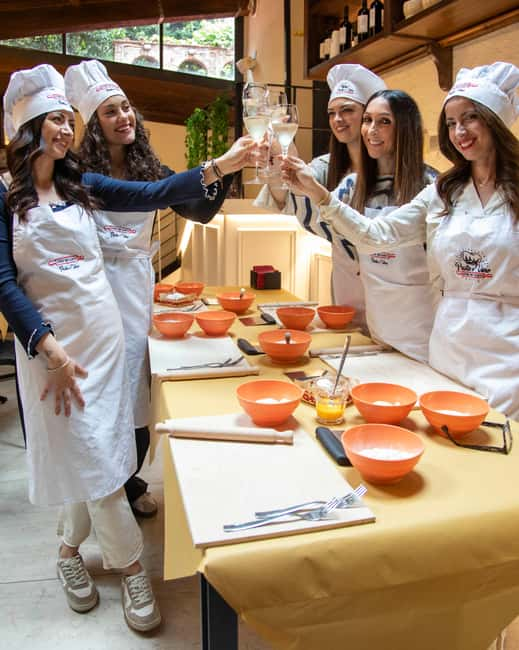
The class begins with a glass of prosecco. Bruschette with extra virgin olive oil are served as you work, along with water. This is a smart start because it gives you something to enjoy while the practical part gets going.
You are provided with an apron and a pasta-maker hat. The hat is more playful than essential, but it helps create the relaxed mood that many people want from an Italian food class. The prosecco also makes the first introductions easier, especially for solo participants or mixed groups.
Do not treat this opening as a separate tasting session. The food and drink are there throughout the class, but the main value comes later, when you sit down to eat the pasta you helped make. Extra food or drinks outside the designated menu are not included.
Making fettuccine from fresh dough
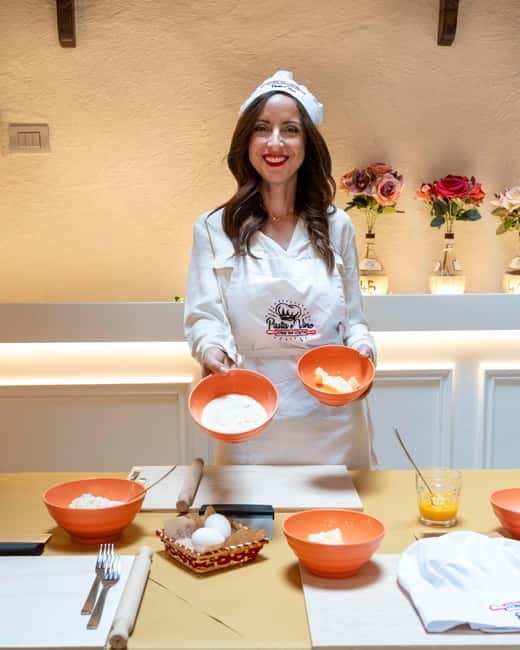
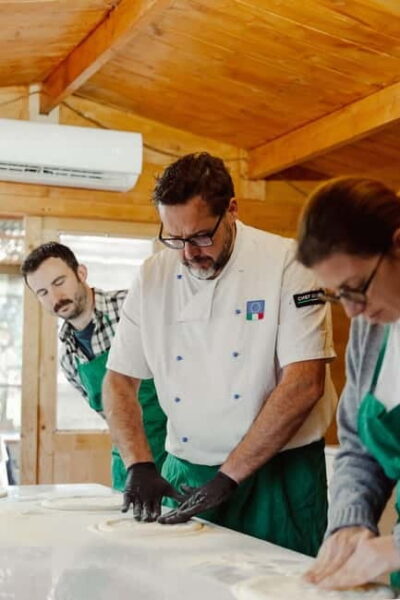
The first major task is fresh fettuccine. You work with the dough under the host’s direction, learning how to knead it and shape it properly. The useful part is not simply producing a strip of pasta. You are shown how the dough should feel and how to tell when it has reached the right condition.
That distinction came through clearly in Felix’s experience with Lorenza. He found that the session was less about handing out a fixed recipe and more about learning how to recognize good pasta dough. That is exactly the sort of lesson you can use at home, since flour, humidity, and small changes in technique can affect the result.
The instructor also answers questions as you go. Lorenza was praised for her English, patience, and easy manner, while Alice received similar praise for her energy and professionalism. Those details matter in a practical class. A rushed explanation can leave you with a plate of food but little idea how to repeat it.
You should expect to spend real time working with the dough. This is not a demonstration where you watch an expert make everything while you take photographs. If you prefer active participation, that is a benefit. If you have limited use of your hands or simply want a polished meal without effort, the format may feel demanding.
Shaping gnocchi and choosing Roman sauces
The second pasta project is gnocchi. You shape the soft pieces and learn how to recognize when they are ready to cook. The class presents gnocchi as a skill of touch and timing, which is more useful than memorizing a cooking time alone.
The finished fettuccine and gnocchi are cooked and served with traditional Roman sauces of your choice. The exact sauce choices are not listed, so you should expect a selection rather than a detailed menu in advance. The important point is that you eat two pasta dishes per person, not just a small sample of one recipe.
This part gives the class a pleasing rhythm. You make one type of pasta, then another, and later taste both as part of a full meal. The food is not an afterthought. It is the payoff for the work at the table.
The portion is also worth keeping in mind when planning your day. The class lasts around three hours, with about two hours devoted to preparation and meal time. Come hungry, but do not plan another large lunch immediately afterward.
More Cooking Classes with Wine Tasting in Rome
- Rome Cooking Class: Make Pasta, Dine & Drink Wine With Local Chef
★ 5.0 · 1,263 reviews - Rome: Combo Pizza and Pasta Cooking Class with Wine
★ 4.6 · 1,180 reviews - Rome: Pasta Making with Wine Tasting and Dinner in Frascati
★ 4.9 · 979 reviews - Super Fun Pasta & Gelato Class by Vatican with Wine + Oil Tasting
★ 5.0 · 726 reviews
Tiramisu with a family twist
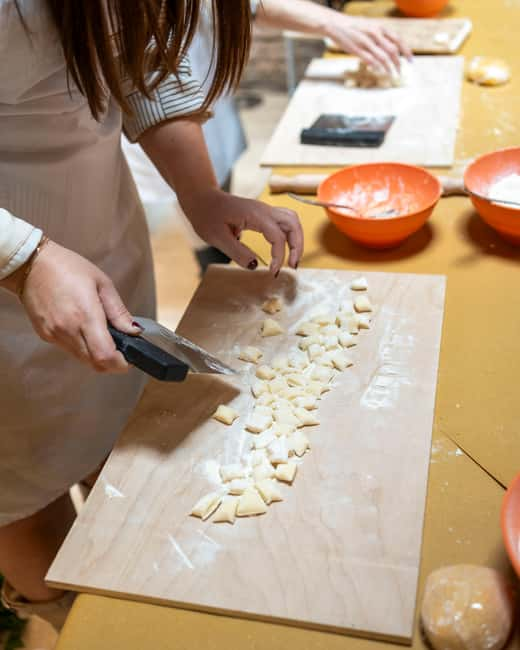
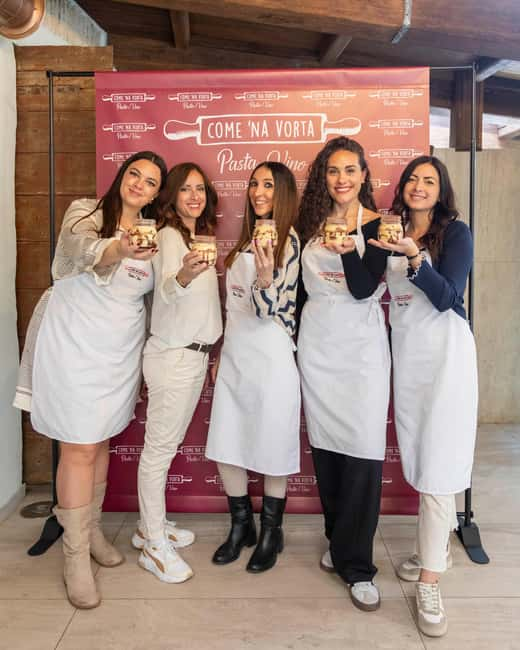
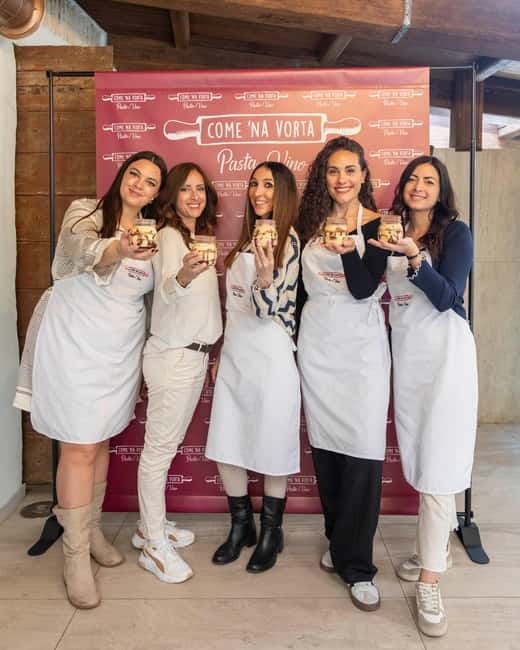
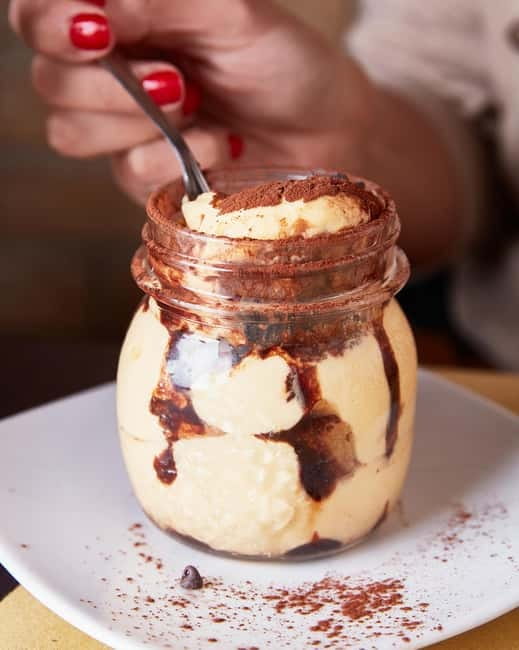
Tiramisu finishes the meal. You prepare an individual serving, and the host also explains variations of the dessert that are popular at the family restaurants. This gives the sweet course a little more personality than a standard recipe demonstration.
The tiramisu segment is useful for anyone who wants a simple Italian dessert to repeat at home. You get the recipe information in the downloadable booklet, along with the pasta guidance from the class. The booklet means you do not have to rely on memory after a long afternoon of food and wine.
The provider describes the tiramisu as homemade, and each person receives one portion. It is not presented as a separate pastry workshop, so expect the main teaching focus to remain pasta. Still, the dessert rounds out the meal and makes the class feel like a complete Italian food experience.
Sitting down to eat what you made
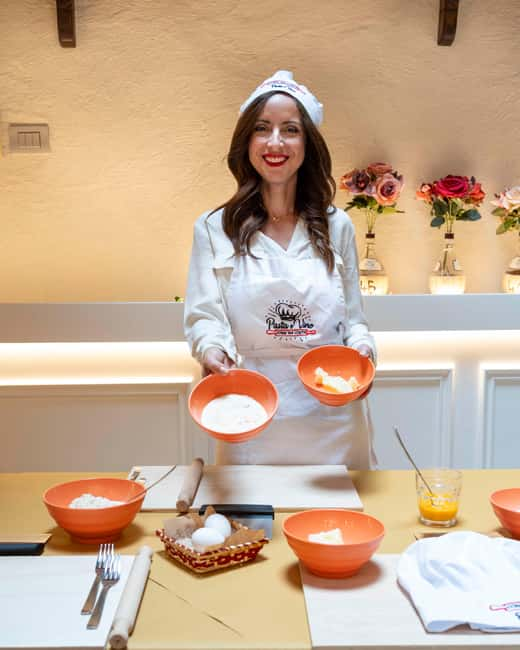
After the preparation, everyone sits together to enjoy the meal. This shared ending is one of the strongest features of the format. You get time to compare your pasta, talk about the cooking, and enjoy the social side of the class without rushing straight out the door.
The wine depends on the package you choose:
- Bronze: one glass of locally produced wine
- Silver: two glasses of traditional Italian wines such as Chianti and Chardonnay
- Gold: two glasses of prestigious Italian wines such as Brunello di Montalcino and Amarone della Valpolicella
The package descriptions do not specify every bottle or vintage, so you should see them as broad wine levels rather than a guaranteed tasting list. The Gold option may appeal to wine lovers, while Bronze keeps the booking simpler if you mainly want the cooking.
Prosecco, bruschette, water, two pasta dishes, and tiramisu are included in the experience. Extra food and drinks are not. The listed price is $77 per person, which is fair if you value a full three-hour activity, the meal, drinks, instruction, recipes, and certificate together. It is less compelling if you are only looking for a cheap plate of pasta, since Rome and Milan offer easier ways to eat pasta for less.
Rome in Trastevere or Milan around Navigli
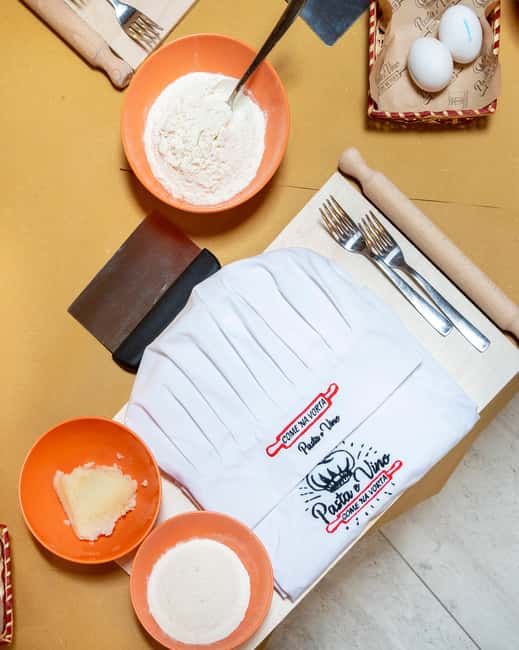
In Rome, the class takes place at a family-owned restaurant in the popular Trastevere district. That setting suits the experience well. You are not learning Italian food in an anonymous classroom. You are connected to a working restaurant and a family business with roots in Rome.
The meeting point can vary according to the option booked, so check the exact location before setting out. Pickup and drop-off are not included. In Trastevere, allow enough time to find the restaurant rather than arriving at the last minute, especially if you are unfamiliar with the area.
In Milan, the class takes place around Navigli, one of the city’s lively areas. The same cooking format applies, but the neighborhood gives you a different setting before and after the class. You can build the activity into an evening around the canals, though the precise meeting point still depends on your booking.
The title includes Rome and Milan, but the supplied location summary identifies Lazio, Italy. Check your selected city carefully when booking. You do not want to assume a Rome location and discover that your reservation is in Milan, or the other way around.
The hosts make a real difference
The strongest praise centers on the instructors. Lorenza is repeatedly described as friendly, patient, cheerful, and highly comfortable in English. She also offered practical suggestions for the rest of a family’s trip, which is the kind of small personal touch that can make a class feel welcoming.
Alice was praised for good humor, sympathy, and professionalism. Luciana was praised for keeping a family group engaged and for helping the class move at a comfortable pace. These comments suggest that the teaching style is a major part of the value, not a minor extra.
No class is identical because the host and group shape the mood. Still, the repeated emphasis on friendly instruction gives you a useful reason to book this experience rather than choose a generic pasta lesson. You are paying for guidance, conversation, and a family connection as much as for the ingredients.
Who will enjoy it most
I would recommend this class to:
- Couples who want a hands-on date activity
- Families looking for something all ages can share
- Solo visitors who enjoy meeting people over food
- Small groups and colleagues planning a team activity
- Anyone who wants to repeat fresh pasta and tiramisu at home
- Wine drinkers who want to add Italian wine to the meal
The class is especially good for first-time pasta makers because the teaching focuses on signs of quality and readiness. You are not expected to arrive with kitchen experience.
It may be less suitable if you want a formal wine tasting, a silent demonstration, or a quick meal. The class is social and active. You will spend about two hours preparing food before settling down to eat.
Practical details that affect your choice
The experience lasts around three hours. The timetable includes about two hours for preparation and time to enjoy the meal, but starting times vary, so check availability for your date.
Small groups are available, and the activity is listed as wheelchair accessible. The meeting point varies by booking option, while transportation to and from the restaurant is not provided.
Free cancellation is available up to 24 hours in advance for a full refund. You can also reserve now and pay later, which helps if your Rome or Milan schedule is still changing.
The recipes are provided as a downloadable booklet, and you receive an individual certificate of participation. The certificate is a pleasant souvenir, but the recipes and practical pasta skills are the more useful take-home benefits.
Should you book Come Na Vorta?
Book it if you want to cook, eat, and talk with people in a family-run restaurant setting. The best reasons are the hands-on work with both fettuccine and gnocchi, the clear focus on judging dough and doneness, and the consistently warm praise for Lorenza, Alice, and Luciana.
At $77 per person, the value is strongest when you choose to enjoy the full package: prosecco, bruschette, two pasta dishes, tiramisu, wine, instruction, recipes, and a three-hour social activity. Check the city, meeting point, and wine tier before paying. If those details suit your schedule, this is a friendly and practical way to add a real cooking experience to a Rome or Milan visit.
FAQ
How long does the Come Na Vorta cooking class last?
The experience lasts around three hours, with roughly two hours spent preparing the food and enjoying the meal.
What food will I make?
You will make fresh fettuccine, gnocchi, and tiramisu. Each person receives two pasta dishes with sauces of their choice and one tiramisu.
Is wine included?
Yes. Bronze includes one glass of locally produced wine. Silver includes two glasses of traditional Italian wines, and Gold includes two glasses of prestigious Italian wines. Prosecco, water, and bruschette are also included.
Where does the class take place?
In Rome, it takes place at a family-owned restaurant in the Trastevere district. In Milan, it takes place around the Navigli area. The exact meeting point varies by booking option.
What languages are available?
The listed instructor languages are English, Italian, and Spanish. Classes automatically take place in English when people from multiple countries are booked together. Other language arrangements may be possible by contacting the provider directly.
Can I cancel or pay later?
You can cancel up to 24 hours before the activity for a full refund. Reserve-now, pay-later booking is also available.
Just added around Rome
- Testaccio: Home Cooking Cacio e Pepe, Amatriciana, Carbonara★ 4.9 · 57 reviews
- Super Fun Pasta and Gelato Cooking Class by the Vatican★ 5.0 · 6 reviews
- Spritz and Spaghetti Traditional Cooking Class in Rome★ 4.9 · 30 reviews
- ROME:Hands-On Lasagna & Marsala Tiramisu Cooking Experience”★ 5.0 · 3 reviews
- Rome: Trastevere Pasta Making Class★ 4.9 · 33 reviews
- Rome: Vatican Food Tours, Cooking classes & Free Tours★ 4.9 · 11 reviews
- Rome: Traditional Pasta and Tiramisu Cooking Class★ 5.0 · 4 reviews
- Rome: Small Group Pasta cooking class near Piazza Navona★ 4.9 · 8 reviews
Cooking Classes with Wine Tasting, compared.


Pasta & Tiramisu Cooking Class with Unlimited Wine
Read our review →
Pasta Making Class with Wine, Limoncello, and Dessert
Read our review →
Cooking Class Pasta & Tiramisu Making Unlimited Wine
Read our review →
Fettuccine & Tiramisù: Cooking Class with Wine & Limoncello
Read our review →
Pasta Making & Wine Tasting with Dinner in Frascati from Rome
Read our review →
Rome Cooking Class: Make Pasta, Dine & Drink Wine With Local Chef
Read our review →