
REVIEW · CENTRAL THAILAND, THAILAND
Bangkok: Half-Day Thai Cooking Class in Bangrak District
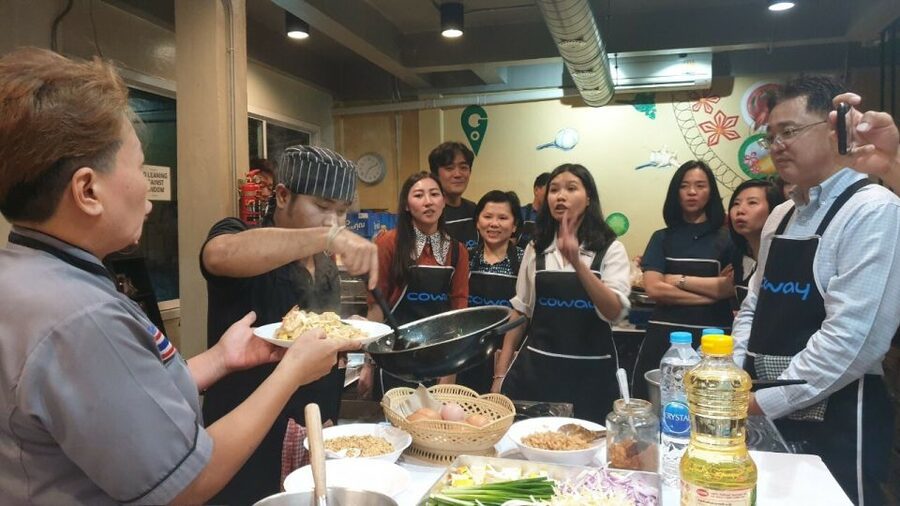
Thai food makes more sense when you cook it. This half-day class in Bangkok’s Bangrak District takes you from a local market to a clean teaching kitchen, where you prepare five Thai dishes and sit down to eat them afterward. I like the market visit in the morning, which connects the meal to everyday Bangkok shopping, and I like the hands-on format, where you do the chopping, mixing, rolling, and cooking yourself. The main drawback is that the menu changes daily, so you cannot count on making Pad Thai or any other particular dish.
This is a practical class rather than a polished food show. Chefs such as Sarin and Natcha have been praised for their humor, patience, and clear instruction, while the recipes are sent afterward so you can cook them again at home. At $45 per person for four hours, the value is strong if you arrive hungry, though the meeting point can be tricky to find and hotel transport is not included.
Key points to know before you book
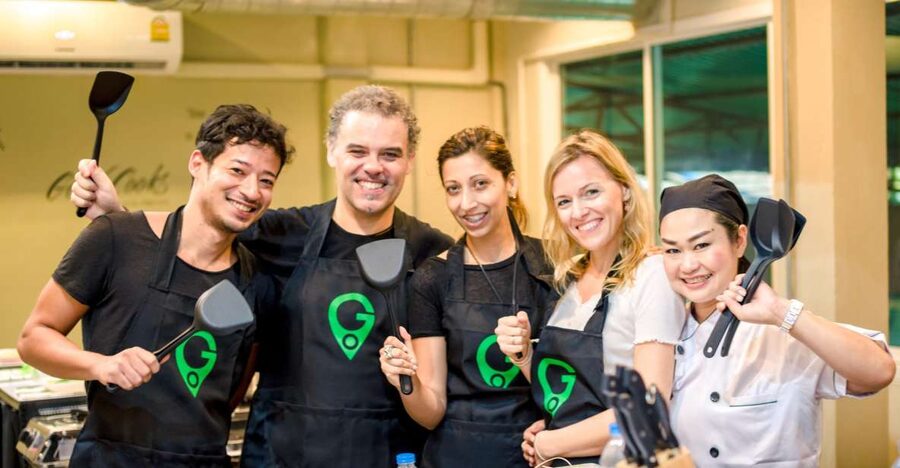
- Five dishes in four hours: You prepare and eat five Thai recipes, with the menu changing from day to day.
- Morning market tour: The morning option includes a walk through the nearby fresh market with the chef.
- Personal teaching: The class is hands-on, and some sessions have been very small, giving cooks plenty of direct help.
- Recipes for home: You receive the full recipe list and class pictures afterward by email.
- Flexible food choices: Vegetarian, pescatarian, halal, and no-seafood requests can be accommodated if you explain them in advance.
- Come seriously hungry: You eat each dish as it is completed, so breakfast can leave you uncomfortably full.
Why this Bangkok cooking class works so well
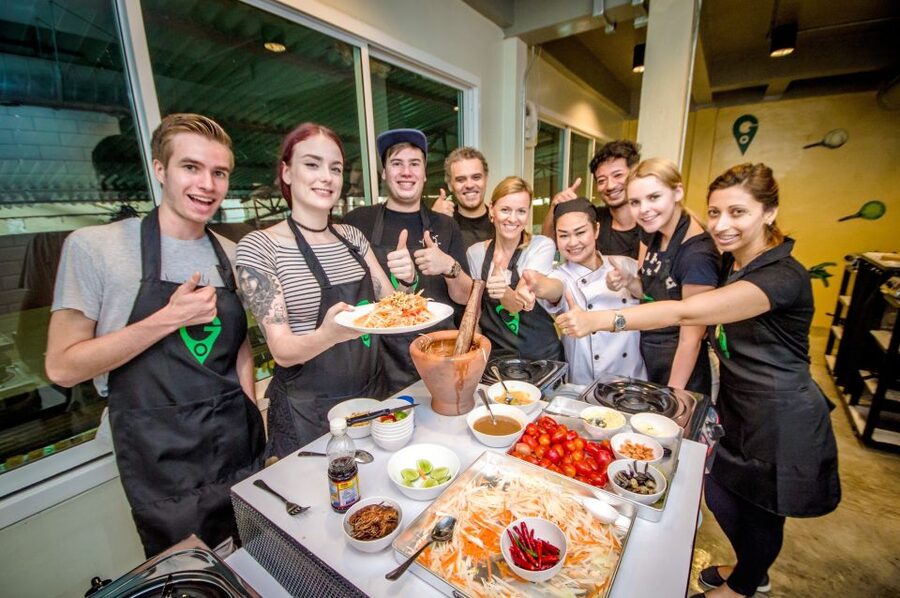
A good cooking class should teach you something you can use later, not just give you a plate of food and a few photographs. This one earns its price by combining instruction, ingredients, a meal, and recipes for roughly four hours.
You are not simply watching a chef cook. You help prepare five dishes from start to finish, with guidance from a Thai chef who explains the ingredients and the reason behind each step. The dishes may include Pad Thai, fragrant curry, Tom Kha, spring rolls, Massaman curry, or mango sticky rice, but the daily menu is not fixed.
That changing menu is both a strength and a weakness. It keeps the class fresh and allows the chef to adjust the food to the group, but you should not book expecting one exact recipe. One participant looked forward to Pad Thai but found it was prepared on another day. If Pad Thai is your main goal, ask about the menu before paying.
The class also gives you a useful introduction to balance in Thai cooking. Ingredients are not treated as a random pile of spices. The chef explains what each one does for flavor, texture, or consistency, and may suggest substitutions for ingredients you cannot find at home. That matters when you return to a kitchen far from Thailand.
More Thai Cooking Classes in Bangkok:
- Bangkok: Hands-on Thai Cooking Class and Market Tour
★ 4.9 · 1,614 reviews - Bangkok: Tingly Thai Cooking School Half-Day Cooking Class
★ 4.9 · 1,191 reviews - Bangkok: Maliwan Thai Cooking Class with Market Tour
★ 4.9 · 1,133 reviews
Start with the Bangrak fresh market
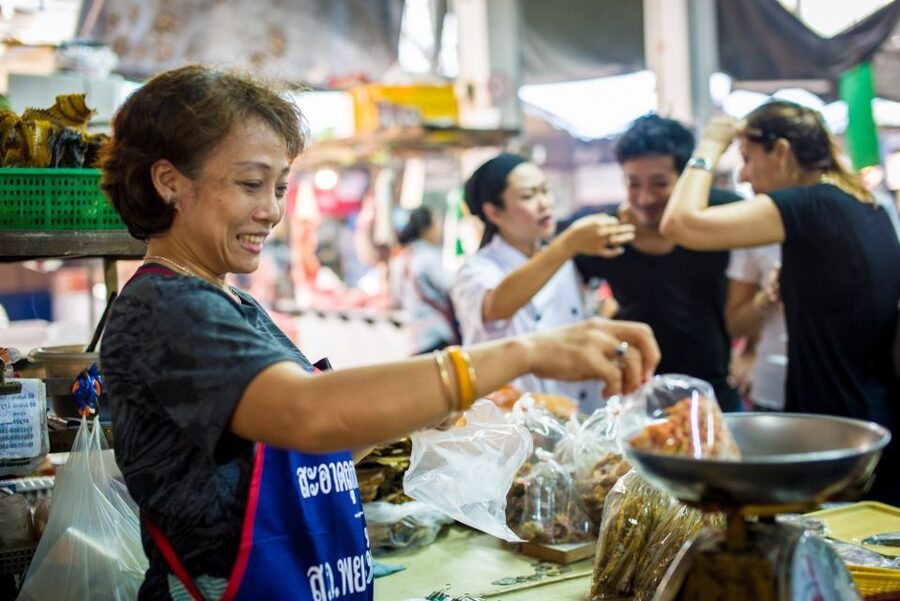
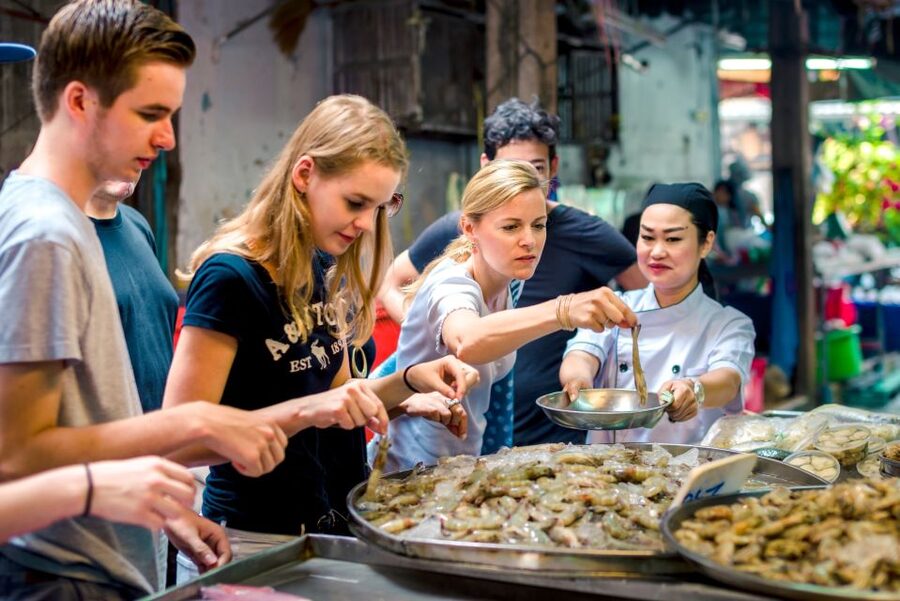
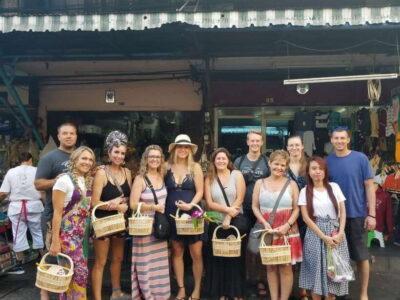
Choose the morning session if you can. It includes a visit to the market beside the cooking school, where the chef shows you the ingredients used in Thai homes and restaurants.
The market is not just a scenic walk. You see where tofu, noodles, vegetables, herbs, and other cooking supplies are bought. The chef can explain unfamiliar ingredients and may have long-standing relationships with the local sellers, which gives the visit a more natural feel than a staged market demonstration.
You also get the sights and smells of an ordinary food market before sitting down to cook. That context helps explain why Thai cooking depends so heavily on fresh produce, herbs, curry ingredients, and prepared staples.
The market portion has two practical limits. It runs in the morning only, and the class does not provide transport from your hotel. The location can also be hard to spot at first. One person arrived confused but found helpful market workers who pointed the way. Give yourself extra time and check the meeting instructions closely.
If your schedule only allows the later class, you still receive the cooking lesson and meal, but you miss this useful connection to Bangkok food shopping.
Five dishes, prepared by your own hands
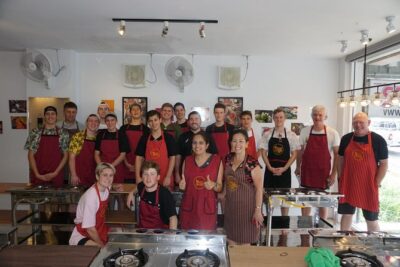
Once the market visit ends, the class moves into the cooking school. The chef guides you through the dishes one by one, allowing you to work at your own station or alongside the group, depending on the session setup.
The recipes are designed for practical home cooking. You learn techniques rather than simply copying a performance. The food can include rolling spring rolls, preparing curry, making Pad Thai, assembling Tom Kha, or working through mango sticky rice. The exact list changes, and the chef may adapt it for dietary needs or personal preferences.
The pace is steady. A dish may be ready after about ten minutes, then another follows while the kitchen is reset. You eat as you go, which makes the experience feel like a long lunch with lessons built into it.
That format has a major advantage: you taste the result while the instructions are still fresh. If a curry needs more balance or a sauce needs adjusting, you can ask at once. You are also likely to remember the process better because each recipe ends with an immediate reward.
The obvious catch is the amount of food. Five dishes is a lot, especially when you are eating each course rather than preparing one shared meal at the end. Come with an empty stomach. If you cannot finish, food may be packed to take away, though you should not assume every class handles leftovers in exactly the same way.
The chefs make the difference
The strongest part of this experience is the teaching. Sarin has been praised for a funny, friendly manner and for tailoring food to individual tastes. Natcha is also frequently singled out for clear explanations, patience, and a warm personality. Other instructors, including Kimmy and Natang, have received similar praise for keeping the class relaxed and easy to follow.
That matters because Thai cooking can look complicated when you first encounter unfamiliar herbs, pastes, noodles, and sauces. A patient instructor keeps the class from becoming a race to keep up.
You can also ask questions throughout the session. The best use of your time is to ask why an ingredient is added, what can replace it, and how the recipe changes when you use less seafood, more spice, or a different protein.
The teaching appears suitable for beginners. The cooking skills required have been described as simple, and the chefs explain the steps as they go. You do not need to arrive with professional knife skills or previous Thai cooking experience.
The experience varies slightly with the group. Some bookings have had only two people, while others have included a small group. A smaller class can mean more direct help and a menu adjusted to your preferences, but you should not count on a private lesson unless your booking specifically confirms it.
More Half-Day Experiences in Bangkok:
- Choose 5 Dishes: Half-Day Cooking Class in Sukhumvit with Market Tour
★ 5.0 · 281 reviews - Half-Day Thai Cooking Class at Organic Farm in Chiang Mai
★ 5.0 · 19,087 reviews - Half-Day Cooking Class with Local Chef Laila in Marrakech
★ 5.0 · 952 reviews - Naxos: Half-Day Cooking Class at Basiliko Family Tavern
★ 5.0 · 887 reviews
Eating the meal you just made
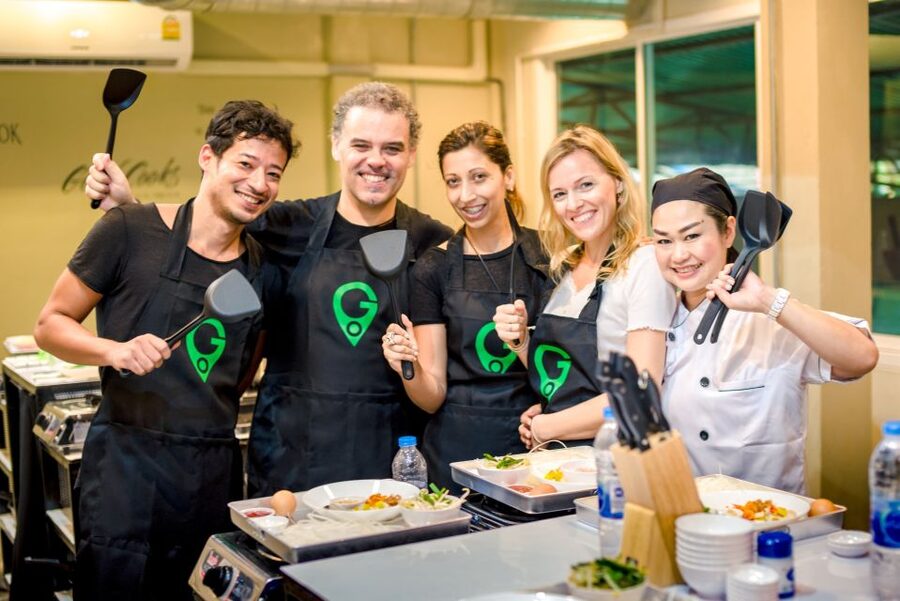
The final meal is not an afterthought. You sit down with the group and eat the dishes you prepared, often as they come off the cooking stations.
This is where the four-hour format proves useful. You have time to cook, taste, ask questions, and enjoy the food without rushing through a single demonstration. Several dishes can be particularly memorable when made fresh, including Tom Kha and mango sticky rice. One cook even found the homemade Tom Kha better than restaurant versions tried afterward.
Mango sticky rice appears often in the praise for good reason. It gives the class a sweet finish and shows how Thai desserts rely on texture as much as flavor. You may also encounter a colorful version, such as blue sticky rice, depending on the day’s menu.
Beer is available to buy, and you may bring your own alcohol without a corkage charge. That makes the meal feel informal, but alcohol is optional. Unlimited water, coffee, and tea are included, which is useful in Bangkok’s heat and during a long cooking session.
Do not treat the meal as a quick tasting. You will be eating substantial portions across the class. A light breakfast, or no breakfast, is the sensible plan.
Dietary requests and menu changes
The class is vegetarian and halal friendly, and dietary adjustments can be made. Pescatarian cooks have had menus adapted successfully, and chefs have also changed dishes for people who do not eat seafood or fish.
You should tell the operator about allergies before the class. Do not wait until you are in the kitchen, especially if you need to avoid a particular ingredient or cooking method.
Menu flexibility is one of the practical benefits of a small class, but it also reinforces the need to manage expectations. You may receive a menu tailored to your group rather than a standard five-dish list. That is good news if you have food restrictions or strong dislikes, but less useful if you have booked around one specific dish.
The class is open to people over 12 who are at least 140 centimeters tall. It is not suitable for children under 12 or people with mobility impairments. The supplied information does not describe special accessibility equipment, so anyone with mobility concerns should ask before booking.
What the $45 price really includes
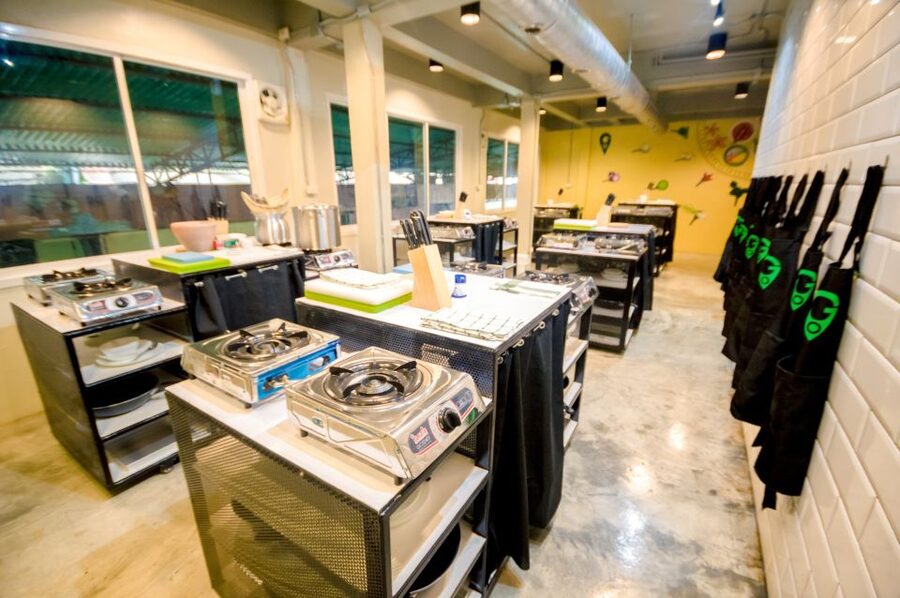
At $45 per person, this is good value for a four-hour Bangkok activity. Your fee covers the chef, ingredients, instruction, five dishes, the food you eat, drinks, and the market visit if you choose the morning session. You also receive the recipes and class photographs afterward.
The strongest value comes from the combination of meal and repeatable skills. A restaurant meal gives you dinner. This class gives you dinner plus a set of recipes you can try again at home.
The value is less clear if you dislike cooking or only want a quick food tasting. Four hours is a long commitment for someone who would rather spend the afternoon sightseeing. You also pay for your own journey to and from the school, so factor in transport when comparing the total cost.
For most food-focused visitors, the price is reasonable. You get a full morning or afternoon, not just a short demonstration, and the class gives you a better understanding of how Thai ingredients work together.
Who should book this class
I would choose this for anyone who likes Thai food and wants more than a restaurant checklist. It works especially well early in a Bangkok visit because the market walk and ingredient lesson help you understand the food you will see everywhere else in the city.
It is also a strong choice for couples, friends, and families with older children who meet the age and height rules. The relaxed instructors make it suitable for beginners, and the small-group atmosphere can give you plenty of chances to ask questions.
You should think twice if you have limited mobility, need a guaranteed specific menu, or dislike eating large amounts of food. The market may involve walking, the class menu changes, and five dishes can be more than you expect.
English is available, as is Thai. The chefs’ ability to explain techniques clearly is a major part of the experience, especially when you are working with ingredients you have never used.
Practical advice for a smooth visit
Book the morning option if the market matters to you. It adds a useful local-food connection and gives you a better look at the ingredients before you cook them.
Tell the operator about allergies and dietary restrictions in advance. If you avoid seafood, do not eat meat, or want halal food, early notice gives the chef time to adjust the menu.
Wear something comfortable for a hands-on cooking session, and avoid eating a large meal beforehand. The class includes water, coffee, and tea, while beer can be purchased and personal alcohol is allowed without a corkage charge.
Keep the recipe email. The full recipe list is one of the best parts of the package because Thai ingredients can be hard to remember once you return home. The class pictures also give you a useful reminder of the dishes and techniques.
Finally, allow time to find the meeting point. The school is near a fresh market, but the entrance may not be obvious. Since hotel transport is not included, plan your route before leaving.
Should you book this Bangkok cooking class?
Yes, if you want a friendly, practical introduction to Thai food and do not mind letting the chef choose the menu. The morning market walk is the best option, and the combination of five dishes, a full meal, recipes, and patient instruction makes $45 a fair price.
Book with realistic expectations. You will not necessarily cook Pad Thai, the class may be small or slightly different from day to day, and you will eat a great deal. For a hands-on Bangkok activity that connects local ingredients with food you can recreate at home, this is an easy recommendation.
FAQ
How long is the Thai cooking class?
The class lasts four hours.
How many dishes will I prepare?
You will prepare five Thai dishes and eat the food you make during the class.
Is the market tour included?
The market tour is included with the morning session only.
Can I choose the dishes on the menu?
The menu changes daily, so a particular dish is not guaranteed. The chef may adjust the menu for dietary preferences or restrictions.
Is the class suitable for vegetarians and people who avoid seafood?
Yes. The class is vegetarian and halal friendly, and dietary adjustments have been made for pescatarians and people who do not eat seafood. You should inform the operator about allergies in advance.
Are drinks included?
Unlimited drinking water, coffee, and tea are included. Beer is available to buy, and you may bring your own alcohol without a corkage charge.
What are the age and accessibility requirements?
You must be over 12 years old and at least 140 centimeters tall. The activity is not suitable for children under 12 or people with mobility impairments.
Just added around Bangkok
- Bangkok Udomsuk Thai Cooking Class with local market tour★ 5.0 · 5 reviews
- Thai cooking class experience in Bangkok with Tingly Thai cooking school★ 5.0 · 59 reviews
- Thai Cooking Class★ 5.0 · 25 reviews
- Thai Cooking Class in Bangkok★ 5.0 · 23 reviews
- Hands-On Thai Cooking Class Bangkok with Local Chef (Small Group)★ 5.0 · 119 reviews
- White Lotus Thai Cooking Class in Bangkok★ 5.0 · 31 reviews
- Baipai Thai Cooking School: Authentic Cooking Class Tour★ 5.0 · 3 reviews
- Sompong Thai Cooking School★ 5.0 · 92 reviews
Thai Cooking Classes, compared.

Half-Day Thai Cooking Class at Organic Farm in Chiang Mai
Read our review →
Cooking Class, Market & Thai Herbs Garden Tour
Read our review →
Phuket Thai Cooking Class with Market Tour Option
Read our review →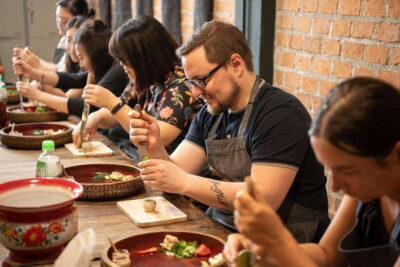
Tingly Thai Cooking School Half-Day Cooking Class
Read our review →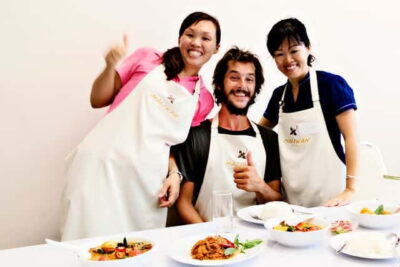
Lists this class appears in