
REVIEW · QUINTANA ROO, MEXICO
PDC Traditional Mexican Cooking Experience
Come hungry, leave with dinner.
The PDC Traditional Mexican Cooking Experience gives you more than a recipe lesson. In a small group of up to eight people, you prepare classic dishes with a chef, support cooks, and a host who connects food with Mexican life and regional identity. I especially like the hands-on cooking and the chance to hear personal stories from native descendants. I also like that you can take home extra food, a useful perk when the class produces enough for more than one meal.
The main consideration is the setting. You meet at the Town Hall Plaza in central Playa del Carmen, then walk five to ten minutes to a rented restaurant. This is not a village kitchen or a local family home, and there is no market visit because the area does not have a real local farmer market for this activity. If you want a polished, spacious kitchen and careful food preparation, that is a sensible tradeoff. If you want a rustic market-to-table outing, it may feel less personal.
Key points at a glance
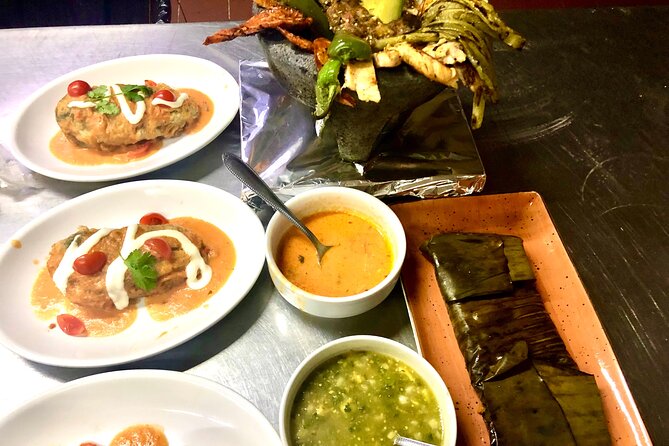
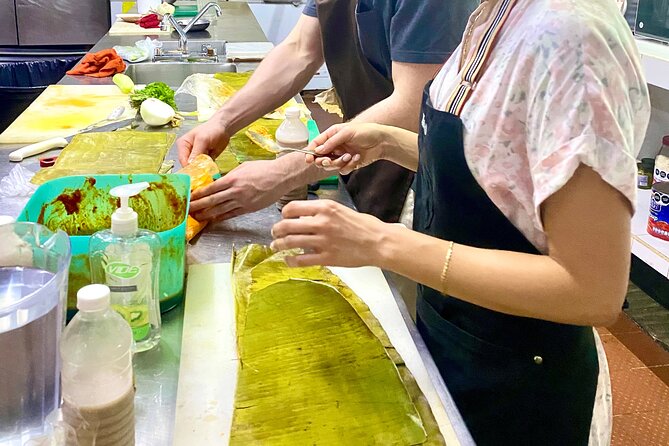
- Tamales made from scratch: You do not simply watch a demonstration. You take part in preparing tamales, a dish that several people found especially memorable.
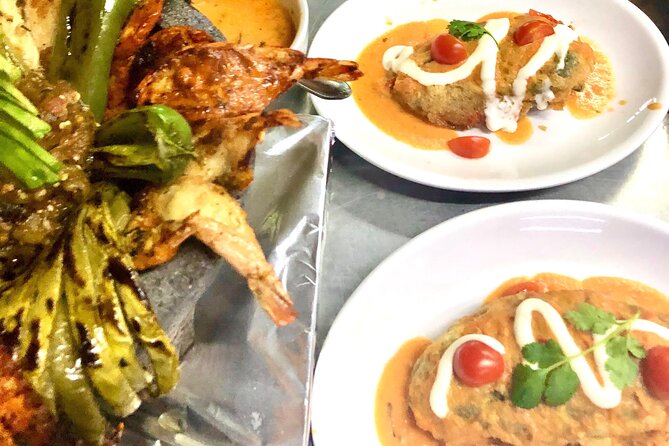
- A serious spread of food: Depending on the day, you may prepare tamales, chiles rellenos, pipian, mole, side dishes, and a land-and-sea molcajete.
- Small groups matter: With no more than eight participants, the chef and cooks can offer direct help rather than leaving you lost at the back of a large class.
- Food comes with context: The host explains Mexican cuisine, Playa del Carmen, regional flavors, and the connection between cooking and caring for others.
- A restaurant kitchen, not a home: The ample rented kitchen is chosen for safety, space, and reliable service.
- Good value for serious eaters: At $116 per person for 3.5 hours, the price includes ingredients, tools, refreshments, instruction, and enough food to take away if you cannot finish it.
Meeting at Playa del Carmen’s Town Hall Plaza
The experience begins at the Town Hall Plaza on 20th Avenue between 8th and 10th Streets in downtown Playa del Carmen. This is a simple central meeting point, and you are escorted from there to the restaurant venue, a walk of roughly five to ten minutes.
That short walk matters. You do not need to arrange a taxi between the meeting point and the kitchen, and the introduction begins before the cooking does. Francisco, Panchito, or another host may explain what lies ahead while giving you an early look at Mexican food and the story of Playa del Carmen.
You should arrive ready to walk a few blocks and cook for several hours. Wear clothes you do not mind working in, though the supplied information does not specify a dress code or special equipment. The important point is that this is an active class, not a seated tasting.
More Mexican Cooking Classes in Mexico:
- Cabo San Lucas Mexican Cooking Class Experience and Local Markets
★ 5.0 · 915 reviews - Mexican Cooking from Scratch in a Local Home in Tulum
★ 5.0 · 585 reviews - Authentic Mexican Legacy Cooking Class in Cabo San Lucas
★ 5.0 · 530 reviews
Why the cooking has a bigger story
Traditional Mexican food is recognized by UNESCO as an Intangible Cultural Heritage of Humanity. That recognition is not simply about famous dishes or colorful ingredients. It reflects a living food system passed through families and communities, with corn, chili peppers, preparation methods, and regional habits all playing a part.
The class uses food to explain why Mexican cuisine changes from one area to another. Mexico does not have one single flavor profile. Different regions have their own combinations of scents, heat, textures, and cooking traditions. You get a clearer sense of that variety when you prepare more than one dish during the same session.
I like this approach because it keeps the class from becoming a paint-by-numbers recipe lesson. One participant valued learning the attitude toward food and life that shaped the dishes, rather than being told only to measure, stir, and serve. That is the difference between learning a recipe and learning why a recipe matters.
The host also presents cooking as an act of affection. Food is prepared for people you care about, and that idea helps explain the generous portions and shared work. It is a warm theme, but the class still gives you practical kitchen experience rather than only a cultural talk.
Starting with aguas frescas and antojitos
The first cooking section introduces Mexican cuisine before moving into the larger dishes. You prepare aguas frescas, the fruit or grain-based refreshments commonly served with Mexican food, along with antojitos mexicanos.
Antojitos are small Mexican starters with pre-Hispanic influences and later regional changes. Here they act as an easy introduction to the flavors you will use later. You begin with manageable tasks, get familiar with the kitchen, and start eating before the main course is ready.
The refreshments are included in the price, which is useful because cooking for 3.5 hours can be thirsty work. Other drinks may also be available as optional choices, and the food can be paired with a flavored Mexican wine from a selected winery.
A practical note: the ingredients are prepared in advance. The class does not take you to a market to select produce, and you will not spend part of the morning watching a shopping routine. That saves time and gets you to the cooking quickly. The cost is less market tour and more kitchen workshop.
Tamales that change the lesson
Tamales are one of the strongest parts of the experience. You prepare them from scratch rather than simply receiving one as a sample. That gives you a better feel for the labor behind a food that can look deceptively simple when it arrives on a plate.
The class does not promise the exact same menu every time, so the tamales are best understood as a dish that has appeared in the cooking program rather than a guaranteed item for every date. Still, they have been a notable part of the experience for multiple people.
One participant said the class changed their idea of what a tamale could be. That is a useful clue for anyone who has only tried restaurant versions. You get to see the preparation as a process, understand the texture, and appreciate how much work goes into making several portions.
The class is also generous with the results. If you cannot finish everything during the session, you are welcome to take cooked and prepared dishes with you. That turns the cooking lesson into a meal later in the day, not just a memory and a recipe card.
A few more cooking classes around Mexico worth a look
- Puerto Vallarta Cooking Class Experience with Market Tour
★ 5.0 · 698 reviews - Mexican Cooking Class with Food Market Visit in Mexico City
★ 5.0 · 506 reviews - Authentic Mayan Cooking Class in Cozumel
★ 5.0 · 344 reviews - Flavors of Oaxaca: Cooking Class with No Set Menu and Local Market Tour
★ 4.5 · 333 reviews
Chiles rellenos and the main traditional dishes
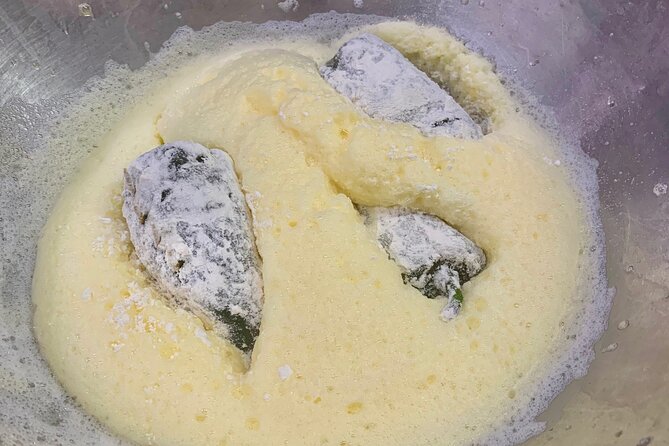
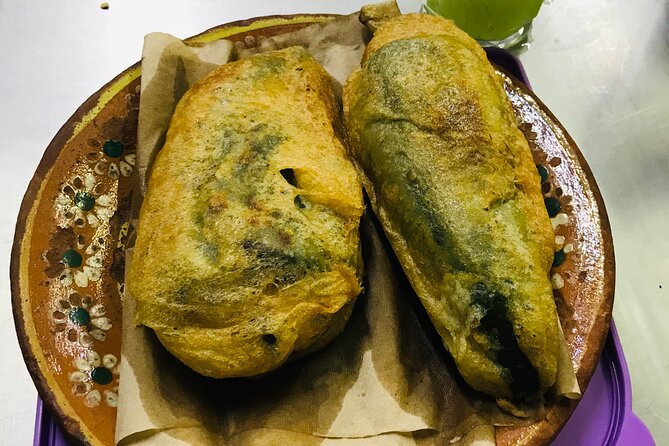
The main course changes from time to time. Possible dishes include chiles rellenos, pipian, and mole. This variation keeps the class tied to the available menu rather than forcing every date into one fixed formula.
Chiles rellenos give you a chance to work with one of Mexico’s best-known combinations: a chili pepper filled or prepared as the central part of the dish, with supporting ingredients that balance heat and richness. Pipian and mole bring a different lesson, since their sauces can carry many layers of flavor and are often central to a meal rather than a small garnish.
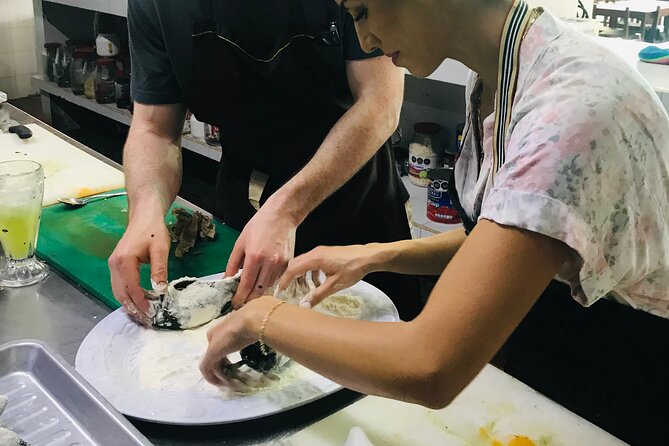
The exact tasks depend on the day and the menu. You may receive a demonstration first, then prepare your portion with help from the chef and support cooks. Francisco has been praised for demonstrating clearly and then letting participants do the work themselves. That balance is important. A class can lose its value if the chef does everything while you watch.
The kitchen staff also help keep the cooking moving. You are not expected to manage every part alone, and the restaurant team can assist with the practical work. This is especially helpful if the dishes arrive at different stages or if you are less confident with Mexican cooking.
The Cielo, Mar y Tierra Molcajete
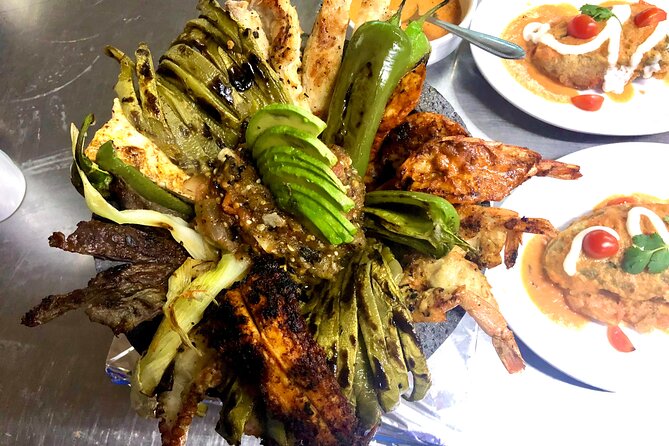
Seafood lovers have a special option: a Cielo, Mar y Tierra Molcajete, or Land, Sea, and Sky Molcajete. The dish uses a volcanic rock mortar and combines octopus, shrimp, flank steak, and chicken. It is served with grilled vegetables and guacamole.
That is a lot of food in one dish, and it is not a delicate little tasting plate. You get several textures and cooking methods at once, along with the fun of working with the molcajete. One participant described a fire show in the traditional mortar before filling it with grilled vegetables, seafood, beef, and chicken.
The exact spectacle and preparation may vary with kitchen conditions, but the molcajete is clearly designed as a shared, hands-on centerpiece. It also explains why the class can produce more food than you expect. You may be preparing dinner for the day as well as practicing techniques.
Red snapper or lobster can be selected for an additional charge. That makes the base price more flexible, but you should ask about the surcharge before choosing either option. If you are watching your budget, the standard menu is the safer choice.
A spacious kitchen with a small-group feel
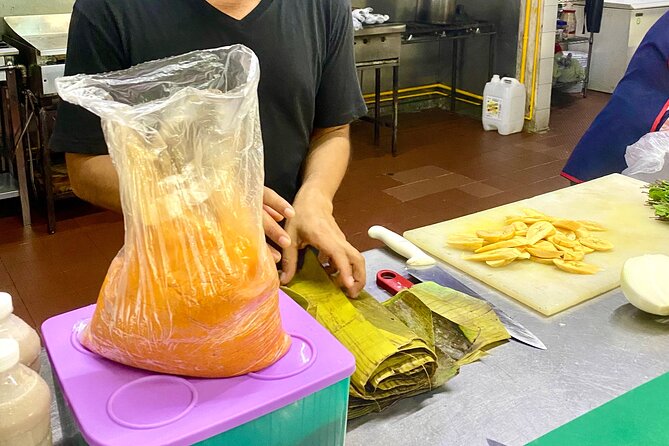
The class takes place in an ample conventional restaurant rather than a private home. The reason given is practical: real cooking requires space, tools, staff, and safety controls.
I see both sides of this choice. A rented restaurant kitchen is less intimate than cooking in someone’s home, but it is likely to be easier for a group. There is room to prepare several dishes, and the chefs and support cooks can focus on food safety and service.
The group is limited to eight participants. That is small enough for direct conversation and help at the counter. It also suits the relaxed style described by participants who enjoyed talking with Panchito about Mexico, Playa del Carmen, beliefs, daily life, and food.
The experience is offered in English and Spanish. If you want a class where you can ask questions rather than just copy movements, the bilingual instruction is useful. The quality of the conversation will depend on the host and group on your date, but the format leaves room for it.
What the $116 price gets you
At $116 per person, this is not the cheapest way to eat in Playa del Carmen. It is also not just a meal. The price includes all cooking ingredients, tools, cooking materials, refreshments, the host, chef, and support cooks.
The food volume changes the value calculation. You may prepare several dishes, eat during the session, and take leftovers away. One person described receiving enough food for two additional meals, while another took a generous portion to enjoy later that evening. Those amounts will vary, but the class is clearly built around a full meal rather than a few bites.
You are also paying for a 3.5-hour activity with a maximum of eight people. That makes the cost easier to justify for anyone who wants an organized cooking class with personal instruction and cultural discussion. If you only want to sample Mexican dishes, spending $116 on restaurants may suit you better.
The optional seafood upgrade is the one cost to watch. Red snapper and lobster are not included in the standard price. Ask about the current surcharge before committing to those choices.
What the strongest feedback tells me
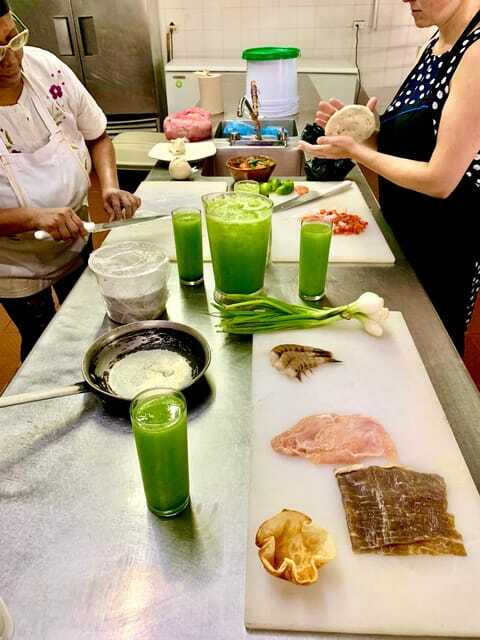
The most repeated praise goes to the hosts, especially Panchito and Francisco. Panchito was described as personable, prompt, and exceptionally well informed about Mexican history, Playa del Carmen, and food. Francisco was praised for being friendly, clear, and easy to talk with.
The second strong point is organization. The restaurant kitchen is spacious and well equipped, the meeting arrangement is straightforward, and support staff help keep the session running. That matters in a class with tamales, sauces, grilled ingredients, side dishes, and drinks all in play.
The third is the sheer amount of cooking. You are not handed a bowl and told to stir once. You prepare several dishes, receive demonstrations, work with the staff, and eat the results.
The small group helps tie those pieces together. A larger class could offer the same recipes, but it would be harder to ask questions or have a natural conversation. Here, the food stories and personal exchange are part of the value.
Who should book this experience?
I would recommend it to you if you enjoy food classes that combine practical work with culture. It is especially suitable if you want to learn how several Mexican dishes fit together in a meal, rather than spending 3.5 hours on one recipe.
It also suits couples, families with older children, and small groups of friends who like to cook together. The generous food portions make it appealing if you prefer an activity that also covers a later meal.
You may want to skip it if your ideal Mexican food experience begins at a market, continues in a home, and stays away from a conventional restaurant. You should also think twice if you dislike seafood, chili peppers, or a long cooking session. The menu changes, but corn, chilies, sauces, grilled ingredients, and regional flavors are central to the experience.
Free cancellation is available up to 24 hours before the start time, and you can reserve now and pay later. Check the available starting times when you book, since the 3.5-hour class is not described with one fixed daily schedule.
Should you book the PDC Traditional Mexican Cooking Experience?
Book it if you want a hands-on Mexican food class with a small group, strong hosts, plenty to eat, and a clear link between cooking and culture. The most convincing reasons are the scratch-made tamales, the changing menu of traditional dishes, the large molcajete option, and the chance to take leftovers with you.
Do not book it expecting a market visit or a private family kitchen. You will cook in a rented restaurant selected for space and safety. For many people, that is a fair exchange for good equipment, staff support, and a smooth three-and-a-half-hour session.
At $116, the experience earns its price when you value instruction, conversation, and a substantial meal. If you only want a quick taste of Mexican food, find a restaurant instead. If you want to understand why the food is prepared with such care, this is a strong choice in downtown Playa del Carmen.
FAQ
Where does the PDC Traditional Mexican Cooking Experience meet?
You meet at the Town Hall Plaza on 20th Avenue between 8th and 10th Streets in downtown Playa del Carmen.
How far is the cooking venue from the meeting point?
The restaurant is about a five to ten minute walk from the Town Hall Plaza.
How long does the experience last?
The cooking experience lasts 3.5 hours.
How many people can join the class?
The group is limited to eight participants.
What languages are available?
The experience is offered in English and Spanish.
Are ingredients and cooking tools included?
Yes. Ingredients, cooking tools, and cooking materials are included.
What dishes might I prepare?
The menu can vary and may include tamales, chiles rellenos, pipian, mole, side dishes, and a Cielo, Mar y Tierra Molcajete with octopus, shrimp, flank steak, and chicken.
Is seafood available?
Yes. Seafood is included in the Cielo, Mar y Tierra Molcajete option. Red snapper or lobster may be available for an additional charge.
Can I take food away after the class?
Yes. You can take cooked and prepared dishes with you if you are unable to finish them during the experience.
Can I cancel for a full refund?
Yes. You can cancel up to 24 hours in advance for a full refund.
Just added around Mexico
- Private Pre-Hispanic Cooking Class in Mexico City with Martha★ 5.0 · 19 reviews
- Flavors of Mexico: Cancun Cooking Class & Market Visit★ 4.5 · 5 reviews
- Private Authentic Mexican Cooking Class in Cancun with Alberto★ 5.0 · 3 reviews
- Tasty Mexican Cooking Class with Feast in Riviera Maya★ 5.0 · 99 reviews
- Cancun small group Cooking Class with Local Chef★ 5.0 · 61 reviews
- 4h Cooking Class in Cancun with 8 Recipes & Bottomless Drinks★ 5.0 · 50 reviews
- Cancun Hands-On Mexican Cooking Class★ 4.5 · 95 reviews
- Private Mexican Cooking Class in Your Cabo San Lucas Villa or Condo★ 5.0 · 8 reviews
Mexican Cooking Classes, compared.
Cabo San Lucas Mexican Cooking Class Experience and Local Markets
Read our review →
Mexican Cooking from Scratch in a Local Home in Tulum
Read our review →
Mexican Cooking Class with Food Market Visit in Mexico City
Read our review →
Essence of Mexico: Authentic Mexican Cooking Class & Market Tour
Read our review →
Mexican Cooking Class with fresh Local Market ingredients selection and transpor
Read our review →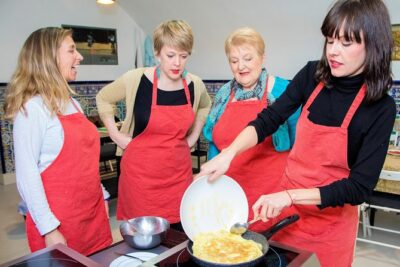
Lists this class appears in