
REVIEW · OAXACA (STATE), MEXICO
Oaxaca: 10 Mexican Salsas Cooking Class with Taco Tasting
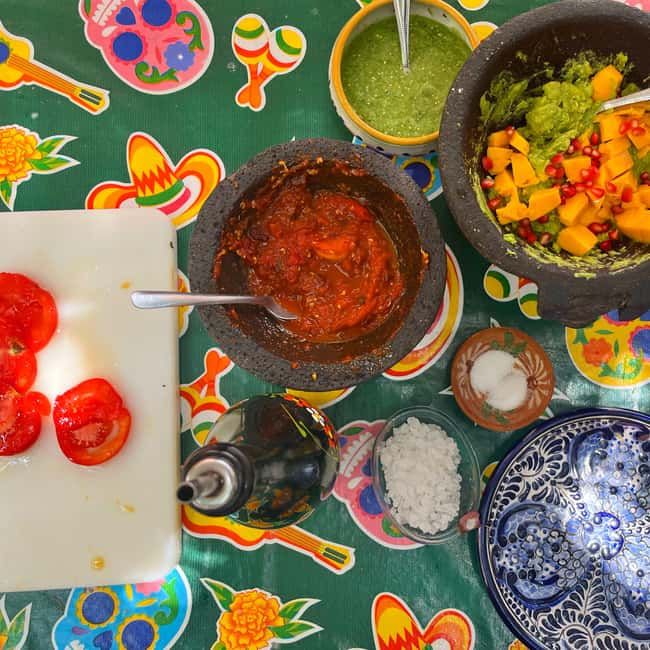
Salsa is where Mexican cooking gets personal. At Casa Crespo in Oaxaca, you spend two hours with Chef Oscar Carrizosa learning ten distinct salsas, from bright Xnipec to smoky Macha, then match them with tacos at the table. I especially like the focus on different chiles and the chance to taste each salsa with prepared food, not just from a spoon. The main thing to consider is the brisk pace: one participant found Chef Oscar rushed and less patient with questions than expected.
The class costs $80 per person, which is a fair price if you want practical cooking skills, a taco tasting, drinks, and a friendly introduction to ingredients that can otherwise seem confusing in Oaxaca’s markets. It is less suitable for anyone with food allergies, since the activity specifically excludes people with allergies and covers a wide range of chiles and ingredients.
Key points to know before booking
- Ten salsas in two hours: You cover a wide range of styles rather than spending the whole class on one recipe.
- Chiles take center stage: You learn how chile de arbol, chipotle, jalapeño, and habanero differ in flavor and heat.
- Oaxacan and Mexican classics: Xnipec, Macha, salsa verde, molcajete salsa, and borracha are part of the lesson.
- Tacos make the lesson useful: You taste the finished salsas with tacos, so you can judge how each one works with food.
- Chef Oscar Carrizosa leads the class: He teaches in English or Spanish at Casa Crespo near Jardin Conzatti.
- Drinks are included: Beer and mezcal were served during at least one class, along with the taco tasting.
Meeting Chef Oscar at Casa Crespo
The class meets at Casa Crespo, at the corner of Jacobo Dalevuelta street, directly in front of Jardin Conzatti. That location makes the activity easy to fit into a day in Oaxaca, especially if you are already walking around the historic center.
You do not need to arrange transportation as part of the activity. The meeting point is clearly identified, and the class takes place at Casa Crespo rather than requiring a trip outside the city.
Chef Oscar Carrizosa teaches in English and Spanish. That matters here because salsa preparation depends on small details: how long a chile is toasted, how much liquid goes into a mixture, and how heat changes as ingredients are combined. If you do not speak Spanish, English instruction makes the class accessible. If you do speak Spanish, you can still enjoy the lesson in the language most comfortable for you.
The setting is wheelchair accessible. Wear comfortable clothes, since this is an active cooking class rather than a demonstration where you simply sit and watch.
More Mexican Cooking Classes in Mexico:
- Cabo San Lucas Mexican Cooking Class Experience and Local Markets
★ 5.0 · 915 reviews - Mexican Cooking from Scratch in a Local Home in Tulum
★ 5.0 · 585 reviews - Authentic Mexican Legacy Cooking Class in Cabo San Lucas
★ 5.0 · 530 reviews
The first lesson: learning the chiles
The class begins with the building blocks of salsa, especially the chiles. You learn how chile de arbol, chipotle, jalapeño, and habanero differ, and how each one changes the final flavor.
This is one of the strongest reasons to book the class. In a Mexican market, dried and fresh chiles can look unfamiliar, and their names do not always tell you how hot, smoky, fruity, or sharp they will taste. A short lesson with several examples gives you a much better starting point for ordering food or cooking at home.
Chile de arbol brings a direct, dry heat. Chipotle adds smoke and depth. Jalapeño gives a greener, fresher heat, while habanero can be much hotter and more aromatic. The value of the lesson is not only learning which chile is hottest. You also begin to understand why a cook chooses one chile over another.
Habanero deserves special attention. It is the hottest chile listed in the class, so you should expect a serious kick rather than a gentle seasoning. If you are sensitive to heat, tell the instructor before tasting. The supplied information does not promise that every salsa can be adjusted to your preference, so approach the hotter examples carefully.
Ten salsas, ten different lessons
Covering ten salsas in two hours means the class moves at a good clip. You will not get a long, slow workshop devoted to one recipe. Instead, you receive a broad survey of Mexican salsa styles and the ingredients that separate them.
The exact order may vary, but the lesson includes several important preparations:
- Xnipec, a sharp salsa associated with the Yucatán, known for strong chile heat and fresh ingredients
- Macha, a more textured salsa with a deeper, seasoned character
- Guacamole and guacachile, two preparations that show how similar ingredients can produce different results
- Salsa verde, the familiar green salsa built around fresh green ingredients
- Classic molcajete salsa, connected to the traditional stone mortar and pestle
- Borracha, a salsa with a distinctive, robust profile
- Salsas seasoned with hibiscus flowers and tamarind
- Additional salsa preparations using chiles such as chile de arbol, chipotle, jalapeño, and habanero
The contrast between these recipes is what makes the class worthwhile. Some salsas focus on fresh brightness, while others depend on toasted, smoky, sour, or earthy flavors. Hibiscus and tamarind add another layer, showing that salsa does not have to mean only tomato, onion, and chile.
I especially like the guacamole and guacachile comparison. The names sound close, but the point of the class is to show you how the two differ. That kind of side-by-side lesson is more useful than memorizing a list of recipes, because it helps you understand the role of chile in a familiar preparation.
Xnipec, Macha, and the art of contrast
Xnipec and Macha are two of the most memorable recipes included in the class because they sit at different ends of the salsa spectrum. Xnipec brings a lively, sharp quality, while Macha is more intense and substantial.
You may already know salsa as something spooned over a taco at the last minute. Macha helps broaden that idea. It has a stronger, more concentrated character, and it shows how a salsa can function almost like a condiment with its own personality.
Xnipec offers a different lesson. It shows how freshness and heat can work together without producing the same effect as a smoky or toasted salsa. When you taste the two with tacos later, you can compare them in a practical way rather than trying to remember flavor notes from a demonstration.
This is also where the class earns its keep for home cooks. You are not only collecting ten recipes. You are learning to ask useful questions: Is the salsa meant to be fresh or cooked? Does it need acidity? Should the chile provide aroma, smoke, or direct heat? Those questions help you improvise later.
More Food and Drink Trips in Mexico:
- Mexican Cooking Class with Food Market Visit in Mexico City
★ 5.0 · 506 reviews - San José del Cabo:Cooking Class +Margaritas & Mezcal tasting
★ 4.8 · 12 reviews - Oaxaca: Traditional Oaxacan Food Cooking Class
★ 5.0 · 10 reviews - Puerto Escondido: Mexican Cooking Class, enjoy mexican food
★ 5.0 · 9 reviews
From molcajete salsa to borracha
The molcajete salsa connects the class to one of Mexico’s most recognizable cooking tools. A molcajete is a traditional stone mortar, and the preparation gives you a feel for the rough texture and direct grinding that distinguish this style from a smooth blended salsa.
Texture matters. A salsa can taste different when it is coarse and rustic compared with one that is fully pureed. The molcajete preparation lets you notice that difference with your own palate.
Borracha offers another contrast. The name means drunk, and this salsa is a classic Mexican preparation with a bold profile. The supplied information does not specify every ingredient used in the class, so you should treat it as a tasting lesson rather than assume it follows one fixed recipe.
The point is variety. In two hours, you see how Mexican cooks build flavor through chiles, acidity, texture, and seasoning. That is far more useful than simply being told that Mexican food is spicy.
Hibiscus and tamarind bring sour notes
The class also includes salsas seasoned with hibiscus flowers and tamarind. These ingredients are especially useful for anyone who thinks salsa is defined only by heat.
Hibiscus brings a tart, floral quality, while tamarind is known for its sour, fruity character. Used in salsa, they can balance chile heat and add a flavor that feels very different from the usual green or red preparations.
This part of the lesson gives you a better sense of how Mexican cooking handles balance. Heat is only one element. A good salsa may need acidity, sweetness, bitterness, smokiness, or fruitiness to taste complete.
It also gives you ideas for cooking at home. If you return from Oaxaca with a bag of dried chiles but no sense of how to use them, the class offers a set of flavor directions. You can make a fresh green salsa, a smoky chipotle version, a sharp tamarind preparation, or something hotter with habanero.
The taco tasting puts everything to work
At the end, you taste tacos with all ten salsas. This is the best part of the schedule because it turns the lesson into a meal and lets you compare each preparation in context.
A salsa can taste powerful on its own and behave differently when paired with a taco. Fat, tortilla, meat, vegetables, and other fillings can soften heat or bring out smoky and sour notes. Tasting all ten with tacos helps you decide which salsa suits which kind of food.
The taco portion is not described as a separate cooking lesson, so you should not expect to prepare an entire taco menu yourself. The focus is the salsa, with tacos prepared for tasting. That keeps the two-hour session manageable and gives you more time to learn the sauces.
The food has received strong praise, with the ingredients and cooking tools also singled out as high quality. Beer and mezcal are included, adding a relaxed Oaxaca touch to the final tasting. Drink service is a pleasant extra, but the main value remains the food and instruction.
If you do not drink alcohol, the available information does not specify alternative beverages, so ask when booking if that detail matters to you.
Pace, group size, and teaching style
The class can work with a group of seven, based on one session, but it may also run with only one person booked. That flexibility is useful. A solo participant was still taught each salsa rather than having the class canceled or reduced to a quick demonstration.
A smaller class should give you more room to ask questions and watch each preparation closely. A larger group can be more social and may feel livelier, but you could have less direct access to the instructor during a fast recipe.
Chef Oscar received strong praise for the fun atmosphere and for helping one participant recreate Mexican food memories at home through recipes and skills. At the same time, one person felt he seemed stressed, rushed through the preparation, and answered questions in an annoyed manner.
I would take that criticism seriously without letting it define the whole experience. Ten salsas in two hours is a lot of material. The schedule naturally requires efficiency, and the teaching style may feel brisk on a busy day. If you want a slow, relaxed workshop with long discussions about every ingredient, this may not be the right format.
If you want broad coverage and practical tasting, the fast pace may work in your favor. Write down questions as you go, and ask them during natural pauses. Cooking partners can also shape the mood, especially in a group setting.
Is $80 a fair price?
At $80 per person, this is not a bargain snack stop. It is a compact cooking experience that combines instruction, ten salsa preparations, tacos, and drinks.
The value is strongest if you care about Mexican food beyond a single meal. You get a useful introduction to chiles, traditional salsa styles, unusual ingredients such as hibiscus and tamarind, and the chance to taste the results with food. A half-day cooking class would offer more time, but this shorter format is easier to fit into an Oaxaca itinerary.
The price also includes the work of preparing ten different salsas. You are paying for teaching, ingredients, kitchen use, tasting food, and drinks rather than simply buying tacos.
I would consider it good value for a food-focused visitor who wants to take recipes and techniques home. It is weaker value if you mainly want a large meal or prefer to watch instead of cook.
Who should book this class?
I would recommend it to curious eaters, home cooks, and anyone who wants a clearer understanding of Mexican chiles. It also suits couples, friends, and solo visitors because the class can operate with a larger group or a single participant.
It is a good choice if you enjoy comparing flavors. The ten-salsa format gives you plenty of contrast, and the tacos help you decide which combinations you like best.
You should think twice if you have food allergies. The activity is specifically marked as unsuitable for people with allergies, and you should not assume substitutions are available.
You may also want a different class if your priority is a long, unhurried cooking session. Two hours passes quickly when you are preparing ten recipes, and the instruction can feel rushed if the class is busy.
The class is wheelchair accessible, taught in English or Spanish, and starts at a central meeting point. Canceling up to 24 hours in advance is allowed for a full refund, and you can reserve now while paying later, which helps if your Oaxaca plans are still shifting.
Should you book the Oaxaca salsa class?
Book it if you want a focused, flavorful lesson that goes well beyond basic guacamole. Chef Oscar Carrizosa covers ten salsas, several types of chile, classic preparations such as Xnipec and Macha, and less expected flavors from hibiscus and tamarind. The final taco tasting makes the techniques easier to understand, and beer and mezcal add value.
Go in expecting a brisk workshop, not a leisurely culinary seminar. Ask questions early, dress comfortably, and be careful with the habanero. For food lovers who want to bring a piece of Oaxaca cooking home, $80 is a sensible spend. For anyone with food allergies or a low tolerance for fast-paced instruction, choose another activity.
FAQ
Where does the salsa cooking class meet?
It meets at Casa Crespo, at the corner of Jacobo Dalevuelta street, in front of Jardin Conzatti.
How long does the class last?
The class lasts two hours.
How much does the experience cost?
The price is $80 per person.
How many salsas will I learn to make?
You will learn to make ten different Mexican salsas.
Which types of chiles are covered?
The class covers chile de arbol, chipotle, jalapeño, and habanero, along with lessons about the differences between chile types and how to use them.
Are tacos included?
Yes. The experience includes a taco tasting paired with the ten salsas you make.
Are drinks included?
Yes. Drinks are included. Beer and mezcal were served during at least one class.
Is the class taught in English?
Yes. Instruction is available in English and Spanish.
Can people with food allergies attend?
The activity is listed as unsuitable for people with food allergies, so it is not recommended if you have an allergy.
Just added around Mexico
- Private Pre-Hispanic Cooking Class in Mexico City with Martha★ 5.0 · 19 reviews
- Private Authentic Mexican Cooking Class in Cancun with Alberto★ 5.0 · 3 reviews
- Flavors of Mexico: Cancun Cooking Class & Market Visit★ 4.5 · 5 reviews
- Tasty Mexican Cooking Class with Feast in Riviera Maya★ 5.0 · 99 reviews
- Cancun small group Cooking Class with Local Chef★ 5.0 · 61 reviews
- 4h Cooking Class in Cancun with 8 Recipes & Bottomless Drinks★ 5.0 · 50 reviews
- Cancun Hands-On Mexican Cooking Class★ 4.5 · 95 reviews
- Private Mexican Cooking Class in Your Cabo San Lucas Villa or Condo★ 5.0 · 8 reviews
Mexican Cooking Classes, compared.
Cabo San Lucas Mexican Cooking Class Experience and Local Markets
Read our review →
Mexican Cooking from Scratch in a Local Home in Tulum
Read our review →
Mexican Cooking Class with Food Market Visit in Mexico City
Read our review →
Essence of Mexico: Authentic Mexican Cooking Class & Market Tour
Read our review →
Mexican Cooking Class with fresh Local Market ingredients selection and transpor
Read our review →
Lists this class appears in